The geopolitical struggle for control over the global semiconductor supply chain has reached a critical and highly contradictory turning point. In late June 2026, the Dutch government officially joined “Pax Silica,” a United States-led international alliance designed to coordinate microchip and artificial intelligence supply chains and reduce collective dependence on China.
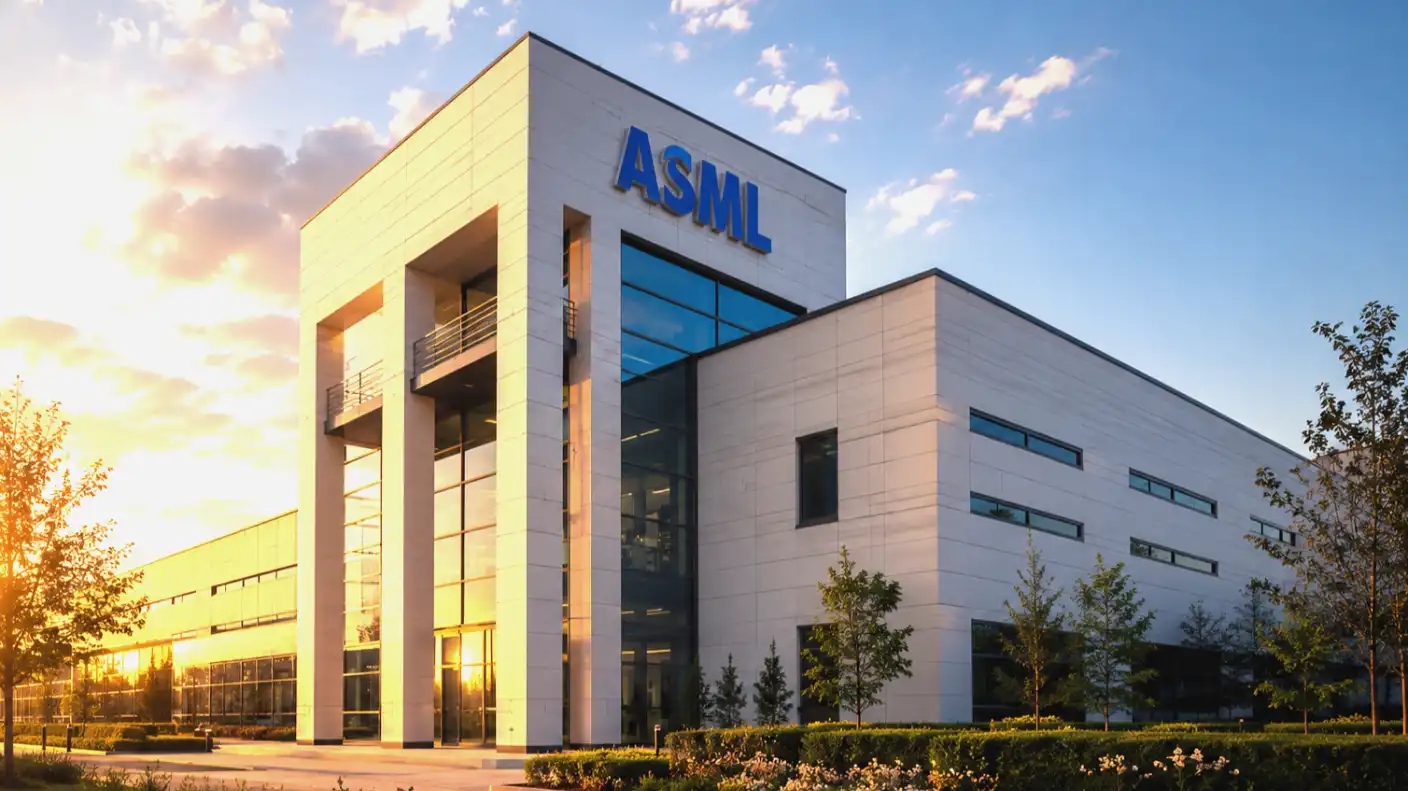
However, this strategic alignment occurred on the same day that Dutch officials launched an aggressive, high-profile diplomatic campaign in Washington. Foreign Trade Minister Sjoerd Sjoerdsma traveled to the United States capital to lobby senior American lawmakers and administrative officials, arguing fiercely against a proposed US bill that would grant Washington unilateral authority to block Dutch chip equipment giant ASML Holding NV from servicing and selling its less advanced machines to Chinese buyers.
This delicate diplomatic balancing act highlights the intense pressure facing the Netherlands, which is home to Europe’s most valuable technology company. ASML holds a virtual monopoly on the advanced lithography systems required to manufacture the world’s most sophisticated microchips.
As the United States seeks to implement increasingly restrictive, unilateral export controls to contain China’s technological rise, Dutch officials are working to establish strict boundaries.
By presenting the Netherlands as a highly cooperative and reliable security partner through alliances like Pax Silica, the Dutch cabinet hopes to convince Congress that existing export controls are already sufficient, and that further unilateral bans would do far more harm than good to the Western technology ecosystem.
The Battle Over the MATCH Act: Protecting ASML’s Bottom Line
The primary focus of Sjoerd Sjoerdsma’s lobbying efforts in Washington is a controversial piece of proposed US legislation known as the MATCH Act. The bill has cleared a key congressional committee but has not yet passed a full vote in either the House of Representatives or the Senate.
Targeting DUV Systems and Service Contracts
While ASML’s most advanced Extreme Ultraviolet (EUV) lithography systems have been barred from China since 2019 under pressure from the first administration of US President Donald Trump, the proposed MATCH Act is designed to target older, less advanced Deep Ultraviolet (DUV) systems.
These DUV immersion systems are the workhorses of the global semiconductor industry, used to manufacture standard memory and logic chips for everything from automobiles to industrial machinery.
The MATCH Act is particularly threatening to ASML because it seeks to extend US authority not just to new machine sales, but to the ongoing service, maintenance, and spare-parts contracts for DUV systems already installed in Chinese factories.
These DUV machines and their associated servicing contracts account for approximately a fifth, or 20%, of ASML’s expected global revenue for the year.
If Washington passes the MATCH Act, it would gain the unilateral legal authority to force ASML to abandon these lucrative maintenance agreements, deal a devastating blow to the company’s financial model, and sever its relationship with its Chinese customers.
A Squeeze on China Sales
The Dutch government argues that further unilateral US restrictions are unnecessary because existing export controls are already having a significant, measurable impact on reducing China’s access to advanced technology.
According to ASML’s latest quarterly financial reports, China’s share of the company’s total system sales dropped to 19% in the first quarter of the year, down from 36% in the previous quarter.
This sharp decline proves that the Dutch government’s own national licensing system, which requires ASML to obtain government permits before exporting advanced DUV systems to China, is working as intended.
By systematically reviewing and restricting high-end shipments, the Netherlands has successfully aligned its security policies with Western objectives without needing to implement a complete, financially devastating ban on lower-end tools.
The Economic Threat to Europe’s Tech Champion
For the Netherlands, protecting ASML is not just a matter of corporate profits; it is a matter of national economic security. ASML is Europe’s largest and most valuable technology company, carrying a massive €45 billion backlog of ordered machines that guarantees its revenue pipeline for years.
The company is a vital driver of high-tech jobs, academic research, and tax revenue for the Dutch state, and its shares have climbed roughly 78% year-to-date on the back of the global AI-driven semiconductor boom.
If the United States uses its extraterritorial legal powers to cripple ASML’s business in China, it would directly undermine Dutch economic sovereignty.
Dutch officials are highly concerned about a precedent where Washington can unilaterally dictate where and how a European company can sell standard, non-military commercial products.
By lobbying aggressively against the MATCH Act, Sjoerdsma is attempting to defend the principle of national sovereignty, ensuring that the Netherlands—and not the United States Congress—retains the final authority over Dutch export policies.
The ‘EUV in China’ Contretemps: Lutnick vs. Fouquet
The lobbying efforts in Washington have taken on a new sense of urgency following a tense, highly public exchange between US Commerce Secretary Howard Lutnick and senior ASML executives.
Lutnick’s Unsubstantiated Accusations
During a series of private meetings with ASML leadership, Commerce Secretary Howard Lutnick raised serious concerns that Washington believes one of the company’s top-of-the-line EUV lithography machines may have made its way into China in violation of US-led export restrictions.
While Lutnick and senior administration officials claimed to possess intelligence pointing to an illicit transfer, they declined to share any physical evidence or supporting documentation to back up their allegations.
The rumor that a highly restricted EUV machine had somehow reached China sent shockwaves through the financial markets, causing ASML shares to drop as much as 2.7% in Amsterdam trading.
Because EUV systems are essential for manufacturing advanced processors for companies like Apple and Nvidia, even a hint of non-compliance with export controls represents a major existential threat to ASML’s global business and its relationships with Western governments.
ASML’s Categorical Denial and Tracking Systems
ASML’s newly appointed Chief Executive Officer, Christophe Fouquet, responded to Lutnick’s allegations with a categorical, public denial.
The company stated that it has never shipped an EUV machine, or any component, module, or spare part specially designed for an EUV machine, to any Chinese customer.
To support its denial, ASML pointed out the sheer, physical absurdity of smuggling an EUV system.
An EUV lithography machine is approximately the size of a city school bus, contains over 100,000 individual components, and requires three fully loaded Boeing 747 cargo planes to transport.
Furthermore, these machines require continuous, hands-on maintenance, calibration, and software support from ASML’s own specialized engineers to remain operational.
The company actively tracks all 314 of its active EUV systems globally, and an internal document circulated in Washington confirmed there is absolutely no indication of any ASML EUV system operating inside China, proving that the rumors were entirely unfounded and highly damaging to the company’s reputation.
The Stock Market Whiplash
Despite the lack of evidence, the fact that the US Commerce Secretary chose to confront ASML’s senior leadership shows the high level of distrust that has developed between Washington and its European allies over the technology blockade.
Investors are increasingly worried that the US government will use unsubstantiated rumors of export violations to justify harsher, unilateral sanctions against ASML, such as restricting the company’s access to critical US-made components or software.
To protect its shareholders and stabilize its stock price, ASML has been running a highly aggressive share buyback program, repurchasing over €15.8 million worth of its own shares daily.
While this buyback program has helped cushion the stock from extreme volatility, the ongoing regulatory uncertainty represents a persistent overhang on ASML’s valuation, proving that even a monopoly player in the tech sector is highly vulnerable to the shifting winds of geopolitical trade wars.
The Strategic Alignment: Joining Pax Silica with European Partners
To strengthen its position and prove its commitment to Western security, the Dutch government chose this week to officially join “Pax Silica,” the US-led technology and supply chain alliance.
Coordinating the Allied Supply Chain
Pax Silica was launched by the United States to coordinate the chip and AI supply chains of democratic nations, reducing their collective reliance on China for critical raw materials and manufacturing capabilities.
The alliance already includes major semiconductor and technology powers, including Japan, South Korea, the United Kingdom, and Australia.
By joining Pax Silica, the Netherlands is signaling that it is fully committed to the long-term defense of the democratic technology ecosystem.
The alliance will allow the participating nations to share information on supply chain vulnerabilities, coordinate research and development spending on next-generation computing technologies, and establish collective security protocols to protect sensitive intellectual property from foreign espionage.
The European Commission’s Coordinated Move
The timing of the Dutch signature was highly calculated. Sjoerd Sjoerdsma signed the Pax Silica declaration in Washington on the same day that the European Commission signed up, presenting a unified, coordinated European front.
Sjoerdsma explained to reporters that the Dutch cabinet deliberately held off on joining the alliance until it could move alongside its European partners.
By coordinating its actions with the European Commission, the Netherlands has significantly increased its diplomatic leverage.
It is much more difficult for Washington to ignore the concerns of a unified European Union than those of a single, small European nation, allowing Sjoerdsma to present a stronger, more credible case against the unilateral provisions of the MATCH Act.
The Broader Dutch Pushback Against US Extraterritoriality
The lobbying efforts over ASML are part of a broader, systemic effort by the Dutch government to limit the reach of American law within its national borders.
Blocking the Takeover of Solvinity
In late May, the Dutch government took the highly unusual step of blocking a proposed US acquisition of Solvinity, a prominent Dutch cloud and IT management company that runs the DigiD digital login system for Dutch citizens.
The cabinet blocked the acquisition out of concern that US federal laws, such as the Cloud Act, could be used by American law enforcement agencies to demand access to sensitive personal data held in the Netherlands.
This decision sent a clear message to Washington: the Netherlands is committed to protecting its national sovereignty and the digital privacy of its citizens, and it will not allow American laws to take precedence over Dutch regulations.
By establishing these clear boundaries, the Dutch cabinet is demonstrating that its relationship with the United States is a partnership of equals, not a subordinate alliance where Washington can dictate domestic policies.
Securing Technological Sovereignty
By presenting itself as a highly cooperative and reliable partner on technological security through its participation in Pax Silica, the Netherlands is attempting to build a strong, credible case against further US intervention.
The Dutch government wants to convince Congress that its existing national licensing system is more than capable of protecting national security, and that allowing the US to unilaterally block DUV sales through the MATCH Act would do more harm than good, potentially alienating allies and driving a wedge into the Western tech coalition.
Ultimately, the Dutch strategy is designed to preserve European technological sovereignty.
By building its own domestic capabilities, collaborating closely with its European partners, and establishing firm boundaries against American unilateralism, the Netherlands is working to ensure that it retains full control over its industrial future, protecting ASML and the broader European tech sector from the shifting winds of superpower geopolitics.
A Polarized Path for Global Technology
The high-stakes diplomatic maneuvering in Washington highlights the immense complexity of the global technology race.
By joining the Pax Silica alliance while simultaneously lobbying against the MATCH Act, the Netherlands is attempting to walk a very fine line: protecting its strategic alliance with the United States while defending the economic sovereignty of its most valuable corporate asset.
The outcome of Sjoerd Sjoerdsma’s lobbying efforts and the upcoming June 30 meeting of the Technical Committee on Motor Vehicles will play a crucial role in shaping the future of global trade.
If Washington ignores the concerns of its European allies and passes the MATCH Act, it could trigger a significant rift in the Western technology coalition, encouraging European nations to develop independent supply chains and reduce their reliance on US components.
However, if a cooperative, dialogue-based approach prevails, the allied nations can build a highly resilient, secure technology ecosystem that protects public safety without destroying the international trade partnerships that have driven decades of technological innovation.