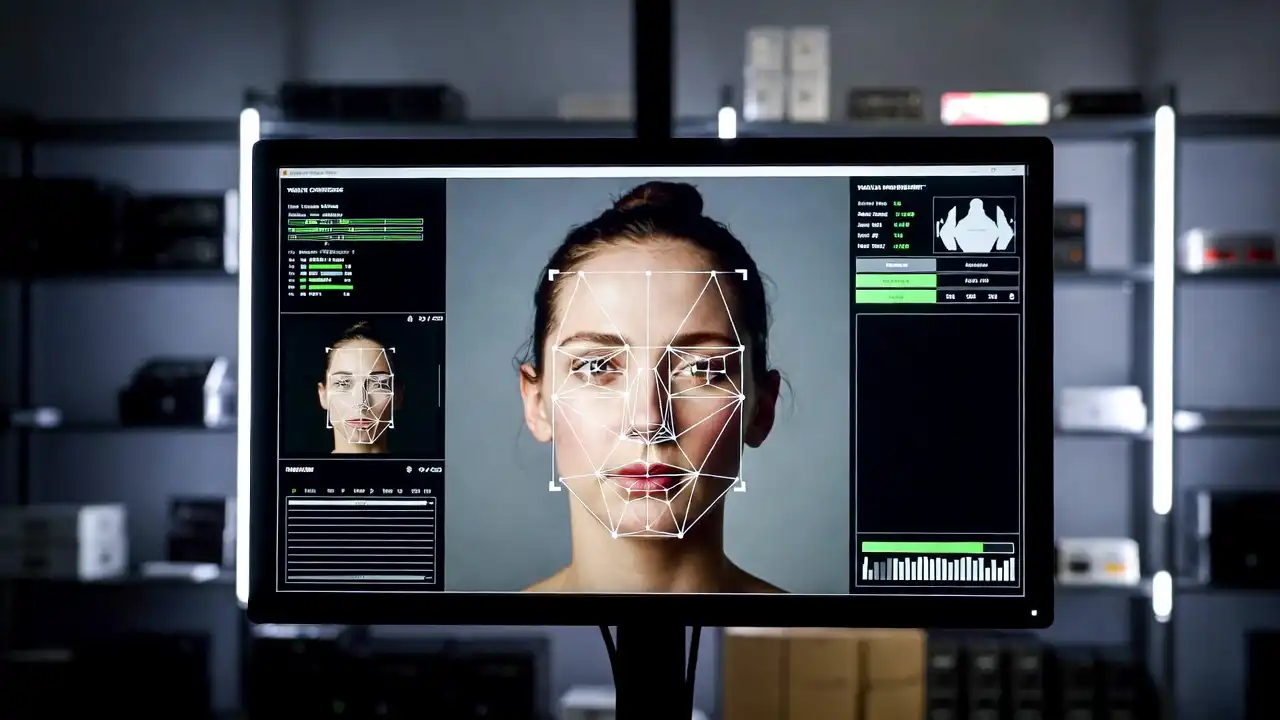
Payment infrastructure provider EFTPOS New Zealand is executing a sweeping technological upgrade across its national retail network, introducing next-generation point-of-sale terminals equipped with facial recognition payment capabilities. The nationwide deployment allows retail shoppers to complete in-store purchases simply by presenting their face to an integrated terminal camera, executing instant payment verification without needing plastic credit cards, mobile phones, or physical PIN entries. The rollout marks a major milestone in the commercial adoption of hands-free biometric commerce across the Asia-Pacific region.
The biometric payment system integrates directly into EFTPOS New Zealand’s established network of over 50,000 active retail terminals operating across supermarkets, convenience stores, quick-service restaurants, and specialty retail shops. By upgrading terminal hardware with high-definition optical infrared cameras, specialized neural processing units, and encrypted communication software, the payment provider is enabling merchants to process transactions in under 2.5 seconds. The hands-free checkout process cuts average register transaction times by up to 50%, offering retail store owners a powerful tool to reduce peak-hour customer queuing bottlenecks.
The introduction of facial recognition payments in New Zealand reflects a broader $15 billion global shift toward biometric point-of-sale technology. As consumers grow accustomed to unlocking smartphones using facial scanning, global financial institutions and payment acquirers are expanding biometric authentication directly into physical retail locations. However, the technology’s arrival in New Zealand has also sparked an important national debate regarding consumer data privacy, biometric database security, and compliance with national privacy laws, prompting payment operators to implement strict opt-in consent protocols and advanced encryption safeguards.
TechGolly provides a detailed financial and technology analysis of EFTPOS New Zealand’s facial recognition rollout, evaluating biometric terminal engineering, liveness detection security, retail merchant benefits, data privacy compliance, consumer adoption psychology, and the future of global hands-free commerce.
Unpacking the Mechanics of Facial Recognition Payment Terminals
To understand how a consumer can pay for groceries using only their face, financial technology analysts and retail architects must examine the multi-stage digital verification process linking customer biometrics, mobile banking applications, and terminal hardware.
The biometric payment journey begins with a voluntary, one-time customer enrollment process. Using a secure mobile banking application or approved payment provider portal, the consumer opts into the biometric payment service. The user uploads a valid government-issued identity document and captures a high-resolution 3D scan of their face using their smartphone camera.
During enrollment, specialized computer vision software analyzes the user’s facial geometry, measuring unique spatial landmarks such as the distance between the eyes, the depth of the eye sockets, the contour of the cheekbones, and the shape of the jawline. The software converts these physical facial measurements into a unique 256-bit mathematical vector hash—a digital token that acts as a secure, unalterable biometric fingerprint.
When the customer visits a participating retail store, the checkout experience is completely frictionless. Upon reaching the register, the store clerk scans the customer’s items as usual. When the final purchase total appears on the payment screen, the customer selects the “Pay with Face” option and looks directly into the terminal’s built-in optical camera for 1 to 2 seconds.
The terminal camera captures a real-time 3D optical scan of the customer’s face, converts the image into an instant mathematical vector, and transmits the encrypted hash across a secure network to a centralized biometric matching vault. The cloud server matches the incoming hash against enrolled user accounts within sub-second timeframes, verifies that the user maintains sufficient funds or credit line availability, and authorizes the transaction, delivering instant payment confirmation to the store clerk without requiring the physical presentation of a credit card.
Liveness Detection and Anti-Spoofing Cyber Protections
A primary technical priority for payment system architects deploying facial recognition hardware in physical retail environments is preventing spoofing attacks and biometric fraud.
Because retail payment terminals are placed in public environments where bad actors could attempt to deceive cameras, terminal hardware must feature advanced anti-spoofing security protections capable of distinguishing a real, living human face from artificial replicas. Early generations of facial recognition software were vulnerable to simple presentation attacks, where a fraudster held up a high-resolution 2D photograph or smartphone video of an enrolled customer in front of a camera lens to authorize fraudulent charges.
To eliminate presentation attack vulnerabilities, EFTPOS New Zealand’s updated terminals deploy multi-spectral liveness detection software paired with hardware-level infrared depth sensors.
The terminal’s optical camera suite captures images across multiple light spectrums simultaneously:
- First, standard visible light spectrum imaging to capture surface facial features.
- Second, active near-infrared (NIR) projection to analyze sub-surface skin light absorption and skin reflectivity.
- Third, 3D structured-light depth mapping, projecting thousands of invisible infrared dots onto the customer’s face to verify physical 3D contour depth.
Liveness detection algorithms analyze these multi-spectral camera inputs in real time, checking for micro-subtle human biological indicators such as natural eye blinking, blood flow pulses beneath the skin, and natural micro-facial muscle tremors. If an individual holds up a 2D paper photograph, a digital smartphone screen, or even a sophisticated 3D silicone mask, the terminal’s infrared depth sensors and liveness detection algorithms instantly recognize the lack of biological skin reflectivity and 3D depth, blocking the transaction and triggering an automated fraud alert.
Furthermore, the payment network protects biometric data in transit and at rest using military-grade 256-bit hardware encryption. Terminal cameras do not store raw photographic images of customer faces on local hardware. The moment a camera captures a facial scan, onboard processors convert the visual image into an encrypted mathematical hash, instantly purging the raw image file from local device memory.
Retail Merchant Benefits: Speed, Throughput, and Fraud Reduction
The commercial motivation driving retail store managers to adopt facial recognition payment terminals centers on operational efficiency, queue reduction, and fraud elimination.
In high-volume retail environments—such as urban supermarkets, busy transit station convenience stores, and quick-service coffee shops during morning rush hours—checkout line speed directly dictates hourly store sales revenue. Traditional payment methods introduce physical friction at the register: customers must search through purses or pockets for wallet cards, unlock mobile phones using passcode sequences, or wait for chip-and-PIN terminal processing, taking an average of 12 to 18 seconds per transaction.
Facial recognition payments reduce total checkout processing times down to less than 2.5 seconds per customer. Eliminating physical card handling and phone unlocking allows a single register lane to process up to 30% more customers per hour, significantly reducing line lengths during peak shopping hours and preventing customer walkouts caused by long wait times.
From a fraud prevention standpoint, biometric authentication offers superior security compared to traditional plastic payment cards or magnetic stripe technology. Plastic credit cards can be lost, stolen, or cloned using illegal card-skimming devices installed on compromised registers. Similarly, mobile wallets can be accessed if a thief obtains a user’s phone passcode.
A customer’s physical 3D facial geometry, however, cannot be lost or stolen. Requiring multi-spectral liveness verification at the physical point of sale ensures that the individual standing at the register is the genuine, authorized account holder, virtually eliminating physical stolen-card fraud and chargeback disputes for retail merchants.
Additionally, hands-free biometric checkout delivers major hygiene advantages in food-service environments. By allowing customers to pay without touching shared terminal keypads, touchscreens, or physical receipts, merchants maintain cleaner checkout environments, reducing the transmission of surface bacteria in busy grocery stores and restaurants.
The Global Biometric Payment Race: China, Europe, and North America
The deployment of facial recognition payment terminals in New Zealand is part of a rapidly accelerating global transformation in merchant acquiring and consumer financial technology.
The global leader in biometric consumer payments is China, where facial recognition checkout systems have operated at scale for over six years. Major digital payment platforms, including Alipay’s “Dragonfly” and WeChat Pay’s “Frog” systems, operate hundreds of thousands of facial recognition terminals across Chinese supermarkets, subway stations, and convenience stores. Millions of Chinese consumers pay for daily train tickets, groceries, and restaurant meals using face-scanning terminals, making biometric payment a mainstream daily habit.
In Western markets, adoption has accelerated through specialized commercial environments. Major sports stadiums, international airports, and entertainment venues across North America and Europe are deploying hands-free biometric payment lanes to speed up concessions sales and queuing.
In the United States, major tech companies and retail chains are testing alternative biometric modalities, including palm-vein scanning systems that verify customer identity by reading internal blood vessel patterns beneath the skin. However, facial recognition remains the most versatile biometric modality because it utilizes low-cost, high-resolution optical cameras that can be easily integrated into standard touchscreen point-of-sale hardware.
As international travelers and shoppers experience hands-free biometric payments in airports and overseas retail hubs, consumer expectations for physical payment convenience are shifting. Payment acquirers that upgrade their merchant terminal networks to support multi-modal biometric authentication are positioning themselves to capture market share as hands-free commerce becomes an international standard.
Privacy Governance, Data Protections, and the New Zealand Privacy Act
While the speed and convenience of facial recognition payments are compelling, the technology’s deployment in public retail spaces raises important legal, ethical, and civil liberties questions regarding consumer data privacy and biometric surveillance.
Unlike a credit card or a digital password, a person’s biometric face profile is a permanent, unchangeable biological identifier. If a corporate database holding raw facial photographs is breached by malicious hackers, affected consumers cannot simply change their face the way they would replace a compromised credit card number or update an online password.
To address public data privacy concerns, EFTPOS New Zealand’s biometric payment network operates under strict legal compliance frameworks established by the New Zealand Privacy Act 2020 and guidelines issued by the Office of the Privacy Commissioner.
The Privacy Act 2020 establishes clear statutory rules governing how organizations collect, store, and process personal biometric information:
- First, mandatory explicit opt-in consent. Retailers and payment acquirers are strictly prohibited from scanning customer faces passively or collecting biometric data without a user’s explicit, informed, and written consent. Consumers must actively choose to enroll in the biometric payment service through a private banking application.
- Second, strict data minimization and purpose limitation. Payment acquirers cannot use biometric payment data for secondary commercial purposes, such as targeted retail advertising, facial tracking across public spaces, or selling consumer movement data to third-party data brokers.
- Third, the right to complete data deletion. Consumers who enroll in the biometric payment service retain the absolute legal right to withdraw their consent at any time through their banking application, triggering an automated purge of their encrypted mathematical biometric tokens from all central verification databases.
Furthermore, system architects emphasize that central biometric vaults store only 256-bit encrypted mathematical hashes rather than raw photographic images. Even if a cybercriminal successfully breached a biometric server enclave, the stolen data would consist entirely of complex mathematical vectors that cannot be reverse-engineered to reconstruct a customer’s original facial photograph.
Consumer Psychology and the Transition to Hands-Free Commerce
The commercial success of facial recognition payment terminals depends heavily on consumer psychological comfort and behavioral adoption curves.
Historically, introducing new financial payment technologies encountered initial consumer hesitation. When contactless “tap-and-go” credit cards were first introduced two decades ago, many consumers expressed safety concerns regarding accidental card scanning or unauthorized wireless data theft. However, as consumers experienced the speed and reliability of contactless payments firsthand, initial hesitation vanished, making contactless tapping the dominant global payment method.
A similar psychological evolution is occurring with biometric consumer payments. Younger, tech-savvy demographics who interact daily with facial recognition sensors to unlock smartphones, log into banking applications, and pass through airport customs gates view biometric authentication as a natural, convenient security feature.
For busy parents carrying young children, elderly shoppers who struggle with small terminal keypads, or fitness enthusiasts running errands without wallets, hands-free facial recognition provides an immediate, tangible improvement in daily retail convenience.
To build public trust during early deployment phases, retail merchants are training floor staff to assist customers, clearly displaying privacy protection notices near registers, and ensuring that traditional payment options—including contactless cards, mobile wallets, and cash—remain fully available alongside new biometric terminals.
Strategic Outlook for Point-of-Sale Technology and Payment Networks
The rollout of facial recognition payment terminals across New Zealand signals a permanent evolution in physical retail infrastructure, setting the stage for a future where physical wallets and plastic cards become obsolete.
Looking forward through the late 2020s and into the 2030s, point-of-sale terminal hardware will transform into intelligent, multi-modal sensor hubs. Future retail checkout registers will integrate artificial intelligence vision sensors that automatically identify items placed on a counter, sum purchase totals instantly without barcode scanning, and authenticate customer payment using background biometric verification as the shopper steps away from the counter.
Furthermore, biometric checkout terminals will integrate deeply with personalized retail loyalty programs. When an enrolled customer looks into a terminal camera at checkout, the system will automatically apply personal store discounts, credit accumulated loyalty points, and deliver digital paperless receipts directly to the customer’s mobile banking app, creating a unified, personalized retail experience.
As financial institutions, technology developers, and merchant acquirers continue to refine biometric security algorithms and privacy safeguards, hands-free payment technology will expand beyond retail stores into public transport networks, hotel check-in desks, corporate office access gates, and healthcare facilities, building the physical infrastructure for an interconnected, hands-free global economy.
Key Takeaways for Retail Executives, Bankers, and Tech Innovators
The deployment of facial recognition payment terminals in New Zealand delivers vital strategic lessons for retail corporate leaders, commercial bank acquiring divisions, fintech developers, and technology investors.
First, frictionless checkout speed directly drives retail merchant value. Payment acquirers and fintech developers that engineer checkout solutions capable of processing transactions in sub-3-second timeframes deliver tangible operational value to merchants by reducing queue lengths and increasing store throughput.
Second, robust anti-spoofing security is a non-negotiable requirement for biometric hardware. Deploying multi-spectral hardware cameras, 3D depth sensors, and advanced liveness detection software is mandatory to protect biometric payment networks against physical presentation attacks and synthetic deepfake fraud.
Third, transparent data privacy governance is essential for consumer acceptance. Payment operators must build compliance-first architectures that enforce explicit opt-in consent, utilize encrypted mathematical hashes instead of raw images, and guarantee full user data deletion rights to earn lasting public trust.
Finally, the global payments industry is moving permanently toward hands-free biometric authentication. Financial institutions, merchant acquirers, and retail organizations that invest in building secure, scalable, and privacy-compliant biometric payment infrastructure today will lead the future of physical retail commerce.