

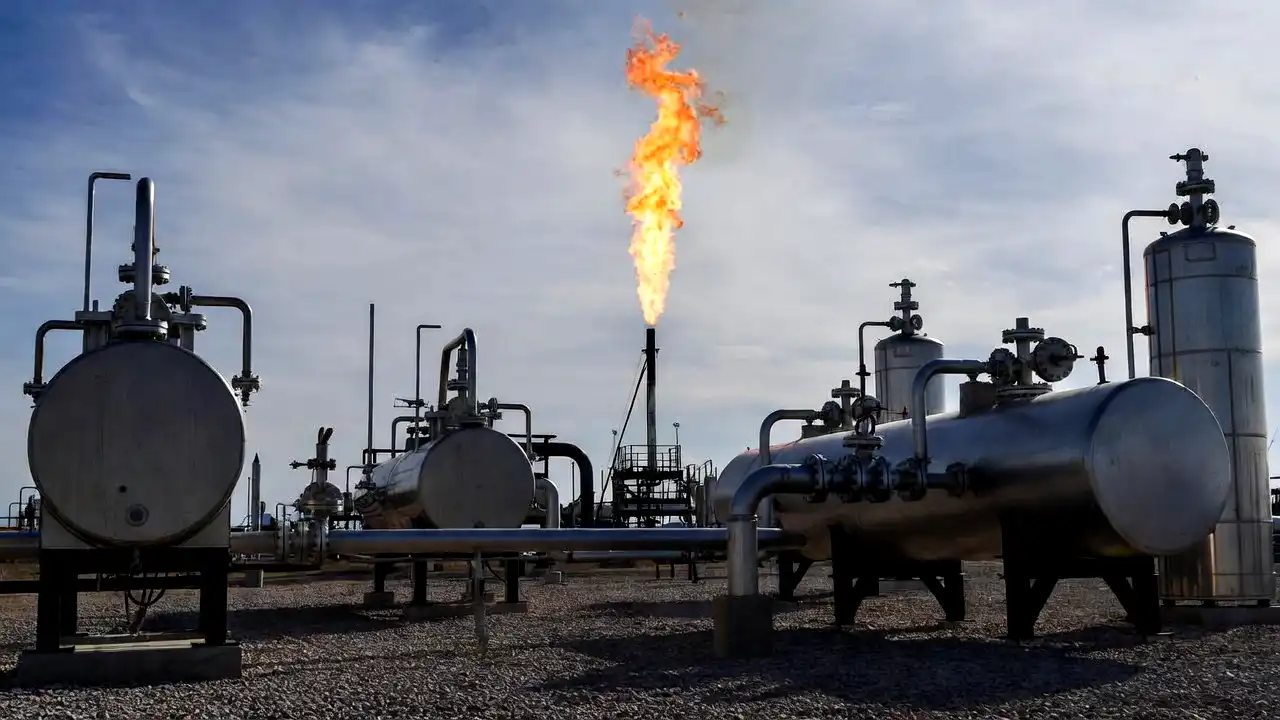
European natural gas prices have surged to their highest valuation in more than three and a half years as escalating military hostilities in the Middle East and maritime blockades along critical shipping corridors raise acute fears of a prolonged winter energy crisis. Benchmark futures contracts traded at the Dutch Title Transfer Facility climbed above €74.40 per megawatt-hour, marking the highest price level recorded across continental trading hubs since January 2023. The rapid market rally represents a 29% gain over a four-week span and an astonishing 133% increase compared to the previous year.
The violent price spike is driven by the near-total disruption of liquefied natural gas exports flowing through the strategic Strait of Hormuz. The narrow maritime waterway, which borders Iran and traditionally handles roughly 20% of global liquefied natural gas trade and one-fifth of the world’s petroleum supply, has experienced severe commercial navigation standstills amid drone strikes, naval mine threats, and military skirmishes. With Qatari export terminals trapped behind the maritime chokepoint and international shipping lines diverting tankers on multi-week detours around the southern tip of Africa, European utilities are struggling to secure replacement cargoes to fuel heating networks and industrial factories.
The geopolitical supply shock arrives at the worst possible moment for European energy security. Underground gas storage facilities across the European Union sit at approximately 64.7% of total capacity, well below the historical five-year seasonal average of 82%. As European energy buyers engage in fierce bidding wars against Asian utilities for uncommitted Atlantic Basin cargoes, the surge in wholesale gas prices threatens to derail Europe’s fragile economic recovery, squeeze heavy industrial manufacturing across Germany, France, and Italy, and force the European Central Bank to maintain a restrictive, hawkish monetary policy stance.
A Historic Price Spike in European Energy Markets
The dramatic run-up in European gas futures highlights the structural fragility of the continent’s post-crisis energy architecture. Following the loss of Russian pipeline gas in 2022, European nations invested tens of billions of dollars to construct floating regasification terminals, expanding their reliance on global seaborne liquefied natural gas.
While flexible LNG imports allowed Europe to survive previous winter heating seasons without catastrophic rationing, they permanently tied domestic European electricity and heating bills to international maritime shipping routes and global commodity markets.
The outbreak of large-scale military conflict in the Persian Gulf has shattered that delicate balance. Energy trading desks in London, Amsterdam, and Frankfurt are pricing in substantial geopolitical risk premiums, anticipating that Middle Eastern export disruptions will persist well into the upcoming year.
The rapid price increase is putting intense pressure on wholesale power markets. Because natural gas-fired peaking turbines set the marginal clearing price for electricity across European power exchanges, rising fuel costs translate directly into higher industrial and consumer power bills.
Breaking Down the TTF Rally Above €74 per Megawatt-Hour
The benchmark Dutch Title Transfer Facility front-month contract experienced relentless buying pressure as commercial utilities and financial hedge funds rushed to cover short positions. Trading volumes across the Intercontinental Exchange reached multi-month highs as physical buyers scrambled to lock in autumn and winter delivery contracts.
The pricing metrics illustrate the velocity of the market breakout:
- The front-month Dutch TTF contract surged from €66.97 to trade firmly above €74.40 per megawatt-hour, breaking through multiple technical resistance ceilings.
- European gas prices recorded their largest single-day percentage jumps since the initial market turbulence of 2022.
- The wholesale price represents more than double the €30 to €35 per megawatt-hour baseline that European manufacturers enjoyed during early spring.
- German and French power futures for delivery in the fourth quarter climbed in tandem, jumping by more than 18% to track rising fuel input expenses.
Energy analysts emphasize that sustained gas prices above €70 per megawatt-hour place severe financial strain on energy-intensive industrial sectors, threatening to force another wave of factory curtailments across the continent.
The Strait of Hormuz Chokepoint and Qatari Supply Curtailments
The primary catalyst driving European market panic is the physical paralysis of maritime traffic through the Strait of Hormuz. The narrow strait serves as the exclusive export gateway for Qatar, the world’s second-largest exporter of liquefied natural gas, alongside major producers in the United Arab Emirates.
Naval drone attacks, missile strikes on regional port facilities, and military blockades have brought commercial navigation to a virtual standstill:
- Maritime intelligence data show that only a single commercial LNG tanker entered the Strait of Hormuz over recent weeks, compared to standard commercial flows of 15 to 20 vessels weekly.
- QatarEnergy announced operational curtailments and delivery deferrals, unable to ship fuel safely through contested regional waters.
- Commercial maritime insurance underwriters canceled war-risk coverage for international tankers entering the Persian Gulf, making uninsured navigation financially impossible for shipping fleets.
- Cryogenic LNG carriers attempting to deliver fuel to Europe are forced to route around the Cape of Good Hope, adding 12 to 16 sailing days and burning thousands of tons of extra marine fuel per voyage.
Because Qatar supplies roughly 12% to 15% of Europe’s total annual liquefied natural gas imports, the loss of Persian Gulf volumes removes millions of cubic meters of essential fuel from the global market.
The Autumn Storage Deficit and Winter Heating Season Vulnerabilities
Compounding the international shipping crisis is the dangerous state of Europe’s domestic gas storage reserves. Under European Union energy security regulations enacted following the 2022 energy crisis, member states are legally required to fill underground storage facilities to at least 90% of capacity by November 1 to guarantee adequate winter fuel supplies.
However, data published by Gas Infrastructure Europe reveals that storage facilities across the 27-nation bloc stand at just 64.7% of capacity, representing one of the lowest seasonal storage levels recorded in nearly two decades.
The storage deficit leaves the European continent exceptionally vulnerable to unexpected weather shocks. If early winter freezes strike Northern Europe while storage caverns remain underfilled, utilities will face severe physical supply shortages, forcing emergency government interventions.
European Gas Storage Lagging at 64.7% Against the 82% Historical Average
The current storage level of 64.7% represents a dangerous deviation from historical operational norms. In standard years, European utilities take advantage of lower wholesale prices during spring and summer months to inject massive volumes of gas into depleted salt caverns and porous rock formations.
The statistical reality confronting European grid planners is alarming:
- Total gas storage inventories across the European Union lag the historical five-year seasonal average of 82% by more than 17 percentage points.
- Storage facilities in key industrial nations, including Germany, the Netherlands, France, and Italy, are filling at less than half their normal daily injection rates.
- The total volume of gas currently stored across European caverns sits roughly 18 billion cubic meters below the level recorded at the exact same time in the previous year.
- A storage deficit of this magnitude eliminates the safety buffer required to absorb sudden pipeline outages or seasonal demand spikes.
Energy security specialists warn that entering the winter heating season with depleted storage caverns leaves the continent exposed to extreme price volatility and potential physical supply rationing.
Inverted Forward Curves Discouraging Private Commercial Stockpiling
The primary economic reason European storage failed to fill during the summer was an unnatural financial market structure known as backwardation. In a healthy gas market, summer gas contracts trade at a discount to winter contracts, providing commercial gas suppliers with a positive profit margin to buy gas, store it underground for months, and sell it during the high-demand winter.
Throughout recent months, elevated geopolitical tensions inverted the forward price curve:
- Front-month summer spot gas contracts traded at premium prices above winter futures contracts, creating a negative financial spread for storage operators.
- Private utility companies that buy gas at €70 per megawatt-hour to inject into storage face severe financial losses if forward winter contracts trade at €65 per megawatt-hour.
- High carrying costs, elevated working capital interest rates, and storage injection fees discouraged commercial traders from stockpiling physical inventory.
- Commercial utilities operated on a just-in-time procurement model, relying on expected autumn LNG arrivals that are now stranded behind the Strait of Hormuz blockade.
This market failure proves that purely market-driven price signals can undermine strategic national energy reserves during periods of extreme international conflict.
The Threat of Missing Mandatory November 1 Storage Targets in Germany and the Netherlands
The slow pace of summer injections means that major European economies will almost certainly miss their statutory gas storage targets ahead of the November 1 regulatory deadline. Germany, Europe’s largest industrial economy, established a national target to fill domestic storage to 90% of capacity, while the Netherlands established an 80% target.
Missing these targets creates severe operational and legal complications:
- German storage facilities, which hold over 24 billion cubic meters of capacity, are currently hovering near 66% capacity and would require an impossible daily injection rate to reach 90% in two months.
- The Dutch transmission system operator, Gasunie, issued public warnings stating that insufficient storage buffers could leave the Netherlands unable to cover normal heating demand during an extended cold snap.
- National governments face the difficult choice of either lowering statutory storage mandates or intervening with billions of euros in emergency taxpayer-funded gas purchasing.
- State-directed emergency purchasing would inject massive public demand into the market, driving wholesale TTF prices even higher across European trading hubs.
The prospect of entering winter with under-filled storage facilities is forcing corporate risk managers across Europe to prepare contingency plans for potential industrial energy curtailments.
Global LNG Bidding Wars: Europe Clashes with Asian Buyers
Because domestic storage is depleted and Middle Eastern pipeline and maritime supplies are constrained, Europe has no choice but to compete aggressively for uncommitted, flexible liquefied natural gas cargoes produced in the United States, West Africa, and Latin America.
However, Europe is not the only region facing energy deficits. Major Asian economic powerhouses—including Japan, South Korea, China, and Taiwan—also depend heavily on imported liquefied natural gas to fuel power grids and urban heating networks.
The loss of Qatari export volumes has triggered a fierce transpacific bidding war, with European utilities forced to pay premium prices to redirect LNG supertankers away from Asian destinations toward European regasification terminals.
Narrowing TTF-JKM Spreads and Atlantic Basin Cargo Diversions
The primary financial battlefield where this competition plays out is the price spread between the European Dutch TTF benchmark and the Asian Japan Korea Marker (JKM). Historically, Asian spot prices traded at a significant premium over European prices, reflecting higher shipping expenses from Atlantic export facilities.
Over recent trading sessions, that historical price spread has completely collapsed:
- The price spread between Northwest European delivered LNG spot prices and Northeast Asian JKM spot prices compressed to a microscopic discount of just 7 cents per million British thermal units.
- European buyers have been forced to bid aggressively to match Asian purchase offers, pushing delivered Atlantic cargo prices to their highest levels since 2023.
- Approximately 70% of flexible, uncommitted United States Gulf Coast export cargoes are currently routing toward European terminals in Rotterdam, Dunkirk, and Wilhelmshaven.
- If Asian buyers raise their bids to secure winter heating reserves, European prices must climb even higher to keep Atlantic cargoes from turning south toward Asia.
Energy trading analysts at international brokerage firms noted that European buyers have no alternative; they must continue outbidding Asian buyers regardless of price to prevent winter gas shortages.
Surging Maritime Tanker Charter Rates and Extended African Detours
The global redirection of LNG trade flows has placed immense strain on the international maritime shipping industry. When tankers are forced to sail around the Cape of Good Hope rather than utilizing standard canal shortcuts, the average voyage duration doubles, effectively tying up global tanker capacity.
The shipping crisis is generating compounding logistics expenses:
- Daily spot charter rates for modern two-stroke liquefied natural gas carriers surged past $140,000 per day, representing a 40% increase over recent weeks.
- The global supply of available spot LNG carriers has tightened to historical lows, leaving commodity traders struggling to find available vessels to lift American export cargoes.
- Port congestion and extended holding queues at European import terminals are driving demurrage penalties to hundreds of thousands of dollars per cargo.
- Elevated marine bunker fuel costs add substantial freight surcharges to every delivered cubic meter of natural gas.
These maritime freight expenses are added directly to wholesale European gas prices, ensuring that imported energy remains expensive for European industrial consumers.
Economic Shockwaves Across European Heavy Industry and Consumers
The sudden surge in natural gas prices carries devastating economic consequences for the broader European economy. Natural gas is not only a heating and power generation fuel; it is the fundamental raw material used in chemical synthesis, fertilizer production, steelmaking, and industrial manufacturing.
European heavy industry has already spent two years struggling to adapt to high structural energy costs, resulting in factory shutdowns, corporate bankruptcies, and investment flight to North America and Asia.
A renewed gas price spike to €74 per megawatt-hour threatens to trigger a second wave of permanent industrial de-industrialization across the continent.
Squeezing Chemical, Fertilizer, and Glass Manufacturing Margins
Energy-intensive manufacturing sectors operate with narrow profit margins that cannot absorb sudden double-digit increases in raw material expenses. When natural gas prices exceed €60 per megawatt-hour, producing basic chemicals and fertilizers inside Europe becomes loss-making compared to importing finished products from the United States or the Middle East.
Industrial damage is spreading rapidly across core European manufacturing belts:
- Fertilizer Manufacturers: Ammonia and nitrogen fertilizer producers, including Yara International and BASF, face severe margin compression, raising fears of agricultural fertilizer shortages and higher domestic food prices.
- Specialty Chemicals: Chemical conglomerates in Germany’s Ruhr Valley are throttling production runs of basic polymers, synthetic resins, and industrial solvents.
- Glass and Ceramics: Industrial glassmakers and ceramic tile manufacturers in Italy and Spain, which operate high-temperature gas furnaces continuously, are cutting operational shifts to manage electricity bills.
- Primary Metals: Secondary aluminum smelters and specialty steel foundries are reviewing production schedules, delaying capital investments in facility upgrades.
Corporate executives warn that if high gas prices persist through the winter, European manufacturers will be forced to permanently relocate manufacturing lines to regions with affordable, stable energy supplies.
Re-Igniting Eurozone Inflation Pressures and ECB Hawkishness
The resurgence of European gas futures delivers a direct shock to the macroeconomic outlook of the 21-nation Eurozone. Energy price inflation acts as an immediate driver of headline consumer price indices, eroding real household purchasing power and depressing retail commerce.
The inflationary spike creates an acute policy dilemma for the European Central Bank:
- Headline consumer inflation in the Eurozone rebounded to 3.3% in August, remaining above the central bank’s official 2.0% stability target for the sixth straight month.
- Rising electricity and home heating tariffs will feed directly into consumer price indices throughout the autumn and winter quarters.
- European Central Bank Governing Council members, led by Bank of Finland Governor Olli Rehn, have warned that the central bank cannot tolerate an affordability crisis, signaling readiness to raise interest rates to 2.50%.
- Raising borrowing costs in a slowing economy risks choking off private corporate investment and increasing debt servicing costs for highly leveraged governments.
The threat of stagflation—elevated inflation paired with stagnant 0.8% economic growth—has returned as the dominant macroeconomic risk facing European policymakers.
Strategic Policy Responses and the Acceleration of Clean Energy
The acute vulnerability exposed by the Middle Eastern energy crisis has reinforced a fundamental truth among European policymakers: Europe cannot achieve genuine economic security while relying on imported fossil fuels.
While short-term policy responses must focus on securing emergency LNG cargoes, managing storage injections, and protecting vulnerable low-income households from utility rate spikes, long-term survival requires accelerating the clean energy transition.
Every megawatt of solar panels, wind turbines, heat pumps, and nuclear power deployed within Europe permanently reduces the continent’s structural demand for volatile imported gas.
The Role of Solar and Wind in Displacing Imported Fossil Gas
The silver lining in Europe’s energy landscape is the remarkable growth of domestic renewable energy generation. Over the past three years, European nations have installed historic volumes of solar photovoltaic arrays and commercial wind farms, creating a clean generation fleet that directly offsets fossil gas consumption.
Research from European energy associations highlights the massive savings delivered by clean power:
- European solar and wind generation allowed the European Union to avoid an estimated €10 billion in imported natural gas expenses since the outbreak of Middle Eastern hostilities.
- On sunny days, solar power generated savings exceeding €110 million per day, reducing the volume of expensive gas required to run electricity peaking plants.
- Industrial heat pumps and commercial building electrification are permanently reducing the volume of natural gas consumed for space heating in Germany and France.
- Total European natural gas consumption remains 10% to 15% below pre-2021 historical baselines, proving that structural energy efficiency gains are insulating the continent from worse economic damage.
Accelerating the deployment of renewable power, grid-scale battery storage, and smart electrical networks represents the most cost-effective strategy to achieve lasting energy independence.
The Long-Term Horizon for European Energy Security and Decarbonization
Looking toward the end of the decade, the European energy system is transitioning toward a resilient, decentralized architecture designed to withstand international geopolitical disruptions.
Key structural transformations that will define Europe’s energy future include:
- Massive Clean Energy Additions: Deploying hundreds of gigawatts of offshore wind in the North Sea and utility-scale solar across Southern Europe to achieve 100% clean power grids.
- Expanding Nuclear Baseload: Modernizing existing nuclear reactors in France and investing in next-generation Small Modular Reactors to provide continuous, carbon-free industrial electricity.
- Building Green Hydrogen Corridors: Constructing regional hydrogen pipeline networks to replace natural gas in heavy industrial steelmaking and chemical synthesis.
- Diverse Non-Middle East LNG Partnerships: Securing long-term 20-year liquefied natural gas supply contracts with producers in the United States, Canada, and South America to eliminate reliance on vulnerable maritime chokepoints.
By uniting aggressive clean energy deployment with diversified international trade partnerships, Europe can build a sovereign, low-carbon energy foundation that protects its citizens from foreign energy blackmail and international market volatility.
The surge of European gas futures above €74 per megawatt-hour to their highest level since 2023 marks an urgent wake-up call for the continent’s economic and political leaders. By exposing how quickly military conflict in the Middle East and the closure of the Strait of Hormuz can paralyze global LNG trade and deplete European storage buffers, the crisis has laid bare the ongoing risks of fossil fuel dependency. As European utilities engage in fierce international bidding wars and heavy manufacturers confront crushing overhead expenses, the path forward requires decisive leadership. By enforcing strategic storage disciplines, protecting consumers through targeted tariff reforms, and relentlessly accelerating domestic solar, wind, and nuclear deployments, Europe can conquer imported energy inflation and build an enduring, prosperous, and secure clean-energy future.






