

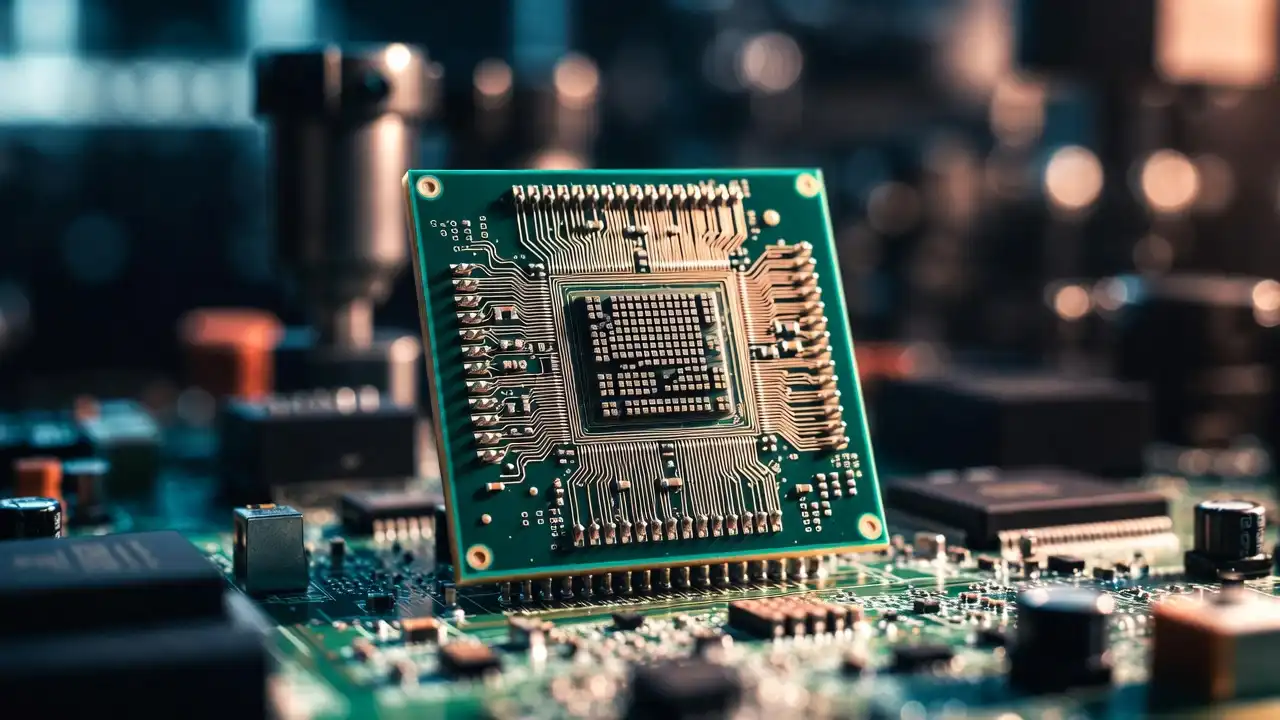
A group of four leading United States advanced technology corporations has committed a combined $2 billion (approximately 2.7 trillion won) in direct foreign investment into South Korea’s semiconductor, advanced materials, and clean energy industries. The multi-billion-dollar capital injection, formally confirmed by South Korea’s Ministry of Trade, Industry and Energy, establishes an expanded operational bridge connecting American technological innovation with South Korea’s world-leading microchip manufacturing and renewable infrastructure ecosystems.
The investment package targets foundational links across high-technology supply chains. Sponsoring projects spanning advanced semiconductor fabrication equipment, specialty chemical precursors, precision industrial materials, and offshore wind power development, the initiative strengthens the bilateral industrial alliance between Seoul and Washington. The commitments arrive as global technology conglomerates navigate accelerating demand for high-bandwidth memory chips to power artificial intelligence supercomputers while restructuring manufacturing networks to build resilience against international trade barriers and geopolitical supply disruptions.
South Korean Trade, Industry and Energy Minister Kim Jung-kwan confirmed the agreements following high-level bilateral investment ceremonies, emphasizing that the multi-billion-dollar commitment reflects deep, mutual institutional trust between the two allied nations. As South Korea executes national megaprojects to construct the world’s largest semiconductor mega-cluster in Gyeonggi Province and expands coastal renewable power generation to supply high-density industrial fabs, the influx of American capital provides essential engineering equipment and clean electricity to sustain the nation’s high-tech export engine.
A Major Transpacific Capital Influx Across Advanced Industries
The $2 billion investment commitment represents a significant strategic milestone in the ongoing realignment of global advanced manufacturing. Over recent years, international commerce has transitioned away from low-cost, single-source supply chains toward secure, friendshored industrial networks built among trusted geopolitical allies.
South Korea has established itself as the indispensable global center for memory semiconductor fabrication, producing more than 60% of the world’s dynamic random-access memory and over 90% of global High-Bandwidth Memory (HBM) architectures.
However, operating high-volume semiconductor fabrication plants requires steady access to specialized equipment, high-purity chemical precursors, and massive electrical baseload power.
The four American corporate investments address these exact physical requirements. By establishing local manufacturing plants, precision testing laboratories, and clean energy generation assets directly within South Korea, American suppliers can support domestic chip champions like Samsung Electronics and SK Hynix with zero shipping delays and seamless technical collaboration.
The bilateral partnership proves that cross-border investment is a two-way street. While South Korean conglomerates have deployed tens of billions of dollars to construct battery gigafactories and semiconductor packaging facilities inside the United States, American component manufacturers are expanding their physical footprint in South Korea to capture high-margin Asian demand.
Unpacking the $2 Billion Multi-Sector Investment Commitment
The $2 billion capital deployment is distributed across high-growth industrial sectors engineered to accelerate South Korea’s advanced technology transition. The Ministry of Trade, Industry and Energy structured the agreements to provide immediate economic spillovers across domestic manufacturing hubs.
The multi-sector capital package allocates funding across critical development tiers:
- Advanced Semiconductor Equipment: Constructing specialized manufacturing facilities and cleanroom assembly lines to produce cutting-edge deposition, etching, and wafer-handling machinery.
- High-Purity Advanced Materials: Deploying chemical synthesis reactors to produce ultra-pure process gases, photoresist additives, and advanced polishing slurries required for sub-2-nanometer wafer fabrication.
- Offshore Wind Power Generation: Financing the development, marine engineering, and turbine installation for commercial-scale offshore wind farms along South Korea’s coastal waters.
- Specialized Research and Development: Establishing dedicated research centers in South Korea to co-develop next-generation semiconductor packaging materials alongside local university engineers.
The comprehensive investment package will create thousands of specialized, high-wage engineering and technical jobs across provincial industrial zones, stimulating regional economic development outside the crowded Seoul metropolitan basin.
Trade Minister Kim Jung-kwan on Strengthening Bilateral Supply Chains
Following the formal signing ceremonies, Trade, Industry and Energy Minister Kim Jung-kwan addressed international business leaders, emphasizing the strategic importance of the transatlantic economic partnership. Minister Kim noted that the multi-billion-dollar commitment demonstrates that the commercial alliance between Seoul and Washington remains strong, durable, and anchored in shared democratic values.
Minister Kim highlighted the core strategic benefits of the agreements:
- The investments demonstrate that American high-tech leaders view South Korea as a stable, predictable, and technologically advanced manufacturing hub in Asia.
- Expanding domestic production of specialized American equipment and materials reduces South Korea’s reliance on vulnerable third-party import supply chains.
- The clean energy commitments will accelerate the decarbonization of South Korea’s industrial sector, helping domestic exporters comply with international carbon border regulations.
- The Ministry of Trade, Industry and Energy pledged to provide comprehensive administrative support, including expedited zoning approvals, customized tax incentives, and streamlined infrastructure connections.
Minister Kim affirmed that the South Korean government will continue to expand bilateral investment incentives, ensuring that multinational corporations can scale operations smoothly across the country.
Deepening Semiconductor and Advanced Materials Integration
The semiconductor industry forms the economic backbone of South Korea’s economy, generating hundreds of billions of dollars in annual export revenues and driving national technological innovation. However, the physical process of building a modern microchip requires thousands of individual manufacturing steps utilizing the world’s most sophisticated machinery and ultra-pure chemical materials.
Historically, South Korean chipmakers relied heavily on imported equipment and materials from the United States, Japan, and Europe.
The new investment agreements accelerate the localization of these critical supply chain inputs, allowing global equipment makers to manufacture and service tools directly adjacent to active fabrication cleanrooms in Pyeongtaek, Hwaseong, and Yongin.
This physical integration shortens development cycles, optimizes machine uptime, and provides domestic chipmakers with a decisive operational advantage over international rivals.
Expanding Semiconductor Equipment and Precision Tooling Cleanrooms
A major portion of the $2 billion American investment is dedicated to expanding precision semiconductor equipment manufacturing inside South Korea. Fabricating advanced memory chips and logic processors requires specialized machinery that operates with atomic-level precision under extreme vacuum conditions.
The incoming investments will fund high-tech machinery infrastructure:
- Building advanced cleanroom assembly plants to manufacture automated wafer transport systems, precision chemical vapor deposition tools, and high-selectivity plasma etching platforms.
- Establishing localized refurbishment and spare-parts manufacturing centers to reduce equipment maintenance turnaround times from weeks to hours.
- Integrating automated optical inspection and laser metrology tools to monitor wafer defect densities in real time during high-volume production runs.
- Training certified field service engineers to provide 24/7 technical support directly on-site at domestic semiconductor fabrication mega-complexes.
Localizing equipment assembly lowers capital expenditure overhead for domestic chipmakers, ensuring that newly constructed fabrication lines can achieve full commercial production yields rapidly.
Sourcing Advanced Materials and Specialty Precursor Chemicals
The second high-value technology tier supported by the investment package is the advanced materials and specialty chemicals sector. As semiconductor architectures shrink toward 2-nanometer and 1-nanometer dimensions, traditional chemical materials encounter physical limitations, requiring novel chemical formulations to prevent electrical leakage and signal degradation.
American materials innovators are establishing dedicated chemical synthesis facilities in South Korea:
- Producing ultra-high-purity electronic gases, including specialized fluorinated etching gases and atomic-layer deposition precursor molecules.
- Formulating advanced extreme ultraviolet photoresists and anti-reflective coatings tailored specifically for high-numerical-aperture lithography systems.
- Developing high-thermal-conductivity underfill materials and dielectric films required for 2.5D and 3D multi-chip heterogeneous packaging.
- Manufacturing specialized silicon carbide and gallium nitride wide-bandgap substrates for next-generation automotive power semiconductors.
Establishing local materials synthesis plants eliminates international shipping delays and protects domestic foundries from unexpected export restrictions or customs bottlenecks in third-party nations.
Direct Synergies with Samsung Electronics and SK Hynix HBM Roadmaps
The primary commercial beneficiaries of the expanded equipment and materials footprint are South Korea’s memory semiconductor champions, Samsung Electronics and SK Hynix. The two corporations are locked in an intense global race to supply high-bandwidth memory to leading artificial intelligence hardware designers like Nvidia and AMD.
The localized American investments provide direct technological synergies:
- Supplying the specialized through-silicon via etching tools required to drill millions of microscopic vertical interconnect holes through stacked dynamic random-access memory dies.
- Providing high-precision thermal compression and advanced hybrid bonding machinery to stack 12-high and 16-high memory dies in next-generation HBM4 architectures.
- Supplying low-loss dielectric packaging materials that dissipate thermal energy efficiently during continuous, multi-kilowatt artificial intelligence model training runs.
- Enabling collaborative, rapid prototyping where American equipment designers and South Korean chip architects co-design tool parameters in real time.
These collaborative synergies ensure that Samsung Electronics and SK Hynix maintain an insurmountable technological lead in the multi-billion-dollar artificial intelligence memory market.
Accelerating Clean Energy Infrastructure and Offshore Wind Development
Alongside semiconductor manufacturing, a substantial share of the $2 billion investment commitment is allocated to clean energy infrastructure, focusing specifically on utility-scale offshore wind power development. South Korea is navigating an ambitious industrial decarbonization roadmap, targeting a 40% reduction in national greenhouse gas emissions by 2030 and striving to achieve complete carbon neutrality by 2050.
Achieving these climate targets requires deploying massive volumes of zero-carbon electricity to power energy-intensive semiconductor cleanrooms, automotive assembly plants, and steel mills.
South Korea possesses exceptional offshore wind resources, particularly along its western and southern coastal waters, where steady oceanic winds provide predictable, high-capacity clean generation.
American clean energy developers and infrastructure funds are deploying capital to construct commercial offshore wind arrays that will feed clean electricity directly into the national power grid.
Deploying Advanced Wind Turbine Equipment and Grid Connections
The offshore wind projects funded under the investment package will deploy cutting-edge marine engineering and high-capacity wind turbine hardware. Constructing utility-scale wind farms in coastal waters requires specialized offshore installation vessels, heavy-lift cranes, and subsea high-voltage transmission cables.
The clean energy investment program focuses on several core infrastructure milestones:
- Installing modern 15-megawatt to 20-megawatt offshore wind turbines featuring composite rotor blades measuring over 100 meters in length.
- Constructing specialized offshore converter substations that collect electricity from dozens of turbines and convert it into high-voltage direct current for long-distance subsea transmission.
- Collaborating with domestic South Korean shipyards and marine engineering conglomerates to fabricate robust floating and fixed-bottom steel foundation jackets.
- Deploying dynamic submarine power cables to link coastal wind generation directly to high-demand industrial centers in Incheon and Gyeonggi Province.
These utility-scale projects will generate gigawatts of clean electricity, providing domestic manufacturers with verifiable renewable energy certificates to satisfy corporate clean-energy commitments.
Supporting South Korea’s Carbon Neutrality and Industrial Power Security
The expansion of offshore wind capacity provides vital structural support for South Korea’s industrial power security. Modern semiconductor fabrication complexes are voracious consumers of electrical power, with a single mega-cluster requiring gigawatts of continuous electrical baseload capacity.
Furthermore, international technology clients and European export markets are enforcing strict environmental sustainability standards, demanding that imported electronic components be manufactured using verified clean energy.
The addition of new offshore wind capacity delivers essential strategic benefits:
- Expanding the domestic supply of zero-emission electricity, allowing semiconductor manufacturers to execute long-term clean power purchase agreements.
- Reducing national reliance on expensive imported liquefied natural gas and coal, insulating the domestic economy from international commodity price shocks.
- Creating thousands of localized maritime engineering, port logistics, and turbine maintenance jobs in coastal communities like Ulsan, Yeosu, and Shinan.
- Enhancing power grid stability by pairing variable offshore wind generation with utility-scale battery energy storage systems.
By uniting clean energy generation with semiconductor manufacturing, South Korea is building a sustainable, low-carbon industrial ecosystem that enhances long-term export competitiveness.
Navigating Global Supply Chain Realignments and Trade Pressures
The $2 billion investment agreement unfolds against a backdrop of intensifying international trade friction, tariff protectionism, and geopolitical competition. The high-technology sector sits at the absolute center of national security policy, with major economic powers implementing domestic subsidies and export restrictions to protect strategic industries.
The United States government has enacted aggressive export controls through the Department of Commerce, restricting the transfer of advanced computing chips and semiconductor manufacturing tooling to strategic adversaries like China.
At the same time, the United States has enacted protective tariff frameworks designed to encourage global manufacturers to reshore production lines to North America.
Navigating this complex geopolitical landscape requires South Korea and the United States to maintain deep diplomatic coordination, ensuring that trade defense measures do not disrupt allied industrial supply chains.
Managing Semiconductor Export Controls and Tariff Protectionism
South Korean chipmakers maintain extensive manufacturing operations in mainland China, operating major memory fabrication plants in Wuxi and Xi’an. Navigating United States export controls requires continuous regulatory coordination to secure validated end-user authorizations and equipment upgrade exemptions.
The bilateral investment alliance helps stabilize these regulatory dynamics:
- Demonstrating that South Korea is actively investing capital and integrating supply chains with American corporate partners, reinforcing its status as a trusted technology ally.
- Facilitating transparent regulatory dialogues between the Ministry of Trade, Industry and Energy and the United States Bureau of Industry and Security.
- Providing domestic foundries with certified Western equipment and materials that comply fully with international trade and export control regulations.
- Accelerating the geographic diversification of South Korean manufacturing, ensuring that next-generation sub-2-nanometer and advanced HBM4 production lines are constructed within South Korea and the United States.
Maintaining total regulatory alignment with Washington protects South Korean semiconductor leaders from unexpected trade sanctions, ensuring continuous access to international markets.
The Broader $350 Billion Bilateral Investment Architecture
The $2 billion corporate investment package operates as part of a massive, multi-decade economic partnership between South Korea and the United States. Over recent years, the two nations have built one of the most active bilateral investment corridors in the world, with cumulative cross-border investment commitments approaching $350 billion.
The bilateral investment framework spans strategic economic sectors:
- South Korean automotive giants Hyundai Motor Group and Kia Corporation are investing billions of dollars to construct advanced electric vehicle and battery manufacturing campuses in Georgia and Alabama.
- South Korean battery champions LG Energy Solution, Samsung SDI, and SK On are deploying tens of billions of dollars in joint-venture battery gigafactories across Michigan, Indiana, Ohio, and Kentucky.
- Samsung Electronics is constructing a landmark $40 billion-plus advanced logic foundry and packaging ecosystem in Taylor, Texas, supported by direct grants under the United States CHIPS and Science Act.
- American technology titans Google, Amazon Web Services, and Microsoft are expanding multi-billion-dollar cloud computing and artificial intelligence data center clusters in South Korea.
This deep, reciprocal capital integration ensures that the economic prosperity of both nations remains permanently intertwined, creating an unbreakable commercial alliance that drives global technological progress.
Strategic Implications for the Asian High-Tech Manufacturing Landscape
The influx of $2 billion in American technology capital carries profound strategic implications for the broader Asian industrial landscape. As technological competition accelerates across the Asia-Pacific basin, nations are competing aggressively to attract high-value research, advanced packaging, and clean energy investments.
The expansion of American corporate manufacturing in South Korea reinforces the nation’s status as the premier high-tech manufacturing capital of East Asia.
By combining world-class domestic chip fabrication with American precision tooling and renewable infrastructure, South Korea is constructing an integrated technological ecosystem that will define the future of global hardware manufacturing.
Strengthening South Korea’s Position in the Global AI Hardware Matrix
The global artificial intelligence revolution has elevated physical hardware into the ultimate strategic asset. The software foundation models that power autonomous vehicles, scientific research, and enterprise automation depend entirely on physical semiconductor silicon fabricated in cleanrooms across East Asia.
The newly announced investments cement South Korea’s leadership across the complete hardware matrix:
- Securing priority domestic access to advanced American etching and deposition tools, allowing foundries to achieve high-volume manufacturing yields on complex 3D memory stacks.
- Establishing local chemical synthesis plants that guarantee a steady supply of high-purity process chemicals during global supply chain disruptions.
- Integrating domestic high-bandwidth memory with American logic accelerators, powering the next generation of generative artificial intelligence supercomputers.
- Fostering collaborative research partnerships between American software engineers and South Korean materials scientists to design custom silicon architectures for autonomous robotics and smart mobility.
This integrated hardware capability ensures that South Korea remains an indispensable pillar of the global digital economy, capturing substantial economic value as artificial intelligence scales across global industries.
The Long-Term Horizon for Transatlantic and Pacific Industrial Alliances
Looking toward the end of the decade, the collaboration between South Korea and the United States will serve as an enduring model for international industrial partnerships. The era of transactional, fragmented trade is giving way to deep, institutionalized co-development among democratic allies.
Key structural trends that will define the future of the bilateral industrial alliance include:
- Joint Quantum and Semiconductor R&D: Establishing shared research laboratories to pioneer room-temperature superconductors, two-dimensional materials, and quantum computing processors.
- Resilient Critical Mineral Supply Chains: Coordinating international investments across Australia, Canada, and Latin America to secure diverse, refined battery and semiconductor minerals outside non-market monopolies.
- Standardized Clean Energy Certification: Developing interoperable cross-border carbon accounting standards to ensure that clean-energy-manufactured goods move duty-free across allied trade borders.
- Advanced Technical Workforce Exchanges: Expanding specialized engineering fellowship programs to train thousands of American and South Korean technicians in advanced cleanroom operations and marine wind engineering.
By uniting state strategic foresight with private-sector entrepreneurial dynamism, South Korea and the United States are building an enduring technological foundation that will power economic growth, protect national security, and drive sustainable innovation for generations to come.
The announcement that four leading United States corporations are investing $2 billion across South Korea’s semiconductor, advanced materials, and clean energy sectors marks a defining milestone in the global technology landscape. By localizing precision equipment manufacturing, establishing domestic synthesis plants for ultra-pure process chemicals, and funding utility-scale offshore wind generation, this multi-billion-dollar capital injection directly reinforces South Korea’s position as the world’s premier memory semiconductor powerhouse. Supported by strong bilateral trust and aligned with broader transpacific supply chain realignments, the partnership between Seoul and Washington demonstrates how international industrial alliances can overcome geopolitical volatility and power grid constraints. As the global demand for artificial intelligence hardware and clean baseload electricity surges, this landmark investment ensures that South Korea will continue to lead the world in advanced manufacturing, powering the technologies that will define the future of the global economy.






