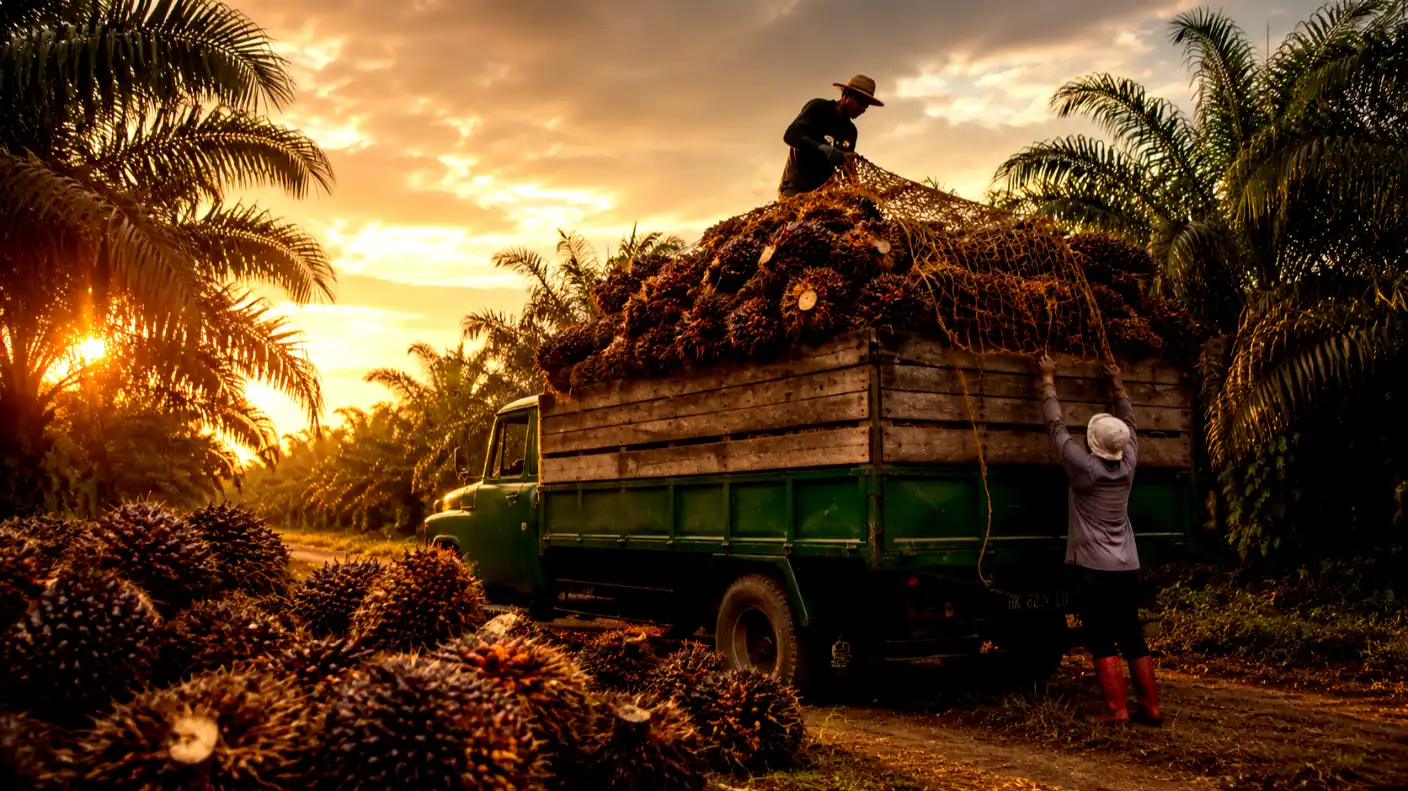
Benchmark agricultural commodity futures experienced downward pressure as the global edible oil complex adjusted to shifting inventory data in Southeast Asia. Crude palm oil futures trading on the Bursa Malaysia Derivatives Exchange retreated toward 4,961 ringgit, or roughly $1,220 per metric ton, extending a multi-session pullback. Commercial commodity traders and institutional fund managers took profits ahead of comprehensive supply and demand data from the Malaysian Palm Oil Board.
The market downturn reflects an expanding supply buffer in Malaysia, the world’s second-largest producer of palm oil. Monthly industrial estimates indicate that domestic inventories climbed toward five-month highs as plantation harvesting entered its seasonal peak-production cycle. Simultaneously, international export shipments from Malaysian maritime terminals dropped between 6.5% and 14.9%, weighed down by severe port congestion in India and cautious buying from industrial food processors in China.
While softening export demand and lower prices for competing soybean oil created near-term headwinds, the broader vegetable oil market retains structural price support. Escalating geopolitical tensions in the Middle East pushed global crude oil benchmarks toward $100 per barrel, reinforcing the economic appeal of blending palm oil into renewable biodiesel. Furthermore, aggressive biofuel mandates in neighboring Indonesia and emerging dry weather patterns across Southeast Asian growing belts continue to set a firm long-term price floor.
Anatomy of the Near-Term Inventory Build in Malaysia
The recent price retreat is primarily a reaction to physical inventory accumulation in Malaysian storage facilities and transit terminals. When physical supplies expand faster than international buyers can absorb them, futures contracts naturally adjust downward to encourage commercial consumption.
Seasonal Peak Production Lifting Output Across Plantations
Oil palm estates across Peninsular Malaysia, Sabah, and Sarawak are operating in the middle of their annual high-yield biological production cycle. Favorable seasonal conditions and improved field labor availability allowed plantation operators to boost crude palm oil production by 9.4% month on month, lifting monthly output to 1.79 million metric tons.
This seasonal surge in fresh fruit bunch harvesting expanded national stockpiles to approximately 2.63 million metric tons. Upstream plantation companies have reported steady extraction rates at processing mills, with oil extraction ratios hovering around 20%. Because crude palm oil is a perishable commodity that requires steady refinery processing and storage management, storage tank utilization at major export harbors like Port Klang and Pasir Gudang climbed steadily. This growing physical supply prompted merchant traders to liquidate front-month speculative long positions.
Cargo Surveyor Estimates Reveal Weaker Monthly Shipments
While production expanded according to seasonal expectations, international outbound shipments failed to keep pace. Independent maritime cargo surveyors, including Intertek Testing Services and AmSpec Agri Malaysia, reported that outbound palm oil shipments dropped significantly during the latest tracking period.
Export volumes fell between 6.5% and 14.9% compared to the prior month, reflecting reduced spot purchasing from price-sensitive developing markets. International buyers pulled back on new import orders after benchmark futures hovered near psychological resistance at 5,000 ringgit per ton for several consecutive weeks. When destination buyers saw freight costs rise and storage tanks fill up at home, they delayed purchasing additional cargoes, leaving more physical oil sitting in domestic Malaysian storage tanks.
Major Demand Headwinds Across Asian Import Destinations
The slowdown in Malaysian export velocity stems directly from logistical bottlenecks and inventory dynamics across the world’s largest edible oil consumption hubs.
Indian Port Congestion Delays Tanker Discharges
India represents the world’s largest importer of palm oil, purchasing millions of tons annually to satisfy domestic culinary demand and institutional food manufacturing. However, heavy vegetable oil buying in the preceding months overwhelmed Indian maritime infrastructure.
Major western and southern Indian ports—including Kandla, Mumbai, and Chennai—experienced severe maritime traffic jams. Cargo vessels carrying crude palm oil, soybean oil, and sunflower oil faced unloading delays of up to 10 days as shoreside storage tanks overflowed. With domestic Indian refiners holding large onshore inventories and working through severe storage constraints, wholesale buyers temporarily paused fresh import bookings from Southeast Asian exporters. This temporary import freeze removed a critical source of daily buying support from the Bursa Malaysia order books.
Chinese Edible Oil Stockpiling and Softening Domestic Consumption
China ranks as the second-largest destination market for palm oil, utilizing the commodity for industrial baking, instant noodle manufacturing, commercial frying, and chemical oleochemical synthesis. However, Chinese retail demand has shown signs of cautious consumer behavior.
Domestic commercial crushers in China have maintained high operating rates, processing large volumes of imported soybeans and accumulating abundant supplies of domestic soybean oil. The resulting availability of low-cost domestic soy oil reduced the pricing premium that palm oil typically commands in commercial food formulation. Chinese trading houses operated on a hand-to-mouth procurement strategy, avoiding large forward commitments and buying only the minimum spot volumes required to meet short-term manufacturing schedules.
Cross-Commodity Pressure and the Biofuel Cushion
The global edible oil complex is deeply interconnected. Price swings in alternative vegetable oils and energy commodities directly influence palm oil valuation on international exchanges.
Soyoil Declines on the Chicago and Dalian Exchanges
Palm oil competes directly with soybean oil, sunflower oil, and rapeseed oil for market share across global food and industrial sectors. When rival oils experience price drops, food manufacturers quickly reformulate their recipes to substitute cheaper alternative feedstocks.
On the Dalian Commodity Exchange, the most active soybean oil futures contract fell 1.15%, while its domestic palm oil contract dropped 1.39%. Similarly, soybean oil futures on the Chicago Board of Trade edged lower by 0.07%, reflecting expectations of a massive South American soybean harvest. The decline in competing vegetable oil prices placed direct downward pressure on Malaysian palm oil futures, preventing traders from bidding the market above recent historical highs.
Surging Crude Oil Prices Bolster Biodiesel Blending Economics
Despite downward pressure from rival edible oils, palm oil prices found strong fundamental support from the international energy complex. Escalating military tensions and supply concerns in the Middle East pushed Brent crude futures toward $100 per barrel, lifting global energy benchmarks.
Higher petroleum prices dramatically improve the economic viability of agricultural biofuels. When fossil diesel prices rise, blending palm-derived fatty acid methyl ester into the transportation fuel pool becomes significantly more profitable for commercial blenders and national governments. The rising cost of traditional diesel prevents vegetable oil prices from collapsing, as energy markets effectively absorb excess agricultural supplies whenever edible oil prices fall to an attractive energy-parity discount.
Indonesia’s Policy Mandates and Regional Supply Squeeze
While Malaysia grapples with temporary inventory accumulation, market dynamics across the Malacca Strait in Indonesia tell a very different story. Indonesia, the world’s largest palm oil producer, is systematically restricting the volume of raw oil available for international export.
B40 and B50 National Biodiesel Mandates Consume Millions of Liters
The Indonesian government is executing an aggressive national energy self-sufficiency program by expanding mandatory domestic biodiesel blending. The country has successfully implemented its nationwide B40 mandate—requiring diesel fuel to contain 40% palm-based biofuel—and is running pilot operations to transition toward a B50 blend.
Official government data shows that Indonesia consumed 10.7 million kiloliters of palm oil-based biodiesel during the first eight months of the year alone. By diverting millions of tons of crude palm oil away from export jetties directly into domestic fuel refineries, Indonesia has significantly reduced its national export surplus. This domestic consumption acts as a structural supply drain, ensuring that global edible oil markets face a tight supply balance regardless of short-term inventory builds in Malaysia.
Tightening State Export Controls by the World’s Largest Producer
In addition to ambitious biofuel blending mandates, Indonesian policymakers have introduced stricter technical regulations and administrative monitoring over primary natural resource exports. Under updated presidential directives, the central government has tightened oversight on export permits and domestic market obligation quotas.
Indonesian palm oil producers must supply a specific portion of their total output to the domestic cooking oil market at government-capped prices before receiving commercial export clearance. These regulatory requirements increase compliance friction and slow down outbound shipment approvals from Indonesian ports. As Indonesian export availability tightens, international buyers must inevitably turn back to Malaysia to meet their baseline import requirements, limiting the potential downside for Malaysian benchmark prices.
Long-Term Climate Risks and Market Outlook
Looking beyond short-term inventory statistics, the long-term price trajectory of the palm oil sector will depend heavily on meteorological developments and plantation operating economics.
Emerging El Niño Weather Patterns Threaten Future Crop Yields
Meteorological agencies have warned of emerging dry conditions and intensifying El Niño weather patterns across Southeast Asia. Extended periods of below-average rainfall create significant soil moisture deficits across major growing regions in Sumatra, Kalimantan, and Peninsular Malaysia.
While rainfall deficits do not immediately reduce fresh fruit bunch production due to a biological lag of nine to twelve months, severe dry spells permanently affect flower development and fruit formation. Agronomists note that prolonged heatwaves and regional haze from forest fires could lead to a sharp contraction in regional palm oil yields over the next production cycle. Forward-looking commodity funds are factoring this supply risk into their models, accumulating long-dated futures contracts to hedge against potential harvest shortfalls.
Structural Price Forecasts and Plantation Sector Margins
Independent agricultural equity research houses remain generally bullish on the plantation sector. Analysts maintain full-year average crude palm oil price forecasts between 4,400 ringgit and 4,500 ringgit per metric ton.
While seasonally strong harvest yields and expanding port stockpiles may keep spot prices range-bound between 4,800 and 5,100 ringgit per ton over the next few months, fundamental production costs will prevent steep market corrections. Upstream plantation companies face elevated operational expenditures, including higher imported fertilizer costs, increased minimum wage standards, and rising shipping freight charges. Upstream producers with modern, high-yielding crop profiles and strong balance sheets remain well-positioned to generate robust operating cash flows in this pricing environment.
The Future Trajectory of Global Edible Oil Trade
The current dip in palm oil futures highlights the delicate balance between short-term physical logistics and long-term structural supply constraints. While expanding Malaysian inventories and temporary shipping bottlenecks at Indian ports have triggered a necessary market correction, the broader fundamentals of the global vegetable oil market remain remarkably resilient.
As global populations expand, industrial food processing expands across emerging economies, and nations accelerate the adoption of clean biofuels to meet decarbonization targets, baseline demand for cost-effective vegetable oils will continue to climb. Furthermore, strict environmental sustainability regulations, such as the European Union Deforestation Regulation, are limiting the physical expansion of new oil palm acreage worldwide.
With limited new land available for plantation development, future supply growth must come entirely from agricultural yield improvements and operational efficiency. In this tightly balanced global environment, any unexpected weather disruption or sudden acceleration in biofuel mandates could quickly erase surplus stockpiles, setting the stage for the next major upward rally in agricultural commodity markets.