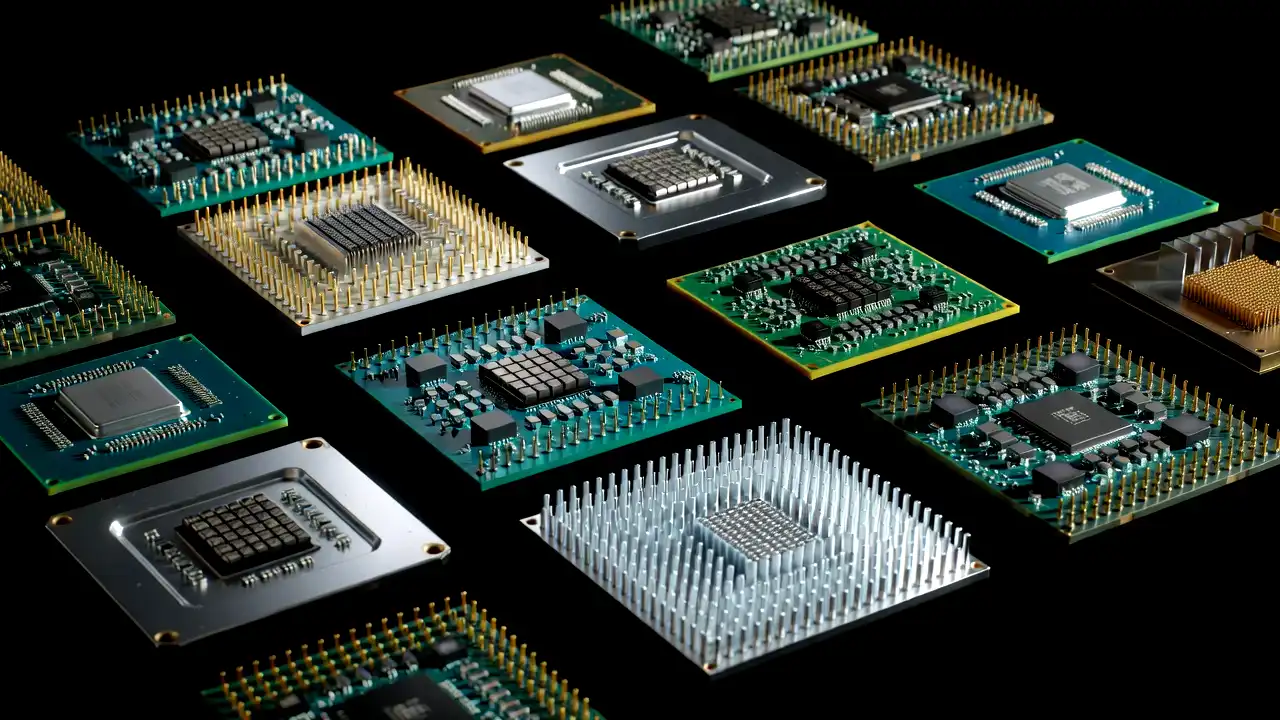
The global technology sector is experiencing its most severe, highly volatile financial correction of the decade. For the past several years, the semiconductor industry operated as the undisputed king of the stock market, delivering historic, multi-bagger returns that propelled the valuations of major hardware manufacturers to astronomical heights. This legendary bull run, fueled by the global artificial intelligence boom, reached an absolute peak in late June. Today, that entire speculative edifice is undergoing a massive, highly disruptive wind-down, erasing trillions of dollars in market value and pushing the sector to the doorstep of a technical bear market.
The scale of the devastation is laid bare in the benchmark PHLX Semiconductor Sector Index, commonly known as the SOX. The index, which tracks the thirty largest U.S.-traded companies involved in the design, distribution, manufacture, and sale of semiconductors, has plummeted by nearly 20 percent from its historic record high on June 22. A 20 percent decline from a previous peak is the universally recognized definition of a technical bear market, a threshold that the SOX reached during a brutal, high-volume trading session.
This rapid collapse represents a massive, highly painful reversal for some of the most popular, crowded momentum strategies on Wall Street. Over the past month, the persistent decline has wiped out an estimated $3.3 trillion in market value from semiconductor and technology stocks globally, sending shockwaves through international equity markets, tripping exchange-level circuit breakers, and forcing highly leveraged funds into a frantic scramble to deleverage their portfolios. This massive restructuring of risk indicates that the artificial intelligence trade has entered a challenging, highly complex new era.
The Great Silicon Washout: Inside the Historic Three-Trillion-Dollar Chip Market Correction
To understand how a market of this magnitude can collapse so rapidly, investors must look at the nature of the quantitative trading strategies that drove the tech sector’s historic rise. Throughout the first half of the year, semiconductor stocks were essentially the only trade that mattered on Wall Street. High-flying stocks like Nvidia, Micron Technology, Broadcom, and Advanced Micro Devices experienced uninterrupted, vertical climbs, routinely posting double-digit weekly gains as retail and institutional investors piled into the momentum trade.
This consistent outperformance created a powerful, highly dangerous feedback loop. Quantitative mutual funds and trend-following hedge funds employ algorithms that automatically buy the best-performing stocks in the market to ride their momentum. As these automated buy orders poured in, they pushed the share prices even higher, attracting even more momentum-chasing capital.
By the end of June, the semiconductor sector had become incredibly crowded, with valuations detached from traditional fundamental metrics like price-to-sales ratios, which frequently exceeded 100 times trailing sales for certain niche equipment suppliers. When a market becomes this crowded and highly leveraged, any minor shift in the macroeconomic or regulatory environment can trigger a catastrophic, synchronized liquidation as the algorithms simultaneously rush to lock in profits, transforming a healthy market correction into a massive, three-trillion-dollar washout.
The Five Catalysts Fueling the Semiconductor Collapse
The sudden collapse of the semiconductor market is not the result of a single, isolated corporate failure. It is the product of a highly complex, multi-layered perfect storm that has seen five distinct, highly disruptive macroeconomic, regulatory, and corporate catalysts collide at the same moment.
These five catalysts have systematically undermined the core assumptions that supported the technology bull market, forcing global investors to dramatically re-evaluate their exposure to the semiconductor sector and de-leverage their portfolios at an unprecedented speed.
The Monetization Crisis: Wall Street Questions the AI Spend Rate
The first and most fundamental catalyst is a growing crisis of faith regarding the actual, real-world monetization of artificial intelligence. For over two years, major technology giants—hyperscalers like Microsoft, Alphabet, Meta Platforms, and Amazon—have spent unprecedented sums of capital constructing massive data centers, purchasing advanced graphics processing units, and leasing high-capacity cloud servers.
Wall Street was initially highly supportive of this capital expenditure boom, assuming that the physical infrastructure would rapidly translate into high-margin software revenues.
By the middle of the year, that timeline assumption faced severe skepticism. Investors began to look closely at corporate balance sheets and realized that while the hardware suppliers are making billions of dollars, the software companies writing the checks are struggling to show a meaningful return on their investment.
Microsoft’s massive capital expenditure of $65 billion stands in stark contrast to its $37 billion in realized, annualized artificial intelligence revenues, while Meta’s rising spending forecasts continue to squeeze its operating margins.
This timing mismatch has led prominent analysts to warn that we may be entering an era of industrial overcapacity, prompting institutional investors to trim their high-multiple technology holdings before the hardware buying cycle inevitably slows down.
The Transpacific Regulatory Crackdown: South Korea’s Antitrust Raids and US Patent Probes
The second catalyst is a highly disruptive, coordinated regulatory crackdown on both sides of the Pacific, which has shattered investor confidence in the critical semiconductor supply chain.
The first major blow landed in Seoul, when South Korean prosecutors conducted surprise antitrust raids on the local offices of major memory interface chip suppliers, including China’s Montage Technology, Japan’s Renesas, and U.S.-based Rambus, over allegations of price-fixing.
Only twenty-four hours later, the U.S. International Trade Commission announced a major, highly aggressive Section 337 investigation into Samsung Electronics, following a patent infringement complaint filed by California-based developer Netlist.
Because Samsung, SK Hynix, and Micron operate a tight global oligopoly over the memory market, these simultaneous regulatory investigations in Washington and Seoul threaten to disrupt the delivery of the high-speed DDR5 and High Bandwidth Memory chips required to power AI servers.
The prospect of supply chain blockades, massive antitrust fines, and potential import bans has sent a wave of panic through the semiconductor sector, forcing investors to dump their holdings at any price to avoid being caught in a regulatory crossfire.
The Loophole Clampdown: Nvidia’s Asian Whitelist Purge
The third major catalyst is an aggressive escalation of the ongoing technological trade war between the United States and China. As Washington attempts to block Chinese military and technology firms from accessing advanced American computing capabilities, the U.S. government has systematically closed several major regulatory loopholes, including the “overseas subsidiary” loophole that allowed Chinese firms to export chips to neutral third countries like Singapore and Malaysia.
In response to this pressure, Nvidia executed a sweeping, highly disruptive purge of its authorized sales network across Asia.
The company introduced a highly restrictive, corporate-monitored “whitelist” system, more than halving its authorized customer list in Singapore, Malaysia, and Japan.
This regulatory crackdown has frozen the broader regional chip trade, cutting off dozens of emerging cloud providers, distributors, and startup developers from accessing advanced graphics processing units and high-performance server systems, depriving Nvidia of a massive source of high-margin regional revenue.
The Geopolitical Energy Shock and the Return of Hawkish Fed Fears
The fourth catalyst is a highly challenging macroeconomic environment characterized by rising energy costs and persistent, energy-driven inflationary pressures. The fragile geopolitical balance in the Middle East collapsed entirely after a series of military airstrikes disrupted shipping corridors, forcing Brent crude oil prices back above $85 per barrel.
This energy shock has direct, highly negative consequences for global monetary policy.
Higher oil and gasoline prices act as a regressive tax on consumer income while pushing core inflation indicators higher, complicating the Federal Reserve’s policy outlook.
Several hawkish regional Federal Reserve presidents have issued warnings, suggesting that more tightening or a prolonged period of elevated interest rates may be required if price levels do not move steadily toward the 2% target.
This hawkish tone has driven real U.S. Treasury yields higher, with the 10-year yield trading near 4.569%, making high-multiple, non-yielding technology stocks significantly less attractive to institutional allocators.
Disappointing Corporate Releases and the Deleveraging of Momentum Trades
The final, highly damaging catalyst is a series of soft, disappointing corporate earnings and guidance releases from leading tech bellwethers. While ASML Holding NV reported a blowout second-quarter earnings performance, its shares faced a rapid, highly volatile “sell-the-news” profit-taking reversal as investors focused on growing geopolitical risks.
This bearish sentiment was compounded after the close of the market when streaming giant Netflix reported its quarterly results.
While its numbers were healthy, its subsequent stock-market reception pushed the shares almost 9% lower in after-hours trading, raising fears that consumer digital demand has hit a natural ceiling.
This series of disappointments triggered a massive, self-initiated deleveraging process across the entire financial system.
In South Korea, total assets under management across leveraged exchange-traded funds declined by a staggering 31 percent, falling from a peak of KRW 4.8 trillion to KRW 3.3 trillion, as quantitative funds rushed to cover their losses, liquidate their positions, and meet margin calls, creating a powerful, downward spiral that has worsened the decline across all global markets.
The Pain Trade: How the Long-Chips, Short-Hyperscaler Strategy Backfired
The severity of the current semiconductor collapse is being heavily amplified by the crowded nature of the tech trade before the correction. Throughout the first half of the year, a highly popular, near-universal strategy among hedge funds and quantitative mutual funds was to take a massive “long” position in high-flying semiconductor stocks while being “short” the mega-cap hyperscalers who were paying the bills.
The logic behind this trade seemed flawless on paper: the hyperscalers were locked in a highly competitive arms race, forcing them to spend billions of dollars on hardware regardless of whether their own software businesses were profitable.
Therefore, the chipmakers were guaranteed to capture the cash first, making them a much safer, higher-growth bet.
This crowded position has backfired catastrophically, transforming into what Wall Street traders call a “pain trade.”
As the regulatory crackdowns, energy shocks, and monetization fears hit the market, the momentum strategies that had generated historic returns suddenly reversed direction.
Hedge funds that had used high leverage to maximize their long semiconductor positions were hit with massive margin calls, forcing them to dump their chip stocks at any price to cover their liabilities.
Christian Mueller-Glissmann, the head of asset allocation research at Goldman Sachs, described the scale of this unwinding as one of the biggest momentum sell-offs on record, noting that the market has experienced three consecutive weeks of absolute washout.
Re-evaluating the Future of the Semiconductor Supercycle
As the benchmark semiconductor index hovers on the absolute doorstep of a technical bear market, the primary task facing global investors and technology analysts is to separate the short-term market noise from the long-term structural realities of the industry. The massive, three-trillion-dollar wipeout has undoubtedly been a painful, highly disruptive event, but it does not mean that the structural demand for advanced computing hardware is dead.
The global economy is entering a permanent new era defined by digital automation, sovereign resource nationalism, and the rapid deployment of artificial intelligence across all sectors.
To power this transition, the world will continue to require an extraordinary, ever-expanding volume of advanced logic processors, high-bandwidth memory chips, and high-performance networking systems.
The current correction is not a sign of technological obsolescence; rather, it is a healthy, necessary “mid-cycle reset” designed to wash out speculative leverage, deflate stretched valuation multiples, and force technology companies to transition from promise-driven hype to strict, numbers-driven financial discipline.
Over the coming months, as the market navigates the regulatory investigations in South Korea, the patent disputes in Washington, and the high-stakes corporate earnings releases of the summer, the semiconductor sector will slowly establish a stable, more sustainable floor.
The companies that survive and prosper in this new, more disciplined environment will be those that possess robust balance sheets, secure component supply lines, and real-world pricing power.
The era of easy, momentum-driven technology gains is over, and the era of the disciplined, value-focused hardware investor has officially begun, ensuring that the critical algorithms and advanced silicon powering the future remain anchored in a secure, stable, and highly resilient global economy.