

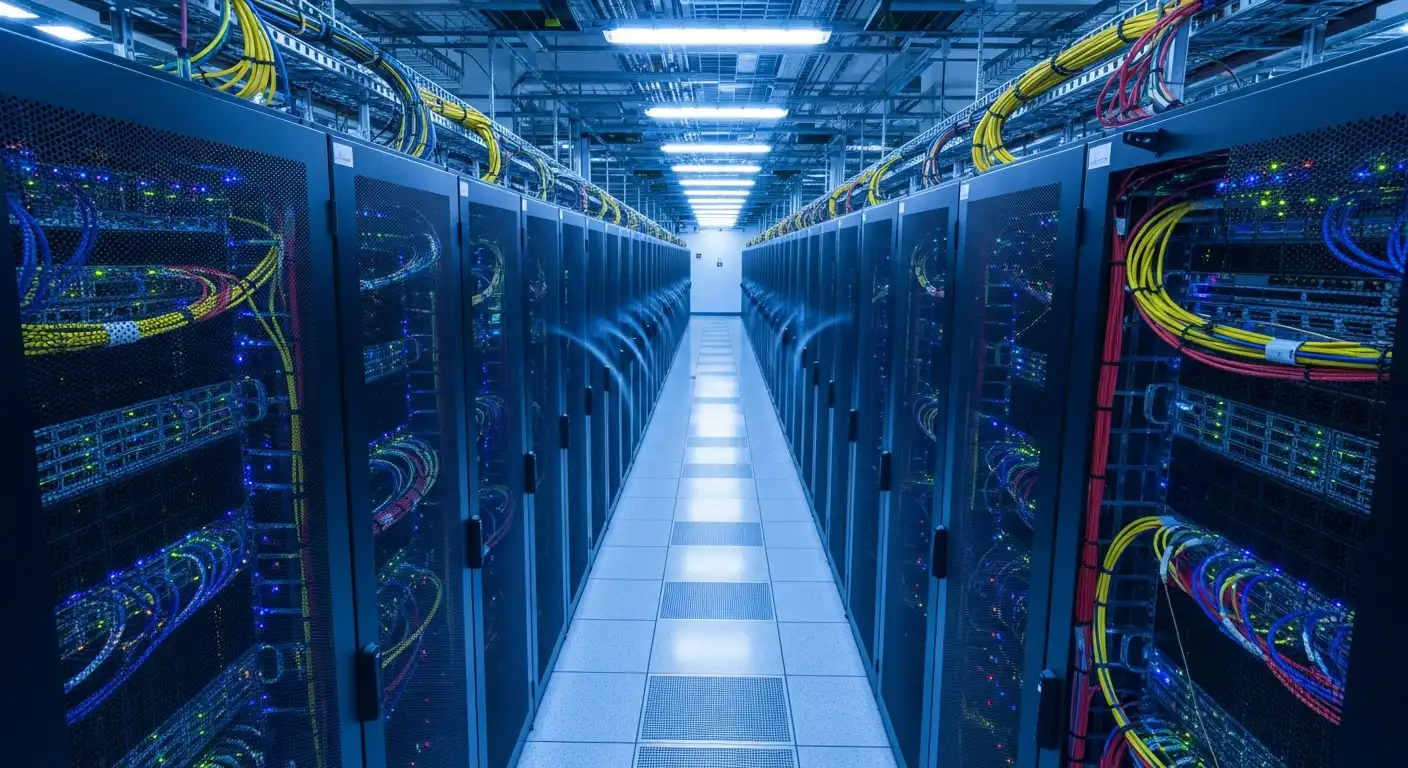
The global digital infrastructure market is experiencing a massive, highly disruptive realignment. In a historic corporate milestone that completely redefines the relationship between cryptocurrency mining and high-performance computing, Hut 8 Corp. announced that it has signed a massive, long-term $9.8 billion lease agreement. The transaction, signed with a top-tier, unnamed artificial intelligence cloud developer, will fully commercialize the company’s newly constructed 215-megawatt data center campus in West Texas, marking one of the largest infrastructure contracts ever finalized in the technology sector.
The announcement of this blockbuster deal, recently on a Monday in mid-July, triggered an immediate, highly celebratory reaction across the financial markets. Shares of Hut 8, which trade on the Nasdaq under the ticker symbol HUT, surged by more than 28 percent in high-volume trading, pushing the stock close to its 52-week high. The market’s reaction is a powerful, numbers-driven validation of the company’s “miner-to-AI-landlord” strategy. By converting a massive, grid-connected power pipeline originally built for bitcoin mining into a state-of-the-art artificial intelligence hosting facility, Hut 8 has unlocked an extraordinary new source of highly predictable, high-margin recurring cash flow.
For the broader digital asset and technology industries, this $9.8 billion transaction is a watershed event. It proves that the physical assets owned by cryptocurrency miners—specifically their hard-to-secure, high-voltage electrical grid connections and massive real estate holdings—have become some of the most highly coveted properties in the global economy. As the artificial intelligence boom continues to outrun the capacity of traditional public utilities, these power-rich locations are serving as the primary, indispensable foundations supporting the next generation of global computing.
The Miner-to-AI-Landlord Pivot: A Watershed Moment for Digital Infrastructure
To understand why the proposed lease has generated such immense market enthusiasm, investors must analyze the changing economics of the digital asset mining sector. Historically, cryptocurrency mining was a highly cyclical, volatile business. Companies spent billions of dollars purchasing specialized mining computers, building out factory floors, and securing cheap electricity. When the price of Bitcoin soared, they generated massive profits; when the market corrected, their revenues collapsed, often forcing them to sell off their accumulated coin reserves at a steep loss to cover their operational overheads.
The financial pressure on these traditional mining operations reached a boiling point following the quadrennial “halving” event, which cut the daily block reward issued to miners in half.
Faced with halved revenues and rising electricity prices, many mid-tier and inefficient miners were forced to shut down their machines entirely, triggering a massive consolidation of the industry.
Forward-thinking operators, however, recognized a much more lucrative alternative. They realized that the high-voltage electrical substations, transmission lines, and land they owned were precisely the physical assets that the artificial intelligence industry was desperately scrambling to secure.
By pivoting from speculative coin creation to long-term infrastructure hosting, companies like Hut 8 are completely changing their risk profiles.
A 15-year lease delivering approximately $653 million in annual recurring revenue transforms the company from a high-risk cryptocurrency proxy into a highly stable, investment-grade utility.
This predictable income stream allows the company to protect its cash flows, comfortably fund its own technology research, and secure low-interest institutional debt, proving that in the digital age, owning the physical power lines is far more valuable than chasing volatile digital tokens.
Shifting the Cash Flow Profile Away from Crypto Volatility
The long-term, fifteen-year term of the lease represents a major financial stabilizer for Hut 8. In previous years, the company’s quarterly earnings reports were highly unpredictable, swinging wildly based on the spot price of Bitcoin and the fluctuating hashrate of the global network.
The new agreement eliminates this volatility for the West Texas facility.
The $653 million in annual payments will be delivered in steady, reliable monthly installments, creating a highly predictable cash-flow engine that can easily support the company’s broader operational growth.
This financial stability is highly attractive to conservative institutional investors, pension funds, and wealth managers, who historically avoided the cryptocurrency sector due to its extreme price swings but are highly eager to invest in the physical infrastructure of the artificial intelligence boom.
The Valuation Disconnect: Why Wall Street Rewarded the Deal
The stock market’s rapid, 28 percent upward re-rating of Hut 8’s shares is a direct reflection of a massive valuation disconnect. While traditional cryptocurrency mining stocks trade at highly depressed valuation multiples due to their cyclical earnings risk, pure-play data center operators like Equinix and Digital Realty command premium, double-digit multiples based on their reliable, recurring cash flows.
By securing a long-term, $9.8 billion lease with a top-tier AI developer, Hut 8 has proved to the market that its physical assets are comparable in value and profitability to those of the major data center REITs.
This realization is driving a significant, long-term re-rating of the entire sector, as investors realize that buying undervalued mining stocks with massive, grid-connected power pipelines is actually one of the most efficient, low-cost ways to build exposure to the physical infrastructure of the AI boom.
The West Texas Powerhouse: Inside the Two-Hundred-Fifteen Megawatt Campus
The physical asset at the heart of this historic transaction is a newly constructed, state-of-the-art data center campus located in West Texas. The facility, which features a fully active, grid-connected power capacity of 215 megawatts, was originally designed to serve as one of the country’s most powerful, high-density bitcoin mining installations.
To support the transition to artificial intelligence hosting, the campus is undergoing a massive, highly complex engineering overhaul.
While cryptocurrency mining machines can operate in simple, uninsulated industrial sheds utilizing basic air-cooling systems, advanced artificial intelligence accelerators generate extraordinary thermal loads that require a much more sophisticated, liquid-cooled cleanroom environment.
The $9.8 billion lease will fund these extensive structural upgrades, outfitting the West Texas campus with advanced liquid-to-air cooling loops, high-capacity backup generators, and robust physical security systems to meet the highest enterprise standards.
The Strategic Advantage of Texas Grid Interconnections
The choice of West Texas as the site for this massive computing hub is a masterpiece of strategic location selection. The state of Texas operates its own, largely independent electrical grid managed by the Electric Reliability Council of Texas, commonly known as ERCOT.
The ERCOT grid offers unique, highly valuable benefits for high-capacity data center operators:
- Abundant Clean Energy: West Texas is home to some of the largest solar and wind farms in the country, providing data center operators with immediate access to cheap, zero-emission electricity.
- Flexible Regulatory Frameworks: The Texas regulatory environment is highly supportive of infrastructure development, allowing companies to build and connect new facilities faster than almost any other region in North America.
- Behind-the-Meter Power Solutions: The state’s energy laws allow developers to build specialized, on-site generation systems directly connected to the data center, bypassing the bottlenecks of the public transmission grid.
By building its 215-megawatt campus in this resource-rich region, Hut 8 has secured a massive, long-term operational advantage, allowing its tenant to run their high-power artificial intelligence servers with maximum energy efficiency and absolute grid reliability.
Solving the AI Power Bottleneck
The primary bottleneck holding back the global deployment of artificial intelligence is not chip design or software development; it is power.
As technology giants race to train next-generation models, their immense demand for electricity is rapidly exhausting the capacity of regional utility grids, with wait times to secure new, high-power grid connections stretching to over five years in major technology corridors.
This severe power shortage has turned Hut 8’s pre-existing, fully grid-connected 215-megawatt capacity into an incredibly valuable commodity.
Because the West Texas campus already possesses the physical transformers, high-voltage transmission lines, and approved utility interconnection agreements, the AI developer can begin installing its server racks immediately, bypassing years of regulatory delays.
This rapid time-to-market is worth a massive premium to tech companies locked in an existential race against their competitors, allowing Hut 8 to command a highly lucrative, multi-billion-dollar price tag for its physical power assets.
The Economics of the Lease: Low Risk, High-Margin Revenue
The financial structure of the $9.8 billion lease is designed to minimize risk for Hut 8 while maximizing its long-term profit margins. The agreement utilizes a highly sophisticated, “triple-net” hosting model that has become the gold standard of the digital infrastructure sector.
Under this model, the unnamed AI cloud developer is responsible for providing, installing, and maintaining its own expensive, high-performance computing hardware, including the advanced graphics processing units, server racks, and network switches.
Hut 8’s operational role is strictly limited to managing the physical facility, securing the required electrical power, maintaining the advanced cooling systems, and providing round-the-clock physical security.
This division of labor is highly beneficial for Hut 8.
The company does not have to worry about the rapid, highly expensive technological obsolescence of the computer chips, which must be upgraded every three to five years at a cost of billions of dollars.
Instead, the company operates as a pure infrastructure landlord, collecting a steady, low-risk leasing fee while leaving the high capital expenditures and technology risks entirely on the shoulders of the tenant, ensuring that its massive $9.8 billion revenue stream remains highly profitable and secure under all market conditions.
Comparing the Giants: Hut 8 vs. Core Scientific and TeraWulf
The successful execution of the West Texas lease has completely redefined the competitive dynamics of the miner-to-AI sector. While several other major digital asset infrastructure companies have announced similar pivots over the past year, the sheer scale of Hut 8’s $9.8 billion agreement has set a new valuation ceiling for the entire industry.
To see the broader pattern, investors only need to compare the major deals:
- Hut 8 Corp. (HUT): Signed a massive, 15-year, $9.8 billion lease to fully commercialize its 215-megawatt West Texas campus.
- Core Scientific (CORZ): Secured a highly successful, $6.7 billion multi-year hosting agreement with cloud provider CoreWeave to deploy 200 megawatts of capacity.
- TeraWulf (WULF): Actively expanding its Lake Mariner facility in New York, targeting over 100 megawatts of dedicated AI hosting capacity.
By securing a $9.8 billion contract, Hut 8 has proved that its physical power assets are among the most valuable in the world, outperforming the previous benchmarks set by Core Scientific and establishing itself as the undisputed leader of the global digital infrastructure transition.
This outperformance will likely force other major mining companies to accelerate their own AI hosting plans, triggering a massive, multi-billion-dollar wave of mergers, acquisitions, and infrastructure retrofits across the entire digital asset sector.
The historic $9.8 billion lease agreement between Hut 8 and its unnamed AI partner is a defining milestone for the global technology and energy sectors. By successfully converting its massive, high-voltage power assets in West Texas into a state-of-the-art artificial intelligence hosting facility, the company has proved that raw, grid-connected power is the ultimate currency of the digital age.
As the construction crews complete the cleanroom upgrades and the first wave of advanced AI servers begins to hum in the West Texas desert, the program will ensure that the vital systems keeping the digital economy running remain secure, resilient, and fully prepared to support the next generation of global intelligence.






