

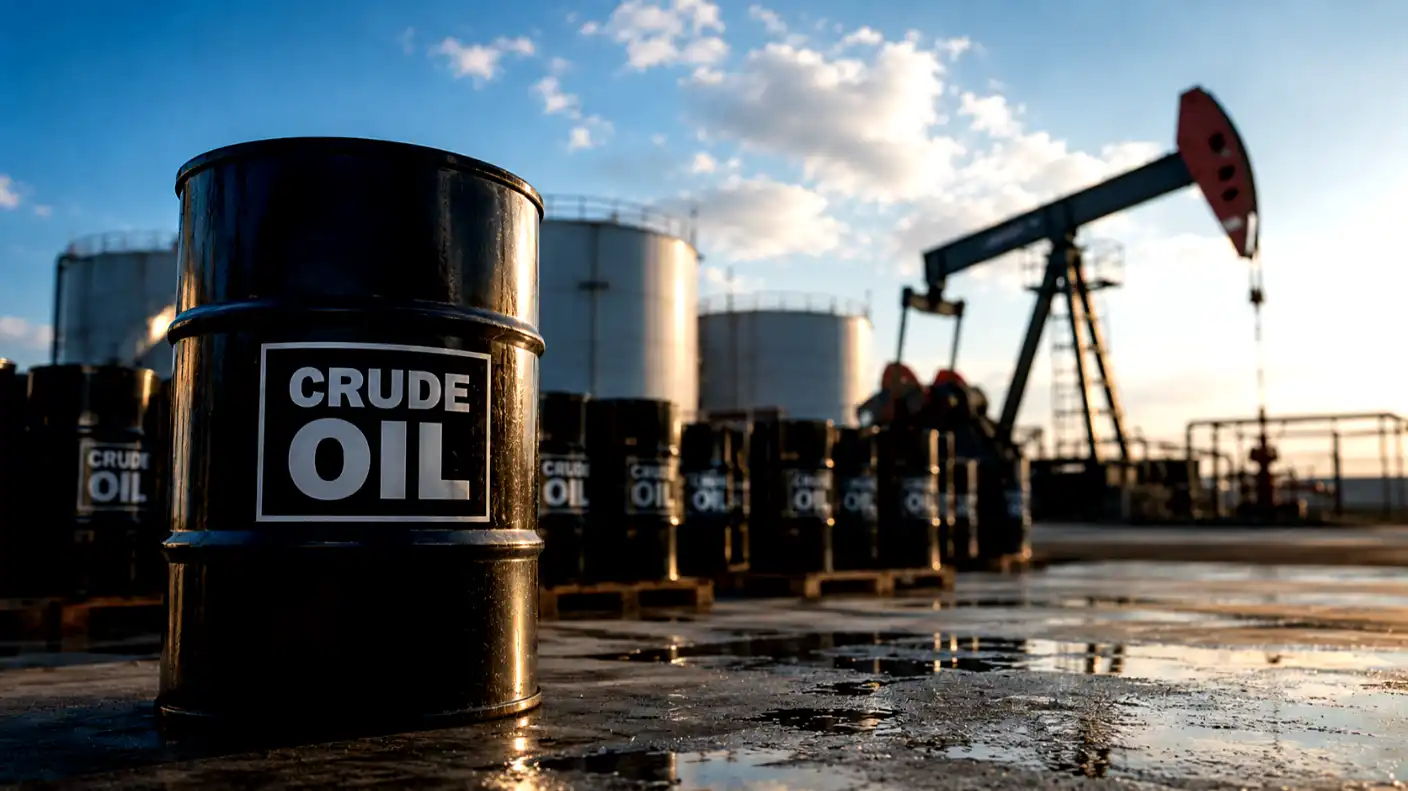
Surging energy benchmarks are reigniting inflation anxieties across Wall Street. With crude oil prices climbing toward the psychological threshold of $100 per barrel, equity traders and macroeconomic commentators are sounding alarms over rising gasoline prices, surging Treasury yields, and the potential for persistent interest rate pressure. Volatile trading sessions have seen the Dow Jones Industrial Average drop over 400 points as investors weigh the drag of elevated energy costs against corporate growth prospects.
Yet, despite the mounting chorus of macroeconomic pessimism, market commentator and television host Jim Cramer is urging investors not to abandon equity markets. Outlining a defiant bullish thesis on his evening program, Cramer argued that elevated oil prices alone cannot derail the broader economic expansion or crush corporate earnings power. Highlighting resilient consumer balance sheets, robust productivity gains fueled by artificial intelligence, and the structural cash flows of a booming domestic energy sector, Cramer emphasized that betting against long-term equity growth remains a losing historical strategy.
The Economic Shock of 100 Dollar Crude in Perspective
Rising oil prices historically act as an indirect tax on consumer spending and corporate operations. When petroleum benchmarks spike, the ripple effects spread through supply chains, transportation fleets, and retail gas stations.
Breaking Down the Gasoline Tax on Everyday Consumers
When benchmark crude touches $100 per barrel, retail gasoline prices at the pump quickly climb toward $4.00 or $4.50 per gallon across the United States. For an average American household commuting to work and transporting children to school, higher fuel prices consume an additional $100 to $200 per month in disposable cash flow.
Historically, this energy tax squeezed discretionary budgets, forcing families to curtail spending on restaurant dining, apparel, electronics, and travel. Bearish equity analysts argue that this sudden drain on discretionary income will trigger a sharp contraction in consumer demand, hitting retail and hospitality earnings. However, modern consumer spending patterns differ substantially from previous decades. Consumer spending has diversified, with energy costs accounting for roughly 3.5% of total household expenditures today compared to more than 8% during the energy crises of the late 1970s and early 1980s.
Treasury Yield Volatility and Interest Rate Expectations
The secondary challenge stemming from rising oil prices is its impact on sovereign bond yields. When crude prices surge, headline Consumer Price Index figures accelerate, complicating monetary policy for central bankers.
Bond traders react to higher energy inflation by bidding up benchmark 10-year Treasury yields past 4.3% and 4.5%. Higher long-term borrowing yields increase the cost of capital for corporate enterprises, raise mortgage interest rates above 7%, and exert downward pressure on stock valuation multiples. Skeptics fear that sticky energy inflation will prevent the Federal Reserve from easing borrowing costs, trapping the economy in a high-rate environment. Yet, underlying core inflation figures—which strip out volatile food and energy costs—continue to show steady structural disinflation across healthcare, durable manufactured goods, and residential rents.
Core Arguments Anchoring the Bullish Market Thesis
Rather than viewing the energy spike as a fatal blow to financial markets, Cramer laid out fundamental economic pillars that continue to support stock valuations.
Consumer Balance Sheets and Resilient Retail Spending
The primary foundation of the bullish argument is the ongoing financial resilience of the American consumer. Despite headline inflation and higher fuel costs, corporate data from premier financial institutions demonstrates that consumer credit and spending volumes remain healthy.
Data from major credit card issuers and national banks indicate that consumer deposit balances remain elevated compared to pre-pandemic levels. Wage growth across the private sector continues to expand between 3.5% and 4.0% annually, outpacing baseline inflation for most income brackets. Unemployment remains near historic lows below 4.5%, ensuring that consumers maintain steady paychecks to service household debt and maintain baseline living standards. While consumers are shopping more selectively—seeking promotional discounts at warehouse clubs and discount grocers—they are not abandoning discretionary commerce altogether.
Corporate Earnings Growth Driven by AI and Productivity
A critical factor separating the current stock market from previous inflationary cycles is the unprecedented corporate investment in operational efficiency. Corporate America is generating strong earnings expansion, with S&P 500 operating profits growing by more than 10% year over year.
The widespread deployment of generative artificial intelligence and workflow automation is delivering measurable productivity gains across corporate operations. Software developers, customer support centers, financial underwriters, and supply chain coordinators are completing daily operational tasks in fractions of historical timelines. These efficiency enhancements allow corporations to expand operating profit margins by 150 to 250 basis points, offsetting rising transportation and raw material expenses. Companies that generate expanding operating margins despite macroeconomic friction provide durable earnings support for equity markets.
American Energy Independence and Domestic Cash Flow Engines
The structural relationship between the United States economy and global oil markets has transformed over the past two decades. In prior decades, high oil prices transferred hundreds of billions of dollars in wealth out of the United States directly to foreign oil cartels.
Today, the United States stands as the world’s largest crude oil and natural gas producer, pumping over 13.3 million barrels of crude oil per day from prolific shale basins like the Permian in Texas and New Mexico. When oil prices climb toward $100 per barrel, American exploration and production companies generate massive windfalls in free cash flow. This domestic energy revenue flows directly back into the American financial system, funding domestic capital investments, corporate taxes, high-wage industrial employment, and shareholder returns. High oil prices no longer represent a pure economic drain; they act as a massive internal cash redistribution mechanism that strengthens domestic energy producers.
Sector Rotation and Defensive Playbooks for Volatile Cycles
Financial markets rarely move in unison. When macroeconomic shocks hit specific market sectors, dynamic capital rotation creates powerful profit opportunities elsewhere across the equity landscape.
Energy Giants Delivering Massive Dividends and Share Buybacks
The clearest beneficiaries of rising crude prices are integrated oil supermajors and upstream independent drillers. Companies like ExxonMobil, Chevron, ConocoPhillips, and EOG Resources operate with production break-even costs between $35 and $45 per barrel.
At $100 crude, these energy titans generate record operating cash flows. Rather than repeating past mistakes of over-drilling and flooding the market with excess supply, modern energy executives maintain strict capital discipline, dedicating only 40% to 50% of cash flows to new drilling. The remaining billions in surplus capital flow directly to shareholders through robust 3% to 5% dividend yields and massive share repurchase programs. Investors who maintain diversified exposure to the energy sector capture high-margin dividend income that hedges against broader market pullbacks.
Secular Technology Leaders Immune to Traditional Energy Swings
While energy stocks surge, mega-cap technology leaders continue to demonstrate business models that operate independently of commodity price fluctuations. Enterprise software providers, semiconductor designers, and cybersecurity firms do not consume massive quantities of diesel fuel to deliver their products.
When a cloud software provider sells enterprise software subscriptions or an advanced semiconductor firm licenses processor architectures, its cost of goods sold remains virtually unaffected by gasoline pump prices. Companies like Microsoft, Nvidia, Apple, and Alphabet hold hundreds of billions of dollars in liquid cash reserves, generate gross margins above 65%, and command immense pricing power. Investors fleeing commodity-sensitive industrials consistently rotate capital back into high-margin secular tech champions, creating a structural bid that cushions major market indices from steep declines.
Historical Precedents of Equities Overcoming Commodity Spikes
Looking back across decades of market history reveals that commodity price spikes frequently create short-term market panic that ultimately resolves into long-term equity advances.
Lessons from Past Geopolitical Energy Crises
Market history is filled with episodes where military conflicts or supply disruptions triggered sudden spikes in petroleum benchmarks. During the geopolitical tensions of 1990, the commodity supercycle of the mid-2000s, and the European energy shock of 2022, equity indices experienced sharp initial corrections ranging from 5% to 12%.
In each historical instance, macroeconomic bears predicted an inevitable global recession and a protracted multi-year bear market. Yet, high energy prices consistently triggered their own economic cure: elevated prices incentivized non-OPEC producers to increase drilling, prompted technological substitution, and encouraged consumer conservation, ultimately bringing oil benchmarks back down. Within 6 to 12 months following each historical oil spike, the broader S&P 500 not only recovered its losses but went on to establish new all-time highs. Investors who panic-sold their portfolios during the peak of the energy panic missed the subsequent market recoveries.
Why Long-Term Pessimism Consistently Underperforms the Market
The core philosophical message underpinning Cramer’s analysis is that long-term bearishness is an inherently flawed investing strategy. Over any 10-year or 20-year rolling investment horizon, the United States equity market has delivered positive annualized real returns averaging between 8% and 10%.
Betting on permanent market downturns requires an investor to be right twice: identifying the exact moment to exit the market before a decline, and timing the exact bottom to buy back in before prices rebound. Because the market’s strongest rally days often occur during periods of peak pessimism, sitting in cash guarantees that an investor misses the compounding returns that drive long-term wealth creation. Embracing short-term market volatility as a natural price of admission allows disciplined market participants to compound capital across multi-decade market cycles.
Strategic Portfolio Guidance for Market Participants
Navigating an equity market confronting $100 oil requires tactical discipline, emotional control, and a clear focus on high-quality business models.
Avoiding Emotional Selloffs During Macroeconomic Pullbacks
The biggest danger facing individual investors during market pullbacks is emotional decision-making. When financial news headlines warn of impending economic collapse, retail market participants often succumb to fear and liquidate high-quality equities at depressed valuations.
Cramer advises investors to view macroeconomic pullbacks not as crises, but as attractive buying opportunities. When broad market selloffs drag down premier corporate leaders alongside speculative stocks, high-quality companies with durable competitive moats go on sale at attractive price-to-earnings discounts. Establishing automated dollar-cost averaging programs allows investors to systematically accumulate shares during market downturns, lowering their average cost basis and setting the stage for substantial capital appreciation when market sentiment stabilizes.
Identifying High-Quality Cash Generators for the Next Leg Up
Rather than attempting to forecast daily swings in crude oil futures, portfolio managers should focus on companies possessing specific structural characteristics that thrive in volatile economic environments.
Target investments should include enterprises with low debt-to-equity ratios, high return on invested capital, and the pricing power required to pass input cost increases directly to customers. Sectors such as industrial automation, defense aerospace, specialized healthcare, and mission-critical cybersecurity provide steady, non-cyclical demand that remains resilient regardless of energy market volatility. By pairing high-margin growth stocks with cash-generative energy producers and defensive healthcare providers, investors construct balanced portfolios capable of weathering commodity spikes while capturing upside from the ongoing technological revolution.
The Resilience of American Capitalism Under Pressure
The debate over $100 oil highlights the ongoing struggle between short-term macroeconomic anxieties and the long-term compounding power of commercial innovation. While elevated energy benchmarks introduce friction into the global economic system, they do not possess the structural power to dismantle a resilient, diversified economy.
The United States economy has evolved into an agile, technologically advanced powerhouse driven by consumer vitality, industrial software, and domestic energy production. Companies continue to invent new technologies, optimize operating expenses, and expand profit margins under demanding economic conditions.
For investors navigating the noise of financial markets, the lesson remains clear: temporary commodity spikes should not dictate long-term investment strategies. By looking past short-term energy headlines, maintaining exposure to premier corporate innovators, and staying invested through market volatility, market participants position themselves to participate in the enduring upward trajectory of global equity markets.






