

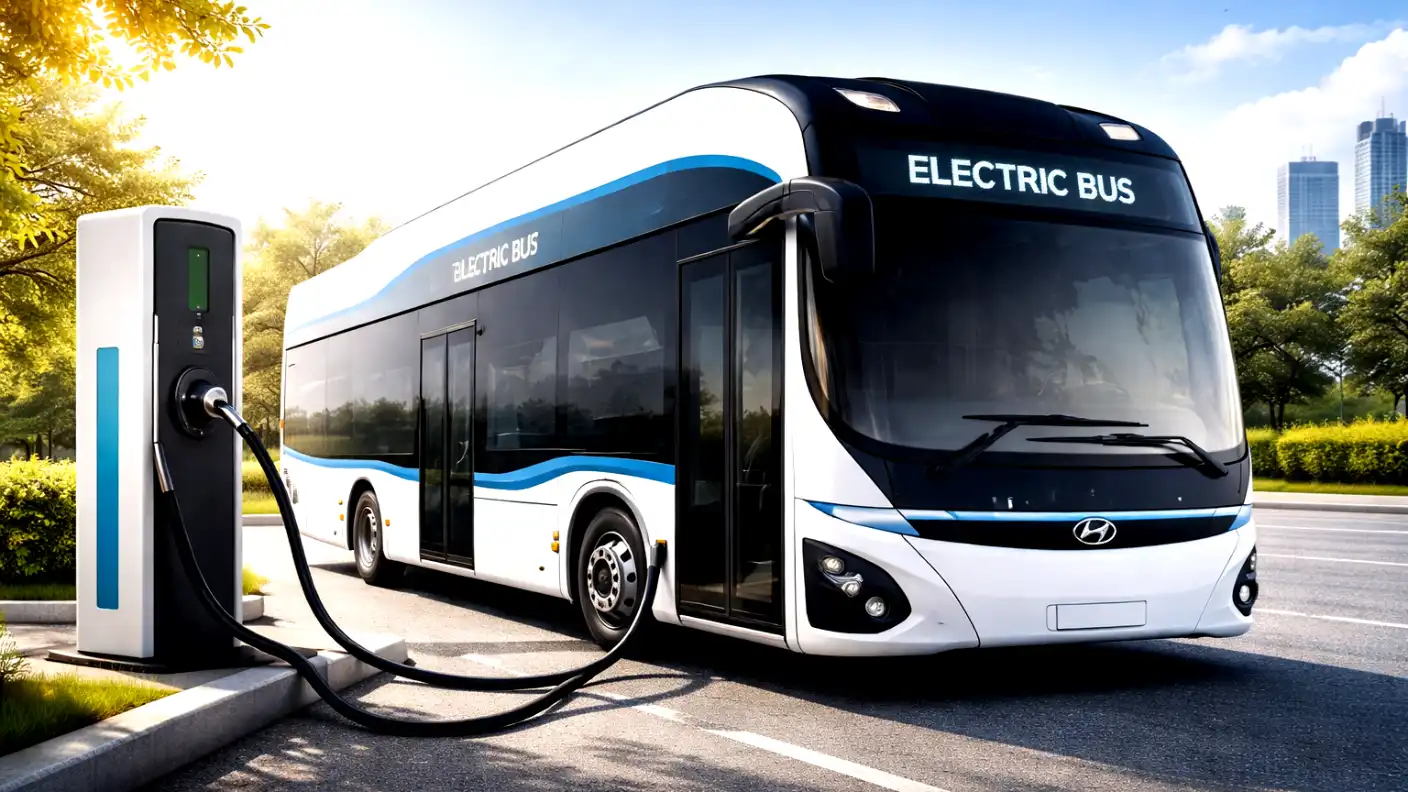
The public transportation sector in Latin America is undergoing a major, highly strategic transformation. As municipal governments race to replace their aging, highly polluting diesel bus fleets with clean, zero-emission electric vehicles, they are increasingly running into a challenging technological dilemma. For the past decade, Chinese manufacturers have dominated the global market for electric buses, leveraging massive state subsidies to export cheap, highly advanced vehicles. However, in August 2026, details emerged regarding a bold, homegrown initiative in Mexico designed to break this dependency on foreign technology and establish national sovereignty over its public transit systems.
At the center of this domestic industrial offensive is the “Taruk,” the first-ever fully designed, patented, and manufactured electric bus built entirely by Mexican companies. Developed through a highly collaborative partnership between veteran Mexican commercial vehicle manufacturer Dina (Diesel Nacional) and specialized electric traction firm Megaflux, the project represents a major milestone in Mexico’s push for advanced manufacturing self-sufficiency.
Supported by the National Council for Humanities, Sciences, and Technologies, along with engineers from the prestigious National Autonomous University of Mexico and the Metropolitan Autonomous University, the Taruk is not an experimental or temporary prototype. The vehicle has completed months of rigorous real-world testing on busy public transit routes, successfully proving its commercial viability. By localizing up to 80% of its component supply chain, the developers want to protect municipal governments from volatile international trade tariffs while building a highly resilient domestic manufacturing sector.
The Mechanics of Taruk: High-Performance Domestic Engineering
The Taruk is designed specifically to navigate the challenging, high-density urban environments of Mexico’s major cities, utilizing a highly advanced, proprietary electric powertrain to deliver passenger capacity and range metrics that can easily compete with any Asian import.
Technical Specifications of the Nine-Point-Five Meter Minibus
The physical dimensions of the Taruk have been meticulously engineered to optimize maneuverability on narrow, crowded metropolitan streets. The zero-emission minibus measures exactly 9,522 millimeters in length, features a wheelbase of 4,780 millimeters, and has a gross vehicle weight of 13,500 kilograms.
Despite its compact, highly agile footprint, the vehicle offers a spacious interior cabin designed to maximize passenger capacity. The Taruk can comfortably accommodate up to 60 passengers simultaneously, configured with 28 high-comfort passenger seats and space for 32 standing riders. By utilizing a low-floor, highly accessible design, the bus ensures rapid passenger boarding and exit times, which is essential for reducing delays and maintaining strict scheduling timetables in busy city centers.
Power and Range Capacity Optimized for Urban Transit
The heart of the Taruk’s physical platform is its high-efficiency electric traction and battery system, developed entirely by Megaflux. To accommodate different regional routes and transit needs, the developers offer three distinct battery capacity options:
- One-Hundred-Forty Kilowatt-Hours: Delivering a reliable, single-charge range of 170 kilometers, ideal for short-haul, high-frequency historic city center routes.
- One-Hundred-Ninety-Two Kilowatt-Hours: Providing a mid-range capacity of 240 kilometers.
- Two-Hundred-Eighty-Two Kilowatt-Hours: The high-capacity option delivering a massive 350 kilometers of range on a single charge.
This 350-kilometer range is highly strategic. It allows the vehicle to easily execute a full, continuous 16-hour urban transit shift without needing to stop for intermediate, time-consuming recharges during the day.
Furthermore, the advanced lithium-ion batteries can achieve a 100% state of charge in under four hours using depot-based fast chargers, ensuring high operational uptime and minimizing the required investments in expensive opportunity-charging infrastructure along the route.
Navigating the Trade Maze: Shifting from Chinese Imports to Local Sourcing
While the technical specifications of the Taruk are impressive, the primary driver behind the project is a deep geopolitical concern over the national security risks of relying too heavily on foreign-made public infrastructure.
The Dominance of Chinese Bus Brands in Mexico City
The scale of China’s presence in the Mexican transport market is massive. Over the past decade, Chinese new-energy bus manufacturers, led by Yutong Bus and BYD, have successfully captured a dominant share of the local market. Yutong alone holds an estimated 60% to 70% share of the pure electric bus and dual-mode trolleybus market in Mexico City, with over 700 of its vehicles actively running on the capital’s high-density transit lanes.
These Chinese vehicles, including massive 26-meter-long “land train” models designed specifically to handle Mexico City’s high population density, have provided vital service during major events like the 2026 FIFA World Cup.
However, as the trade conflict between the United States, Mexico, and China continues to intensify, this heavy reliance on Chinese technology has become a major political headache for policymakers.
Under the United States-Mexico-Canada Agreement (USMCA) signed in 2020, American automakers and politicians have expressed growing alarm that Chinese firms could use Mexico as a backdoor to export highly subsidized, low-priced electric vehicles to North America, bypassing U.S. tariffs.
To defuse these tensions and protect its own manufacturing interests, the Mexican government is under intense pressure to scale back its reliance on Chinese technology and build its own domestic capabilities.
Targeting Eighty Percent Localization to Cut China Reliance
The Taruk project is the most concrete and effective response to this geopolitical squeeze. By designing, patenting, and manufacturing the vehicle entirely within Mexico, Dina and Megaflux are establishing complete technological independence over their public transit networks.
The primary mechanism allowing the partners to bypass foreign trade barriers is their highly localized supply chain. Up to 80% of the bus’s components are domestically sourced:
- The highly efficient electric powertrain and traction systems are manufactured in the industrial borough of Iztapalapa, in the south of Mexico City.
- The heavy-duty steel chassis, vehicle bodywork, and final assembly are executed at Dina’s major manufacturing facility in Ciudad Sahagun, Hidalgo.
- By keeping the entire manufacturing and sourcing process within the country, the project is creating thousands of highly skilled local engineering, software, and mechanical jobs, while protecting municipal transit operators from volatile international trade tariff changes.
This high level of localization also solves a major, ongoing maintenance problem for local governments. When a transit authority imports a fleet of Chinese electric buses, securing replacement parts and technical support during an unexpected equipment failure can take weeks or months due to shipping delays, keeping expensive vehicles out of service.
Because the Taruk is built locally, operators can access faster, more efficient spare parts delivery and local engineering support, significantly reducing maintenance delays and lowering the lifetime operating costs of public transit networks, proving that a local value chain is far more economically viable than foreign dependencies.
Bipartisan National Policy: Economy Minister Marcelo Ebrard’s Industrial Vision
The strategic importance of the Taruk project has been recognized at the absolute highest levels of the Mexican government, turning the domestic electric bus into a key pillar of the country’s national industrial policy.
Presenting the “Made in Mexico” Certification
At a high-profile ceremony held in Mexico City, Mexico’s Economy Minister, Marcelo Ebrard, officially presented the prestigious “Made in Mexico” (Hecho en México) certification to the corporate leadership of Dina and Megaflux. This formal certification integrates the Taruk directly into the government’s national development roadmap, known as “Plan Mexico.”
During his address at the certification ceremony, Ebrard emphasized that the Taruk represents a major, strategic advance within Mexico’s industrial policy, proving that local companies can successfully design and manufacture highly complex, advanced technology that can compete with any global rival.
He made it clear that the government is no longer content to act as a mere low-cost assembly hub for foreign multinationals; instead, it is prioritizing the development of domestic innovation, patents, and high-value manufacturing capabilities to ensure the long-term well-being of the population.
Building Long-Term Technological Sovereignty
Ebrard also announced that the Taruk is not a simple, experimental project designed for public relations. The vehicle has undergone months of rigorous, real-world testing on the public routes of the Mexico City Passenger Transport Network (RTP) to verify its performance, reliability, and energy efficiency under actual, high-density transit conditions.
The results of these tests were highly successful. The Taruk proved to be more energy-efficient and durable than traditional, imported models, while operating with significantly lower maintenance and fuel costs than legacy diesel buses.
By proving its operational viability on the busy streets of the capital, the vehicle has demonstrated that domestic engineering can deliver superior results, giving the government the confidence to begin integrating the bus into public transit networks nationwide and securing a vital step toward long-term technological sovereignty.
The Regional Rollout and the Massive Domestic Market Potential
The commercialization of the Taruk has already begun to generate significant, real-world momentum, with the first production units scheduled to enter public service in key regional cities.
Real-World Deployments in Ensenada and Chetumal
During the launch event, Economy Minister Ebrard announced that the first commercial models of the Taruk will begin operating in the port city of Ensenada, Baja California.
The local transit authority plans to integrate the zero-emission buses into its primary urban routes, providing a clean, dignified transport option for local residents while significantly reducing urban air pollution.
At the same time, the state government of Quintana Roo is testing a similar pilot program in the capital city of Chetumal.
The state has delivered and integrated 66 electric transit units into service, attempting to resolve a historic decade-long deficit in public transportation in the regional capital.
By deploying the Taruk in these diverse coastal and urban environments, the developers can gather valuable, real-world performance data under different climates and terrain conditions, allowing them to continuously refine and optimize their technology.
The Looming Four-Hundred-Thousand Unit Replacement Cycle
The long-term market potential for the Taruk is immense. According to comprehensive market research reports published by Latam Mobility, Mexico’s municipal public transit systems will require over 400,000 electric buses over the next 20 years to fully renew and modernize their aging, diesel-powered fleets.
This massive replacement cycle represents a multi-billion-dollar business opportunity for domestic manufacturers.
To capture this market, Dina and Megaflux are already planning to scale up their production capacity.
The partners’ initial production plan contemplates manufacturing 2,000 units per year, with the clear potential to scale up to 6,000 units annually as demand grows.
Furthermore, the companies are actively developing 6-meter, 8-meter, and 12-meter variants of the Taruk to complement the current 9.5-meter model, ensuring they can offer a complete line of vehicles to serve every segment of the country’s diverse transit networks.
By capturing a significant share of this massive domestic demand, the partnership is ensuring that the country’s clean energy transition directly supports local industrial growth, making the public transit network a self-sustaining engine of national commerce, where even a 1.5% improvement in processing latency or fee structure can save municipal operators millions of dollars annually.
Shaping the Clean Future of Latin American Transit
The official certification and commercial launch of the Taruk electric bus represent a historic turning point for the Mexican automotive and public transport industries. By successfully designing, patenting, and manufacturing a 100% domestic electric vehicle with up to 80% localized components, Dina and Megaflux have proven that developing nations can successfully break their dependency on foreign technology by investing in local innovation, universities, and industrial partnerships.
While the competitive pressures from Chinese giants like Yutong and BYD remain intense, the Taruk’s superior cost-efficiency, localized parts supply, and strong backing from the national government provide a highly secure, profitable foundation for growth.
As the first production units begin operating in Ensenada and Chetumal, and the company prepares to scale its production capacity to meet the country’s massive 400,000-unit replacement cycle, this advanced, clean-tech vehicle will ensure that Mexico remains a dominant, highly resilient leader in the Latin American transit market.
The success of this program proves that the ultimate winners of the net-zero era will be the nations that can successfully integrate advanced, domestic engineering with the physical building blocks of public infrastructure, securing a cleaner, healthier, and highly sovereign future for decades to come.






