

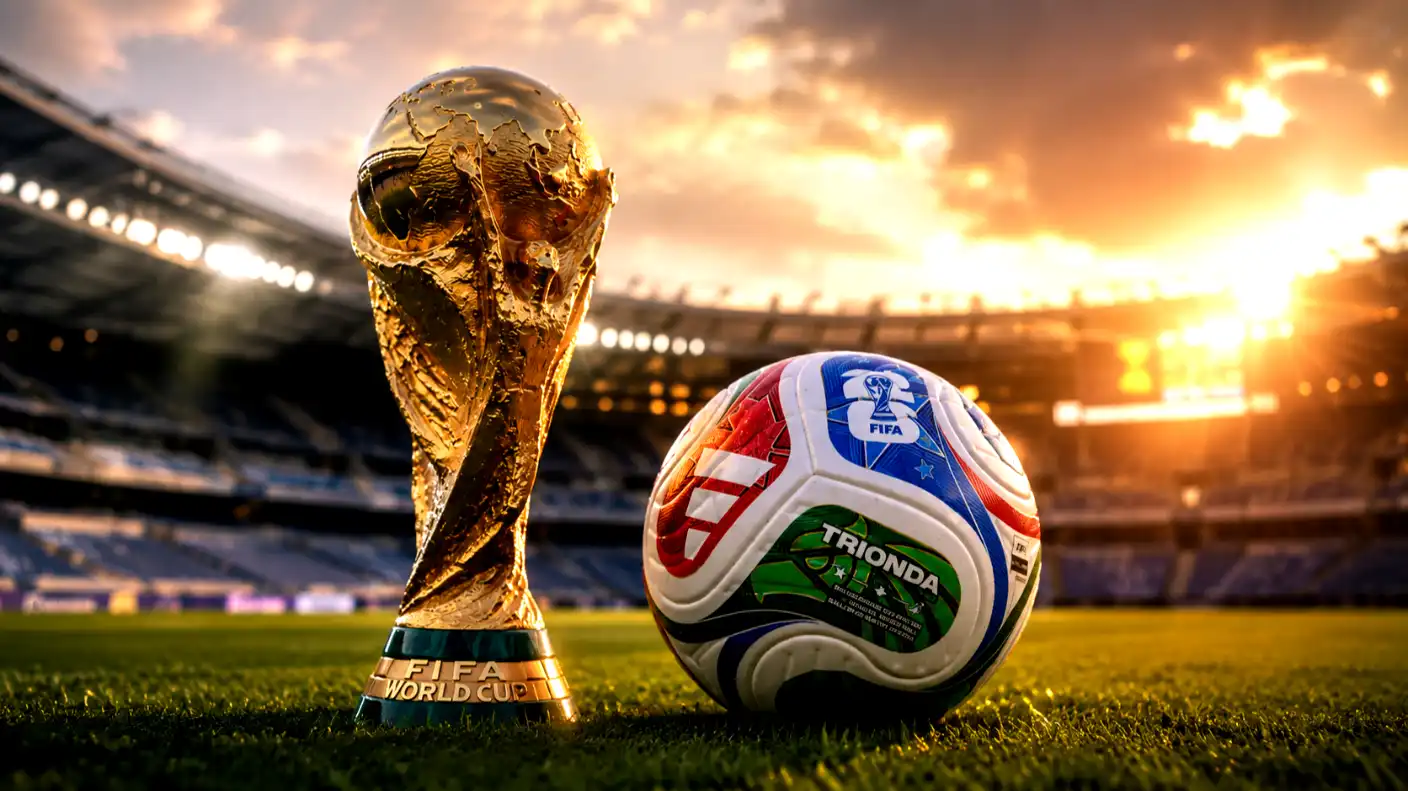
The global sporting landscape has reached its absolute peak, and the United States has successfully proved that it can turn the world’s most-watched athletic tournament into an unprecedented economic powerhouse. As the European champions Spain prepare to face the defending world champions Argentina in the historic final at MetLife Stadium, the regional host committee has declared the tournament an unqualified commercial triumph. Overcoming months of deep-seated skepticism regarding high ticket prices, potential transportation gridlock, and severe environmental challenges, the New York-New Jersey region has delivered a massive, multi-billion-dollar economic windfall.
The final match, scheduled for Sunday, July 19, 2026, has brought together a spectacular, highly secure, and internationally significant audience. A bipartisan and star-studded guest list—including U.S. President Donald Trump, Argentine President Javier Milei, Spanish Prime Minister Pedro Sánchez, Mexican President Claudia Sheinbaum, and Canadian Prime Minister Mark Carney—will join over 80,000 spectators inside the East Rutherford colosseum, which has been temporarily renamed the New York New Jersey Stadium for the duration of the tournament. The match carries immense historical weight, offering Argentina’s legendary captain Lionel Messi a poetic opportunity for redemption on the very same pitch where he briefly retired from international football ten years ago after an agonizing Copa America final defeat.
Beyond the physical boundaries of the stadium, the host cities have constructed a massive, highly inclusive festival environment to ensure that every citizen can participate in the celebrations. From a massive, free watch party for 50,000 fans on Central Park’s Great Lawn to over 100 free community screenings distributed across New York City’s five boroughs, the metropolitan area has transformed into a global soccer carnival. This widespread public participation, paired with near-100% hotel occupancy rates and record-breaking retail spending, has allowed local officials to declare the tournament a historic success, proving that large-scale, state-sponsored sporting events can deliver real, tangible, and highly profitable returns to their host communities.
The Financial Windfall: How the World Cup Revitalized New York’s Tourism Sector
The primary proof of the tournament’s success lies in its staggering financial metrics. While some academic economists have historically argued that hosting major sporting events rarely delivers a net positive return on investment due to high infrastructure costs, the New York-New Jersey Host Committee has produced hard, empirical data that refutes this skeptical view.
According to a comprehensive study released by the host committee, the initial group-stage matches of the tournament alone generated an extraordinary $1.2 billion in direct economic impact for the regional economy. This massive inflow of capital went directly into the bank accounts of local hotels, restaurants, transportation providers, and small businesses, creating a powerful economic multiplier effect that has supported thousands of high-wage seasonal jobs across the metropolitan area.
The financial windfall is particularly visible in the local hospitality sector. Hotel occupancy rates across Manhattan, Brooklyn, Queens, and northern New Jersey hit near-100% capacity for multiple consecutive weeks, allowing hoteliers to command premium room rates and offset several years of stagnant corporate travel growth.
At the same time, the city’s world-class culinary and retail sectors reported unprecedented sales volumes. Restaurants and bars situated near transit hubs and official fan festivals saw their daily receipts jump by as much as 45% compared to typical summer averages, proving that the influx of international tourists is a highly potent economic stabilizer for the entire region.
The Staggering $1.2 Billion Group-Stage Windfall
The $1.2 billion in direct economic impact generated during the group-stage period is a historic milestone for regional tourism boards. Alex Lasry, the Chief Executive Officer of the New York-New Jersey Host Committee, confirmed these numbers, pointing out that the massive influx of international visitors has successfully compensated for the high public investments required to secure and operate the tournament.
The financial data shows that the average international visitor spent approximately $450 per day during their stay, representing a highly profitable consumer demographic. This spending was spread across multiple sectors, with tourists purchasing Broadway theater tickets, visiting world-class museums, booking specialized guided tours, and buying premium merchandise, ensuring that the economic benefits of the tournament reached far beyond the immediate vicinity of the football stadium.
The Experience Economy: High-Margin Tourism Overrides Inflation Fears
The spectacular success of the tournament proves that the global “experience economy” has become highly resilient against macroeconomic headwinds. Despite persistent, sticky inflation and elevated interest rates that have forced many household budgets to tighten, consumers showed an absolute willingness to spend heavily to participate in this once-in-a-generation sporting spectacle.
This high-value consumer behavior was particularly visible in the ticket resale markets. Primary tickets for the final had sold out months in advance through official FIFA lotteries, forcing late-stage buyers to turn to secondary exchanges like SeatGeek, where average resale prices surged to a range between $1,800 and $7,500 per seat.
The fact that fans were willing to pay these extraordinary, premium prices to secure their place in the stadium proves that unique, high-status live experiences hold an immense, non-discretionary appeal for modern consumers, allowing high-margin tourism to drive regional economic growth even during challenging economic cycles.
The Public Square: Bringing the World Cup to the Five Boroughs
While wealthy corporate sponsors and high-paying tourists filled the stadium seats, local government officials worked tirelessly to ensure that the tournament did not become an exclusive playground for the wealthy. To democratize the event, New York City Mayor Zohran Mamdani and regional host committees established a massive network of free public viewing events, bringing the excitement of the World Cup directly to local communities.
This grassroots outreach was a primary focus of the city’s operational planning. By providing free, safe, and highly accessible places for everyday citizens to watch the matches, the city successfully fostered a powerful sense of community cohesion, transforming the international tournament into a shared, highly memorable civic experience for millions of working-class families who could never have afforded a physical ticket.
The Fifty-Thousand-Fan Central Park Great Lawn Watch Party
The centerpiece of this civic democratization effort is the massive, free watch party organized on Central Park’s iconic Great Lawn. The city secured permission from the park service and local conservation groups to host up to 50,000 fans for the final match, erecting giant, high-definition LED screens and state-of-the-art sound systems across the historic green space.
To manage a crowd of this magnitude safely, the city deployed a highly sophisticated, multi-agency security and logistics plan. The New York Police Department, the Parks Department, and emergency medical services coordinated their operations, establishing secure entry points, active biometric crowd-monitoring systems, and extensive waste-management facilities to ensure the park’s delicate environment remained protected.
By offering a safe, free, and incredibly high-energy environment for fans to gather, the Central Park watch party has become one of the defining cultural images of the 2026 tournament, rivaling the famous fan parks of Munich, Rio de Janeiro, and London.
One Hundred Free Community Screenings Across the Boroughs
The city’s commitment to accessibility extended far beyond Central Park. To reach families in every corner of the metropolitan area, the host committee organized more than 100 free community screenings across the five boroughs, utilizing public parks, local recreation centers, and neighborhood cultural hubs to broadcast the matches.
These localized screenings were particularly successful in highly diverse, immigrant-heavy neighborhoods across Queens, Brooklyn, and the Bronx, where football is a primary cultural passion.
By setting up public screens in local parks, the city allowed diverse communities to gather, wave their national flags, and celebrate their heritage in a safe, family-friendly environment.
This grassroots integration has earned high praise from community leaders, who commended the city for using the power of sport to bridge cultural divides, foster social inclusion, and deliver real-world recreation to underserved neighborhoods.
The Entertainment Integration: Reimagining the Halftime Show
The 2026 World Cup Final represents a major, permanent evolution in how global sporting events are presented. In a historic first designed to expand the commercial appeal of the tournament to non-traditional sports fans, FIFA partnered with international entertainment groups to introduce a massive, Super Bowl-style halftime show and closing ceremony.
The integration of high-production pop-culture entertainment into a soccer final was initially met with skepticism from traditionalists, who argued that an extended halftime show would disrupt the flow of the match and violate long-standing soccer traditions.
However, FIFA’s leadership, under President Gianni Infantino, stood firm, arguing that the modern entertainment landscape requires central, high-impact spectacles to capture the attention of younger, tech-native audiences who consume media in short-form, highly visual formats.
The Star-Studded Lineup: Madonna, Shakira, Justin Bieber, and BTS
The final closing ceremony and halftime show will feature some of the most famous, highly influential musicians in the world. The star-studded lineup—led by pop icon Madonna, Latin superstar Shakira, Canadian singer Justin Bieber, and K-pop sensation BTS—is engineered to draw hundreds of millions of simultaneous global television viewers, transforming a traditional soccer final into a massive global entertainment event.
This entertainment integration has significantly increased the commercial value of the final’s broadcasting rights. Major national networks, including FOX and Telemundo, have charged record-breaking ad rates for commercial spots airing during the halftime show, allowing them to monetize a massive, non-traditional audience that is tuning in specifically for the musical performances.
By bridging the gap between world-class athletics and global pop culture, FIFA has successfully expanded the commercial footprint of the tournament, setting a new benchmark for how global sports entertainment will be packaged and monetized for the rest of the decade.
Supporting the Global Citizen Education Fund
The massive commercial scale of the halftime show is being utilized to support a vital, highly progressive philanthropic initiative. FIFA and Global Citizen announced that a significant portion of the revenues generated from the musical performances, corporate sponsorships, and digital streaming rights will be directed to the newly established FIFA Global Citizen Education Fund.
The fund’s primary mandate is to expand access to high-quality primary and secondary education for vulnerable children in developing nations and active conflict zones across the globe.
By aligning this high-profile entertainment spectacle with a worthy, internationally recognized social cause, the partners are using the massive platform of the World Cup to drive real, lasting social impact.
This philanthropic integration has earned widespread praise from international NGOs and humanitarian groups, proving that the massive wealth generated by modern professional sports can be successfully leveraged to solve some of the most critical challenges facing our global society.
Overcoming Environmental and Infrastructural Obstacles
The historic success of the 2026 World Cup Final is particularly impressive because the host region had to navigate a series of severe, highly unexpected environmental and logistical challenges in the days leading up to the final match.
The most alarming threat emerged when a sudden shift in wind patterns carried a massive cloud of toxic smoke from ongoing Canadian wildfires directly into the northeastern United States.
The smoke blanketed the New York-New Jersey metropolitan area in a dense, orange haze, driving local air quality indices to dangerous levels and raising fears that the final match would have to be postponed or relocated to protect the health of the players and the 80,000 spectators.
Cleared Skies: Managing the Canadian Wildfire Smoke Threat
The local host committee and emergency management services responded to the wildfire smoke threat with absolute precision. Under the direction of the New York State Department of Environmental Conservation and local health authorities, the committee established a continuous, real-time air quality monitoring network around MetLife Stadium.
To protect the public, the city issued targeted health advisories, distributed high-grade particulate masks to arriving international fans, and prepared extensive, climate-controlled indoor cooling shelters across the stadium complex.
Fortunately, a favorable change in wind direction on Saturday evening pushed the bulk of the smoke cloud out to sea, allowing the skies over East Rutherford to clear just in time for the final.
The successful management of this environmental crisis has proved that the NY-NJ host committee possesses the operational agility and emergency infrastructure needed to handle the most unpredictable real-world challenges, securing the safety of the tournament under extreme pressure.
Upgrading the Infrastructure: Transporting Millions without Gridlock
The second major operational challenge was the complex task of transporting hundreds of thousands of international visitors across a highly congested, geographically fragmented metropolitan area. MetLife Stadium sits in the Meadowlands of New Jersey, separated from Manhattan by the Hudson River, creating a natural bottleneck that has historically struggled to handle massive event traffic.
To prevent catastrophic transport gridlock, the transit agencies of New York and New Jersey executed a massive, highly integrated transit plan.
The MTA, NJ Transit, and the Port Authority coordinated their operations, running continuous, high-frequency shuttle trains, establishing dedicated express bus lanes, and using advanced, AI-driven traffic management software to optimize traffic flows through the Lincoln and Holland tunnels.
This massive transportation effort allowed millions of international fans to travel seamlessly between their Manhattan hotels, the fan festivals in Brooklyn and Queens, and the stadium in New Jersey without a single major transit failure, proving that modern, data-driven public transportation systems can successfully handle the most demanding logistical challenges in the world.
The historic, record-breaking success of the 2026 FIFA World Cup is a powerful, highly instructive testament to the economic and cultural strength of the United States and its North American partners. By delivering over $1.2 billion in direct economic impact during the group stages alone, successfully managing severe environmental and infrastructural challenges, and bringing together world-class athletics and global pop culture on a single, massive stage, the New York-New Jersey region has set a new standard for international event hosting.
As the final whistle blows and Spain and Argentina write the concluding chapter of this historic tournament, the legacy of 2026 is clear: the physical and financial scale of modern professional sports remains an unparalleled, highly reliable engine of regional economic growth, and the cities that have the courage, the capital, and the strategic vision to host these global spectacles will continue to reap the rewards of a highly integrated, prosperous, and connected global economy.






