Key Points:
- SK Hynix is considering a base underwriting fee of around 0.5% for the investment banks managing its massive United States share sale.
- The Nasdaq Global Select Market listing could raise to $29.4 billion, representing about 2.5% of the company’s total outstanding stock.
- A 0.5% fee rate would yield between $130 million and $147 million in collective base fees, with potential performance-based bonuses on top.
- South Korean financial officials are preparing for up to $29 billion in capital inflows on the July 14 settlement date, requiring foreign exchange hedging.
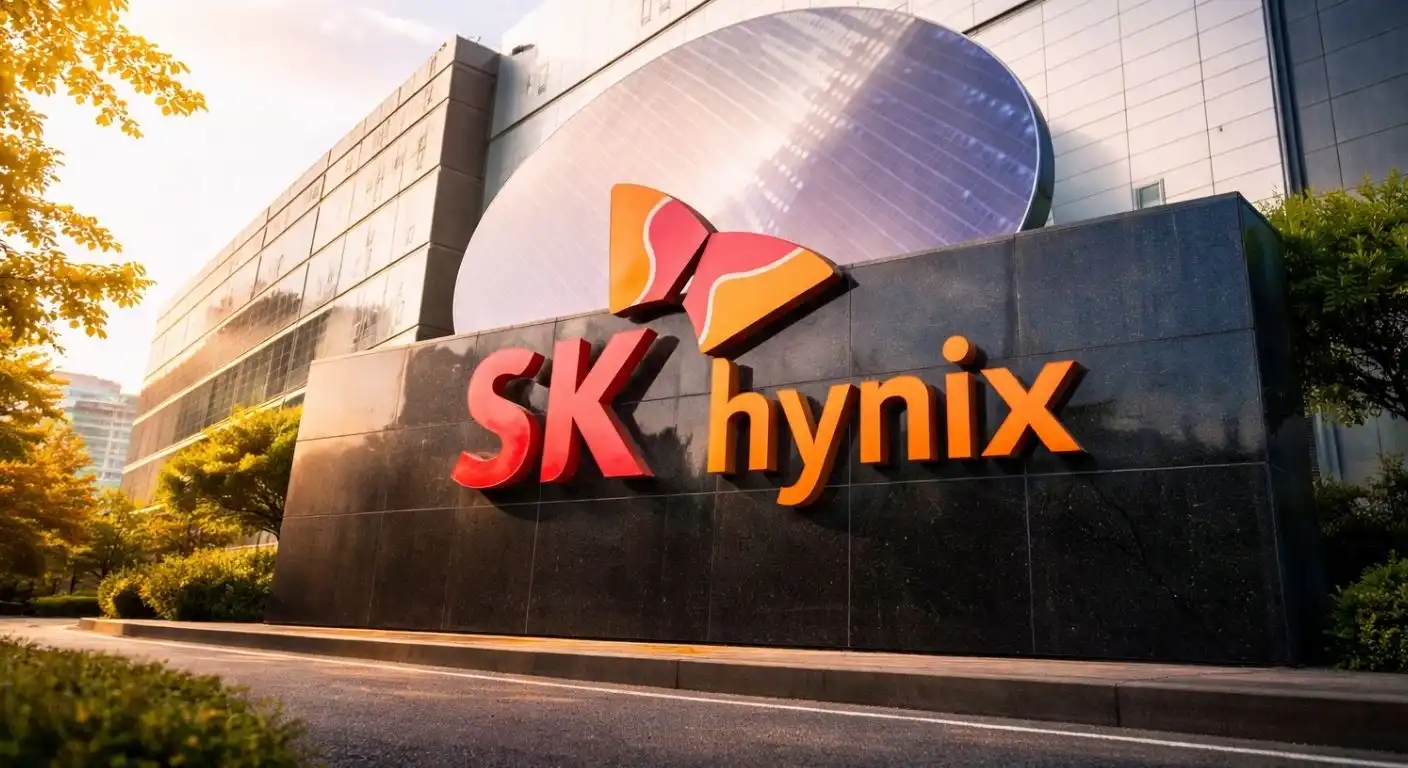
South Korean memory chip giant SK Hynix is preparing to pay a base underwriting fee of approximately 0.5% to the major investment banks managing its upcoming listing in the United States. The planned listing of American Depositary Receipts on the Nasdaq Global Select Market represents one of the largest international equity sales in financial history. If completed at the maximum target, the offering could raise to $29.4 billion by selling 17.79 million newly issued common shares, representing about 2.5% of the company’s total outstanding stock. Despite the relatively low fee percentage, the massive scale of the transaction ensures a substantial payout for the financial institutions coordinating the deal.
The proposed 0.5% base rate sits significantly below traditional underwriting fee percentages for major public listings in the United States, where fees often exceed 1% and can reach up to 5% to 7% for mid-market transactions. However, with the chipmaker’s total market value hovering around $1.1 trillion, a 0.5% payout rate would yield between $130 million and $147 million in collective base fees. To bridge the gap, the company’s board is also considering discretionary, performance-based incentive payments on top of the base fee to reward the underwriting banks if the offering achieves strong pricing benchmarks. Four major Wall Street institutions—Bank of America, Citigroup, Goldman Sachs, and JPMorgan Chase—are leading the high-stakes share sale.
The listing process is moving on a highly accelerated schedule designed to capitalize on sustained investor appetite for artificial intelligence hardware. The bookbuilding process to collect institutional orders begins on Monday, July 6, with the final offering price scheduled for determination on July 9. The newly minted American Depositary Shares, trading under the ticker SKHY, will make their official trading debut on the Nasdaq on July 10. This compressed timeline leaves little room for market fluctuations, allowing the company to lock in pricing before shifting macroeconomic trends or interest rate decisions can alter investor sentiment.
Proceeds from the massive capital raise will directly fund the company’s ambitious global expansion plans. The chipmaker has earmarked the funds for major capital expenditures, including the construction of the state-of-the-art Yongin Semiconductor Cluster in South Korea. The company will invest 9.41 trillion won in the first phase of this facility, aiming to open its high-tech cleanroom in the first quarter of 2027, with an additional 21.61 trillion won planned for subsequent phases through 2030. The firm is also expanding its global footprint with a 19 trillion won packaging plant in Cheongju and a $3.9 billion advanced packaging facility in Indiana to serve North American clients.
This capital injection will help the firm defend its dominant position in the high-growth artificial intelligence sector. The company stands as the leading global supplier of high-bandwidth memory chips, which are critical components utilized in Nvidia’s dominant graphics processing units. Because these advanced chips prevent processing bottlenecks and allow neural networks to handle trillions of operations per second, demand has vastly outstripped supply. Developing these cutting-edge memory stacks requires extreme capital intensity, making dual listings in both Seoul and New York a vital strategic mechanism to access deeper pools of global capital.
Despite strong long-term demand, the listing proceeds amid significant near-term stock volatility. The company’s Seoul-listed shares have experienced wild price swings, falling as much as 15% on a Thursday before rebounding 10% on Friday. This volatility stems from broader market debate regarding the long-term sustainability of the artificial intelligence hardware buildout. Even with these recent fluctuations, the stock has gained more than 700% over the last twelve months, reflecting immense investor enthusiasm for companies that form the backbone of modern cloud computing infrastructure.
The completion of the transaction on its July 14 settlement date will trigger a massive influx of foreign capital into South Korea, prompting local finance officials to brace for a major currency impact. The sudden transfer of up to $29 billion in foreign capital threatens to disrupt the won-dollar exchange rate, which has sagged by more than 7% this year to approach a 17-year historical low. To prevent extreme currency volatility, the government expects the chipmaker to hedge the incoming funds through the forward foreign exchange market, converting the dollar-denominated proceeds into local currency gradually over several months.
In terms of fundraising size, this offering belongs to a rare tier of global finance. A successful $29.4 billion capital raise would match the historic record set by Saudi Aramco’s initial public offering in 2019, which raised $29.4 billion. It would also surpass Alibaba Group’s landmark $25 billion listing in 2014, making it the largest-ever American Depositary Receipt offering by an Asian enterprise. By using a dual-listing structure rather than a traditional initial public offering, the company avoids the heavy regulatory delays of a ground-up listing while offering global investors frictionless access to its shares.
Ultimately, the success of this dual listing will serve as a vital gauge of global demand for high-growth semiconductor plays. A strong reception from institutional buyers on Wall Street will demonstrate that despite short-term stock volatility, the underlying appetite for artificial intelligence infrastructure remains durable. Additionally, the second listing may help narrow the historical valuation discount that South Korean technology companies face compared to their American and Taiwanese peers. The coming weeks will reveal how international markets price this critical pillar of the global technology supply chain.