Key Points:
- SK Hynix is launching a record-breaking $28 billion U.S. stock listing to cement its leadership in the global AI memory market.
- The IPO proceeds will primarily fund the construction of advanced fabrication plants and R&D centers dedicated to next-generation HBM production.
- A U.S. listing aligns the firm with the world’s largest cloud providers and AI hardware designers, fostering closer integration with the U.S. tech ecosystem.
- Market analysts expect this move to significantly boost the company’s valuation, as it transitions from a traditional memory supplier to a core AI infrastructure provider.
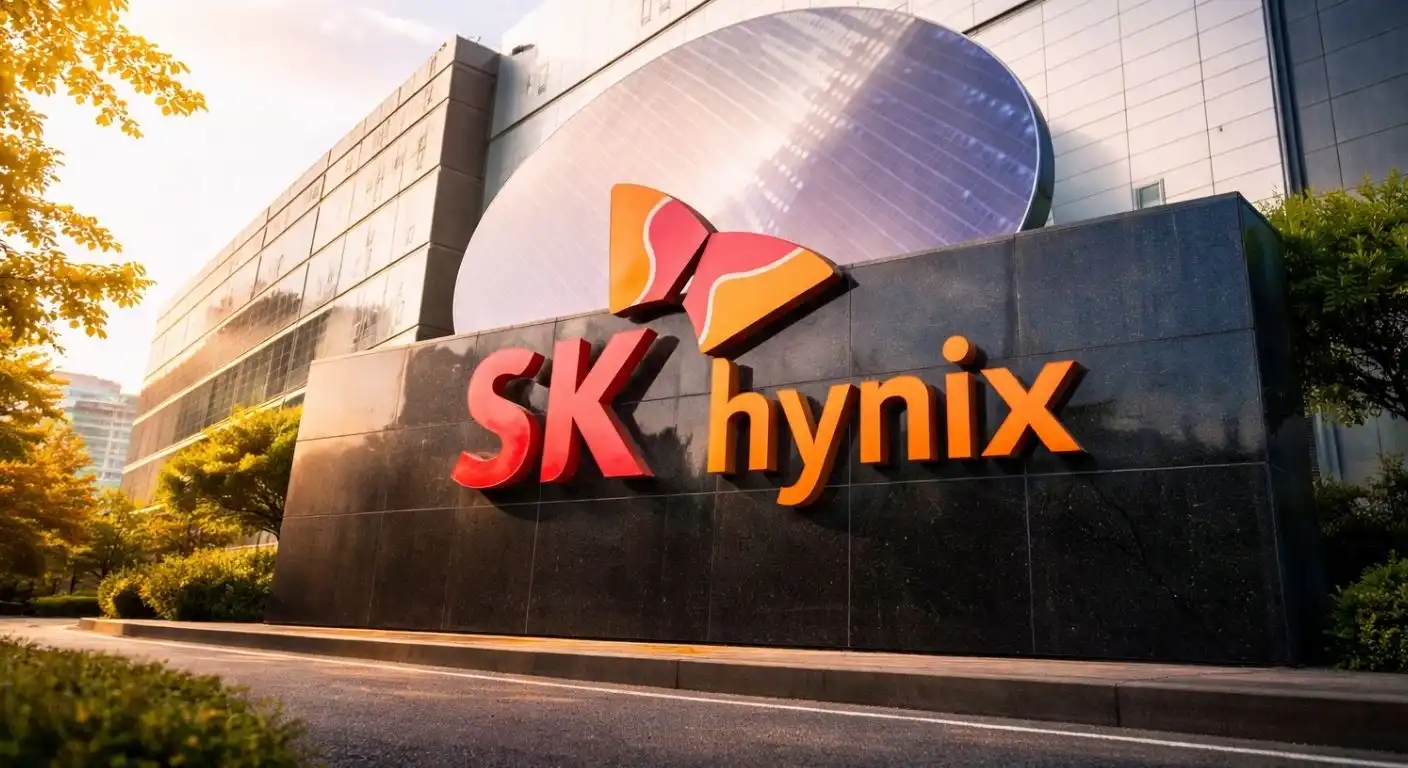
South Korean semiconductor giant SK Hynix is preparing for a landmark initial public offering (IPO) on a major U.S. stock exchange, aiming to raise an estimated $28 billion. This strategic move is designed to capitalize on the massive global demand for high-bandwidth memory (HBM) chips, which have become the essential fuel for artificial intelligence development. By tapping into the depth and liquidity of American capital markets, the company plans to secure the financial runway necessary to maintain its lead in the global hardware race and fund its multi-billion dollar manufacturing expansion.
The decision to pursue a U.S. listing marks a significant shift in the strategic focus of the South Korean semiconductor industry. For decades, the company remained largely tethered to domestic stock exchanges. However, as the center of gravity for AI innovation has shifted toward Silicon Valley and major U.S. cloud regions, having a direct presence in American financial markets has become a business necessity. By trading in the same time zone as its most critical partners—such as NVIDIA and various cloud hyperscalers—the company expects to gain greater visibility among institutional investors who specialize in high-growth technology.
The scale of the $28 billion offering is unprecedented in the semiconductor sector. It reflects the immense capital intensity required to remain competitive in the HBM market, where fabrication plants—often referred to as “fabs”—frequently cost over $15 billion each. The funding will provide the company with the liquidity to accelerate its roadmap for 2-nanometer and 3-nanometer processes, ensuring it stays ahead of competitors who are also investing aggressively to capture a share of the AI memory market. In an industry where a single generation of delay can result in a permanent loss of market share, this capital provides the “insurance” needed to keep building at full capacity.
This IPO also serves as a strategic move to manage geopolitical risks. By establishing a permanent foothold in the U.S. financial landscape, the firm strengthens its ties to American industrial policy and secure supply chain initiatives. The U.S. government has been clear about its desire to “friend-shore” the production of critical technology components. By integrating more deeply with the U.S. economy, the company becomes an essential ally in the national mission to maintain a domestic-led technology ecosystem, thereby reducing the impact of potential trade disruptions elsewhere in the world.
Institutional investors are already signaling strong interest in the offering. The demand for “pure-play” AI hardware exposure has remained elevated, with funds constantly looking for reliable companies that can demonstrate consistent growth in HBM sales. Unlike pure software companies that face high volatility, memory manufacturers offer a tangible, asset-heavy investment profile that many pension funds and large-scale asset managers find attractive. The $28 billion figure reflects the company’s confidence that it can attract a broad base of long-term capital that is not just looking for a quick profit, but for a stable foundation in the AI-driven economy.
Operational efficiency remains the focus for the company’s leadership team. With the new capital, the firm intends to implement a more automated, AI-driven manufacturing process across all its global sites. This transition is expected to improve production yields by 1.5% to 2%—a small-sounding number that represents hundreds of millions of dollars in additional margin when applied to millions of memory chips. This focus on “smart manufacturing” is vital, as the company needs to maximize the output of every square foot of its clean-room space to satisfy the relentless appetite of AI data centers.
Looking ahead, the listing process will involve rigorous regulatory scrutiny, ensuring that the company’s financial disclosures meet the high standards of the U.S. securities market. This transparency is expected to build even greater trust with international customers. Being an American-listed entity changes how a firm is perceived by its global partners, offering a layer of corporate governance that is often a requirement for massive procurement contracts with governments and highly regulated industries like defense and finance.
As the company proceeds with this IPO, the entire semiconductor industry is observing the implications. The success of a $28 billion listing would prove that the AI hardware market is still in its early growth phase, with room for massive capital inflows. It also signals that the next generation of computing—centered on memory-speed and power-efficiency—will be defined by companies that can successfully bridge the gap between Asian manufacturing strength and American financial liquidity. If the IPO reaches its target, it will establish the company as one of the most powerful and well-capitalized players in the global semiconductor space, ready to power the next decade of digital transformation.
The move is clearly designed to set the company apart from the rest of the market. While competitors rely on slow-moving credit markets or domestic equity, this listing provides an immediate, global scale that is nearly impossible to replicate. It is a bold, high-stakes gamble that underscores the firm’s ambition to move beyond its roots and become the heartbeat of the modern data center. Whether the market is ready to absorb an offering of this size remains to be seen, but the intent is clear: the future of AI will be built on this foundation, and the company intends to be the one holding the keys to the kingdom.