Key Points:
- A former Apple veteran has launched a new smart glasses startup, successfully raising $1 billion in early-stage capital.
- The venture aims to challenge Meta’s dominance in the AR wearable space by prioritizing hardware comfort and everyday usability.
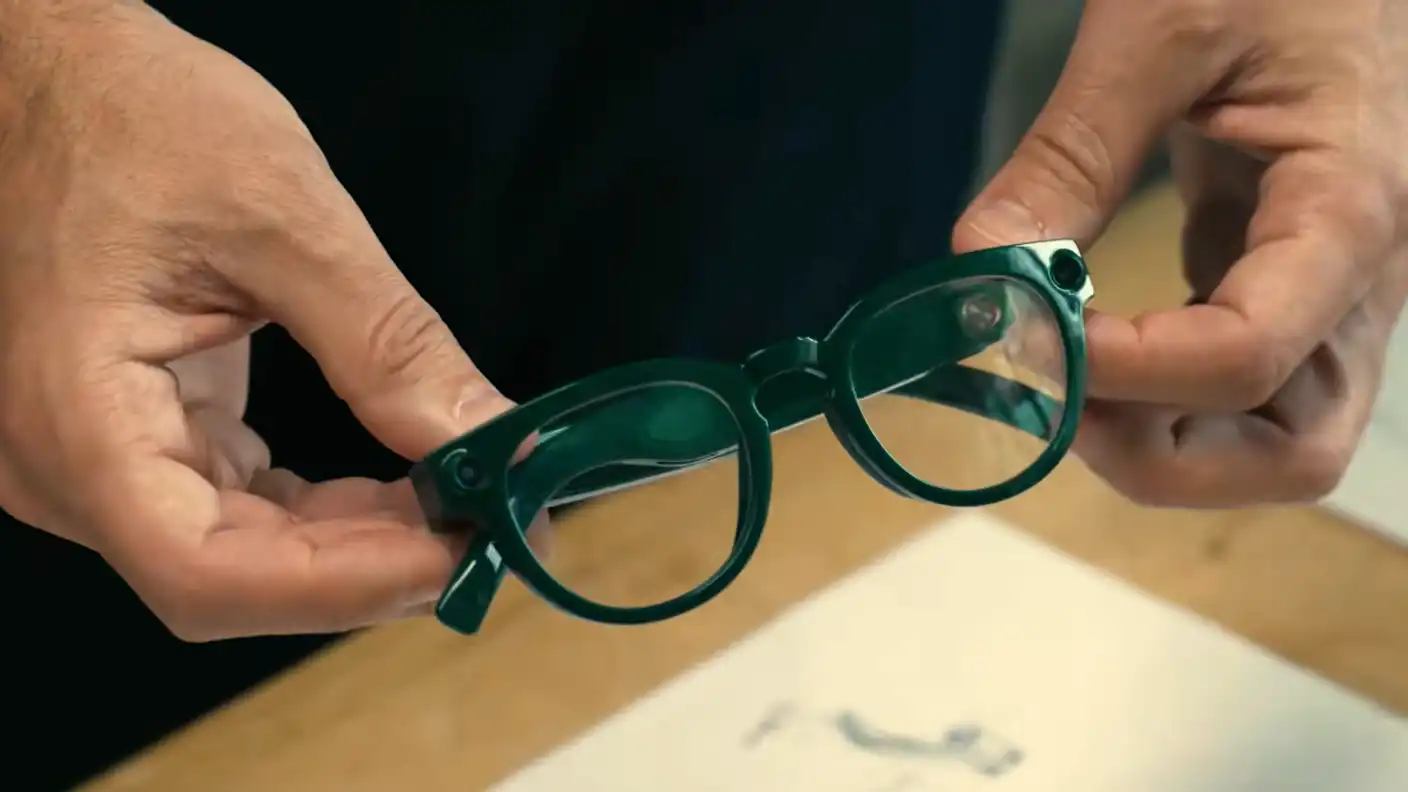
- The startup’s design philosophy focuses on “invisible technology,” moving away from the bulky, headset-style designs that currently define the market.
- Industry analysts view this as the most significant threat to Meta’s metaverse strategy, as the firm targets the critical “consumer-grade” market segment.
The race to own the future of wearable technology has intensified as a prominent former Apple executive has launched a new smart glasses venture, securing a massive $1 billion in initial funding. This startup aims to disrupt the augmented reality (AR) market, directly challenging Meta’s long-standing ambitions to dominate the transition from screens to heads-up displays. By focusing on lightweight, aesthetically pleasing hardware that integrates seamlessly with daily life, the new company hopes to solve the design hurdles that have prevented smart glasses from achieving mainstream adoption.
For years, the industry has chased the “holy grail” of augmented reality: a pair of glasses that looks like standard eyewear but contains the power of a high-end smartphone. Meta has invested heavily in this vision, but its current hardware offerings often suffer from significant trade-offs in battery life, heat management, and physical bulk. The new startup, founded by a former Apple leader known for overseeing significant portions of the iPhone’s design evolution, argues that the current approach is fundamentally flawed. Instead of treating glasses like a piece of heavy computing equipment, the team is building them like a piece of high-fashion jewelry that happens to be “smart.”
The $1 billion funding round represents one of the largest early-stage investments in the history of wearable tech. This capital provides the startup with a long runway to solve the most difficult technical challenges, including the miniaturization of optical components and the development of energy-efficient AI processors that can run directly on the frames. By bypassing the limitations of existing chipsets, the company intends to build its own custom silicon, tailored specifically to handle the intensive spatial computing tasks required for smooth, real-time augmented reality.
Market dynamics are shifting in favor of this “design-first” approach. Consumers have shown time and again that they are unwilling to wear uncomfortable, heavy, or socially awkward hardware, regardless of how advanced the underlying features might be. While Meta has focused on building an expansive software ecosystem and metaverse-ready platforms, the new entrant is betting that the winning strategy is to capture the “hardware interface” first. If the glasses are not comfortable, the software ecosystem will never reach its potential. This competitive divergence between the two firms will likely define the wearable market for the next several years.
The timing of this venture is also strategic. We are witnessing a peak in interest for artificial intelligence, and the next frontier for AI is “spatial computing.” Users are looking for ways to bring their digital information into the physical world without being tethered to a screen. A successful pair of smart glasses could potentially replace the smartphone as the primary interface for our digital lives. Investors who participated in the $1 billion round are betting that this specific team—with their deep background in Apple’s supply chain and design philosophy—has the best chance of turning this vision into a mass-market reality.
Of course, the road to mass adoption is fraught with obstacles. Creating a truly functional AR display involves navigating complex optical physics, light-field rendering, and battery energy density limits that are pushing the boundaries of current material science. The startup’s ability to recruit top-tier talent from existing tech giants will be tested as they scale their engineering team. However, the $1 billion budget allows them to pay for the best experts in the world, potentially accelerating their prototyping cycle by nearly 20% compared to a typical lean startup.
Meta, meanwhile, is not standing still. The social media giant has already committed to its own massive internal R&D roadmap, often spending over $1 billion every few months on hardware miniaturization. The competition between these two entities will likely lead to a period of rapid innovation, where new features are released at a breakneck pace. This environment benefits the consumer, as the pressure to gain a competitive advantage forces companies to innovate faster, lower their prices, and improve the quality of their displays and sensors.
Looking ahead, the market is set to bifurcate into two distinct categories: “work-focused” headsets that offer extreme immersion, and “lifestyle-focused” glasses that offer subtle, real-time information. The new startup is clearly targeting the latter, aiming to capture the market that uses glasses for navigation, instant translation, and effortless messaging. If they can successfully launch a product that feels like a normal pair of glasses while delivering high-quality visual overlays, it would be a game-changer for the entire industry, essentially fulfilling the promise of “ubiquitous computing” that has been hyped for decades.
As we move toward 2027, the success of this venture will depend on its ability to execute on its promises. The history of tech is filled with ambitious hardware projects that promised to change the world but failed to survive the realities of manufacturing and consumer demand. However, the combination of significant capital, experienced leadership, and a clear focus on the “comfort factor” gives this startup a fighting chance. Whether or not they succeed in dethroning Meta, the presence of such a well-funded rival will ensure that the future of wearable computing remains one of the most exciting and dynamic areas of the modern technology industry.