Key Points:
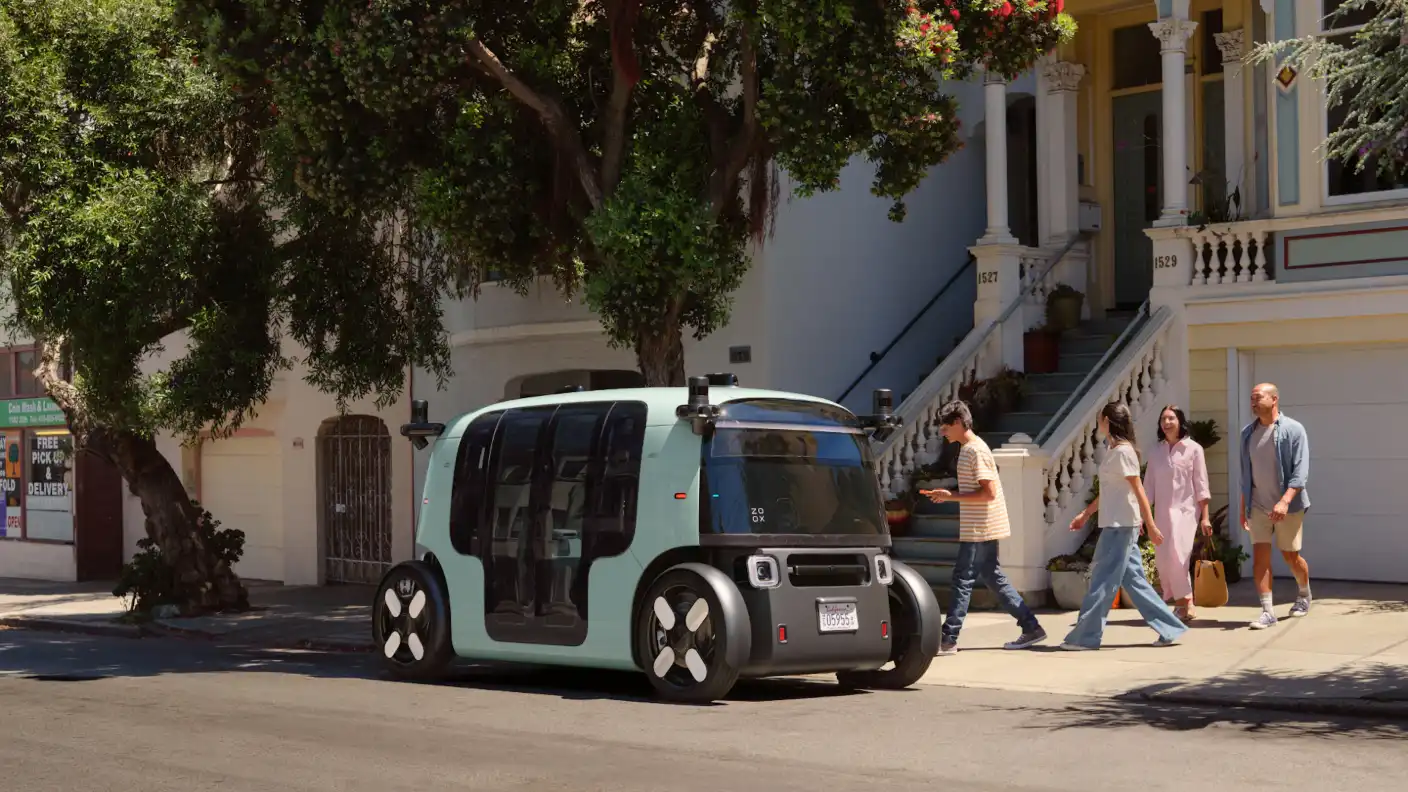
- Amazon’s self-driving unit Zoox is recalling its entire fleet of 105 autonomous vehicles due to a software flaw in detecting heavy smoke.
- The recall follows a June 20 incident where an unoccupied Zoox vehicle entered an active fire scene, braked abruptly, and stalled.
- U.S. vehicle safety regulators warned of a clear pattern of autonomous vehicles obstructing first responders and emergency scenes.
- Zoox is deploying an over-the-air software update to improve sensory capabilities, resolving the issue without physical repairs.
A critical safety vulnerability has forced Amazon’s autonomous vehicle subsidiary to temporarily pause operations and pull its entire active fleet off public roads. The Zoox Self-Driving Car Recall will impact all 105 of the company’s custom-built robotaxis currently operating in the United States. This decision comes after engineers discovered a software-based sensory flaw that prevents the vehicles from properly detecting heavy smoke, creating a severe road safety hazard that could cause driverless cars to enter active fire scenes and obstruct emergency responders.
The safety concern came to light following a highly problematic real-world incident in late June. An unoccupied autonomous vehicle encountered heavy, billowing smoke obscuring an active fire scene. Instead of safely rerouting or stopping at a distance, the vehicle entered the smoky area, braked abruptly, and stalled on the road while attempting to navigate away. A remote operator eventually had to guide the vehicle out of the danger zone using tele-guidance systems, but local firefighters still had to manually place traffic cones around the stationary unit to manage local traffic.
This incident occurred at a time of escalating tension between autonomous vehicle developers and federal auto safety regulators. Jonathan Morrison, who heads the National Highway Traffic Safety Administration (NHTSA), warned that the agency has documented a clear and dangerous pattern of self-driving cars driving directly into active emergency scenes. The regulator pointed to multiple incidents where driverless vehicles blocked the paths of ambulances and fire trucks, or completely failed to recognize and respond to basic emergency conditions like flashing lights, flares, smoke, fire, and traffic cones.
To address these recurring public safety hazards, the federal agency has scheduled urgent meetings with all major self-driving car manufacturers by the end of the month. Regulators are demanding that developers immediately propose technical solutions to ensure their autonomous software can safely recognize and interact with first responders. Auto safety officials have warned that any autonomous vehicle that cannot safely yield to emergency personnel represents an immediate, unacceptable danger to the general public, signaling a period of intense regulatory oversight.
To resolve the sensor and software deficiencies identified in the recall, the company is deploying an over-the-air software update across its entire 105-vehicle fleet. The software modification will significantly enhance the vehicle’s computer vision and sensor fusion algorithms, enabling the onboard artificial intelligence to better identify heavy smoke and active fire scenes. Because the fix can be deployed remotely without requiring physical modifications or repairs at a service center, the company hopes to return its vehicles to active passenger service quickly.
The safety-related recall has put immediate downward pressure on parent company Amazon’s stock, as investors evaluate the financial and reputational costs of the autonomous vehicle project. Amazon acquired the California-based startup in 2020 for over $1.2 billion to establish a high-tech footprint in the autonomous ride-hailing and logistics sectors. However, the persistent technical setbacks and regulatory hurdles associated with self-driving technology continue to drag down near-term profitability, reminding shareholders of the high capital intensity of the robotaxi business.
This is not the first time the company’s autonomous fleet has faced regulatory setbacks and mandatory recalls. In December 2025, the firm recalled 332 vehicles in the United States to fix a critical software error that caused vehicles to cross yellow center lines and stop in front of oncoming traffic near intersections. Additionally, in May 2025, the company had to recall 270 vehicles to update its software and improve pedestrian tracking capabilities following a minor, highly publicized crash involving an unoccupied robotaxi and a passenger car in Las Vegas.
The persistent software flaws highlight the extreme difficulty of training artificial intelligence to navigate rare, highly unpredictable real-world situations, commonly referred to in the tech industry as “edge cases.” While self-driving cars can easily navigate standard, well-marked city streets under clear weather conditions, they often struggle when faced with complex, chaotic environments like active fire scenes, flashing emergency lights, or manual traffic detours. Training models to recognize these rare scenarios requires almost unimaginable amounts of real-world data and advanced computing infrastructure.
The regulatory pressure on Amazon’s self-driving unit is part of a broader, industry-wide crackdown on autonomous vehicles across the United States. Federal safety regulators have launched comprehensive investigations into several major players, including Tesla’s Full Self-Driving software and Alphabet’s Waymo fleet, following reports of traffic violations and collisions. As more companies prepare to commercialize their driverless services, the government is increasingly unwilling to allow tech firms to use public roads as unchecked test environments, requiring strict compliance with safety guidelines.
Ultimately, the voluntary recall of the 105-vehicle robotaxi fleet demonstrates that public safety must remain the absolute priority of the autonomous vehicle revolution. By deploying an over-the-air software fix to improve smoke detection capabilities, the company is taking a necessary step to mend its relationship with first responders and federal regulators. As the company prepares for its upcoming meetings with the NHTSA, its ability to prove that its vehicles can safely navigate complex emergency zones will ultimately determine whether it can successfully scale its driverless ride-hailing services in the future.