Key Points:
- Bank of Japan Governor Kazuo Ueda affirmed that interest rate increases remain on the table at every monetary policy meeting, including in September.
- The central bank lifted its policy rate to 0.25% in July after exiting negative interest rates in March, but real interest rates remain deeply negative.
- Core consumer inflation in Japan continues to hold near 2.8%, while spring wage negotiations secured average pay increases of 5.10%.
- The central bank is monitoring financial market volatility, the yen exchange rate, and United States economic growth before adjusting borrowing costs.
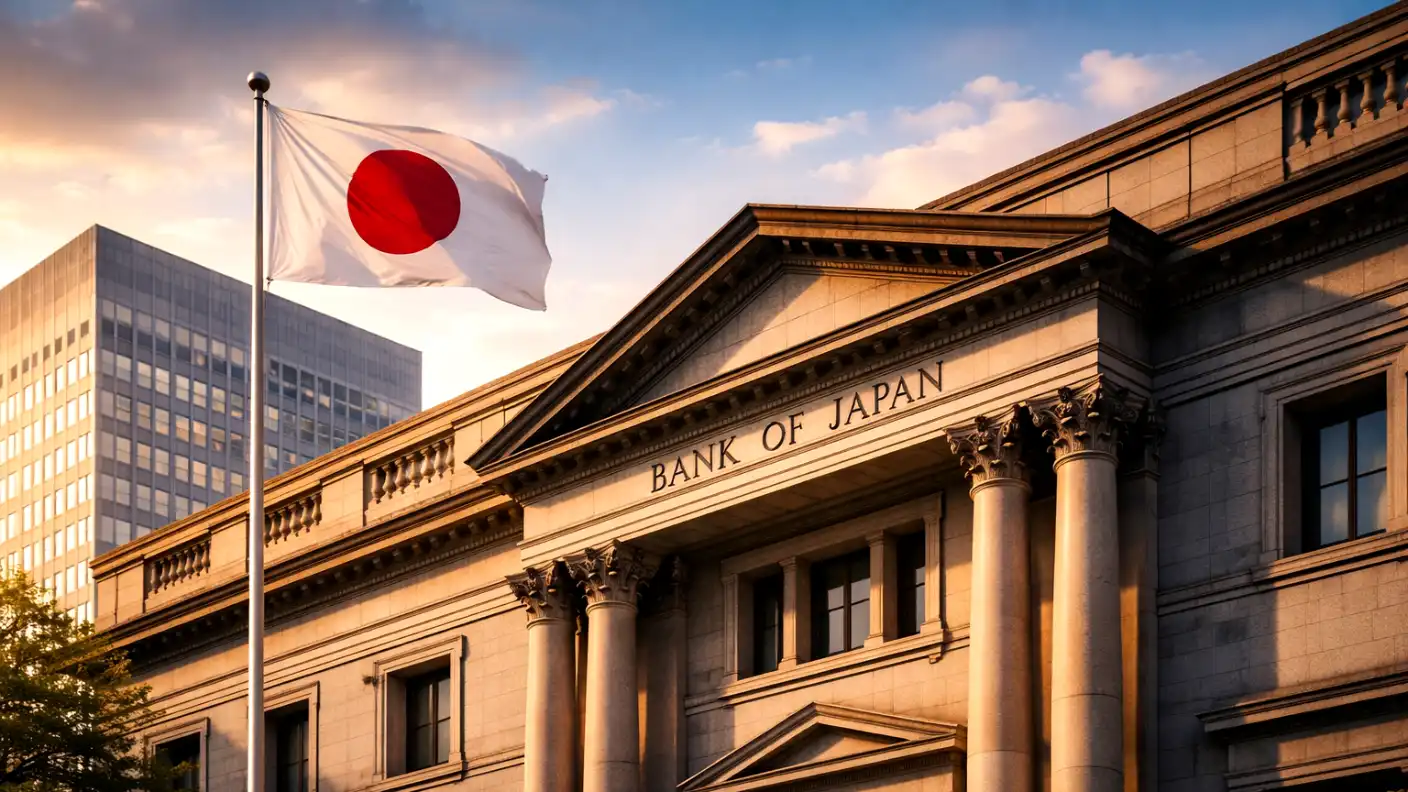
Bank of Japan Governor Kazuo Ueda signaled that the central bank remains prepared to raise benchmark interest rates at every upcoming monetary policy meeting, including its scheduled gathering later this month. Speaking during a parliamentary hearing, Ueda reaffirmed that the central bank will steadily tighten monetary conditions if economic output, service sector growth, and core inflation continue to track official baseline forecasts. The clear policy signal reinforces market expectations that Japan’s historic era of ultra-loose monetary stimulus has come to an end.
The central bank chief emphasized that real interest rates across Japan remain deeply negative even after two historic rate adjustments earlier in the year. The Bank of Japan ended eight years of negative interest rates in March, lifting its short-term policy target from negative 0.1% to a range between 0.0% and 0.1%. Policymakers followed with a second interest rate increase in July, raising the uncollateralized overnight call rate to approximately 0.25%. Because current borrowing benchmarks sit well below inflation, Ueda stressed that monetary conditions continue to provide substantial stimulus to the domestic economy.
Core consumer price inflation, which excludes volatile fresh food costs, continues to hover around 2.8%, remaining consistently above the central bank’s official 2.0% target for more than two years. Unlike previous commodity-driven price spikes, recent price increases stem from expanding domestic demand, rising logistics fees, and steady service sector adjustments. Central bank economists project that underlying inflation will sustainably settle around the 2.0% benchmark as businesses pass higher labor expenses on to retail consumers.
Robust wage growth forms the cornerstone of the central bank’s rate-hiking rationale. Results from annual spring labor negotiations revealed that major Japanese corporations agreed to average wage increases of 5.10%, representing the largest annual compensation boost in 33 years. Furthermore, regional economic surveys show that wage hikes are successfully spreading to small and medium-sized enterprises, which employ roughly 70% of Japan’s domestic workforce. This broad-based income growth supports consumer purchasing power and fuels a virtuous cycle between wages and prices.
Currency fluctuations also play an influential role in shaping the central bank’s interest rate timeline. The Japanese yen appreciated to trade around 145 to 147 against the United States dollar, rebounding sharply from historic thirty-eight-year lows near 161.95 recorded in July. A weaker yen previously inflated the import cost of crude oil, industrial metals, and food commodities, putting severe pressure on household budgets. Ueda noted that while recent currency stabilization eases immediate import price pressures, policymakers will monitor exchange rate volatility closely.
The governor addressed the global financial turbulence that erupted following the central bank’s July interest rate increase. The sudden rate adjustment triggered a massive unwinding of cross-border yen carry trades, causing the benchmark Nikkei 225 equity index to suffer its largest single-day point drop in history before recovering. Ueda stated that the central bank will carefully assess global market stability and overseas macroeconomic conditions—particularly growth trends in the United States—before executing further policy changes.
Financial markets are closely scrutinizing where Japan’s neutral interest rate ultimately lies. While the Bank of Japan does not publish an official estimate for the neutral rate—the theoretical rate that neither stimulates nor restricts economic growth—private economists place the benchmark between 1.0% and 1.5%. This gap indicates that the central bank has considerable room to raise borrowing costs in gradual increments over the next two years without choking off economic expansion.
Commercial banking institutions and financial markets across Tokyo are rapidly preparing for higher borrowing costs. Commercial banks have raised prime lending rates on variable-rate home mortgages for the first time in nearly two decades, nudging monthly payments higher for new homebuyers. In contrast, higher policy rates are delivering overdue financial relief to regional lenders and commercial deposit holders, who are beginning to earn meaningful interest yields on retail savings accounts after years of near-zero returns.
The Bank of Japan is simultaneously scaling back its massive sovereign bond purchases to normalize bond market functioning. Under its quantitative tightening roadmap, the central bank plans to halve its monthly purchases of Japanese government bonds from 6 trillion yen ($41 billion) to approximately 3 trillion yen ($20.5 billion) by early 2026. This gradual withdrawal allows market forces and private institutional buyers to determine long-term government bond yields.
As the Bank of Japan approaches its September monetary policy meeting, international investors and domestic policymakers are watching closely for the timing of the next rate move. With underlying inflation holding firm, wage gains spreading across the country, and real interest rates remaining deeply negative, Governor Ueda’s clear message underscores a decisive institutional commitment to return Japan to normalized monetary policy.