Key Points:
- Micron, Intel, and Advanced Micro Devices together added approximately $2 trillion in market value during a blockbuster second-quarter rally.
- Micron’s stock soared over 240 percent in Q2, adding $920 billion in market cap as its gross margins jumped to 84.9 percent.
- Intel registered a 216 percent recovery, adding $480 billion in value due to renewed CPU demand and strategic domestic factory investments.
- The massive rally represents a broadening of investor demand for AI infrastructure beyond graphics leader Nvidia to the wider supply chain.
The global landscape of technology investing is undergoing a massive, highly significant transition as the artificial intelligence boom matures. During a blockbuster second-quarter rally, a broader group of U.S. chipmakers successfully decoupled from the singular orbit of market leader Nvidia to generate a spectacular rise in valuation. Micron Technology, Intel Corp., and Advanced Micro Devices (AMD) together added approximately $2 trillion in combined market value as institutional and retail investors bet heavily that the AI buildout will support all major segments of the semiconductor supply chain. This historic surge proves that the investment thesis has officially evolved from speculative software hype to a highly concrete battle for physical computing infrastructure.
Leading this non-Nvidia hardware charge is Idaho-based memory giant Micron Technology, which witnessed an extraordinary 240% single-quarter surge in its stock price during the second quarter. The spectacular rally added approximately $920 billion to the company’s total market capitalization, briefly propelling its overall valuation to a record $1.39 trillion and placing it ahead of major consumer tech leaders like Meta and Tesla. This massive re-rating was driven by a historic memory supply squeeze, with the company’s gross margins jumping from 39% a year ago to a staggering 84.9% in its latest quarterly report. To secure their long-term supply of high-bandwidth memory through 2027, major hyperscalers have committed a massive $22 billion in upfront customer deposits.
Similarly, legacy chipmaker Intel Corp. registered a dramatic, highly unexpected turnaround, with its stock rising by 216% during the second quarter to add $480 billion in market value. Intel’s strong recovery represents a major victory for its multi-year transition strategy, benefiting from a renewed global demand for high-performance central processing units (CPUs) that operate alongside AI accelerators in modern server racks. At the same time, the company’s massive, government-backed investments in building state-of-the-art semiconductor fabrication plants on American soil have successfully positioned the firm as a vital national champion for local supply chain security, helping to restore investor confidence.
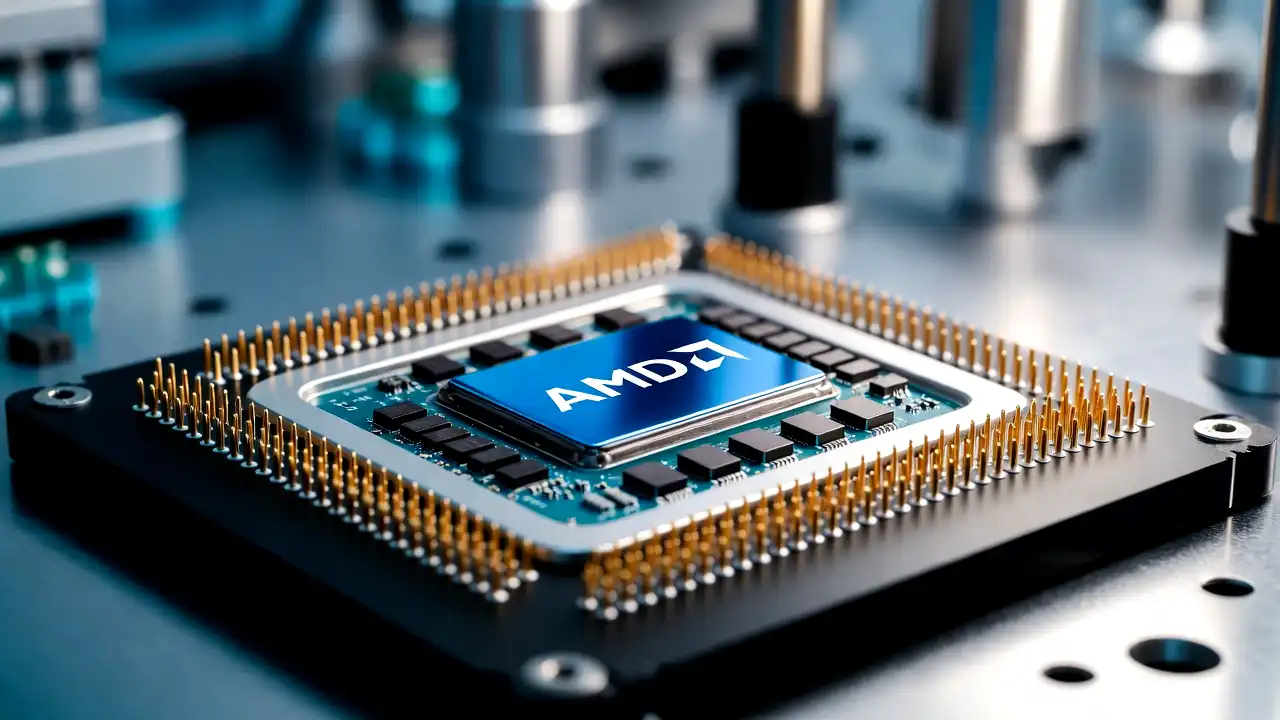
At the same time, Advanced Micro Devices (AMD) saw its stock price nearly triple during the second quarter, adding an impressive $615 billion to its total market value. While Nvidia continues to hold a dominant share of the global graphics processing unit (GPU) market, AMD has successfully established itself as the premier, highly credible alternative for large-scale cloud providers seeking to bypass Nvidia’s pricing monopoly. By releasing its high-performance MI300 and upcoming MI325 accelerators at highly competitive price points, AMD has captured a major slice of the enterprise market, proving that the future of AI computing will not belong to a single, uncontested provider.
The massive wave of capital flowing into the hardware sector lifted the entire semiconductor ecosystem, generating historic gains across all major component manufacturers. During the second quarter, data center connectivity specialist Marvell Technology gained approximately 200%, while British chip design giant Arm Holdings rose by 134%. This synchronized rise propelled the benchmark VanEck Semiconductor ETF, which trades under the ticker symbol SMH, to a record 71% quarterly advance, marking the strongest single-quarter performance in the exchange-traded fund’s history and proving that hardware has officially become the favorite sector of the global financial markets.
A massive, highly coordinated capital rotation away from traditional “Magnificent Seven” software and consumer tech platforms heavily funded this explosive semiconductor rally. During June alone, the combined market capitalization of the seven largest U.S. tech giants plummeted by a staggering $2.3 trillion as institutional portfolio managers systematically reduced their risk exposure to high-multiple software firms. Investors are growing increasingly skeptical of software-centric business models, choosing instead to park their capital in physical chipmakers that generate immediate, high-margin cash flows by supplying the essential building blocks of the next computing revolution.
While the record-breaking quarterly gains have sparked widespread celebration on Wall Street, some conservative macroeconomic analysts are beginning to raise critical questions regarding the sustainability of the hardware boom. Skeptics point out that while cloud giants like Microsoft, Google, and Amazon are committing trillions of dollars to build massive, energy-intensive data centers, these infrastructure investments have yet to translate into significant corporate profitability. If enterprise clients continue to cap their AI software spending due to weaker affordability and a lack of clear, short-term return on investment, the massive demand for high-end microchips could experience a sharp, unexpected deceleration.
The primary physical bottleneck threatening the long-term growth of the semiconductor sector is the immense, unsustainable power consumption of modern AI data centers. Operating a single, gigawatt-scale computer cluster requires massive utility connections and consumes millions of gallons of scarce freshwater daily for cooling, triggering severe community pushback and regulatory freezes in major markets. To prevent a catastrophic local grid collapse, national governments are beginning to implement strict environmental limits and capacity caps on new data center construction. If tech companies cannot successfully secure clean, green energy sources to power their next-generation supercomputers, the entire hardware supply chain could face a severe, non-financial roadblock.
Ultimately, the historic second-quarter semiconductor rally proves that the digital revolution has officially entered its physical manufacturing phase. While the software developers and model builders originally captured the public’s imagination, the physical realities of the silicon supply chain are now dictating the pace of global innovation. By successfully diversifying their investments past a single dominant provider and backing a broader group of manufacturing leaders like Micron, Intel, and AMD, global financial markets have established a highly resilient, globally distributed foundation for long-term growth. The companies that can successfully manufacture these complex, high-margin platforms at scale will continue to lead the way, permanently defining the future of the global technology economy.