Key Points:
- Amazon has reached its “water positive” goal in India ahead of its original 2027 target, returning 120% of the water it consumes in its direct operations.
- The company revealed that its Amazon Web Services (AWS) data centers in India rely entirely on air-cooling systems instead of consuming local water resources.
- Amazon has invested over ₹62 crore in watershed restoration, rainwater harvesting, and drip irrigation projects across six water-stressed Indian states.
- Global technology firms are facing intense public and regulatory scrutiny over the massive resource requirements of AI infrastructure.
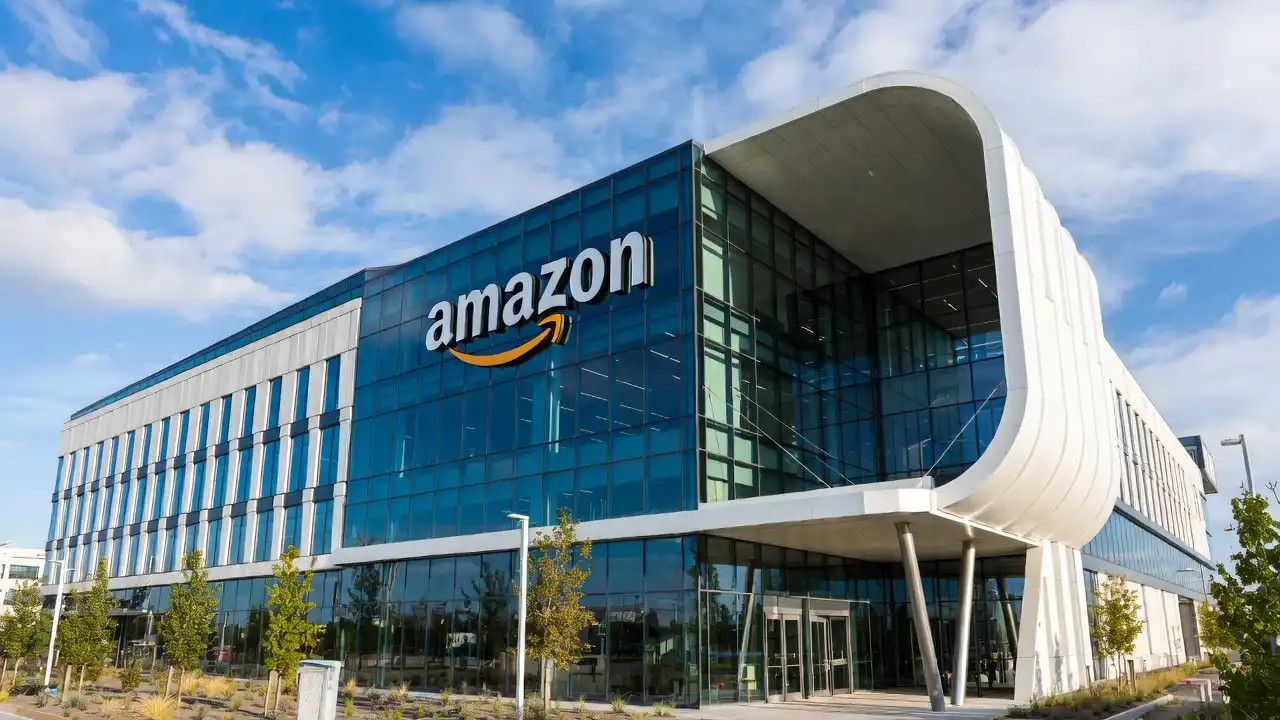
In a major milestone for sustainable cloud computing, Amazon has announced that its Indian operations have reached “water positive” status a year ahead of its original 2027 target. The U.S.-based technology giant has successfully replenished more water into local communities than it consumed across its direct operations, which include massive fulfillment centers, corporate offices, and data centers. The achievement arrives at a highly sensitive time, as global technology firms face escalating public and regulatory pressure over the massive environmental footprint of the resource-hungry artificial intelligence infrastructure currently being built worldwide.
The issue of water availability is particularly acute in India, a country that is home to 18% of the global population but holds only 4% of the world’s freshwater resources. This year’s summer has brought severe water shortages and rationing across major urban centers, worsened by a strong El Niño weather pattern that resulted in weak monsoon rains. The crisis has hit hard in industrial hubs like Karnataka, home to the technology capital Bengaluru, and Maharashtra, home to the financial capital Mumbai. This week, authorities in Mumbai, a metropolis of 13 million people, warned that municipal reservoirs have just 40 days’ worth of water remaining, emphasizing the immense pressure on local utilities.
To mitigate its impact on these vulnerable municipal water grids, Amazon revealed that its Amazon Web Services (AWS) data centers in India do not use any water for cooling. Standard data centers typically consume millions of liters of fresh water daily to cool high-performance server racks. Instead, AWS has engineered its Indian facilities to rely on custom air-cooling systems, combining them with advanced liquid-cooling capabilities to manage the intense heat generated by advanced artificial intelligence processors. By eliminating water-based cooling in its Indian server farms, the company has bypassed a major environmental and regulatory bottleneck.
To achieve its water positive milestone early, Amazon has invested more than ₹62 crore in sustainable water replenishment and conservation projects across six of India’s most water-stressed states. Working in partnership with local non-governmental organizations and community groups, the company has funded more than 50 watershed restoration, piped water supply, and drip irrigation projects. These community initiatives are expected to restore over 3 billion liters of water annually. For example, a major agricultural replenishment project covering 1,500 hectares in Maharashtra is helping 700 local farming families implement sustainable irrigation, boosting their average crop incomes by 80%.
The company’s conservation efforts also extend deep within its own physical logistics and corporate facilities. Across its Indian fulfillment and logistics centers, Amazon has deployed on-site sewage treatment plants to recycle greywater and wastewater. These automated systems recycle approximately 298 million liters of water annually, which the company reuses for landscape irrigation and toilet flushing. Furthermore, the company has installed massive rainwater harvesting pits across its industrial sites, collecting roughly 178 million liters of water per year that naturally percolates back into local aquifers to recharge depleted groundwater levels.
On a global scale, Amazon has been working to defend its environmental record as it plans to spend more than $100 billion over the next decade constructing data centers worldwide, including a planned $35 billion investment in India by 2030. The company reported that its global data center operations achieved an average water use efficiency of 0.12 liters of water per kilowatt-hour in 2025. This performance is more than seven times more water-efficient than the estimated global industry average of 0.84 liters per kilowatt-hour, representing a 52% improvement since 2021 as the firm marches toward its global goal of becoming water positive by 2030.
The intense corporate focus on water efficiency highlights the massive environmental challenges of the ongoing artificial intelligence boom. Advanced AI models, which require significantly more computational power and cooling than traditional web searches, are driving an unprecedented surge in global data center water consumption. According to estimates from the International Energy Agency (IEA), total water consumption across the global AI supply chain is projected to climb to roughly 1.2 trillion liters by 2030, up from about 560 billion liters in 2023. This rapid scaling has triggered a wave of new legislative proposals across the globe aimed at mandating strict water disclosures.
Amazon is not the only technology giant revising its infrastructure design to survive the resource squeeze. Rival Microsoft has also committed to becoming water positive by 2030, allocating $17 million to fund regional watershed protection projects. In India, Microsoft is engineering its planned data center facilities in Hyderabad, Pune, Chennai, and Mumbai to utilize zero-water cooling designs while securing green electricity through local renewable energy partnerships. Google has also pledged to return more water to local communities than its server farms consume by the end of the decade, reflecting a broader realization that tech firms must secure the trust of local communities to protect their business operations.
As the global tech industry continues to build out the physical infrastructure of the digital age, the relationship between operational scaling and environmental stewardship will remain highly volatile. If technology firms cannot prove that their data centers can expand without draining local drinking supplies, they will face growing community opposition, costly lawsuits, and strict municipal construction moratoriums. For Amazon, achieving its water positive milestone in India ahead of schedule is a powerful proof of concept. The ongoing water crisis proves that the future of artificial intelligence will not just be decided by the speed of our software, but by how carefully we manage the natural resources of our planet.