Key Points:
- Australian private capital expenditure fell 3.6% in the second quarter to 50.95 billion Australian dollars, missing market expectations for flat growth.
- Spending on information and telecommunications equipment dropped 53% following a record 199.6% surge in data center server imports.
- Physical data center construction and renewable energy projects cushioned the decline, lifting building and structures investment by 2.1%.
- Australian businesses upgraded future full-year capital spending plans by 15.5% to 200.7 billion Australian dollars.
Australian business investment hit a temporary air pocket during the second quarter as a dramatic surge in data center equipment purchases cooled down. Official economic data reveals that total new private capital expenditure declined by 3.6% on a seasonally adjusted basis to an inflation-adjusted 50.95 billion Australian dollars, equivalent to roughly $36.58 billion. The contraction reversed an upwardly revised 6.9% jump recorded in the first quarter and missed financial market expectations for steady investment.
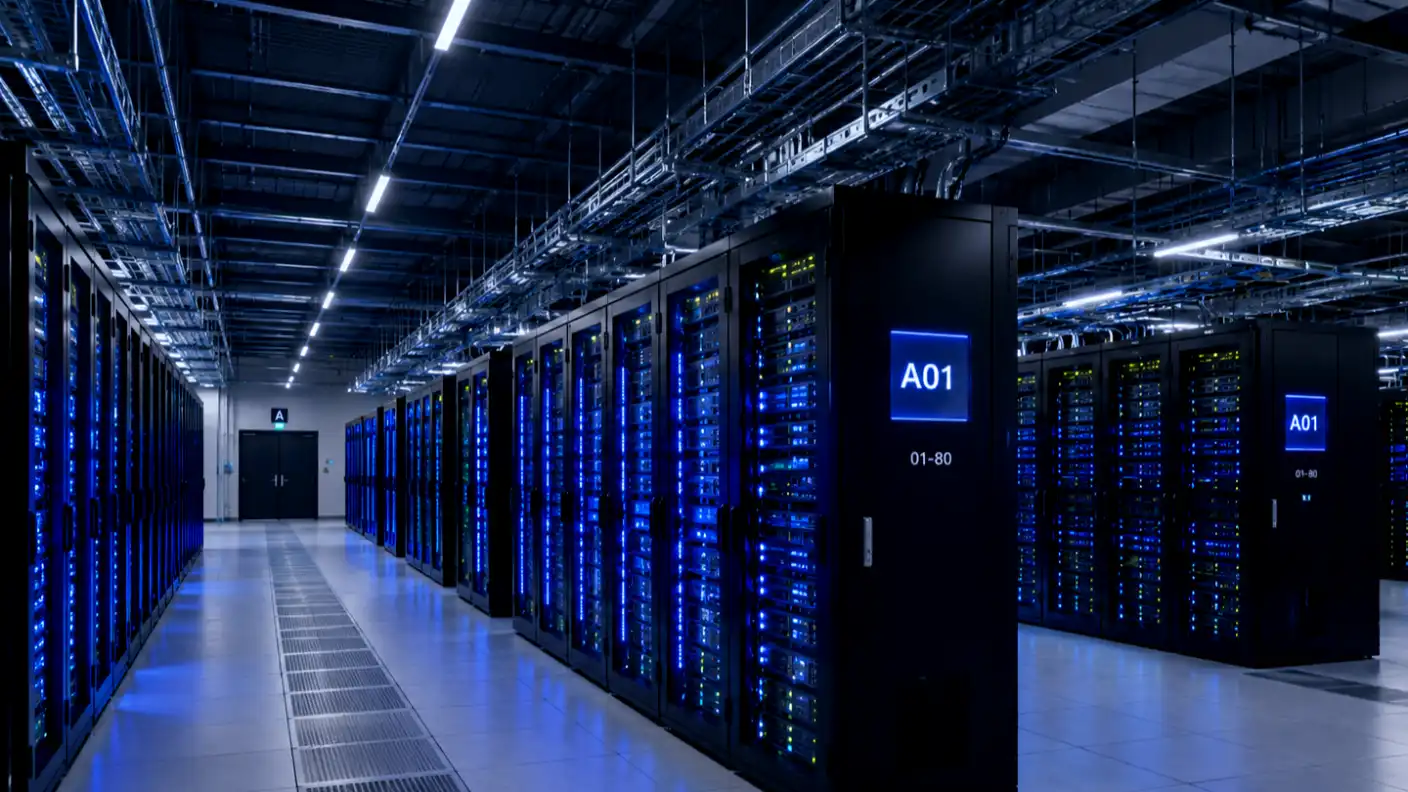
The primary catalyst behind the quarterly investment decline was a sharp pause in information technology hardware procurement. Spending on information media and telecommunications equipment plunged 53.0% quarter-on-quarter. The drop followed a historic 199.6% spending surge during the first three months of the year, when global technology conglomerates and domestic cloud operators rushed to import thousands of specialized server racks, graphics processors, and networking switches to outfit newly completed artificial intelligence data centers.
The pause in tech equipment shipments dragged down overall machinery investment across the economy. Total expenditure on new equipment, plant, and machinery dropped 8.9% during the quarter, with non-mining equipment spending falling 11.3%. Partial gains in transportation equipment, construction machinery, and mining equipment were insufficient to offset the massive hardware vacuum left by the tech sector’s post-surge digestion phase.
In contrast to the slump in digital equipment purchases, physical construction of industrial infrastructure remained strong. Investment in buildings and structures rose 2.1% during the quarter, rebounding from a 3.3% decline in the prior quarter. Construction was driven primarily by a 3.3% increase in non-mining commercial building activity, where data center construction and shell expansion expanded for an eighth consecutive quarter alongside the commencement of major utility-scale wind, solar, and battery storage projects.
Geographic data illustrated where the data center equipment slowdown was felt most acutely. The largest quarterly drops in private capital spending occurred in Victoria, where investment plunged 13.9%, and New South Wales, which recorded a 2.8% decline. Both southeastern states had captured the overwhelming majority of international server imports during the first-quarter tech surge, making their local investment numbers vulnerable to a natural post-import lull. Conversely, mining-heavy Western Australia expanded capital spending by 4.0%, while Tasmania surged 9.3%.
Despite the quarterly contraction, forward-looking business confidence remains exceptionally resilient. Australian businesses upgraded their forward investment plans for the full financial year. The third official estimate for total annual capital expenditure reached 200.7 billion Australian dollars, representing a 15.5% upgrade over previous estimates. Non-mining enterprises drove the optimism, lifting their full-year spending outlook by 17.7% as companies commit capital to long-term energy transition projects, artificial intelligence adoption, and logistics automation.
The volatility in quarterly capex highlights the transformative role of data centers in Australia’s macroeconomic data. National statistical authorities recently established dedicated tracking methodologies for digital infrastructure, noting that data center operations and equipment imports now create measurable swings across quarterly gross domestic product calculations. Because server hardware is import-intensive, large equipment surges often expand capital expenditure while simultaneously increasing import deductions in national accounts.
The quarterly investment slump creates a complicated policy backdrop for the Reserve Bank of Australia as it evaluates interest rate settings. While business equipment spending contracted in the second quarter, separate economic indicators show consumer demand accelerating, with household spending jumping 1.1% in July and annual inflation running hot at 3.5%. Central bank policymakers must determine whether contracting business investment signals broader economic softening or simply reflects temporary supply chain lulls in the tech sector.
As Australian enterprises digest their initial wave of computing hardware imports, the second-quarter capex drop represents a temporary pause in a multi-year digital infrastructure buildout. With physical data center construction continuing at an active pace and corporate full-year investment plans upgraded past 200 billion Australian dollars, the underlying commitment to modernizing the Australian economy remains firmly intact. Moving forward, the next wave of hardware deployments will power the country’s transition into a regional computing hub.