Key Points:
- CXMT will launch its book-building process on July 15, targeting a $4.3 billion capital raise on the Shanghai Stock Exchange.
- The IPO is a strategic pillar of the Chinese government’s “tech sovereignty” mandate, intended to fund the mass production of high-performance DRAM.
- This listing is expected to be heavily oversubscribed by state-backed institutional investors and domestic funds prioritized for long-term semiconductor development.
- The capital will allow the firm to accelerate its expansion into 2-nanometer and next-generation HBM production, directly challenging traditional global market leaders.
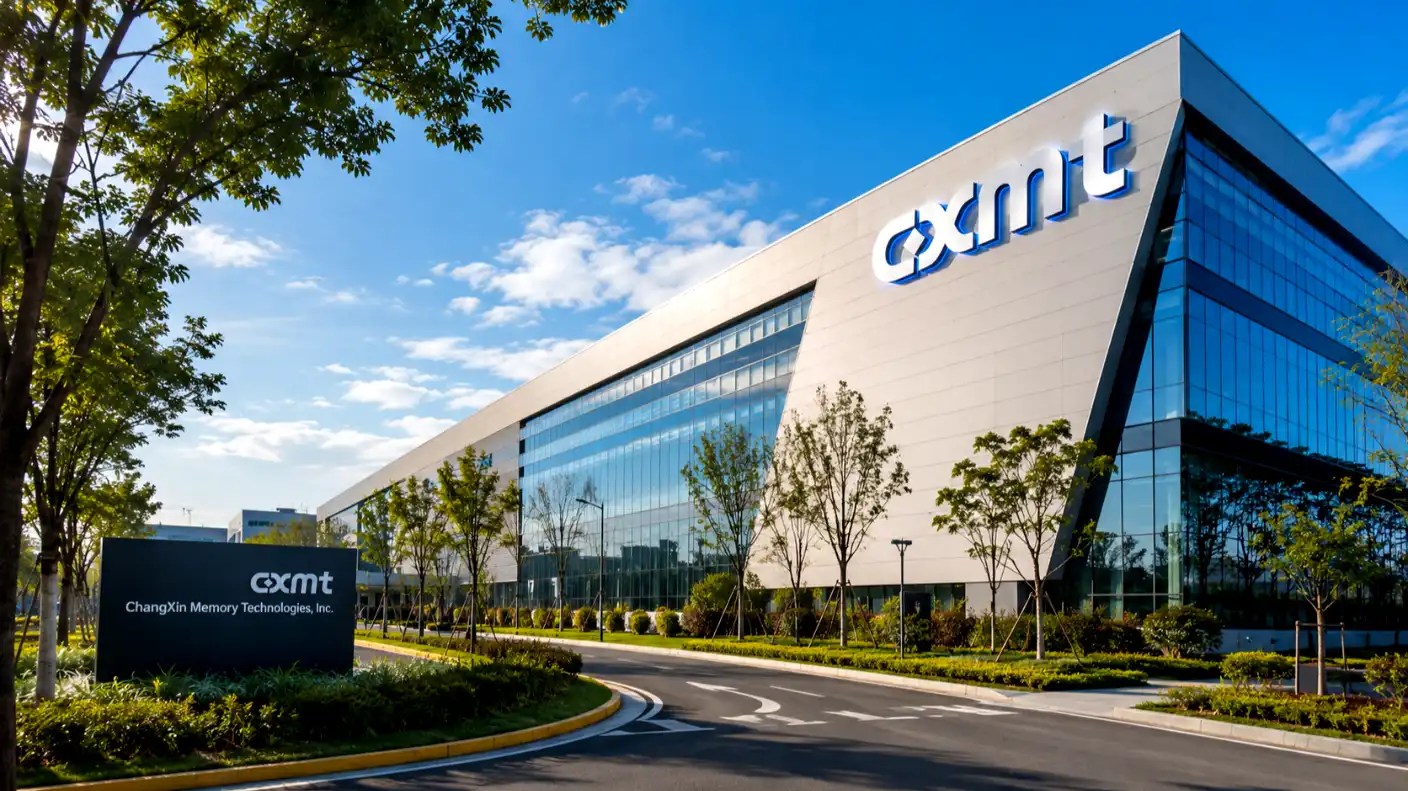
ChangXin Memory Technologies (CXMT), China’s leading domestic producer of DRAM memory chips, has officially confirmed the dates for its massive initial public offering (IPO) on the Shanghai Stock Exchange. The company plans to begin its “book-building” process on July 15, aiming to raise approximately $4.3 billion. This listing is set to become one of the largest semiconductor public offerings in the region, reflecting the intense state-backed focus on achieving self-sufficiency in the critical field of memory chip manufacturing.
The timing of this IPO could not be more critical for the domestic semiconductor industry. As international export controls continue to tighten, restricting the movement of advanced hardware and lithography equipment into the mainland, the importance of CXMT as a “national champion” has skyrocketed. The firm is currently the only major domestic supplier capable of mass-producing memory chips that meet the stringent performance requirements for modern data centers and AI training clusters. The $4.3 billion capital infusion will effectively provide the firm with the financial runway to finalize its most ambitious fabrication projects, which have been under construction for the past two years.
For global investors and local institutional funds, this listing is not just another stock market debut; it is a direct investment in the future of the nation’s technological infrastructure. Government-linked funds and regional investment groups are expected to account for a massive portion of the offering. By directing billions of dollars into the company, these institutions are ensuring that the firm remains adequately funded to survive the “burn rate” of advanced research and development. In the semiconductor industry, where a single new fabrication plant can cost over $15 billion to build and equip, this IPO is a essential step in maintaining a continuous pace of innovation.
Technologically, the firm is working hard to narrow the performance gap with international rivals. While it currently focuses on standard DRAM and NAND modules, the upcoming development pipeline includes plans for high-bandwidth memory (HBM)—the specialized chips that serve as the “brain-feed” for AI processors. This is a high-stakes, high-reward strategy. By successfully producing HBM locally, the firm would solve the single most significant supply chain vulnerability for Chinese AI companies, who are currently forced to pay premium prices to import these components from foreign suppliers.
The competitive landscape for the company is intense. It faces an uphill battle against established global giants that have dominated the memory market for decades. These firms benefit from massive scale and established customer bases. However, CXMT is competing on a different playing field, one governed by national policy and a captive domestic market. By locking in long-term supply agreements with major Chinese cloud providers and AI developers—as evidenced by recent multi-billion dollar contracts—the company is building a guaranteed revenue base that its competitors cannot easily dismantle.
Manufacturing at this scale requires a vast ecosystem of support. The IPO proceeds are also earmarked for improving the firm’s domestic supply chain, from high-precision chemicals to automated assembly robots. The company aims to increase its “local content” usage, ensuring that over 60% of the materials used in its manufacturing process are sourced within the country by the end of the decade. This transition reduces the impact of global price fluctuations and keeps the company’s costs stable even when international logistics are compromised by trade tensions.
The market sentiment surrounding the Shanghai listing remains cautious yet optimistic. While the semiconductor sector is historically cyclical, the current demand for AI-driven memory is proving to be a secular growth trend. The IPO is expected to face high demand, as investors recognize that the company is a “must-have” asset in any technology-heavy portfolio. If the listing proceeds as planned, it will set a new record for Chinese hardware firms, cementing the company’s status as the most important memory maker in the region.
As the book-building process kicks off, the company will have to prove that it can manage the expectations of public shareholders alongside the mandates of national policy. Publicly traded companies face quarterly pressure, while semiconductor manufacturing is a long-term, decade-spanning endeavor. Balancing these two worlds will be the company’s biggest challenge following the IPO. The firm will need to show that its growth is not just supported by subsidies, but is backed by a genuine, competitive product that can hold its own in a marketplace that is increasingly defined by performance, power, and price.
Looking ahead, the global semiconductor industry will be closely monitoring the results of this offering. The scale of the $4.3 billion raise confirms that capital is still flowing heavily into the AI-memory space, even in a cooling economic climate. Whether this results in a sustainable manufacturing success or a future of overcapacity depends on the firm’s ability to execute its production roadmap. For now, all eyes are on July 15, as the company takes its first major step into the global public eye, ready to prove that it is ready to anchor the next era of Chinese technological self-reliance.