Key Points:
- Iran has resumed loading crude oil from its primary Kharg Island export terminal following a six-week naval blockade.
- The lifting of the U.S. Navy blockade follows the signing of a historic bilateral memorandum of understanding (MoU) on June 14, 2026.
- During the blockade, Iranian crude shipments dropped sharply from 1.64 million barrels per day in March to below 500,000 barrels per day in May.
- At least 24 tankers had accumulated at the Kharg Island anchorage, creating a major logistics bottleneck before the truce.
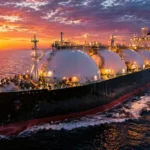
Iran has officially resumed loading crude oil from its primary offshore export terminal, emerging as an early winner following a major de-escalation of military tensions in the Middle East. According to newly released satellite tracking data and shipping logs, supertankers have begun docking at Kharg Island for the first time in roughly six weeks. The resumption of export operations follows the lifting of a tight naval blockade maintained by the United States. This breakthrough has injected fresh supply back into global energy markets, signaling a rapid return to commercial normalcy for a region that has spent months on the brink of a catastrophic energy crisis.
The lifting of the blockade marks the end of a highly restrictive maritime campaign that had surgically severed Iran’s primary economic artery. Initiated by the U.S. Navy on April 13, the naval blockade effectively choked off most of Iran’s maritime trade, preventing large tankers from entering or exiting the Persian Gulf. Consequently, Iranian crude oil loadings—which averaged a robust 1.64 million barrels per day in March—plummeted to less than 500,000 barrels per day in May. This sharp decline represented a steep financial blow to the country, as its central bank relies on oil revenues to fund up to 90% of state expenditures.
This sudden economic revival became possible only after Washington and Tehran signed a landmark interim peace framework on June 14, 2026. The bilateral memorandum of understanding officially declared an end to the U.S. naval blockade of Iranian ports and established a phased timeline to fully reopen the strategic Strait of Hormuz. In return for the easing of maritime restrictions, Iran agreed to suspend its enrichment programs and stop active drone and missile deployments across the region. With the legal barriers officially removed, U.S. Central Command announced the complete withdrawal of its warships from the blockade boundaries.
Satellite imagery captured shortly before the blockade was lifted revealed a massive, highly complex logistics bottleneck building up around Kharg Island’s offshore terminals. At least 24 large crude carriers had accumulated at the island’s anchorage, waiting idle as the naval blockade prevented them from transiting out of the Persian Gulf. Out of these stranded vessels, at least 16 supertankers were fully laden with millions of barrels of Iranian crude and petrochemicals. With the terminal’s physical storage tanks filled to near-capacity, the sudden lifting of the blockade has allowed these idle vessels to finally restart their engines and begin their outward journeys.
As shipping lanes reopened, many vessels in Iran’s highly elusive “ghost fleet” began moving more openly. Ship-tracking platforms reported that at least four large laden tankers, including the very large crude carriers Hero II and Diona, reactivated their Automatic Identification System (AIS) transponders after operating with limited visibility for weeks. Each carrying approximately 2 million barrels of crude oil, these vessels have sailed past the Gulf of Oman boundary, heading southeast toward international waters. Historically, these tankers transport their cargo to offshore transfer zones near Malaysia and Singapore, where the oil is repackaged to obscure its origin before final delivery to independent Chinese refineries.
While the U.S. naval blockade successfully choked off the majority of commercial shipments, independent security analysts tracking the conflict noted that Iran still managed to generate substantial revenue through illicit shipping channels. Since the outbreak of the conflict earlier this year, maritime monitors tracked at least 97 successful Iranian oil loadings, with 49 originating directly from Kharg Island. These covert shipments managed to slip past U.S. patrols to deliver approximately 91 million barrels of crude, generating an estimated $7 billion in revenue. This high revenue generation was supported by a sharp spike in global oil prices, which surged toward $100 per barrel during the height of the shipping crisis.
The resumption of operations at Kharg Island is particularly significant given how close the facility came to complete physical destruction. The coral island, which handles roughly 90% of Iran’s total crude exports and has a maximum loading capacity of 7 million barrels per day, was a frequent target of military threats. U.S. forces had launched airstrikes against military, radar, and mine-storage installations on the island earlier in the conflict, and political leaders in Washington had openly threatened to seize the entire terminal to take total control of the country’s energy assets. Ultimately, the successful negotiation of the peace treaty spared the terminal’s critical shipping infrastructure from direct damage.
The return of Iranian oil has had an immediate and powerful cooling effect on global energy benchmarks. Brent crude oil futures, which had been trading at highly elevated levels due to fears of a prolonged Middle East supply shock, fell sharply to settle below the $80 per barrel mark. This sudden supply relief has eased inflation anxieties for energy-importing economies across Europe and Asia, which had faced the threat of soaring fuel and utility costs. While some market volatility remains, the resumption of exports from the Persian Gulf’s largest oil hub has provided the global economy with a highly welcoming cushion.
As the shipping lanes of the Persian Gulf return to life, the long-term outlook for regional energy security remains highly dependent on both sides adhering to the terms of the newly signed peace treaty. If the 60-day negotiation window leads to a permanent, legally binding treaty, it will establish a stable, long-term framework for global energy trade. However, if political factions in Washington or Tehran disrupt the delicate peace process, the U.S. Navy could easily reimpose its naval blockade, throwing global markets back into chaos. For now, the successful loading of tankers at Kharg Island is a critical milestone, showing that the global economy’s appetite for energy remains the ultimate driver of international diplomacy.