Key Points:
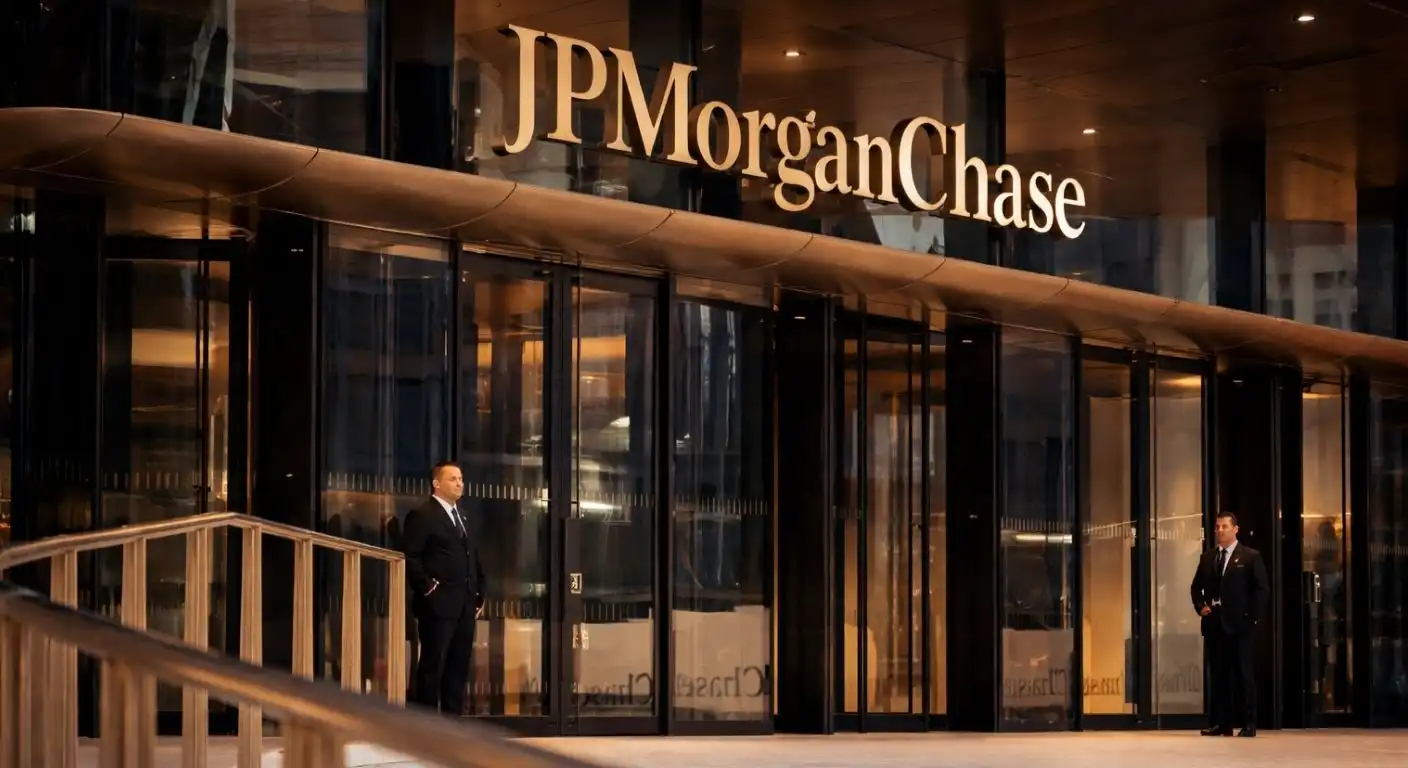
- JPMorgan Chase & Co. is reportedly joining major Gulf lenders to help arrange a massive $7 billion debt financing package for energy projects in Syria.
- The Qatari-led consortium UCC Holding will utilize the funding to construct 4,000 MW of gas-fired power plants and 1,000 MW of solar capacity.
- The U.S. banking giant is working alongside regional heavyweights Qatar National Bank and Abu Dhabi Commercial Bank to coordinate the credit facility.
- The landmark deal represents one of the largest post-conflict foreign capital commitments to Syria, despite highly complex international sanctions.
A historic, highly unexpected financial alignment is taking shape in the Middle East, bridging Wall Street capital with post-conflict reconstruction. JPMorgan Chase & Co. is reportedly joining forces with prominent Gulf lenders to help arrange approximately $7 billion of debt financing for a Qatari-led consortium’s massive energy projects in Syria. This landmark deal represents one of the largest foreign capital commitments to Syria’s reconstruction since the most destructive phases of its long-running domestic conflict began to wind down. By coordinating this massive credit facility, the partners aim to rebuild the country’s shattered power grid, establishing a highly significant precedent for how international capital can participate in sovereign reconstruction.
The physical projects at the center of this massive financing package focus on completely transforming Syria’s energy infrastructure. The Qatari-led consortium, spearheaded by UCC Holding through its subsidiary UCC Concessions Investment, intends to utilize the $7 billion to construct eight new power plants across the country. The comprehensive development plan calls for building 4,000 megawatts (MW) of highly efficient gas-fired power plants alongside 1,000 MW of clean solar energy capacity. This balanced, 5,000 MW mix of traditional thermal and renewable energy represents a vital first step to restore reliable electricity to millions of Syrian households and kickstart local industrial manufacturing.
To manage the exceptional financial scale and complexity of coordinating a $7 billion credit facility, the U.S. banking giant is working alongside regional financial heavyweights. The joint bookrunners and lead managers of the debt financing syndicate include Qatar National Bank (QNB)—the largest financial institution in the Middle East—and Abu Dhabi Commercial Bank (ADCB). This powerful banking consortium will structure, underwrite, and distribute the debt packages to international and regional institutional investors, utilizing their combined balance sheets to absorb the high risk of the post-conflict project while establishing a highly secure, internationally compliant payment framework.
What makes JPMorgan’s participation in this syndicate so highly watched by the international financial community is the extreme regulatory difficulty of doing business in Syria. The war-torn nation remains one of the most sanctions-complicated jurisdictions on earth, with the U.S. government maintaining strict legal restrictions—including the Caesar Act—designed to block any business transactions that support the Syrian government. To navigate these complex legal hurdles, the consortium’s legal advisers, led by global law firm White & Case, constructed a highly innovative public-private partnership (PPP) framework. This legal structure ensures that the financing routes directly to the independent utility projects and complies fully with all applicable international sanctions.
The consortium responsible for executing this massive energy transformation represents a highly capable partnership of regional and international firms. Led by Qatari giant UCC Holding, the group also includes Turkish engineering and development firms Kalyon G.I.S. Energy and Cengiz Energy, alongside the American company Power International USA. This multilateral cooperation has successfully unlocked the necessary technical expertise, manufacturing capabilities, and political capital needed to execute such a complex, cross-border infrastructure project. By combining Qatari management, Turkish construction efficiency, and American technical support, the group intends to establish a new, highly reliable standard for public-private utility projects in the region.
JPMorgan’s decision to co-arrange the Syrian debt package is part of a massive, multi-year expansion of its presence across the Gulf region. Since the regional conflict began in early 2026, the New York-based investment bank has aggressively deployed more than $20 billion in capital across Gulf markets to capture a dominant share of the looming post-war reconstruction boom. Doug Petno, the bank’s co-chief executive of commercial and investment banking, recently confirmed that the firm has significantly expanded its risk appetite and capital limits in the Middle East, noting that rebuilding demand across the region’s damaged energy, logistics, and AI infrastructure could eventually require hundreds of billions of dollars.
For Syria, securing the backing of a premier Wall Street investment bank is a monumental political and economic victory. After a decade of isolation, the country’s utility infrastructure lies in ruins, with regular blackouts paralyzing local economies and preventing hospitals from operating consistently. Restoring 5,000 MW of power to the national grid will provide a massive, immediate boost to local business activity and help stabilize the regional economy. By executing this project under a highly transparent, internationally audited public-private partnership, the country hopes to prove to other wary global corporations that it can successfully manage high-value foreign investments.
The $7 billion infrastructure package also reflects a broader, profound geopolitical shift in how Gulf nations view post-conflict Syria. Over the past several years, Arab nations, particularly Qatar, Saudi Arabia, and the United Arab Emirates, have steadily moved to normalize diplomatic relations with Damascus, seeking to bring the country back into the regional fold. Rather than continuing to isolate Syria, Gulf leaders are utilizing their massive sovereign wealth funds and corporate champions to bankroll its physical reconstruction. This economic integration aims to reduce foreign non-Arab influence in the Levant region while establishing a highly stable, integrated Arab economic bloc.
Ultimately, the massive joint loan organized by JPMorgan, QNB, and ADCB highlights a fundamental truth of the post-conflict era: rebuilding a nation requires connecting it to global capital. While the strict regulatory hurdles and sanctions-related compliance risks of this $7 billion debt facility will continue to draw intense scrutiny from international regulators, the successful finalization of the deal will establish a brand-new blueprint for sovereign reconstruction. As the initial construction phases begin in the coming months, the success of this Qatari-led energy project will determine whether international investors can confidently return to Syria, or if the country’s high political risks remain a bridge too far for Wall Street.