Key Points:
- Nvidia is optimizing its computing hardware and software stacks to support leading Chinese open-weight models, including DeepSeek and Alibaba’s Qwen.
- The chipmaker highlighted a local AI initiative to ensure global developers run popular open models on Nvidia silicon rather than rival chips.
- In official regulatory filings, Nvidia warned that potential United States restrictions on Chinese-developed AI could materially hurt its business.
- Chief Executive Officer Jensen Huang defended open models, stating that both open and proprietary systems drive massive global hardware demand.
Semiconductor giant Nvidia is deepening its technical support for open-weight artificial intelligence models developed in China, navigating a complex geopolitical tightrope between global software adoption and intensifying regulatory scrutiny in Washington. The hardware pioneer announced optimizations across its graphics processing units and software libraries to accelerate popular Chinese models, including DeepSeek’s V4 Flash and Alibaba’s Qwen 3.8. The initiative aims to ensure that no matter which laboratory builds the world’s most popular models, the software runs best on Nvidia silicon.
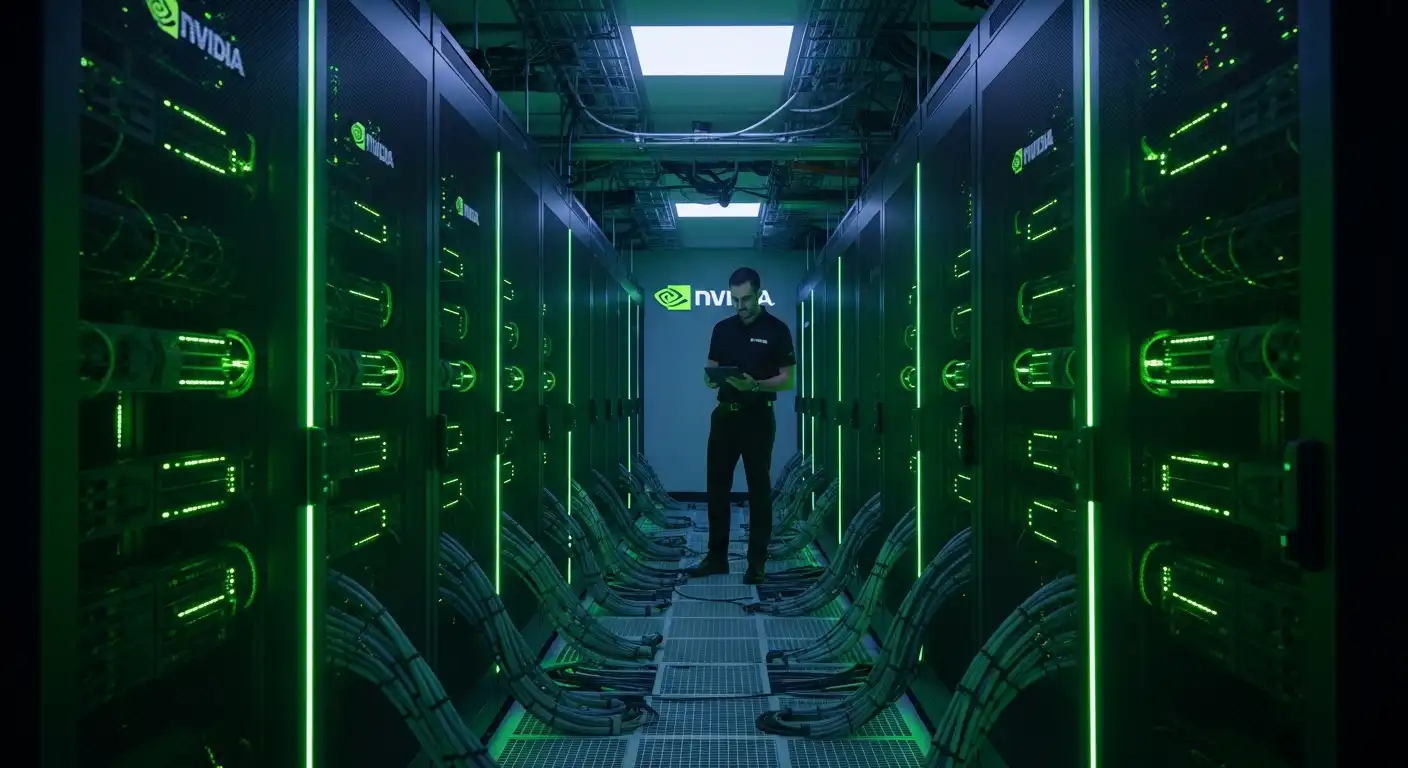
The effort centers on a dedicated local artificial intelligence program designed to optimize high-performance hardware for prominent open-source systems. Alongside models from Western tech giants like Google and Nvidia’s proprietary Nemotron family, engineering teams are actively fine-tuning memory allocations, inference pipelines, and TensorRT acceleration kernels specifically for Chinese architectures. By eliminating execution friction on its GPUs, the chipmaker prevents developers from seeking alternative hardware platforms.
However, embracing Chinese software models arrives amid mounting political friction in the United States. In official regulatory filings submitted to the Securities and Exchange Commission alongside its second-quarter earnings, Nvidia explicitly warned investors of emerging regulatory risks. The company noted that potential executive branch restrictions or federal trade policies targeting artificial intelligence developed in China could materially impact its international operations, revenue streams, and developer ecosystem.
The regulatory warning reflects rising concern on Capitol Hill regarding the rapid proliferation of Chinese machine learning architectures. While closed frontier models developed by American laboratories like OpenAI and Anthropic require cloud access, open-weight models can be downloaded, customized, and run locally on private servers. Lawmakers have voiced alarm that American corporations, financial institutions, and defense suppliers are deploying low-cost Chinese models, fearing national security vulnerabilities and intellectual property risks.
Chief Executive Officer Jensen Huang strongly defended the company’s open-model strategy, arguing that technological progress cannot be divided into isolated camps. Speaking during post-earnings briefings, Huang asserted that both closed and open models are succeeding simultaneously and driving unprecedented demand for computing power. Huang emphasized a straightforward commercial reality: when developers download and deploy open-weight models, they still require massive clusters of graphics processors to run training, fine-tuning, and live inference.
The aggressive hardware optimization serves as an essential defense against rising domestic chip competition in China. Competitors like Huawei have made rapid technological strides with their Ascend series of artificial intelligence accelerators, offering specialized hardware optimized for domestic Chinese algorithms. If Nvidia fails to support and optimize Chinese open-source models on its own architectures, Chinese tech conglomerates and global developers will naturally optimize their software stacks for competing domestic silicon foundries.
To bolster American competitiveness in open-source machine learning, the chipmaker is also investing heavily in domestic open-weight development. The company recently committed $7 billion to license technology from artificial intelligence startup Poolside and hired over 100 specialized engineers to develop trillion-parameter open-weight models under its Nemotron brand. This dual approach allows the hardware titan to support American open innovation while ensuring its graphics chips remain the universal execution standard for international models.
The strategic maneuvering unfolds against a backdrop of record-breaking financial growth. In its latest quarterly financial disclosure, Nvidia posted total revenue of $96.2 billion, representing an explosive 106% year-over-year increase, powered by $89.0 billion in data center sales. Management projected next-quarter revenue will reach approximately $108 billion, proving that the global buildout of artificial intelligence infrastructure continues operating at full throttle.
As the technological rivalry between the United States and China intensifies, maintaining neutrality across the open-source software layer has become a critical balancing act for semiconductor leaders. By optimizing its hardware for the world’s leading open models while managing Washington’s regulatory concerns, Nvidia is defending its position as the indispensable backbone of the global digital economy. Moving forward, the company’s ability to navigate geopolitical trade restrictions will determine whether its silicon continues powering the next chapter of international artificial intelligence innovation.