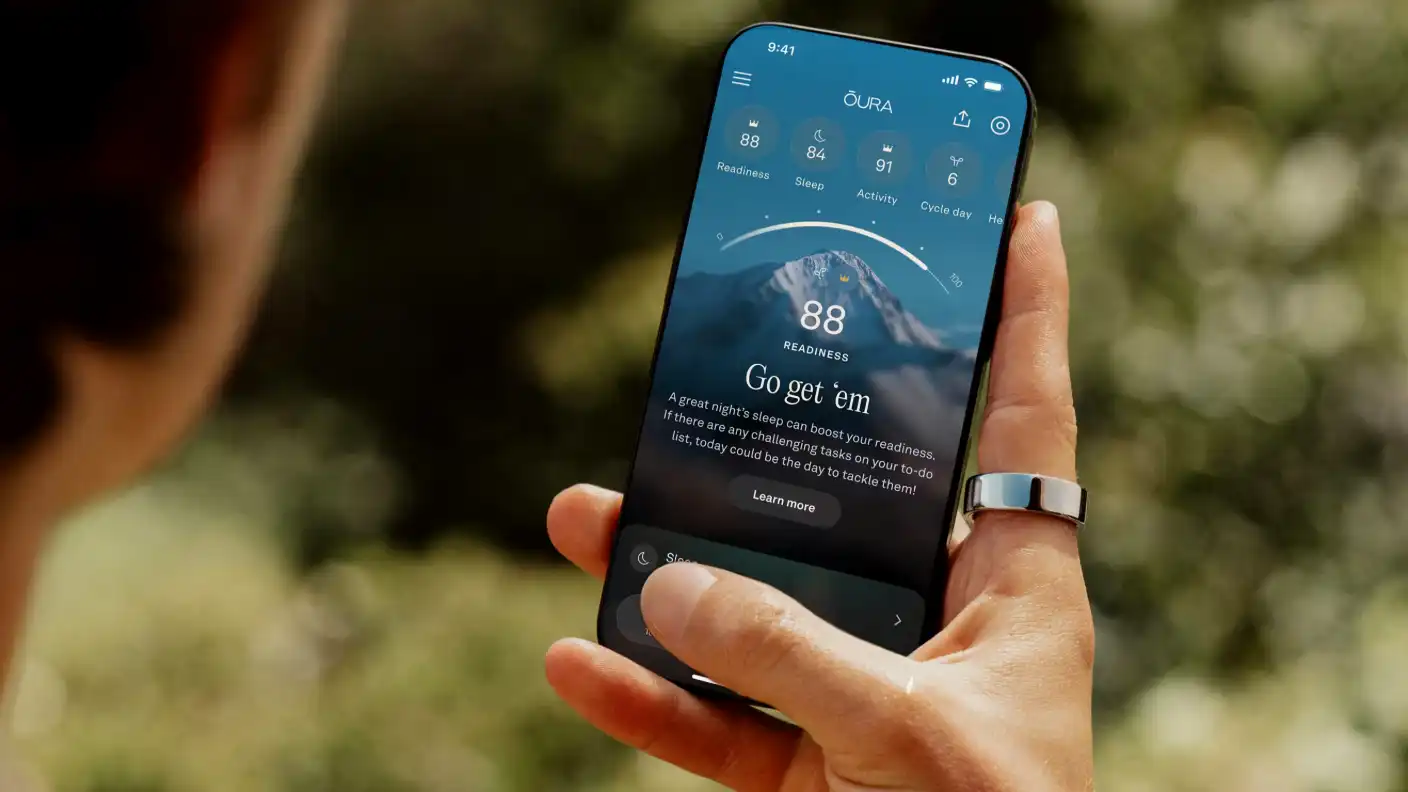
Key Points:
- The newly released Oura Ring 5 features a redesigned chassis that is 40% smaller and lighter than the previous generation.
- Starting at $399, the smart ring introduces blood pressure trend monitoring during sleep alongside 50 other tracked health metrics.
- Despite its much slimmer profile, the device’s battery life has improved to last between six and nine days on a single charge.
- Because most new software updates are also rolling out to older models, the premium ring is most compelling for first-time smart ring buyers.
Smart rings have spent the last few years operating as promising niche gadgets looking for a mainstream audience. While the concept of lightweight, screen-free health tracking has always made logical sense, older models often looked and felt like bulky, high-tech bolts wrapped around a finger. The recently launched Oura Ring 5 looks to change that narrative permanently by introducing the thinnest, lightest, and most comfortable smart ring to date. Starting at $399, the newly released fifth-generation ring features a completely rebuilt hardware architecture that makes it highly compelling, particularly for first-time wearable buyers who want to monitor their health without wearing a bulky smartwatch.
The headline upgrade for the fifth-generation ring is its dramatic reduction in physical size. By completely re-engineering the internal electronics and battery system, the manufacturer managed to make the new model 40% smaller by volume than its predecessor, the Oura Ring 4. The ring’s width has dropped from 7.90 millimeters to just 6.09 millimeters, while its thickness has shrunk to an incredibly slim 2.28 millimeters. Depending on the chosen ring size, the weight has also plummeted to between 2.0 and 2.68 grams. On a user’s hand, this physical diet represents the exact difference between wearing a clunky piece of technology and wearing a standard, classic wedding band.
To achieve this ultra-slim profile without sacrificing data accuracy, engineers completely redesigned the ring’s internal sensing array. The new hardware replaces older, raised sensor bumps with low-profile, precision-engineered sensor domes that maintain closer, more consistent contact with the skin. The active sensing suite combines more powerful light-emitting diodes (LEDs) for clearer optical readings with 12 distinct signal pathways. This advanced layout allows the device to capture highly accurate heart rate, blood oxygen, and skin temperature variations across a much wider variety of finger shapes, movement patterns, and skin tones.
This advanced sensing architecture has also allowed the manufacturer to push its health-tracking capabilities closer to medical-grade territory. The fifth-generation ring introduces blood pressure trend monitoring, allowing the device to track blood pressure signals and nighttime breathing patterns while the user sleeps. This data is viewable inside a newly designed “Health Radar” menu within the companion application. If the system detects any concerning cardiovascular or respiratory trends, the app will automatically prompt the user to consult with a licensed medical professional, turning a simple lifestyle tracker into a proactive wellness monitor.
One of the most surprising engineering achievements of the new model is that battery life survived the massive physical shrinkage. In fact, due to the chemical and mechanical redesign of the internal battery system, the device actually boasts better longevity than its chunkier predecessor. A single charge now lasts between six and nine days of continuous usage, depending on the ring’s physical size and active feature configurations. When the battery does run low, the ring can top up completely in roughly 20 to 80 minutes using the included metallic charging dock, while a newly introduced $99 wireless charging case offers up to a month of backup power on the go.
The companion application now features an “Oura Advisor,” an AI-assisted health tutor designed to analyze sleep and activity metrics to deliver highly personalized coaching. Additionally, the software introduces “GLP-1 Insights,” allowing users who are taking modern weight-loss medications to log their doses, track side effects, and monitor biometric changes in a single digital diary. For users in the United States, the app also integrates with national medical systems, allowing individuals to pull diagnosed conditions, lab results, and allergies directly into their personal health records.
Despite the impressive hardware upgrades, the premium device comes with a significant financial commitment. The starting price of $399 represents a $50 price increase over the previous generation, and that rate only applies to the basic Silver and Black titanium finishes. Buyers who prefer premium paint jobs—such as Gold, Stealth, Brushed Silver, or the new Deep Rose finish—must shell out $499. Furthermore, to access any of the advanced health metrics, sleep analysis, or AI features, users must pay an ongoing subscription fee of $5.99 per month, or $69.99 per year, which continues to draw criticism from consumer advocates.
This pricing structure and software roadmap create a highly specific purchasing dynamic for potential buyers. Most of the newly launched software features, including the AI coaching tools and GLP-1 tracking, are also rolling out to owners of the Oura Ring Gen 3 and Oura Ring 4 models. Because the older hardware remains highly capable and shares the same application experience, existing users have very little urgent reason to upgrade unless they find their current ring too bulky or uncomfortable during workouts. However, for first-time buyers who are entering the smart ring market for the first time, starting fresh with the thinnest, most comfortable, and most advanced ring available makes perfect sense.
As the wearable technology sector continues to mature, the launch of this ultra-slim ring marks a major milestone in the ongoing battle between smartwatches and smart rings. By cramming more than 50 health markers and a week-long battery into a lightweight, completely waterproof titanium band, the device proves that users no longer have to compromise comfort to achieve high-fidelity health tracking. While rival brands continue to launch compelling, subscription-free alternatives with impressive battery lives, the market leader’s relentless focus on hardware miniaturization and clinical-grade tracking ensures it will maintain its dominant position as the industry heads toward a highly anticipated public stock listing.