Key Points:
- An escalating domestic energy crisis in Russia has triggered a sudden surge in demand for electric vehicles and plug-in hybrids at local dealerships.
- State nuclear corporation Rosatom reported a 40 percent jump in EV charging station utilization over a single week in late June.
- Intensifying Ukrainian drone attacks on major oil refineries have crippled domestic oil production, forcing gas stations to ration fuel.
- Independent filling stations have breached the 100-ruble-per-liter mark for the first time, with some pumps charging up to 140 rubles.
A severe, escalating domestic energy crisis is completely reshaping the consumer automotive landscape in Eastern Europe. As Russia struggles to manage a widening fuel shortage, dealerships in Moscow are experiencing an unprecedented surge in demand for electric vehicles and plug-in hybrids. This unexpected, consumer-driven shift is occurring immediately after continuous drone strikes successfully crippled several of the country’s largest oil refineries. By cutting off domestic refining capacities and driving gasoline prices to historic highs, the conflict is forcing local motorists to actively reconsider their reliance on internal combustion engines.
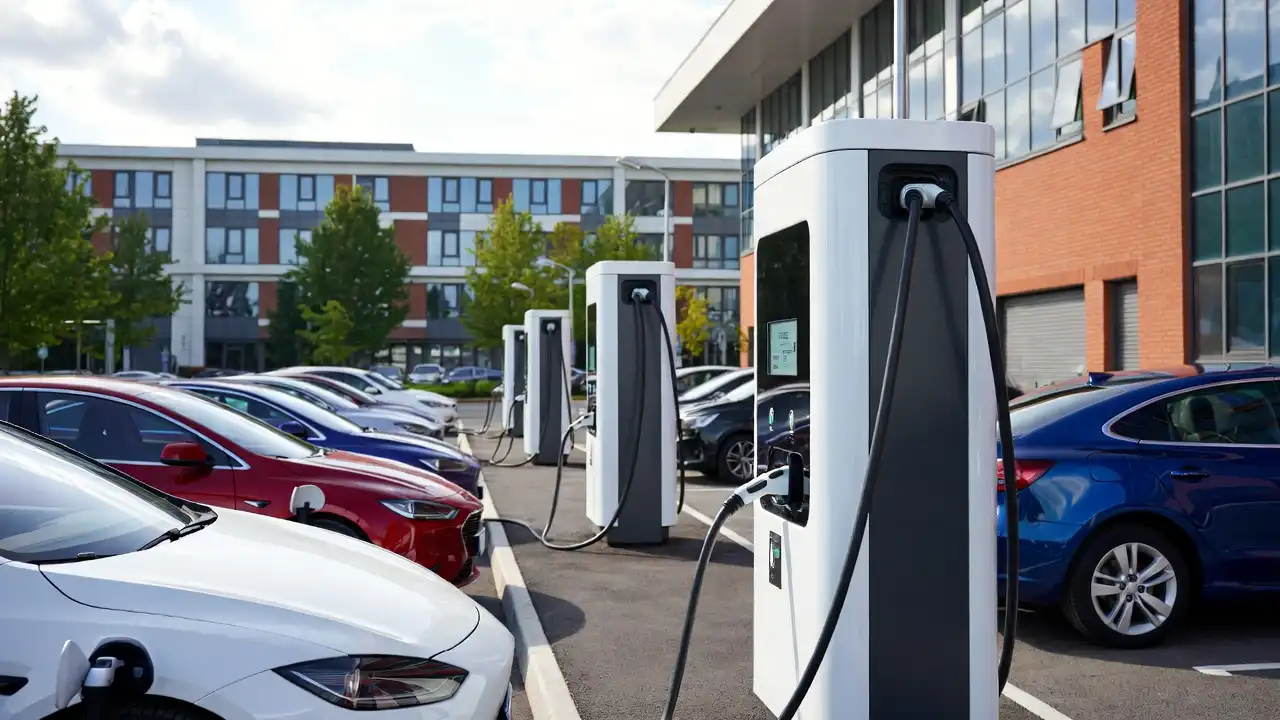
The immediate impact of the gasoline and diesel shortage is highly visible across the nation’s public charging infrastructure. State-owned nuclear giant Rosatom, which operates a major public charging network of over 290 stations, confirmed that it has experienced a massive, unprecedented spike in utilization. Rosatom Chief Executive Officer Alexei Likhachev reported on Wednesday that total demand across the company’s regional charging network rose by a staggering 40% in a single week between June 21 and June 28. This rapid usage expansion provides concrete proof that motorists are aggressively looking to maximize their battery power to bypass dry pumps.
The rush toward alternative drivetrains is born out of extreme financial and logistical pain at local filling stations. Due to the deep refining shortages, independent gas stations across much of the country have breached the critical 100-ruble-per-liter threshold for the first time in history. Worsening wholesale market conditions recently forced these private retailers to perform emergency software updates on their display boards, which were physically unable to advertise three-digit prices. Many private pumps are now charging anywhere from 120 to 140 rubles per liter, representing a devastating pricing shock for average commuters.
While private retailers are raising prices to reflect the high spot-market wholesale rates, large chain stations operated by vertically integrated state oil giants are keeping their prices artificially low under informal agreements with the government. This massive price disparity has created a highly volatile consumer panic, causing motorists to wait in long queues for hours to secure cheaper fuel. This supply run has caused state-owned stations to repeatedly sell out of gasoline and diesel within hours of deliveries, forcing them to temporarily suspend operations and implement strict fuel rationing measures in multiple regions.
The geographic center of the energy crisis is concentrated in Russia’s southern regions, Siberia, and annexed Crimea, where logistical bottlenecks are most severe. In the port city of Sevastopol, official government data showed that average gasoline prices surged by a dizzying 30% in a single week to hit 118.79 rubles per liter on June 29. However, local trade reports indicate that actual prices at private pumps in the city have soared far higher, reaching a record 199 rubles per liter—approximately $9.63 per gallon—this week. Local governors acknowledged that the complete lack of state-owned filling stations on the peninsula has left the region entirely vulnerable to the pricing power of private distributors.
The root cause of this systemic energy crisis is a highly coordinated, relentless Ukrainian drone campaign targeting Russia’s core industrial energy infrastructure. Since the second half of 2025, when the first major wave of attacks struck facilities in Ryazan and Volgograd, Ukrainian drones have successfully damaged more than a dozen major oil refineries. Because the size and coordination of these attacks make it impossible for engineers to repair the facilities before the next wave arrives, Russia’s overall refining output has collapsed by an estimated 25%. This permanent reduction in refining capacity has turned one of the world’s leading oil exporters into a country facing severe domestic fuel rationing.
Faced with these severe fuel constraints, Russian motorists are increasingly turning to alternative technologies, with plug-in hybrids serving as the favorite compromise. According to data released by the analytical agency Autostat, sales of plug-in hybrid vehicles surged by a massive 125% between January and May compared to the same period last year, reaching 24,600 units. While fully electric vehicles are also seeing an uptick, with 231 new registrations recorded last week—nearly double the previous week’s 123—many buyers prefer hybrids because they allow them to drastically cut their fuel consumption without completely abandoning the familiar utility of an internal combustion engine.
Despite the positive sales indicators, industry experts warn that the transition to fully electric transportation faces massive, long-term barriers across the country. Russia’s extreme winter weather and vast geographic distances require massive battery capacities and exceptionally robust heating systems to operate safely. Furthermore, the country’s public charging infrastructure remains at a highly primitive stage, with only 208,000 total electric and hybrid vehicles on the road as of early April. Rosatom’s Likhachev admitted that while the fuel crisis will certainly prompt many motorists to think about making the switch in the future, it is highly unlikely to trigger an immediate, overnight transition to fully electric fleets.
Ultimately, the shifting dynamics of the Russian automotive market demonstrate that the physical realities of the energy transition are heavily dictated by geopolitical events. While the global shift toward electric transportation was originally driven by environmental policies and corporate branding, the current crisis proves that resource security is the ultimate catalyst for technological change. By successfully targeting Russia’s refining capacity, the conflict is forcing the country to accelerate its digital and electrical infrastructure investments to survive. Until the country can successfully rebuild its refineries or establish a massive, national charging network, the dependency on traditional fuels will continue to be its greatest economic vulnerability.