Key Points:
- Samsung Heavy Industries secured a 1.65 trillion won ($1.22 billion) contract for four LNG carriers and two oil tankers.
- The agreement with an Oceania-based client pushes the shipbuilder’s commercial vessel orders to $7.3 billion across 42 ships.
- Combined with two floating LNG units worth $4.4 billion, total orders reached $11.7 billion, achieving 84% of the annual target.
- High global demand for energy security and eco-friendly dual-fuel vessels continues to fill shipyard docks through 2028.
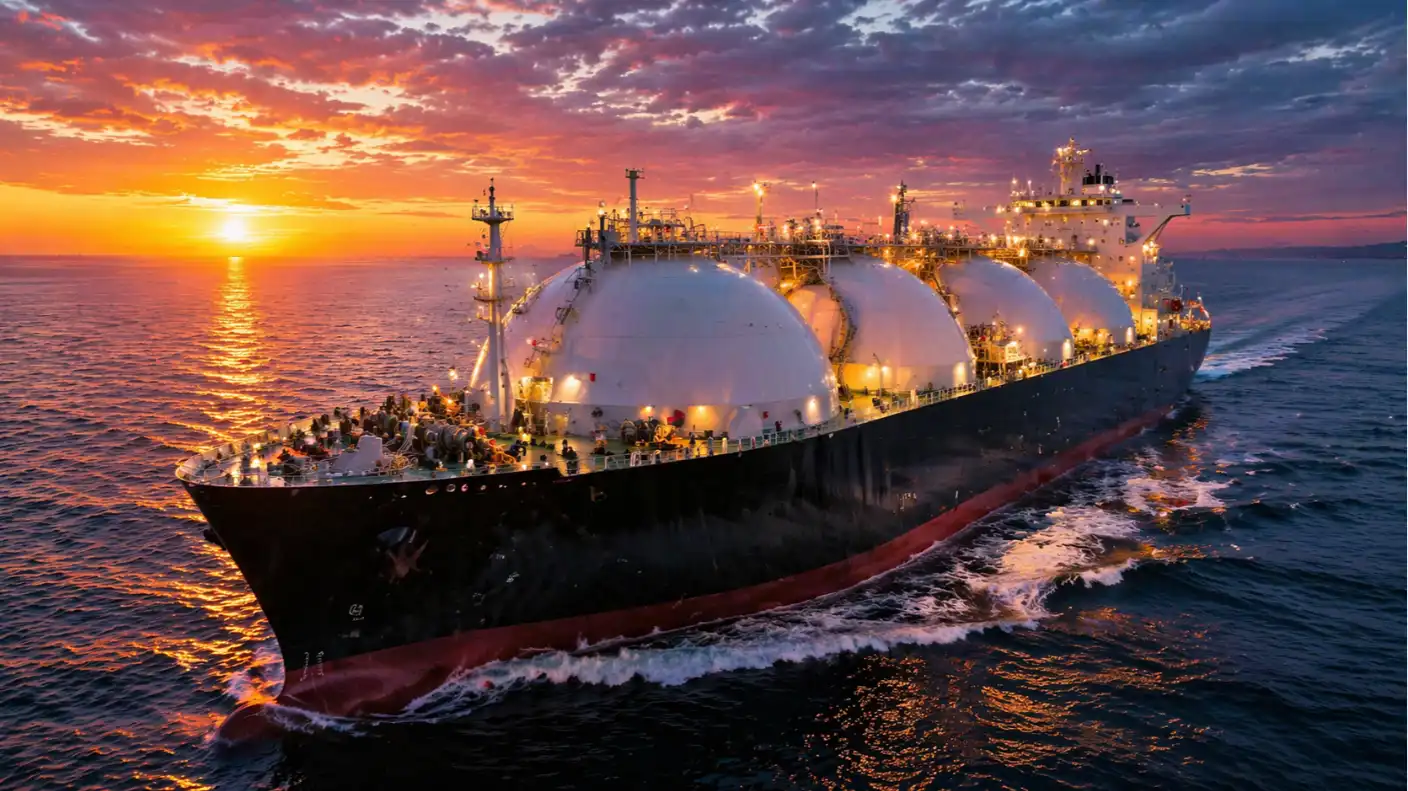
South Korean shipbuilder Samsung Heavy Industries secured a major 1.65 trillion won (approximately $1.22 billion) shipbuilding contract to construct four large liquefied natural gas (LNG) carriers and two crude oil tankers. In a regulatory filing, the shipbuilder confirmed that it signed the commercial agreement with an undisclosed shipowner based in Oceania. The multi-vessel order highlights sustained international demand for high-specification energy transport vessels as global energy trade routes undergo structural realignment.
The latest contract significantly accelerates the shipbuilder’s commercial momentum for the year. With this six-vessel award, Samsung Heavy has secured contracts worth $7.3 billion for 42 commercial ships, including 18 large-scale LNG carriers, container vessels, and specialized crude tankers. Commercial shipowners continue to place premium orders with top-tier South Korean shipyards to secure delivery slots for advanced dual-fuel vessels that comply with increasingly strict international maritime emissions standards.
In addition to traditional commercial cargo vessels, Samsung Heavy has leveraged its market leadership in offshore energy infrastructure to expand its order book. The shipbuilder previously secured contracts for two floating liquefied natural gas (FLNG) production, storage, and offloading facilities valued at a combined $4.4 billion. Factoring in these massive offshore energy projects, Samsung Heavy’s cumulative order intake has reached $11.7 billion, fulfilling roughly 84% of its overall annual order target.
The four newly ordered LNG carriers will feature state-of-the-art membrane cargo containment systems designed to minimize cargo boil-off rates during transoceanic voyages. The vessels will incorporate energy-saving technologies, including air lubrication systems, shaft generators, and custom low-pressure dual-fuel propulsion engines capable of running on clean-burning natural gas. These technical enhancements allow vessel operators to cut greenhouse gas emissions by up to 25% compared to conventional marine fuel engines while lowering operational voyages expenses.
The contract’s two oil tankers address an increasingly tight global tanker market driven by aging vessel profiles and shifting maritime trade lanes. A substantial portion of the global tanker fleet is approaching the 20-year operational mark, forcing shipping lines to order modern replacement hulls to maintain charter eligibility with international oil majors. Furthermore, prolonged disruptions to commercial shipping routes in the Middle East and longer sailing distances around the African continent have expanded ton-mile demand, creating sustained freight demand for newly built tankers.
The global energy market continues to serve as the primary economic catalyst for high-end shipbuilding. International energy producers and utility buyers across Europe and Asia are expanding long-term supply contracts to diversify fuel imports and guarantee winter energy security. With multi-billion-dollar liquefaction export terminals expanding in North America, the Middle East, and East Africa, global maritime trade will require hundreds of specialized LNG transport vessels over the next decade to move physical gas supplies.
Samsung Heavy operates its primary construction operations out of its massive Geoje Shipyard in South Gyeongsang Province, South Korea. The facility maintains one of the world’s most advanced automated drydock networks, utilizing robotic welding machines, artificial intelligence crane scheduling, and digital twin simulation platforms to maximize construction efficiency. Strong order intake over the past three years has filled the shipyard’s construction docks through 2028, allowing company management to pursue a selective, high-margin bidding strategy on newly tendered projects.
Offshore engineering represents a major competitive moat for Samsung Heavy compared to regional shipbuilding rivals. Floating LNG facilities operate as massive offshore processing hubs that extract, purify, liquefy, and store natural gas directly over deepwater gas fields without requiring expensive undersea pipelines to onshore terminals. Because FLNG construction requires complex cryogenic engineering, naval architecture, and heavy process modules, only a select few shipbuilders globally possess the engineering capabilities to execute these multi-billion-dollar megaprojects.
The robust order backlog is driving a substantial financial turnaround for the South Korean shipbuilder. Rising newbuilding vessel prices and a higher proportion of high-margin LNG carriers and FLNG facilities in the production mix are expanding operating profit margins and strengthening corporate cash flows. Financial analysts project that sustained shipyard deliveries will allow Samsung Heavy to maintain profitable operating results and expand its net free cash flow throughout the remainder of the decade.
As global energy logistics companies continue to modernise fleets and invest in offshore gas production, Samsung Heavy’s multi-billion-dollar order milestone reflects the durability of the global shipbuilding supercycle. By combining high-efficiency commercial transport vessels with complex offshore energy engineering, the South Korean shipbuilder is maintaining its industrial leadership at the center of the global energy transition.