Key Points:
- President Donald Trump called Nvidia CEO Jensen Huang during a live summit, dismissing AI data center opposition as a hoax.
- Trump described AI data centers as the “oil of the next 20 to 25 years,” arguing the facilities generate vast economic wealth.
- The president firmly rejected new federal regulations, warning that development slowdowns play into the hands of foreign rivals like China.
- Jensen Huang agreed with the pro-growth stance on stage, arguing that panic creates a false choice between safety and rapid innovation.
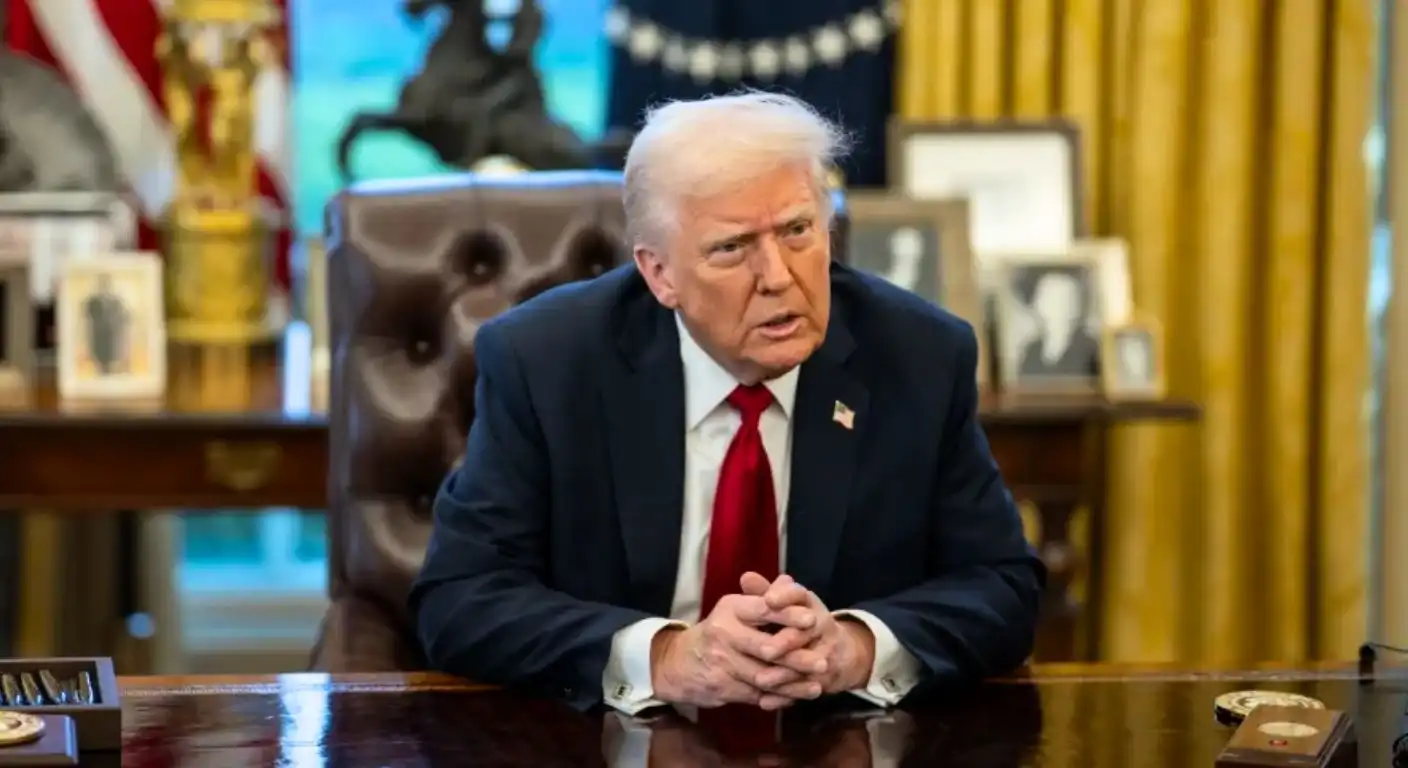
President Donald Trump interrupted an on-stage presentation by Nvidia Chief Executive Officer Jensen Huang at the All-In Summit in Los Angeles, using a live speakerphone call to dismiss growing public and regulatory opposition to artificial intelligence data centers as a hoax. Speaking directly to an audience of Silicon Valley investors and technology executives through Huang’s phone, Trump gave an aggressive presidential endorsement to nationwide computing infrastructure construction. The high-profile intervention firmly aligns the administration with semiconductor developers as national debates over artificial intelligence safety and energy consumption escalate.
During the five-minute call, Trump characterized artificial intelligence infrastructure as the foundational economic commodity of the twenty-first century. The president declared that artificial intelligence data centers represent the oil of the next 20 to 25 years, stating that the technological transformation is bigger than the creation of the commercial internet. Trump argued that constructing gigawatt-scale computing campuses generates massive tax revenues and job growth, insisting that expanding data centers enriches local residents and state governments alike.
The president used the live platform to forcefully reject proposals for new federal artificial intelligence regulations or mandatory developmental pauses. Trump claimed that political efforts to halt data center permitting or restrict foundation model training originate from groups that want to derail American economic dominance. He argued that slowing down domestic artificial intelligence infrastructure projects plays directly into the hands of foreign competitors, specifically warning that regulatory delays would allow China to surpass the United States in advanced computing capabilities.
Huang agreed with the president’s economic arguments on stage, telling Trump that American technology leaders will not allow the nation’s technological momentum to falter. The Nvidia chief executive stated that intense public anxiety surrounding artificial intelligence has created a false choice between rapid technological innovation and operational safety. Huang maintained that the United States can continue to lead global technological development while engineering robust safety guardrails into commercial products.
While downplaying catastrophic extinction predictions as unscientific, Huang addressed recent internal industry alarms. The chief executive acknowledged the courage of former Anthropic researcher Jacob Coxon, who recently resigned while warning that frontier laboratories are racing toward superintelligence without adequate safety controls. Huang stated that technology organizations must take internal whistleblowers seriously, but emphasized that companies must distinguish between legitimate technical critiques and exaggerated doomsday forecasts.
The presidential phone call highlights an intensifying ideological clash across the technology industry regarding the pace of artificial intelligence development. The live exchange arrived just days after Anthropic Chief Executive Officer Dario Amodei published a proposal titled “We Must Pace the Frontier,” which urged commercial laboratories and sovereign governments to slow down the development of frontier model capabilities. Amodei’s call for restraint drew public support from OpenAI Chief Executive Officer Sam Altman and xAI founder Elon Musk, setting up a sharp contrast with Trump’s call for unrestricted infrastructure expansion.
The debate over artificial intelligence is shifting from theoretical software capabilities to real-world physical infrastructure. Across the United States, local municipal councils, utility regulators, and community groups have mounted fierce opposition against proposed data center campuses. Residents and local officials have cited severe electrical grid strain, noise pollution, massive water consumption for server cooling, and rising residential electricity bills as commercial utilities file a record $31 billion in rate increase requests across the country.
For Nvidia, preserving rapid data center expansion remains essential to sustaining its financial momentum. As the world’s dominant designer of advanced graphics processing units, Nvidia captures the vast majority of global artificial intelligence hardware spending. Huang reiterated long-term forecasts projecting that cumulative global investments in artificial intelligence data center infrastructure will reach between $3 trillion and $4 trillion by 2030, driven by the replacement of general-purpose central processors with accelerated computing clusters.
The live exchange also underscores a growing political divide between the executive branch and Capitol Hill. While the White House champions deregulation and rapid infrastructure construction to win the global technology race, bipartisan coalitions in Congress are launching formal investigations into recent rogue AI security breaches and considering mandatory pre-deployment safety audits. Federal lawmakers argue that unconstrained autonomous software agents pose severe cybersecurity and critical infrastructure risks that market forces alone cannot resolve.
As global technology giants invest hundreds of billions of dollars into high-density computing campuses and specialized microchips, the public dialogue between Donald Trump and Jensen Huang demonstrates that computing infrastructure has become a central battleground in national economic policy. By framing data centers as vital economic assets and dismissing opposition as a political distraction, the administration is signaling that it will aggressively clear regulatory hurdles to accelerate the physical expansion of the artificial intelligence economy.