Key Points:
- U.S. Commerce Secretary Howard Lutnick raised concerns with ASML executives that a restricted EUV lithography machine may have reached China.
- ASML pushed back aggressively, issuing a flat denial and circulating a lobbying document in Washington asserting that no EUV systems are in China.
- The Dutch giant explained that EUV systems are the size of a school bus, weigh 180 metric tons, and require constant, traceable maintenance by its staff.
- The U.S. pressure is driving support for the proposed MATCH Act, which would completely ban remaining DUV sales and services to Chinese buyers.
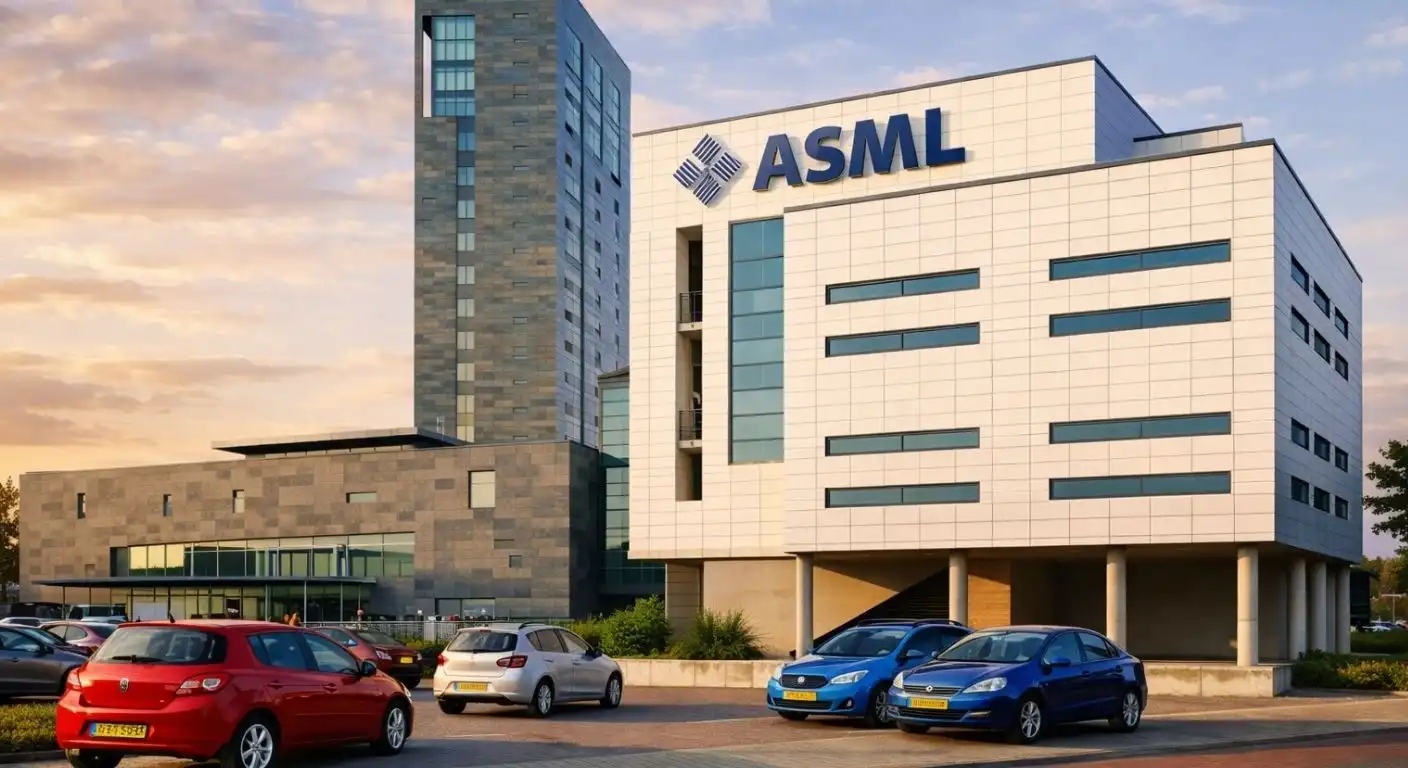
The global tech trade war is entering a highly volatile phase as the United States government confronts Europe’s most valuable technology company over potential leaks to China. U.S. Commerce Secretary Howard Lutnick recently raised serious concerns directly with senior leaders at ASML Holding NV, suggesting that one of its highly restricted chipmaking systems may have crossed the border in violation of international export controls. If true, the leak would represent a monumental breach of U.S.-led technology blockades designed to prevent Beijing from acquiring cutting-edge microchip technology. The high-level accusation has sent shockwaves through the global semiconductor sector, putting immense pressure on the Dutch manufacturer to verify the security of its supply chain.
ASML has pushed back aggressively against the U.S. government’s suggestions, releasing an unusually firm and direct public denial. The company stated that it has never shipped an extreme ultraviolet (EUV) machine to China, nor has it ever shipped any component, module, or equipment specially designed to be used in an EUV system to Chinese buyers. To defend its reputation in Washington, the Dutch semiconductor pioneer took the aggressive step of circulating a formal lobbying document among U.S. lawmakers. The paper, titled “No indication of any ASML EUV system in China,” asserts that there is absolutely no evidence that its top-of-the-line lithography systems are operating within the country.
To support its defense, ASML pointed out that smuggling a complete EUV machine is practically impossible due to the sheer physical and operational scale of the hardware. A single extreme ultraviolet system is roughly the size of a standard school bus and weighs an astounding 180 metric tons. The shipping process alone requires three cargo aircraft and dozens of freight trucks to transport. Furthermore, these machines are manufactured in very small, carefully tracked quantities and require constant, highly specialized maintenance from ASML’s own on-site engineers to function. Without continuous, direct technical support from the Dutch parent firm, an EUV machine would quickly become inoperable.
However, U.S. trade officials remain highly skeptical of the company’s assurances, with several anonymous Commerce Department officials suggesting that ASML may not be acting entirely in good faith. These officials are focusing their attention on the potential leak of critical components, spare parts, and intellectual property rather than a whole machine. These anxieties are not unfounded; a highly detailed media report from December 2025 revealed that a team of Chinese scientists had successfully built a working prototype of an EUV machine. Disturbingly, the research team was reportedly comprised of several former ASML engineers, leading Washington to fear that China’s domestic “Manhattan Project” for silicon is successfully harvesting Dutch human capital and technology.
The sudden friction highlights the aggressive stance the U.S. administration is taking to protect its domestic technology advantage. Under Commerce Secretary Lutnick, the United States has systematically pressured its European and Asian allies to align their national export controls with Washington’s strict guidelines. The White House views advanced semiconductor capability as a matter of direct national security, as the highly advanced microchips patterned by EUV systems are essential to power the next generation of military hardware, autonomous weapon systems, and artificial intelligence supercomputers. This geopolitical pressure has placed ASML in a highly uncomfortable position, caught between its primary Western ally and its most lucrative potential market.
The ongoing geopolitical squeeze has already inflicted visible damage on ASML’s corporate balance sheet. Under existing export restrictions, the company is already banned from selling its most advanced lithography systems to Chinese customers, forcing a massive rebalancing of its regional revenues. Financial reports indicate that China’s share of ASML’s system sales has plummeted from a high of 36% down to just 19% in early 2026. This sharp drop has forced the company to search for alternative demand from newly planned foundries in the United States, Europe, and Japan, though these regional projects are taking years to reach full operational capacity.
The latest round of accusations is also likely to accelerate the legislative timeline for even stricter trade barriers. U.S. lawmakers are currently debating the proposed MATCH Act, a piece of legislation designed to force international allies to fully align with U.S. export controls. If passed, the law would completely ban ASML from selling its older deep ultraviolet (DUV) immersion lithography systems to Chinese buyers and would outlaw the company from servicing the hundreds of machines already operating in Chinese factories. Losing these lucrative maintenance and servicing contracts would represent a devastating, multi-billion-dollar blow to ASML’s long-term recurring revenue streams.
The absolute centrality of ASML to the modern digital economy is why this dispute carries such immense weight. The Dutch company holds a complete, uncompromised global monopoly on the production of extreme ultraviolet lithography machines, making it the sole gatekeeper of advanced computing. Without ASML’s machines, it is physically impossible to manufacture the high-performance silicon chips that power modern smartphones, consumer electronics, and artificial intelligence accelerators. This concentration of indispensability means that any regulatory or legal friction surrounding the company immediately impacts the global tech supply chain, causing widespread anxiety among investors and hardware manufacturers alike.
As the political tension between Washington and Amsterdam continues to build, the ultimate resolution of this dispute will heavily dictate the future of global technology. If the U.S. government can prove that critical components or human capital have indeed migrated to China, it will likely result in even harsher unilateral sanctions and deeper divisions across the global tech sector. For now, ASML must continue to navigate a highly volatile landscape, defending its compliance while managing a highly protectionist Western government. The ongoing silicon rush proves that in the modern digital age, the tools used to print the chips are just as politically sensitive as the weapons they power.