

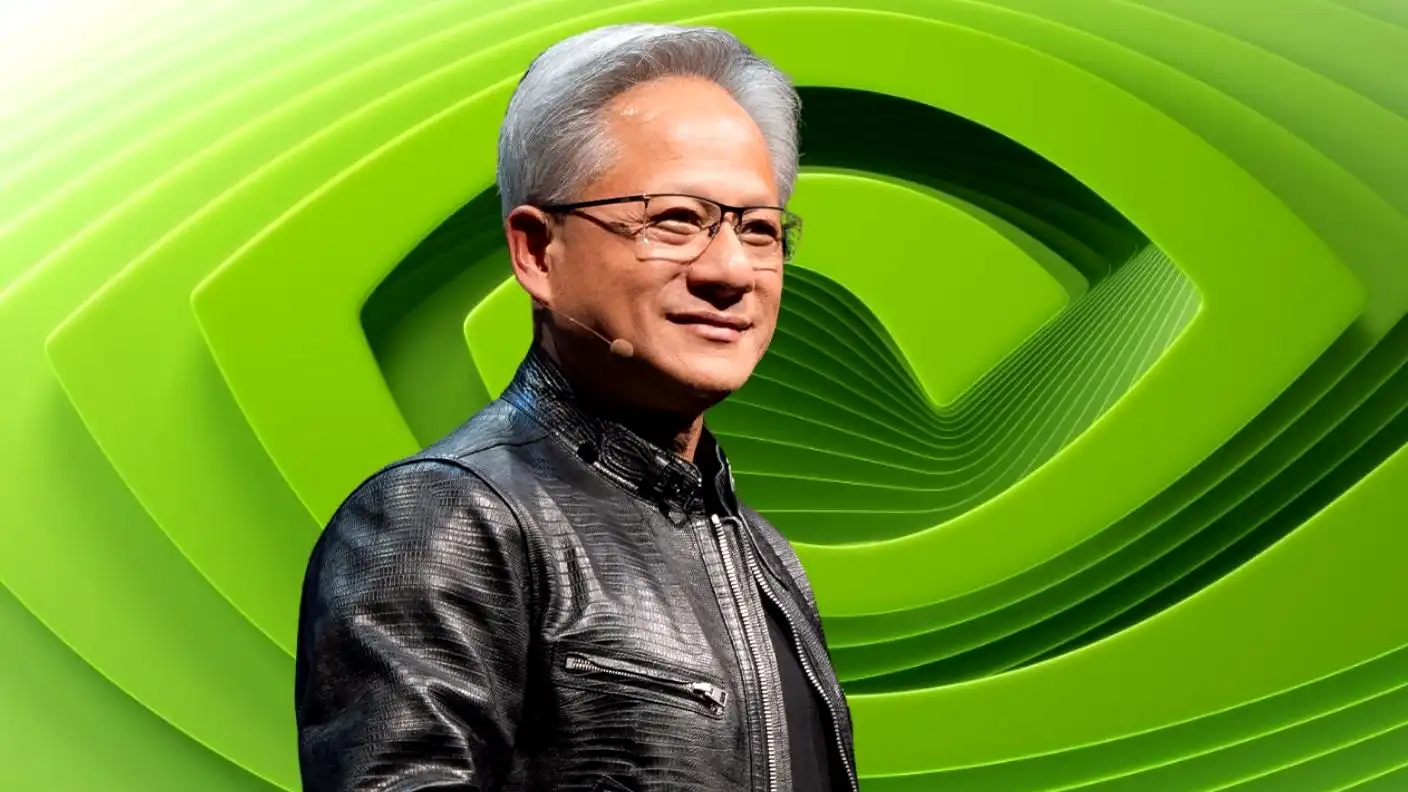
The financial scale of the artificial intelligence boom has officially reached a historic milestone. In August 2026, chipmaking giant Nvidia Corporation announced that it has partnered with six of the world’s most powerful asset managers and investment banks to mobilize a staggering $500 billion in private third-party capital. The initiative, first reported by the Financial Times and confirmed by regulatory filings, aims to build dedicated “compute financing platforms” to fund the rapid construction of AI data centers, power plants, and semiconductor acquisitions globally.
The elite consortium includes private capital giants and investment banks that collectively manage trillions of dollars in global assets: Apollo Global Management, BlackRock, Blackstone, Brookfield Asset Management, Goldman Sachs, and KKR. By pooling their immense financial resources, these Wall Street heavyweights are entering into a highly strategic partnership with Nvidia to bankroll the physical footprint of the AI age, spanning advanced silicon processors, massive data center campuses, and dedicated energy-generation projects.
Despite the historic scope of this $500 billion financing initiative, stock markets reacted with notable caution. During highly active trading, Nvidia’s shares ended the day 2.9% lower, closing at a market valuation of around $5.26 trillion. Investors are balancing their enthusiasm for the massive infrastructure program with rising geopolitical tensions in the Middle East and sticky global inflation, proving that even the most historic technology alliances must navigate the hard realities of the macroeconomic environment.
The Mechanics of the Five Hundred Billion Dollar Funding Envelope
The proposed $500 billion financing initiative represents a quantum leap in the scale of technology funding, transforming how the physical assets of the digital age are financed, built, and deployed.
The Independent Underwriting and Risk Assessment Structure
Unlike traditional corporate loans, these six private market giants will independently assess and underwrite each infrastructure opportunity. In a public blog post on X, Nvidia CEO Jensen Huang explained that the financial institutions will independently assess each opportunity, including the customer, demand, utilization, cash flow, and residual value, while Nvidia provides the AI factory platform and the financial institutions provide long-term capital and financing expertise.
By bringing in Wall Street’s largest private markets firms to independently underwrite the risk, Nvidia is proving that the demand for its chips is backed by rigorous, unbiased institutional risk assessments rather than internal corporate subsidies. This structural division of labor ensures that the technology developer does not take on the default risks of its customers, while the financial sponsors can leverage Nvidia’s technical expertise to verify that the projects they are funding are equipped with the most advanced, commercially viable hardware available.
Treating AI Compute as a New Asset Class Like Mortgage-Backed Securities
The partnership has drawn significant comparisons to previous historical structural transformations in the credit markets. BlackRock CEO Larry Fink compared the new compute financing platforms to the historic creation of the mortgage-backed securities market in the 1970s.
Fink noted that the alliance is effectively treating AI compute as a brand-new, investable asset class for global institutional investors, allowing pension funds and insurance companies to invest in the physical infrastructure of the digital age with the same confidence and liquidity they bring to traditional real estate and infrastructure bonds.
To further reassure these institutional lenders, Nvidia has built a valuable safety valve into the agreements. The chipmaker has secured the option to backstop up to $125 billion, or 25% of the potential deals, protecting lenders and boosting private credit confidence. This multi-layered security structure ensures that even during periods of broader market volatility, the flow of private capital into the AI buildout remains highly secure, providing the industry with a stable, long-term financing pipeline.
The “GPU Demand Flywheel” and Pushing Back Against Circular Financing
The decision of the world’s leading hardware manufacturer to actively participate in the financing of its own customer ecosystem is a highly calculated, strategic move designed to protect its market lead and lock in long-term demand.
Transitioning from Equity Funding to Debt-Fueled Infrastructure
In the early stages of the artificial intelligence boom, technology giants and cloud startups funded their initial software development and hardware purchases almost entirely through venture capital and operating cash flows. Today, however, the capital requirements of the AI buildout have outgrown these traditional funding sources.
The industry has entered a massive, debt-fueled infrastructure phase, where constructing gigawatt-scale data center campuses and securing massive power allocations requires a level of financing that even the largest technology companies struggle to fund on their own. By establishing these independent compute financing platforms, Nvidia is successfully bridging this capital gap, providing its customers with direct access to massive pools of low-cost private credit so they can scale their operations quickly.
Countering Criticisms of Self-Funded AI Demand
The launch of the $500 billion alliance also serves as a powerful defense against a growing, persistent criticism of the technology sector’s financial reporting. For several quarters, market skeptics and short-sellers have accused Nvidia of engaging in “circular financing,” claiming that the chipmaker was artificially inflating its own demand and corporate valuations by directly or indirectly financing its own startup clients.
Critics pointed to Nvidia’s venture capital investments in high-growth cloud startups like CoreWeave, which then used the borrowed cash to purchase advanced Nvidia processors, as evidence of an artificial, self-funding feedback loop.
By bringing in Wall Street’s largest private capital firms to independently assess and underwrite the risk of each project, Nvidia is successfully pushing back against this circular funding narrative.
The fact that independent, risk-averse institutions like Goldman Sachs and Blackstone are willing to commit their own capital to these projects proves that the demand for Nvidia’s hardware is backed by genuine, organic market viability, restoring long-term investor confidence in the sector.
The Squeezed Macroeconomic Environment: Fading Consumer Sentiment and Rising Real Rates
The historic $500 billion financing announcement arrives at a highly volatile time for the global economy, characterized by sticky inflation, rising interest rates, and a pronounced cooling of consumer activity in the United States.
The S&P 500 Eases as the Consumer Finally Blinks
While the technology sector continues to spend heavily on infrastructure, the broader U.S. economy is showing significant signs of fatigue. Recent economic indicators revealed that U.S. retail sales fell 0.6% in July, while consumer sentiment dropped to a multi-year low of 51.0 in August, landing far below the 54.5 that economists expected.
This disappointing consumer data has caused the S&P 500 and the Nasdaq Composite to ease off their record highs, as investors worry that high borrowing costs are finally taking a heavy toll on everyday household spending.
This consumer slowdown has made the stock market increasingly sensitive to corporate leverage.
If major technology companies are borrowing hundreds of billions of dollars to build data centers while consumer demand is active but cooling, the risk of overcapacity and falling profit margins becomes a major concern for equity portfolios.
The Bank of England’s Warning on Systemic Financial Stability Risks
The rising volume of technology-related debt has also drawn intense scrutiny from international regulators, who are increasingly concerned about the systemic risks of the digital infrastructure boom.
In its financial stability report published in late July, the Bank of England warned that the unprecedented pace of investment in artificial intelligence developments could pose a risk to broader financial stability if the companies taking on massive debt fail to deliver sustainable profits, or if they face major technological disruptions.
The central bank emphasized that because so many commercial banks, pension funds, and private credit providers are heavily exposed to this single technological trend, any systemic slowdown in the AI sector could quickly trigger a cascading credit squeeze across the entire global economy.
This regulatory concern underscores the importance of the independent risk assessments mandated under the new $500 billion alliance, proving that even a 1.5% margin improvement in operational efficiency can determine whether these massive, debt-funded projects can remain financially viable.
Sizing up the Giant AI Squeeze: The Seven Hundred Billion Dollar Capex Storm
The proposed $500 billion financing platform is not an isolated capital pool; it represents a key, defining component of an enormous, global investment wave that is completely reconfiguring the corporate finance landscape.
The Massive Capital Budgets of Big Tech Hyperscalers
The primary drivers of this historic capital demand are the major cloud hyperscalers—including Amazon, Microsoft, Meta, Alphabet, and more recently, Oracle—who are currently engaged in a massive, competitive land grab to construct the physical networks of the AI era.
These five tech giants are projected to spend between $730 billion and $740 billion on AI initiatives in 2026 alone, with market analysts expecting next year’s capital budgets to be even more intensive.
This non-stop spending is draining the liquid cash reserves of even the wealthiest corporate balance sheets, forcing these firms to rely heavily on private credit, high-yield debt, and Wall Street alliances to finance their massive physical buildouts, which routinely require over $1 billion in capital investments for individual projects.
Establishing the Legal and Financial Baseline of the Machine Age
By successfully bringing Wall Street’s largest private capital providers together to independently underwrite AI infrastructure, Nvidia is establishing a predictable, standardized financial baseline for the future machine economy.
These financing platforms will help customers access scarce computing power at scale and build the physical AI factories that will power every industry and country in the coming decades.
As the central bank continues to monitor the financial stability risks of this massive expansion, the successful deployment of this $500 billion capital envelope will determine the future of global technology regulation.
By proving that the physical infrastructure of the AI era can be financed safely, sustainably, and independently, the alliance is paving the way for a more connected, efficient, and intelligent future, ensuring that the United States remains the undisputed leader of the global digital economy.
Powering the Next Technological Frontier
The landmark partnership between Nvidia Corporation and Wall Street’s premier investment giants to mobilize $500 billion in private capital represents a historic milestone for the global technology and financial sectors. By building independent compute financing platforms that are backed by rigorous, unbiased institutional risk assessments, the chipmaker has successfully established a predictable, sustainable baseline for the future machine economy.
While the massive scale of the financing has triggered a complex debate over the risks of high corporate leverage and public-credit concentration during a period of cooling consumer sentiment, the strategic benefits of the alliance are immense.
The $500 billion funding envelope secures a reliable, long-term financing pipeline to build the data centers, power grids, and silicon processors required to support the next generation of computing, ensuring that the United States remains the undisputed capital of the global digital economy.
As the technology sector navigates a highly volatile macroeconomic environment and rising geopolitical tensions, this aggressive, private-sector-led infrastructure offensive will determine the leaders, the standards, and the capabilities of the automated world of the future.






