

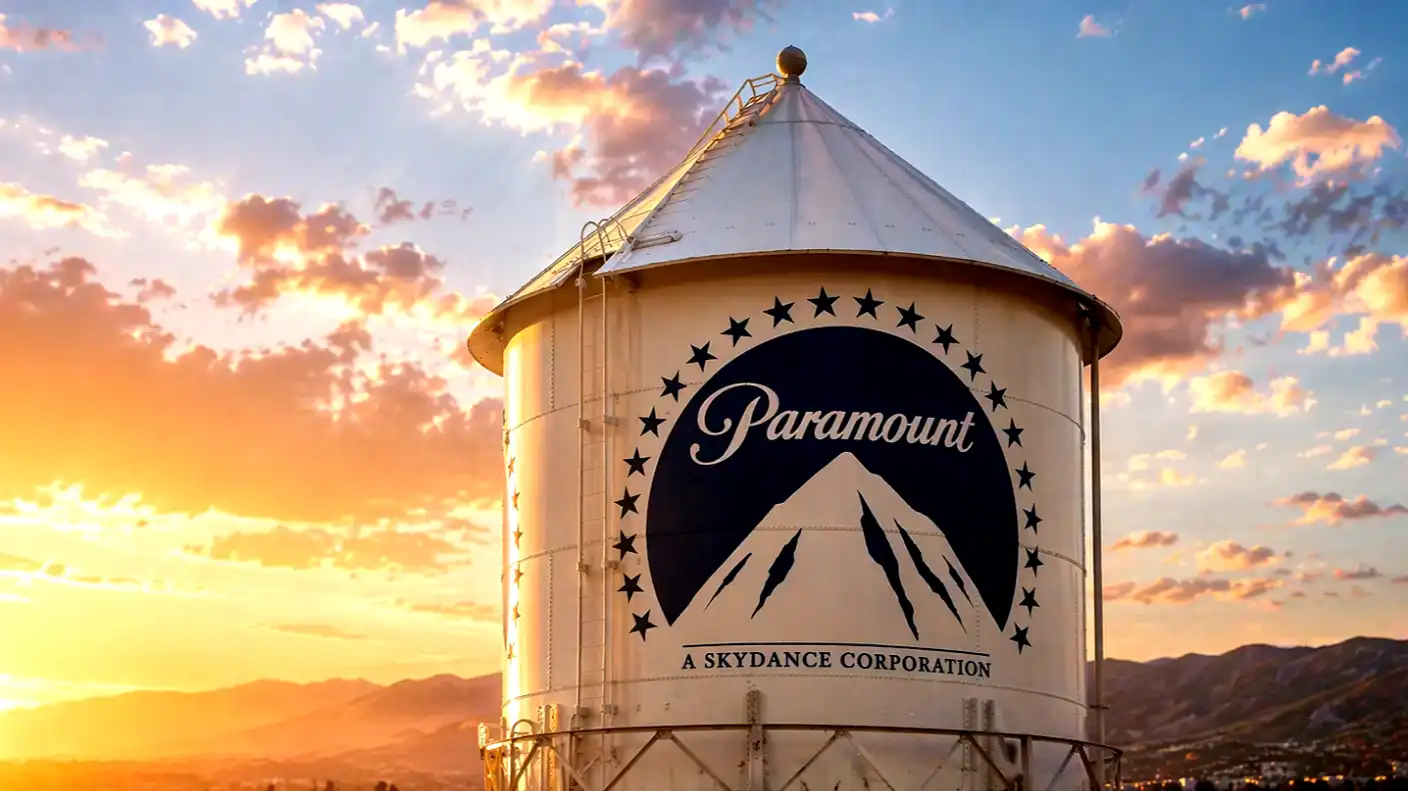
The global entertainment and media landscape has experienced a major, highly disruptive legal earthquake. In a stunning defeat for some of the world’s most powerful media executives, a federal judge has issued a temporary restraining order, halting the proposed $110 billion merger between Paramount-Skydance and Warner Bros. Discovery. The ruling, handed down on a Monday in mid-July, represents a historic victory for antitrust regulators, consumer advocacy groups, and Hollywood’s creative labor force, throwing the largest media transaction in history into a state of acute operational chaos.
The federal court’s decision to pause the transaction is a direct response to a highly coordinated, dual-front legal offensive launched against the megamerger. Just days prior, a bipartisan coalition of 12 state attorneys general, led by California’s Rob Bonta and New York’s Letitia James, filed a major antitrust lawsuit seeking to block the deal, quickly followed by a separate, highly aggressive filing from the Writers Guild of America. By granting the temporary restraining order, the judge ruled that the plaintiffs had successfully demonstrated a high probability of proving “irreversible harm” to competition, consumers, and creative labor if the merger were allowed to proceed before a full antitrust trial.
For David Ellison, the tech scion leading the newly merged Paramount-Skydance, this court intervention represents a catastrophic financial and operational roadblock. Ellison and his management team had spent months structuring the highly complex transaction, aiming to complete the merger by September to avoid expensive, pre-negotiated stock-payout escalations to Warner Bros. Discovery shareholders. With the federal judge now setting a formal preliminary injunction hearing for August, the deal’s timeline has been completely shattered, leaving both companies in a costly state of operational limbo that will drain millions of dollars in banking interest, legal fees, and administrative overhead every single day the pause remains active.
The Injunction Victory: Why the Federal Judge Halted the Megamerger
The legal mechanism behind the historic pause is a temporary restraining order, an extraordinary tool under federal civil procedure. To secure a temporary restraining order, plaintiffs must satisfy an incredibly demanding legal standard, proving to a federal judge that allowing a transaction to proceed—even temporarily—would cause immediate, irreversible damage to the public interest that could not be easily undone or compensated with money later.
In his written opinion, the federal judge agreed with the antitrust coalition and the Writers Guild of America, ruling that the physical integration of the two media giants would create a consolidated market structure that would be almost impossible to dismantle if the government ultimately won its case.
If Paramount-Skydance and Warner Bros. Discovery were allowed to merge their data servers, lay off duplicate employees, consolidate their streaming platforms, and sign joint advertising contracts, they would permanently alter the competitive dynamics of the industry.
By freezing the transaction immediately, the court has preserved the status quo, ensuring that the two companies must continue to operate as independent, competing entities until a full, evidence-based preliminary injunction hearing can be conducted in August.
The Bipartisan State Coalition’s Case Against Consolidation
The primary driving force behind the antitrust lawsuit is a highly unique, bipartisan coalition of 12 state attorneys general representing both progressive and conservative regions across the United States. This state-level alliance, led by California’s Rob Bonta and New York’s Letitia James, has stepped in to fill a critical regulatory vacuum, serving as the primary line of defense against corporate consolidation as federal agencies face mounting political pressure.
The states’ legal argument is built on a straightforward, consumer-first premise: the proposed merger violates Section 7 of the Clayton Antitrust Act, which prohibits acquisitions that substantially lessen competition or tend to create a monopoly.
The coalition has compiled extensive economic data proving that combining the two media empires would give the merged company an unprecedented, highly dangerous level of control over what European and American consumers watch, how much they pay for entertainment, and how independent retail distributors can survive.
The Double Threat of Price Gouging and Shrunk Choice
The most immediate threat facing everyday consumers is the potential for massive, uncoordinated price hikes across the digital streaming landscape. If the merger is allowed to close, the combined company will control two of the most popular, high-volume streaming platforms in the world: Warner’s Max and Paramount+.
Together, these platforms command more than 35 percent of the national streaming market share.
With so much concentrated market power, the merged company would have both the incentive and the ability to systematically raise subscription prices, eliminate low-cost ad-supported tiers, and reduce the overall volume of original programming.
Consumers would find themselves with fewer independent options, forced to pay premium prices to access their favorite movies, television series, and live sports broadcasts, directly worsening the cost-of-living crisis currently squeezing middle-class household budgets.
The Destruction of the Independent Movie Theater Network
The second major sector threatened by the consolidation is the independent movie theater industry. To survive in an era dominated by home streaming, physical movie theaters rely on a continuous, reliable flow of high-value, exclusive theatrical releases from the major Hollywood studios.
If the “Big Five” legacy film studios are reduced to just four dominant players, the merged Paramount-Warner giant will hold immense, disproportionate leverage over theater owners.
The company will be able to dictate predatory terms, demanding a larger share of box-office receipts, forcing theaters to show its films on multiple screens for extended runs, and reducing the exclusive theatrical window down to unprofitable levels.
Independent theater chains, which operate on paper-thin margins, will find it impossible to survive under these terms, leading to widespread theater closures and permanently restricting the public’s access to communal cinematic experiences.
The Writers Guild Victory: Defending the Creative Labor Force
While the state attorneys general focus on consumer protection, the Writers Guild of America has launched a parallel, highly sophisticated antitrust challenge focused on the labor market. The union represents over 15,000 professional screenwriters across the United States, and its leadership views the proposed merger as a direct, existential threat to the creative economy.
The WGA’s lawsuit relies on the advanced legal theory of monopsony—a market condition where a single dominant buyer has the power to control and suppress the price of labor.
The union argues that by bringing the industry’s two largest employers under a single corporate roof, the merged company will have the unchecked power to artificially lower writer wages, eliminate entry-level positions, and cut production overhead, completely hollowing out the career pipeline for the next generation of American storytellers.
The Scars of the Warner-Discovery and Paramount-Skydance Precedents
To prove the validity of its arguments, the Writers Guild’s legal complaint points directly to the devastating, highly visible consequences of previous media consolidations. Following the massive 2022 merger of Warner Bros. and Discovery, and the subsequent 2025 merger of Paramount and Skydance, the respective management teams immediately executed aggressive, multi-billion-dollar cost-cutting programs.
These restructurings resulted in thousands of layoffs, the sudden cancellation of highly anticipated movies and television series, and a sharp contraction in the overall volume of original programming.
The WGA argues that a combined Paramount-Warner would duplicate this playbook on a much larger scale, using its dominant market share to squeeze creative workers and reduce production overhead, creating a homogenous, highly exclusive ecosystem where only established, legacy writers can secure stable employment.
Eliminating Creative Diversity and Original Voices
The union’s lawsuit also warns that consolidation will lead to a severe decline in creative risk-taking across the entire entertainment sector. When an industry is dominated by a tiny group of massive conglomerates, the remaining studios naturally become highly risk-averse.
Instead of investing in original, diverse, and unconventional creative voices, these massive enterprises prefer to focus their resources on low-risk, highly predictable intellectual property.
This means the consolidated company is highly likely to prioritize endless sequels, reboots, and franchise extensions—such as the endless exploitation of the Harry Potter or Top Gun libraries—over original, experimental storytelling.
As a result, independent filmmakers and emerging screenwriters will find it increasingly difficult to secure funding or distribution for original concepts, leading to a highly repetitive, corporate-approved entertainment landscape.
The Financial Nightmare: Why Delaying the Deal Is Catastrophic for David Ellison
While the legal and environmental arguments are critical, the most immediate consequence of the temporary restraining order is its devastating impact on the financial architecture of the merger itself. The deal was designed by David Ellison and his financial advisers to be executed on a highly strict, fast-paced timeline, to close the transaction by September.
The timing is critical because the merger agreement includes a highly expensive “escalator clause” designed to protect Warner Bros. Discovery shareholders from prolonged regulatory delays.
If the transaction fails to close by the September deadline, the purchase price automatically escalates by millions of dollars for every day the closing is delayed, directly increasing the cash outlay required from Skydance and its private equity backers.
By setting the preliminary injunction hearing for August, the federal judge has effectively made it impossible for the companies to meet their initial closing targets, exposing Ellison’s group to massive, potentially deal-killing financial penalties.
Managing the Multi-Billion Dollar Debt Load
The ongoing regulatory and legal delays are also placing immense strain on Warner Bros. Discovery’s existing balance sheet. WBD is currently carrying a massive, highly expensive debt load of approximately $43 billion, a legacy of the previous Warner-Discovery merger in 2022.
Managing this debt requires continuous, highly disciplined capital allocation and operational stability.
By trapping the company in a prolonged state of regulatory limbo, the temporary restraining order prevents WBD’s management from executing long-term business plans, restructuring its internal divisions, or refinancing its debt under favorable terms.
Every month the company remains stuck in this holding pattern, it must spend millions of dollars on banking fees and interest payments without generating any of the multi-billion-dollar synergies promised by the merger, severely damaging its financial health and reducing its value to potential future buyers if the current deal falls apart.
The Role of Private Equity and Tech Scions
The financial architecture of the proposed merger also highlights the growing influence of massive, private-equity-backed tech scions over the traditional entertainment industry. David Ellison, the founder of Skydance, is the son of Larry Ellison, the multi-billion-dollar founder of software giant Oracle and a prominent, highly influential political donor.
This familial and financial connection has drawn intense scrutiny from corporate governance watchdogs, who worry that the merger represents a dangerous consolidation of technology, media, and political influence under a single, highly powerful family dynasty.
By using his father’s massive capital reserves to fund the acquisition, David Ellison is attempting to build a tech-style, vertically integrated media empire that can dominate both the physical distribution networks and the underlying content of global entertainment.
The federal court’s decision to block the transaction is a direct check on this concentrated power, proving that even the most well-funded corporate dynasties must comply with the strict, non-negotiable protections of American antitrust law.
The temporary restraining order issued by the federal judge is a defining, historic victory for the rule of law and the future of creative labor. By successfully halting the $110 billion Paramount-Warner Bros. Discovery merger, the court has demonstrated that the era of uninhibited corporate consolidation is officially over, and that regulators are prepared to take bold, proactive steps to protect consumers, movie theaters, and creative workers from monopolistic exploitation.
As the two companies prepare for the highly anticipated preliminary injunction hearing in August, the eyes of the global financial and media communities will be focused entirely on the courtroom, knowing that the final decision of the judge will permanently rewrite the rules of global entertainment and dictate who controls the stories we tell for decades to come.






