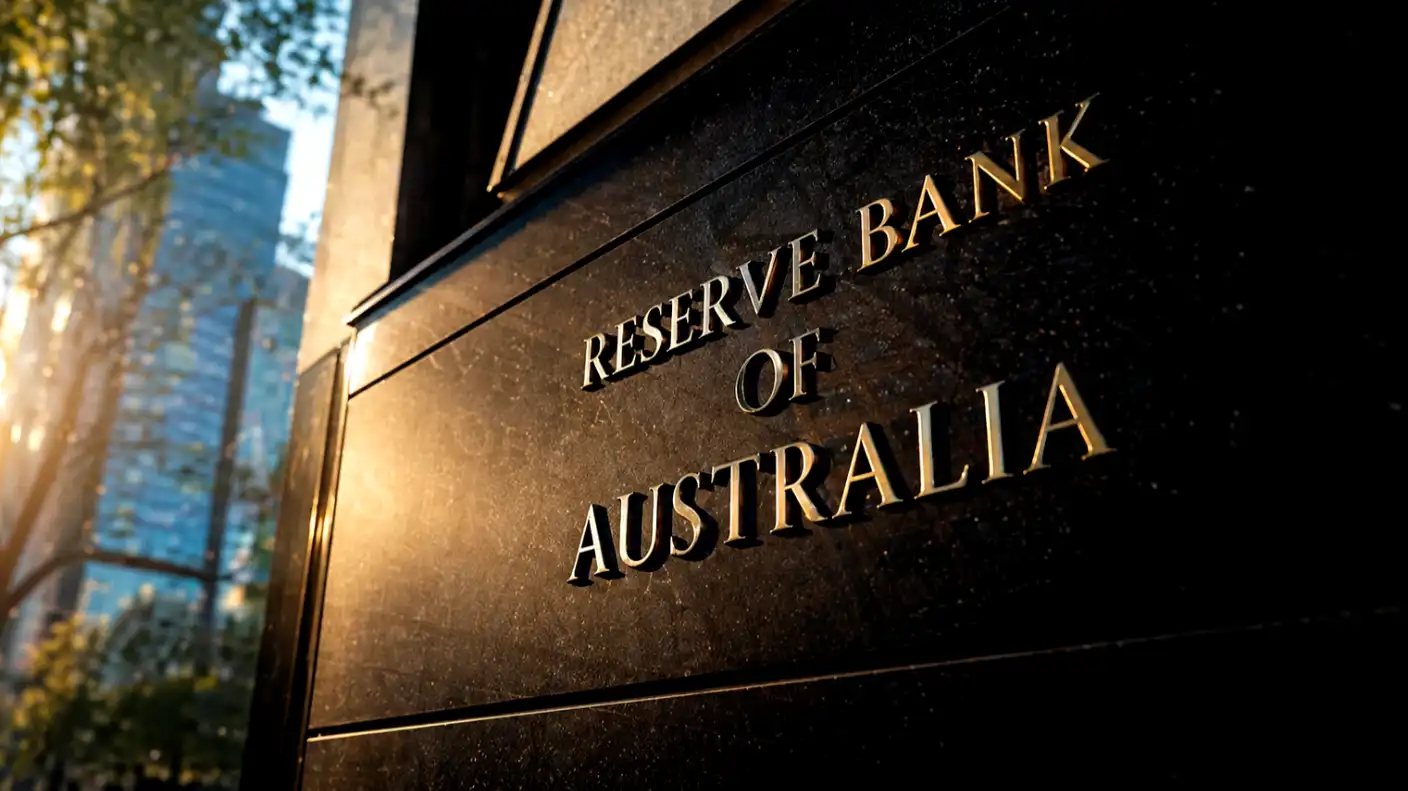
The Reserve Bank of Australia has held its benchmark cash rate steady at 4.35%, maintaining borrowing costs at a 12-year high while issuing a stern warning that it stands ready to tighten monetary policy further if inflation proves stubborn. Detailed policy minutes from the Monetary Policy Board reveal that central bank governors engaged in an intense debate over whether to raise the cash rate by another 25 basis points to 4.60% before deciding that the current restrictive stance provides sufficient time to evaluate incoming economic data.
Led by Governor Michele Bullock, the central bank emphasized that inflation remains uncomfortably high and is returning to target far too slowly. While global peers like the Federal Reserve, the European Central Bank, and the Bank of England are pivoting toward interest rate cuts, Australia is walking an independent, hawkish path. The board reiterated that it is ruling nothing in and ruling nothing out, delivering a clear signal to financial markets that Australian interest rate cuts remain off the table for the foreseeable future.
The central bank finds itself navigating a difficult economic balancing act. On the one hand, sticky service inflation, resilient public infrastructure spending, and a tight labor market with unemployment hovering near 4.2% threaten to entrench consumer price expectations. On the other hand, aggressive monetary tightening has squeezed mortgage holders, pushed household savings rates down to 0.9%, and driven private retail consumption into stagnation. The board concluded that keeping the cash rate at 4.35% preserves the gains made in the labor market while maintaining steady downward pressure on domestic consumer prices.
Inside the RBA’s Deliberations: The 4.35% Cash Rate Standstill
The Monetary Policy Board’s latest meeting highlighted the persistent inflation risks confronting the Australian economy. Rather than treating the policy decision as a routine pause, central bank members evaluated two distinct options: raising the cash rate by 25 basis points to 4.60% or keeping the rate unchanged at 4.35%.
The case for an immediate rate increase rested on evidence that aggregate demand continues to outpace domestic supply capacity. Members observed that underlying inflation has exceeded the upper bound of the target band for eleven consecutive quarters. Furthermore, preliminary financial data suggested that previous financial condition forecasts were overly optimistic regarding how quickly inflation would cool.
However, the board ultimately decided that keeping rates unchanged was the more prudent choice. Governors judged that the current 4.35% cash rate is actively restricting economic activity, evidenced by weak consumer spending, declining real household disposable incomes, and slowing private business investment. Pausing allowed the central bank to examine upcoming quarterly inflation prints, employment reports, and consumer spending figures before making another irreversible policy move.
Weighing a 25-Basis-Point Rate Hike Against Financial Stability
The debate over hiking the cash rate to 4.60% focused heavily on the credibility of monetary policy. Board members expressed concern that if the public begins to believe that the central bank will tolerate above-target inflation for an extended period, businesses will continue raising retail prices and workers will demand higher nominal wages to offset living expenses.
Central bank economists presented modeling showing that a 25-basis-point increase would accelerate the return of consumer price inflation to the target midpoint, reducing the risk of long-term economic damage. An immediate rate hike would also counter recent fiscal stimulus measures, including federal tax cuts and state-level energy rebates, which inject billions of dollars of purchasing power into household bank accounts.
Despite these arguments, governors worried that an additional rate increase could push vulnerable households over a financial cliff. With roughly 35% of Australian households carrying variable-rate residential mortgages, higher monthly repayments could trigger a surge in mortgage defaults and force an abrupt contraction in domestic economic output. The board decided to give earlier rate hikes more time to work through commercial banking channels before applying additional monetary pressure.
Why Governor Michele Bullock Refuses to Rule Out Further Tightening
In her post-meeting communications, Governor Michele Bullock adopted an uncompromising tone, pushing back aggressively against market expectations for near-term interest rate cuts. Governor Bullock stated that the board will not hesitate to raise interest rates if economic data indicates that inflation is becoming entrenched above target.
The Governor highlighted several key factors that distinguish Australia from other developed economies:
- Australian underlying inflation peaked lower than in the United States or Europe, but it is proving significantly more persistent on the way down.
- The Australian labor market remains exceptionally tight, with job vacancies remaining well above pre-pandemic historical averages.
- Domestic wage growth has climbed to roughly 4.1%, running ahead of zero productivity growth.
- The transmission of monetary policy has been cushioned by high household wealth, supported by rising residential property valuations.
Governor Bullock emphasized that the central bank is prepared to maintain a restrictive policy stance for as long as necessary. Her remarks served as an explicit warning to corporate price-setters and financial market traders that the central bank will prioritize price stability over short-term economic comfort.
Persistent Inflation Sticking Points and the 2% to 3% Target Band
The core objective of the Reserve Bank of Australia is to keep annual headline consumer price inflation between 2% and 3%, with a focus on the 2.5% midpoint. However, recent economic data show that achieving this objective is taking significantly longer than initially anticipated.
Headline inflation rose at an annual rate of 3.8%, while the trimmed mean—the central bank’s preferred measure of underlying inflation that strips out volatile price spikes—stood at 3.9%. These figures confirm that domestic price pressures remain broad-based across the economy.
The persistence of inflation is particularly acute in non-tradable goods and services, which are driven by domestic economic conditions rather than international shipping rates or global commodity prices.
Trimmed Mean Inflation Stuck at 3.9% and Service Price Pressures
The trimmed mean inflation reading of 3.9% represents the primary headache for central bank policymakers. While imported goods inflation has cooled due to normalized global supply chains, service sector inflation remains stubbornly elevated across multiple domestic categories.
Service prices are climbing at an annual rate exceeding 4.5%, driven by structural increases in operating expenses:
- Commercial rents and residential lease renewals have surged by 7% to 10% in major capital cities like Sydney, Melbourne, and Brisbane.
- Insurance premiums for commercial property, public liability, and residential buildings jumped by more than 14% over the past year.
- Professional services, medical consultations, and veterinary fees recorded price increases between 5% and 8%.
- Hospitality and entertainment operators raised prices to cover higher utility bills and mandatory award wage adjustments.
Because service sector businesses rely heavily on local labor and commercial leases, service price inflation tends to be highly persistent. Once service inflation becomes established, central banks typically must maintain restrictive borrowing costs for extended periods to suppress demand.
The Slow Timeline to Reach the 2.5% Midpoint by Late 2026
The central bank’s updated economic forecasts reveal a prolonged timeline for inflation normalization. According to baseline projections, trimmed mean inflation will not enter the top of the 2% to 3% target band until late 2025 and is not forecast to reach the 2.5% midpoint until late 2026.
This extended timeline represents an enormous operational gamble for the central bank. Prolonging the return to target leaves the economy vulnerable to external supply shocks. If a geopolitical conflict in the Middle East triggers a spike in global crude oil prices or shipping rates, inflation could easily accelerate back toward 5%, undoing years of monetary tightening.
Board members openly acknowledged this risk, noting that tolerating a slow return to target is only acceptable if inflation continues to move downward. If upcoming quarterly reports show that inflation has stalled at 3.9% or is drifting upward, the central bank will be forced to implement immediate rate hikes to prevent long-term inflation expectations from de-anchoring.
Sluggish Productivity Growth and Unit Labor Cost Pressures
A fundamental structural problem compounding Australia’s inflation challenge is the complete absence of labor productivity growth. Over the past eight quarters, Australian productivity growth has remained essentially flat, hovering near 0%.
When productivity fails to grow, wage increases translate directly into higher unit labor costs for employers. Total wage growth has climbed to an annual rate of 4.1%, supported by statutory increases in award wages and collective enterprise bargaining agreements.
If labor productivity expands at 1% to 1.5% annually, businesses can easily absorb 4% wage increases without raising end prices. However, with zero productivity growth, an employer paying 4.1% higher wages must raise retail prices by roughly 4% just to maintain existing operating profit margins. The central bank warned that unless domestic productivity improves rapidly, current wage growth rates remain inconsistent with returning inflation to the 2.5% target.
Household Pressures, Mortgage Squeezes, and Private Consumption
While macroeconomic indicators show resilient aggregate demand, the financial reality for millions of Australian households is exceptionally difficult. The Reserve Bank’s aggressive tightening cycle—raising the cash rate from 0.10% to 4.35% in just eighteen months—has created a severe two-speed economy.
On one side of the divide, older Australians and self-funded retirees with significant cash savings and no mortgage debt are benefiting from 5% term deposit yields and rising equity markets.
On the other hand, working-age families and young homeowners with substantial mortgage debt are bearing the brunt of the monetary squeeze.
The Collapse in Household Savings to 0.9% and Discretionary Retrenchment
The clearest indicator of household financial distress is the collapse of the household savings ratio. The net savings rate of Australian households has plummeted to 0.9% of disposable income, down from pandemic-era highs exceeding 20% and well below the historical ten-year average of 6.5%.
Families are exhausting their savings buffers to keep up with surging mortgage repayments, grocery bills, and energy charges. Monthly mortgage payments for an average homeowner with a $600,000 home loan have climbed by more than $1,400 per month since the tightening cycle began.
To service their housing debt, households have slashed discretionary spending:
- Retail trade volumes per capita have contracted for seven consecutive quarters, falling by more than 2.5%.
- Spending on domestic tourism, dining out, and recreational entertainment has experienced double-digit declines.
- Consumers are aggressively trading down, swapping premium-brand groceries for private-label alternatives at major supermarket chains.
- Major home appliance, furniture, and electronics retailers report sharp drops in big-ticket floor sales.
This consumer retrenchment is holding the broader private economy back from genuine expansion, forcing thousands of small hospitality and retail businesses into insolvency.
Resilient Public Spending and Government Infrastructure Demand
A primary factor preventing the Australian economy from sliding into a formal technical recession is the massive scale of public sector expenditure. Federal and state government spending has grown at an annual rate exceeding 4.5%, supported by unprecedented investments in transport infrastructure, healthcare, defense, and clean energy transitions.
State governments across New South Wales, Victoria, and Queensland are executing multi-billion-dollar infrastructure pipelines, building new subway tunnels, hospital wings, and renewable energy transmission lines. This continuous public capital deployment injects billions of dollars into regional supply chains and absorbs tens of thousands of construction workers.
While public infrastructure spending delivers long-term economic benefits, in the short term, it competes directly with the private sector for scarce construction labor, raw engineering materials, and electrical equipment. Central bank governors noted that strong public demand is partially offsetting the restrictive effects of higher interest rates, keeping domestic economic capacity under constant strain.
Global Policy Divergence and Financial Market Repercussions
The Reserve Bank of Australia’s hawkish stance is creating a stark divergence between Australian monetary policy and the actions of other major global central banks. For much of the post-pandemic era, international central banks moved in lockstep, tightening borrowing costs simultaneously to combat global inflation.
Now, the global economic cycle is fracturing. Major Western economies are seeing inflation cool rapidly toward 2%, prompting monetary authorities to begin easing cycles to prevent economic recessions.
Australia, by contrast, is being left behind as a global high-interest-rate outlier, reshaping currency valuations, cross-border capital flows, and sovereign bond yields.
Australia’s Hawkish Stance Versus Global Central Bank Rate Cuts
The international monetary landscape has shifted toward policy easing:
- The United States Federal Reserve has prepared financial markets for aggressive interest rate cuts, citing cooling labor demand and normalizing inflation.
- The European Central Bank has already initiated interest rate reductions, lowering benchmark rates to support sluggish German and French industrial output.
- The Bank of England has lowered borrowing costs as British headline inflation fell back toward its 2% statutory target.
- The Bank of Canada and the Reserve Bank of New Zealand have accelerated rate-cutting campaigns to relieve severe domestic mortgage distress.
Because the Reserve Bank of Australia raised its cash rate to a lower peak (4.35%) than the Federal Reserve (5.50%) or the Bank of England (5.25%), Australian demand did not slow as violently as demand in peer nations. As a consequence, Australian inflation is taking longer to eradicate, forcing the RBA to keep borrowing costs elevated while international peers lower theirs.
Bond Market Shifts and Currency Rebound for the Australian Dollar
This widening monetary policy divergence is triggering substantial repositioning across global financial markets. Fixed-income bond yields on Australian sovereign debt have climbed relative to United States Treasuries, attracting foreign institutional yield-seekers.
The spread between Australian 10-year government bonds and United States 10-year Treasuries has flipped into positive territory. International bond desks are pricing out near-term Australian rate cuts, anticipating that the RBA will remain on hold until well into next year.
In foreign exchange markets, the Australian dollar has staged a noticeable rebound. After trading below 64 US cents during the height of global growth concerns, the local currency has climbed toward 68 US cents. A stronger Australian dollar provides a welcome deflationary benefit by reducing the domestic cost of imported consumer electronics, refined fuels, and industrial machinery, helping the central bank in its long-term battle against imported price pressures.
The Reserve Bank of Australia’s decision to hold the cash rate at 4.35% while keeping the door open to future rate hikes reflects the stubborn reality of Australia’s inflation landscape. While the board recognized that previous rate increases have squeezed households and cooled consumer spending, the persistent strength of service inflation, flat productivity growth, and a tight 4.2% labor market prevent any immediate policy easing. As global central banks begin cutting rates, Australia must navigate an independent, restrictive course. By maintaining peak borrowing costs, Governor Michele Bullock and the Monetary Policy Board are determined to break the back of domestic inflation, ensuring that price stability returns to the Australian economy.