

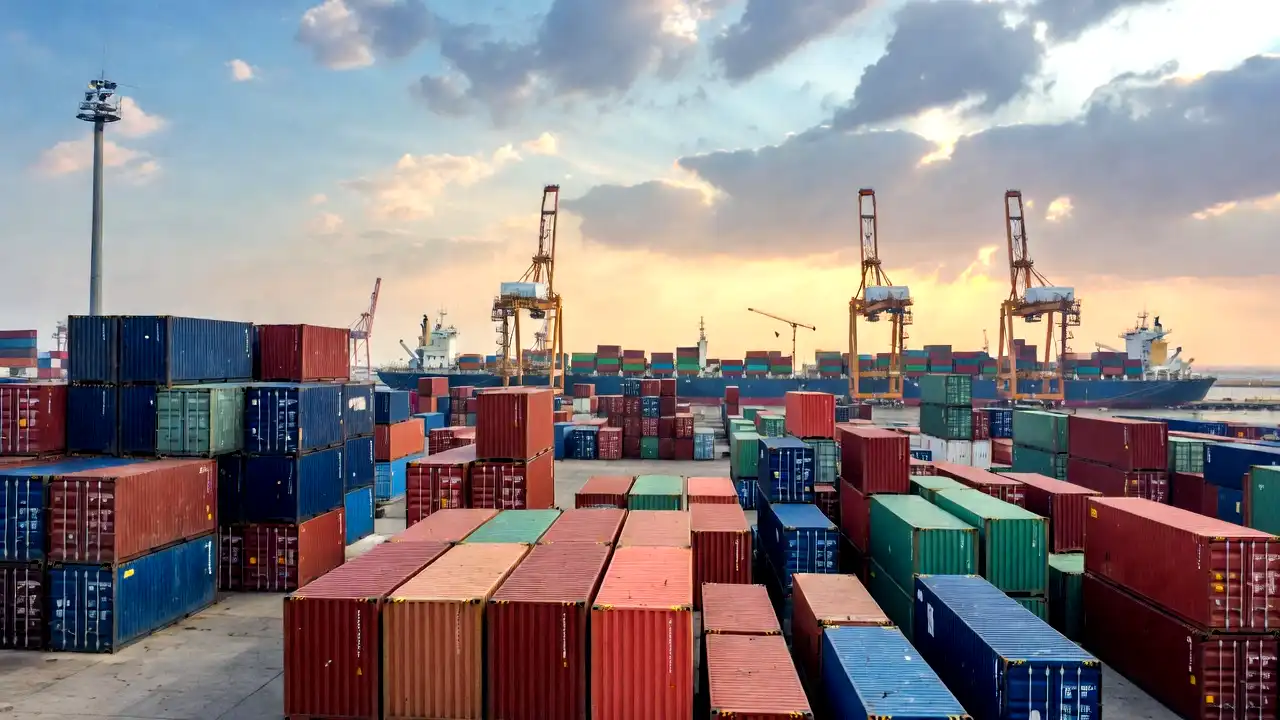
The global technology hardware market has entered a highly intensive growth phase, and the export engine of one of East Asia’s most modern economies is reaping the rewards. Recently, in August 2026, official trade data from the Korea Customs Service revealed that South Korea’s exports experienced an extraordinary year-on-year surge during the first ten days of the month. This sharp expansion represents a historic milestone, showing that the global appetite for advanced memory chips, high-speed computer components, and refined petroleum products remains incredibly strong.
According to the provisional trade statistics, South Korea’s outbound shipments reached $21.3 billion (approximately 30.2 trillion Korean won) during the August 1–10 period. This total marks a massive 45.3% increase compared to the $14.6 billion recorded during the same period in the previous year. This performance represents the highest export volume ever recorded for the first ten days of August, beating previous historical benchmarks and demonstrating the immense operational strength of the country’s manufacturing base.
This rapid export expansion highlights a broader structural transition in the global digital economy. As companies around the world invest billions of dollars to construct massive artificial intelligence data centers, purchase specialized graphics processors, and upgrade their enterprise computer networks, they are relying almost exclusively on South Korean memory giants Samsung Electronics and SK Hynix to supply the high-bandwidth memory chips required to keep their systems running. This technological lead has turned South Korea into a dominant global export powerhouse, with its semiconductor shipments carrying the nation’s entire trade surplus to record heights.
Breaking Down the Record-Setting August Trade Data
The seasonally adjusted trade numbers show that the performance of the export sector has far outpaced previous market forecasts, providing a powerful economic stimulus to the domestic economy as the country navigates a highly volatile global trade environment.
Outbound Shipments Cross the Twenty-Billion-Dollar Milestone
The record-breaking $21.3 billion export total was achieved over a standard working period of seven days, which was identical to the number of working days in the prior year’s period. This means that the average daily export volume during the ten days also rose by an identical 45.3% year-on-year, reaching approximately $3.04 billion per day.
This high level of daily output shows that the country’s ports and logistics networks are operating at maximum efficiency. Competitors in neighboring countries are watching this performance closely, as the rapid outflow of high-value goods indicates that South Korea’s supply chains have successfully bypassed regional transportation bottlenecks and shipping disruptions.
Imports and the Sustained Trade Surplus Metrics
While exports surged to historic heights, South Korea’s import bills also recorded steady, sustainable growth. Over the August 1–10 period, imports rose by 23.1% year-on-year, reaching a total of $19.5 billion.
The primary driver behind this import growth was the technological requirements of the domestic chip industry, with imports of raw semiconductors surging by 90.8% and imports of specialized semiconductor manufacturing equipment jumping by 77.3%.
Because the growth in outbound shipments far outpaced the rise in imports, South Korea posted a healthy trade surplus of $1.8 billion (specifically $1.798 billion) for the ten days.
This surplus ensures that the country’s continuous run of monthly trade surpluses, which stood at 18 consecutive months as of July, remains solid as the industry enters the second half of the year. This steady capital accumulation provides the Bank of Korea with a vital financial cushion, protecting the domestic currency, the won, from external volatility.
The Semiconductor Supercycle: Powering Nearly Half of National Exports
The primary driver of South Korea’s export miracle is the continued, relentless expansion of the global semiconductor market, which is experiencing a multi-year supercycle fueled by the rapid integration of artificial intelligence technologies.
Shifting Capital to High-Bandwidth Memory and AI Infrastructure
During the first ten days of August, South Korea’s semiconductor exports surged by an extraordinary 155.4% year-on-year, reaching a total of $9.95 billion (nearly $10 billion). This historic figure represents the highest chip export volume ever recorded for this specific ten-day period, proving that the global demand for memory chips is continuing to accelerate rather than slowing down.
This rapid growth has significantly increased the semiconductor sector’s dominance over the broader national economy:
- Semiconductors accounted for a massive 46.8% of South Korea’s total exports during the ten days, showing how deeply the country’s fortunes are tied to a single technology sector.
- This represents a massive 20.1 percentage point increase compared to the chip sector’s 26.7% share of total exports during the same period last year.
- Computer peripherals, which are also vital for building out digital infrastructure, saw their exports jump by a staggering 139.5% during the period, further illustrating the strength of the hardware upgrade cycle.
This high concentration of export growth carries both massive opportunities and significant strategic challenges. For the major South Korean chipmakers, the global artificial intelligence boom represents a highly lucrative, multi-billion-dollar market.
Where even a 1.5% margin improvement can yield massive savings for data center operators, securing high-purity, high-capacity memory chips is an absolute necessity.
As long as tech giants continue to pour capital into cloud infrastructure, South Korea’s export engine will remain highly profitable. However, this high concentration also means that any future slowdown in the technology cycle would have an immediate, outsized impact on the country’s national GDP, forcing policymakers to remain highly vigilant.
Petroleum Product Shipments and the Geopolitical Energy Landscape
While high-tech silicon dominated the headlines, traditional industrial sectors also contributed to the record-setting August performance. Exports of refined petroleum products shot up by 65.3% year-on-year, reaching a total of $1.99 billion for the ten days.
This significant export growth was driven by a combination of rising international fuel prices and expanding export volumes to neighboring Asian economies.
As geopolitical tensions in the Middle East and ongoing shipping disruptions in the Red Sea continue to create volatility in global energy markets, major regional buyers are increasingly turning to South Korea’s highly advanced refining complexes in Ulsan and Yeosu to secure their fuel supplies, turning the country’s traditional energy sector into a highly reliable source of export revenue.
The Curious Case of the Automobile Export Drop
While almost every major industrial sector reported high-growth performance during the ten days, the automotive industry experienced a sudden, dramatic contraction. Outbound shipments of South Korean automobiles plummeted by 80.9% year-on-year, dropping to a mere $182 million.
Navigating Seasonal Labor Holidays and Supply Chain Setbacks
For casual market observers, a sudden 80.9% drop in automobile exports might suggest a severe collapse in global consumer demand for South Korean cars. However, industry insiders and logistics experts point out that this decline is the result of a highly predictable, seasonal labor pattern rather than a structural market crisis.
Every year, during the first week of August, South Korea’s major automotive manufacturers—including Hyundai Motor Company and Kia Corporation—execute their mandated summer holiday shutdowns.
During this week-long period, assembly plants across the country completely pause their production lines, allowing hundreds of thousands of workers to take their annual vacations simultaneously.
Because production lines are silent and transport trucks are parked, the volume of vehicles shipped to domestic ports for export drops to near-zero during these first ten days of August. This seasonal labor pause creates a temporary, highly distorted data print that naturally corrects itself as factories resume normal, high-volume operations during the second half of the month.
Restructuring the Global Trade Map: China, Vietnam, and the U.S.
The rapid growth in South Korea’s exports is also driving a significant restructuring of the global trade map, shifting the destination of the country’s high-tech shipments and reflecting changing consumer behaviors in key international markets.
The Double-Tonnage Export Spike to China and Vietnam
The most significant geographic development in the August trade data is the dramatic resurgence of demand from China, which has traditionally operated as South Korea’s largest trading partner.
The geographic distribution of export growth highlights these shifting regional dynamics:
- Exports to China more than doubled during the ten days, surging by an impressive 134.8% to reach a total of $6.7 billion.
- Outbound shipments to Vietnam, which serves as a major manufacturing and assembly hub for South Korean electronics companies, jumped by 45.4% year-on-year to reach $2.39 billion.
- Shipments to Hong Kong experienced an even more dramatic surge, skyrocketing by 259.4% during the ten days.
- Exports to the European Union also recorded healthy, broad-based growth, climbing 57.2% year-on-year.
This massive surge in shipments to China and Vietnam is closely tied to the regional technology supply chain. As Chinese and Vietnamese consumer electronics firms prepare for the major autumn product launch season—including manufacturing next-generation smartphones, smartwatches, and laptops—they must import massive volumes of South Korean memory chips, displays, and camera modules.
This high-volume component demand has re-energized intra-Asian trade flows, proving that China and Southeast Asia remain the undisputed assembly engine of the global technology sector.
Flatlining Shipments to the United States Amid Tariff Shifts
In sharp contrast to the triple-digit growth recorded in Asian markets, South Korea’s exports to the United States flatlined during the first ten days of August. Outbound shipments to the U.S. fell slightly by 0.2% year-on-year, dropping to $2.0 billion.
This sudden cooling of the transatlantic trade route is closely linked to shifting trade policies and rising regulatory barriers. Over the past year, the U.S. government has implemented a series of new tariff structures and stricter trade enforcement measures, creating a highly cautious environment for international exporters.
Faced with rising shipping costs and the threat of further trade restrictions, many South Korean firms have begun adjusting their logistics models, prioritizing direct, local manufacturing investments inside the United States over direct exports from Asian ports.
While this defensive shift helps protect their long-term American market share, it has also resulted in a temporary flattening of direct trade volumes, leaving the United States as the only major trading partner that did not record growth during the record-setting August period.
Cumulative Financial Performance: Approaching Seven Hundred Billion Dollars
The spectacular performance recorded during the first ten days of August is the continuation of a historic, highly successful trading year for the South Korean economy.
As of August 10, 2026, South Korea’s cumulative exports for the year reached an astonishing $616.3 billion, representing a massive 50.3% increase compared to the same period in the prior year.
This sustained, double-digit growth has allowed the country to accumulate a historic year-to-date trade surplus of $169.5 billion (specifically $169.558 billion), nearly approaching the $170 billion milestone.
This massive trade surplus represents a major financial triumph for South Korea’s policymakers and central bankers.
By accumulating such large cash reserves, the country has built a highly resilient economic shield, protecting its financial system from external shocks, stabilizing the domestic currency against foreign exchange volatility, and providing local corporations with the financial confidence to continue investing billions of dollars in advanced research, development, and clean-energy transitions.
As the global technology supercycle continues to run at maximum speed, South Korea’s cumulative performance is on track to set an all-time annual record by the end of December, cementing the country’s position as an undisputed powerhouse of the global digital economy.
Navigating the Future of Global Trade
The historic trade statistics published by the Korea Customs Service for the first ten days of August represent a defining moment for the global technology and manufacturing sectors. By demonstrating a massive 45.3% year-on-year surge in exports and crossing the $21.3 billion milestone, South Korea has proven that the global demand for advanced memory chips remains exceptionally strong.
While seasonal labor holidays have temporarily depressed automobile shipments, and rising tariff pressures have flattened trade with the United States, the spectacular growth recorded in China and Southeast Asia has easily filled the gap.
As South Korean chipmakers continue to scale up their high-bandwidth memory production and secure their vertical component supply chains, the country’s export engine is well-positioned to maintain its record-breaking momentum, proving that the ultimate winners of the digital age will be the nations that can successfully manufacture, scale, and deliver the physical building blocks of computation to the global marketplace.






