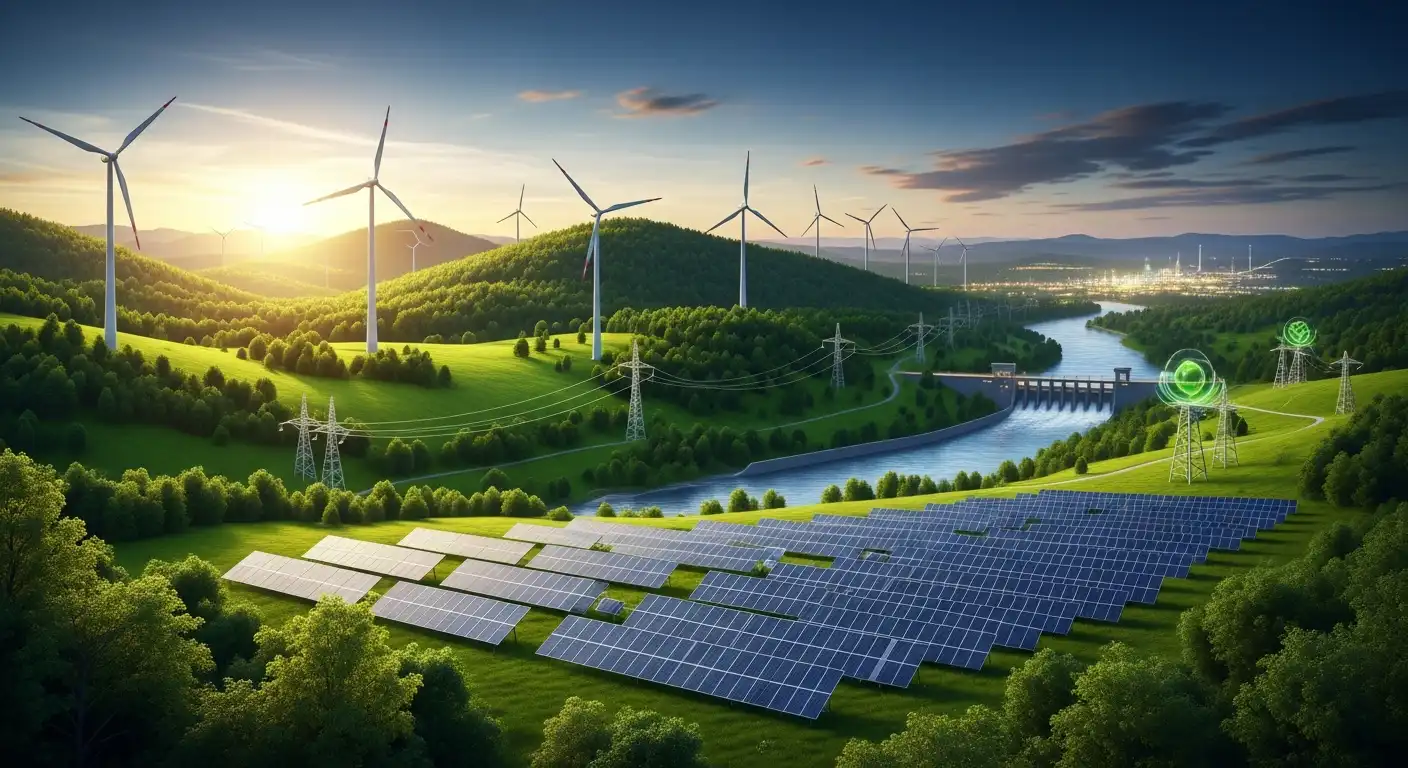
The Thai government is overhauling its national energy architecture, executing a decisive policy pivot away from imported liquefied natural gas in favor of domestic renewable power generation. Confronted with escalating geopolitical volatility in the Middle East and severe shipping risks in the Persian Gulf, energy planners in Bangkok are rewriting the country’s flagship Power Development Plan. The revised master plan accelerates the deployment of utility-scale solar, reservoir-based floating solar arrays, wind farms, and advanced battery energy storage systems to insulate the domestic economy from international fuel price shocks.
For decades, Thailand relied on natural gas as the backbone of its industrial economy, using it to generate roughly 60% of the nation’s electricity. However, rapid depletion of domestic gas reserves in the Gulf of Thailand forced state-owned energy conglomerate PTT and the Electricity Generating Authority of Thailand to import millions of tons of expensive liquefied natural gas from overseas markets. As regional military conflicts involving Iran threaten maritime transport through the Strait of Hormuz, driving global gas prices higher, Thai policymakers decided that continuing to depend on imported fossil fuels poses an unacceptable risk to national economic stability.
Under the updated Power Development Plan spanning through 2037, Thailand will raise the share of renewable energy in its national electricity generation mix to over 51%, up from approximately 20% today. This transition involves deploying tens of gigawatts of clean electricity, expanding the world’s largest hydro-floating solar networks across state-owned dams, and introducing direct power purchase agreements. By establishing an independent clean energy supply, Thailand aims to lower electricity tariffs for domestic consumers while attracting tens of billions of dollars in foreign investment from global technology giants constructing green artificial intelligence data centers across Southeast Asia.
A Strategic Pivot Away from Imported Fossil Fuels
Thailand’s historical reliance on natural gas made the country one of the most gas-dependent economies in the Asia-Pacific region. State-run gas fields like Erawan and Bongkot in the Gulf of Thailand supplied reliable, affordable fuel that powered the nation’s rapid industrialization, supporting world-class automotive assembly plants, electronics factories, and petrochemical complexes.
However, the natural decline of these legacy domestic gas reservoirs altered the country’s energy security. Over the past decade, domestic gas output dropped steadily, forcing Thailand to import liquefied natural gas via ocean-going cryogenic tankers to satisfy baseline industrial demand.
Annual imports surged past 11 million metric tons, exposing the national economy directly to the volatile pricing cycles of global spot gas markets.
The recent outbreak of hostilities in the Middle East delivered a severe wake-up call to Thai energy authorities. Global gas benchmarks climbed sharply as shipping insurers raised war-risk premiums for tankers traversing Middle Eastern waters.
Recognizing that volatile fuel import bills drain foreign exchange reserves and inflate retail electricity rates, Bangkok decided to substitute expensive imported gas with abundant, domestically generated clean electricity.
Middle Eastern Geopolitical Shocks and Soaring Spot LNG Prices
The catalyst accelerating Thailand’s energy restructuring is the acute vulnerability of international liquefied natural gas supply chains. The Middle East accounts for a major share of global fuel exports, with hundreds of tankers passing through the narrow Strait of Hormuz each month.
Escalating military friction centered on Iran created immediate commercial fallout across Asian energy markets:
- International spot prices for Asian liquefied natural gas jumped toward multi-month highs, adding millions of dollars to the cost of every delivered cargo.
- Commercial maritime shipping operators rerouted vessels around the Cape of Good Hope, adding 12 to 16 sailing days and inflating ocean freight expenses.
- Reinsurance underwriters canceled or sharply restricted war-risk coverage for commercial cargo vessels operating near regional conflict zones.
- Thai state utility EGAT faced surging fuel procurement expenses, threatening to push retail electricity tariffs above five baht per kilowatt-hour.
Energy economists emphasized that continuing to base national power planning on imported fuel creates persistent economic instability. By redirecting capital toward domestic solar and wind generation, Thailand permanently eliminates maritime fuel transport risks and insulates national budgets from foreign geopolitical crises.
Depleting Domestic Gas Fields in the Gulf of Thailand
Compounding international fuel risks is the permanent structural decline of Thailand’s indigenous hydrocarbon reserves. Despite aggressive development campaigns and secondary recovery investments, natural output from mature shallow-water fields in the Gulf of Thailand has declined at an annual rate of 8% to 10%.
The geological exhaustion of these fields created severe midstream imbalances:
- Legacy domestic extraction assets that once satisfied over 80% of national power needs now provide less than 45% of total consumption.
- Offshore pipeline networks that historically moved domestic gas to coastal power plants in Rayong and Chonburi are operating with excess capacity.
- Thailand’s pipeline imports of natural gas from neighboring Myanmar face chronic supply constraints and geopolitical uncertainties.
- Capital investments required to extract remaining deep-water gas deposits have risen substantially, making domestic offshore drilling increasingly uncompetitive against renewable generation.
Recognizing that domestic gas will never return to historical production peaks, the Ministry of Energy determined that expanding renewable energy infrastructure represents the only viable long-term strategy to replace declining Patagonian and offshore Patagonian-style fossil reserves.
The New Power Development Plan: Targeting 51% Renewable Energy
The updated Power Development Plan represents the most comprehensive energy overhaul in modern Thai history. The statutory framework sets the mandatory generation roadmap for the country through 2037, establishing binding procurement quotas for public utilities and private independent power producers.
The core objective of the revised plan is to elevate the share of renewable power from roughly 20% of the national energy mix to a dominant 51% by 2037. Over this transition window, the share of natural gas will drop from nearly 60% to roughly 35%, permanently ending the era of gas dominance.
The government will execute this transition by procuring over 25 gigawatts of brand-new clean energy capacity through competitive bidding rounds managed by the Energy Regulatory Commission.
These projects will be distributed across diverse geographical regions, creating thousands of regional construction jobs and stimulating rural economic development.
Scaling Utility-Scale Solar and Wind Across Regional Provinces
The foundation of Thailand’s clean energy expansion is the large-scale deployment of ground-mounted solar photovoltaic farms and commercial wind parks. Thailand possesses exceptional solar irradiance, particularly across the sunny agricultural plains of the Northeast and Central regions.
The procurement schedule allocates tens of gigawatts to private renewable developers:
- Over 15 gigawatts of utility-scale ground-mounted solar projects will be constructed across provinces like Nakhon Ratchasima, Khon Kaen, and Lopburi.
- Approximately 5.5 gigawatts of commercial onshore wind capacity will be developed across elevated mountain ridges in the South and Northeast.
- Independent power producers will sign 25-year feed-in tariff power purchase agreements with state utilities, locking in fixed electricity prices below 2.2 baht (roughly 6.5 cents) per kilowatt-hour.
- Farmers and agricultural cooperatives will benefit from agrivoltaic dual-use land programs, generating clean solar power above shade-tolerant crops.
Locking in fixed, long-term power purchase agreements below 7 cents per kilowatt-hour ensures that retail electricity rates remain affordable and predictable for decades, providing domestic businesses with a major cost advantage over regional competitors.
Expanding World-Leading Hydro-Floating Solar Across EGAT Reservoirs
A standout innovation in Thailand’s clean power strategy is the massive expansion of hydro-floating solar hybrid systems. The Electricity Generating Authority of Thailand pioneered this hybrid technology, operating the world’s largest floating solar installation at the Sirindhorn Dam reservoir in Ubon Ratchathani.
Hydro-floating solar systems combine high-efficiency solar panels mounted on eco-friendly floating pontoons with existing hydroelectric dam turbines:
- Floating solar panels generate abundant electricity during sunny daylight hours, allowing dam operators to conserve reservoir water.
- During evening peak hours or cloudy weather, operators open dam gates, running hydroelectric turbines to supply continuous, clean electricity.
- Floating panels reduce surface water evaporation by millions of cubic meters annually, preserving critical water supplies for agricultural irrigation during dry seasons.
- Mounting solar panels on existing reservoirs utilizes existing high-voltage transmission lines, eliminating the need to acquire expensive private land or construct new power corridors.
EGAT plans to deploy hydro-floating solar arrays across nine major hydroelectric dams nationwide—including the Bhumibol, Srinagarind, and Ubol Ratana reservoirs—delivering over 2.7 gigawatts of hybrid clean energy capacity.
Integrating Battery Energy Storage Systems for Grid Stability
To manage the intermittency of solar and wind generation, the new master plan mandates large-scale investments in utility battery energy storage systems and pumped-storage hydroelectric facilities.
Energy storage technology acts as the vital bridge that transforms variable clean generation into steady, reliable baseload electricity:
- EGAT and private developers will deploy more than 3.0 gigawatts (over 12 gigawatt-hours) of advanced utility-scale battery energy storage systems adjacent to key high-voltage substations.
- Battery arrays will provide sub-second frequency regulation, stabilizing grid voltage during sudden cloud cover or wind drop-offs.
- Industrial batteries will absorb surplus midday solar generation and discharge clean power during the expensive evening peak demand window between 7:00 PM and 10:00 PM.
- The government will expand pumped-storage hydroelectric capacity at the Lam Takhong Jolabha Vadhana power station, storing gigawatt-hours of energy in high mountain reservoirs.
Deploying energy storage at scale ensures that Thailand’s power grid can comfortably handle a 51% clean energy penetration rate without risking voltage drops or localized blackouts.
Securing Multi-Billion-Dollar Tech Investments and Green Data Centers
Thailand’s accelerated renewable transition is directly linked to its national digital economy ambitions. The country is competing aggressively against regional neighbors like Malaysia, Indonesia, and Singapore to become Southeast Asia’s premier hub for cloud computing, artificial intelligence training, and digital enterprise services.
Multinational technology corporations are investing hundreds of billions of dollars globally to construct high-density computing campuses.
However, tech giants operate under strict global sustainability mandates requiring 100% of their operational electricity to originate from verifiable, local renewable energy sources.
If Thailand remained dependent on carbon-intensive imported natural gas, multinational technology firms would bypass Bangkok and build data center infrastructure in competing regional markets.
Direct Power Purchase Agreements for Google, Microsoft, and AWS
To capture this flood of foreign technology capital, the Thai government introduced Direct Power Purchase Agreement pilot programs. Under these progressive market rules, enterprise data center operators can bypass traditional utility monopolies and purchase clean electricity directly from private solar and wind developers.
The regulatory reform unlocked massive infrastructure commitments from the world’s largest technology leaders:
- Alphabet committed $1.0 billion to construct a world-scale Google Cloud region and data center campus in Bangkok and Chonburi.
- Amazon Web Services launched a long-term $5.0 billion investment program to build high-capacity data center clusters across Thailand by 2037.
- Microsoft signed strategic collaboration agreements with the Thai government to deploy advanced cloud infrastructure and enterprise artificial intelligence training centers.
- The direct power purchase framework incorporates third-party grid wheeling, allowing tech firms to run server racks on verified clean electricity generated hundreds of kilometers away.
Offering guaranteed access to low-cost, green electricity provides Thailand with an insurmountable competitive advantage, ensuring that the country captures the high-paying engineering jobs and digital tax revenues generated by the artificial intelligence revolution.
Powering Southeast Asia’s Booming Digital Infrastructure Hub
The expansion of green computing infrastructure is driving an industrial renaissance across Thailand’s Eastern Economic Corridor. Special economic zones in Chonburi, Rayong, and Chachoengsao are attracting advanced semiconductor packaging plants, electric vehicle battery gigafactories, and optical networking manufacturers.
These advanced manufacturing industries consume immense amounts of electricity and require 24/7 reliability alongside green certifications:
- Electric vehicle manufacturers, including BYD, Great Wall Motor, and SAIC Motor, are operating automated assembly mega-plants powered by rooftop solar and clean grid tariffs.
- Global consumer electronics and printed circuit board manufacturers are relocating supply chain nodes from East Asia to Thailand to take advantage of low-carbon electricity.
- High-capacity trans-Pacific subsea fiber-optic telecommunications cables are landing at coastal landing stations, linking Thai data centers directly with North America and Europe.
- Green hydrogen and ammonia pilot projects are developing adjacent to industrial ports, utilizing surplus renewable energy to decarbonize heavy maritime transport.
By uniting cheap, clean power with world-class digital and transportation logistics, Thailand is establishing an integrated industrial ecosystem that will drive economic growth for the next half-century.
Exploring Clean Baseload Alternatives: Small Modular Reactors and Regional Hydro
While solar, wind, and battery storage will provide the majority of new energy generation, Thai energy planners recognize that maintaining absolute grid reliability requires dependable, low-carbon baseload power. To complement variable renewables, the updated Power Development Plan incorporates innovative nuclear and regional hydroelectric options.
These advanced clean technologies will operate alongside battery storage, providing continuous electricity during extended periods of monsoon cloud cover or regional drought.
By diversifying its clean baseload portfolio, Thailand ensures that its decarbonization strategy remains resilient against climate and geopolitical disruptions.
Deploying Small Modular Nuclear Reactors in the Late 2030s
A groundbreaking inclusion in the revised power master plan is the formal introduction of Small Modular Reactor nuclear technology. The updated framework allocates up to 600 megawatts of capacity for small modular reactors, targeting commercial deployment in the late 2030s.
Small modular reactors represent an ideal clean baseload solution for modern industrial grids:
- Generating between 150 megawatts and 300 megawatts of continuous, carbon-free baseload power per unit on a physical footprint smaller than a traditional sports stadium.
- Utilizing advanced passive safety systems that shut down and cool the reactor core automatically without requiring human intervention or external emergency electrical power.
- Fabricating reactor components in standardized, high-precision factory environments drastically reduces construction timelines and capital costs compared to legacy gigawatt-scale nuclear plants.
- Siting modular reactors directly adjacent to industrial manufacturing clusters in coastal regions, providing clean electricity and industrial high-temperature process heat.
The Ministry of Energy and the Thailand Institute of Nuclear Technology have established technical working groups to evaluate leading international reactor designs from the United States, France, and South Korea, while developing comprehensive domestic nuclear regulatory and safety frameworks.
Expanding Cross-Border Clean Hydroelectric Imports from Laos
Thailand is also deepening its regional clean energy integration by expanding long-term cross-border electricity trade with neighboring Laos. Often referred to as the “Battery of Southeast Asia,” Laos possesses vast, high-altitude river systems that generate immense volumes of clean hydroelectric power.
Under bilateral energy cooperation agreements, Thailand imports thousands of megawatts of low-cost hydroelectric electricity through dedicated high-voltage direct-current transmission links:
- Long-term power purchase agreements secure clean baseload electricity at fixed tariffs below 5 cents per kilowatt-hour.
- Cross-border power lines link mountainous Laotian hydroelectric dams directly to industrial demand centers in northeastern and central Thailand.
- Regional grid interconnection agreements enable multilateral power trading, allowing Thailand to wheel surplus clean energy to Malaysia and Singapore under the ASEAN Power Grid initiative.
- Importing clean water-powered electricity reduces Thailand’s need to construct domestic fossil-fuel peaking plants.
Regional energy integration establishes a shared clean power network across the Mekong sub-region, enhancing energy security and lowering systemic costs for all participating nations.
Strategic Implications for Southeast Asian Energy Security
Thailand’s decisive transition from imported fossil gas toward domestic renewable energy provides a transformative blueprint for the entire Southeast Asian region. Emerging economies across the Association of Southeast Asian Nations face a shared dilemma: how to satisfy rapidly growing power demand while achieving national net-zero carbon commitments and managing sovereign debt.
For years, regional energy policy was paralyzed by the assumption that natural gas represented an indispensable, permanent bridge fuel that developing nations had to burn for decades before adopting renewables.
Thailand’s bold policy pivot proves that volatile international fuel markets and climate realities have made the fossil-gas bridge economically obsolete, demonstrating that emerging economies can leapfrog directly into clean electrification.
Protecting Consumer Utility Tariffs from Global Commodity Shocks
The ultimate benchmark of energy policy is its ability to deliver affordable, stable electricity to everyday citizens and small businesses. In an era marked by geopolitical conflicts and extreme weather events, exposing domestic utility bills to global fuel volatility imposes severe economic penalties on households.
Transitioning to a 51% renewable energy mix delivers permanent economic protections:
- Eliminating foreign fuel surcharges from monthly residential and commercial electricity bills.
- Protecting the national balance of payments by reducing annual foreign exchange expenditures on imported fuel by billions of dollars.
- Shielding small and medium-sized enterprises from sudden energy price spikes, allowing local factories and retail shops to plan multi-year business expansions with confidence.
- Reinvesting national energy capital into domestic manufacturing, engineering services, and local high-wage employment.
By grounding its electricity system in domestic clean resources, Thailand builds a stable economic foundation that protects the living standards of its 70 million citizens.
The Regional Blueprint for Decarbonizing Emerging Asian Economies
Thailand’s revamped Power Development Plan will accelerate clean energy adoption across the wider ASEAN economic bloc. As the second-largest economy in Southeast Asia, Thailand’s regulatory innovations and infrastructure models frequently serve as the technical benchmark for neighboring countries.
Key elements of Thailand’s transition are already inspiring regional adoption:
- The replication of hydro-floating solar hybrid designs across reservoirs in Vietnam, Indonesia, and the Philippines.
- The expansion of direct power purchase agreements and green tariff mechanisms across Southeast Asian commercial centers.
- The joint development of the ASEAN Power Grid is creating an integrated regional electricity market capable of trading renewable power from the Mekong Delta to the Indonesian archipelago.
- The coordinated adoption of small modular nuclear reactors and grid-scale battery storage to replace retiring regional coal-fired power stations.
By demonstrating that large-scale clean energy deployment is not only environmentally sustainable but commercially profitable and geopolitically essential, Thailand is leading Southeast Asia into a new era of energy sovereignty.
Thailand’s decision to accelerate its shift toward renewable energy marks a historic milestone in the nation’s economic development. By recognizing the fatal vulnerabilities of imported liquefied natural gas in the wake of Middle Eastern conflicts and Gulf of Thailand reserve depletion, Bangkok has chosen the path of clean energy independence. Backed by a modernized Power Development Plan targeting 51% renewable generation, world-class hydro-floating solar networks, and direct clean power agreements for global technology titans, Thailand is constructing a resilient, low-cost, and carbon-free energy ecosystem. As the nation replaces expensive foreign fossil fuels with abundant domestic sunshine, wind, and water, Thailand stands as a beacon of sustainable industrial progress, securing its economic future and illuminating the path forward for the entire Asia-Pacific region.