

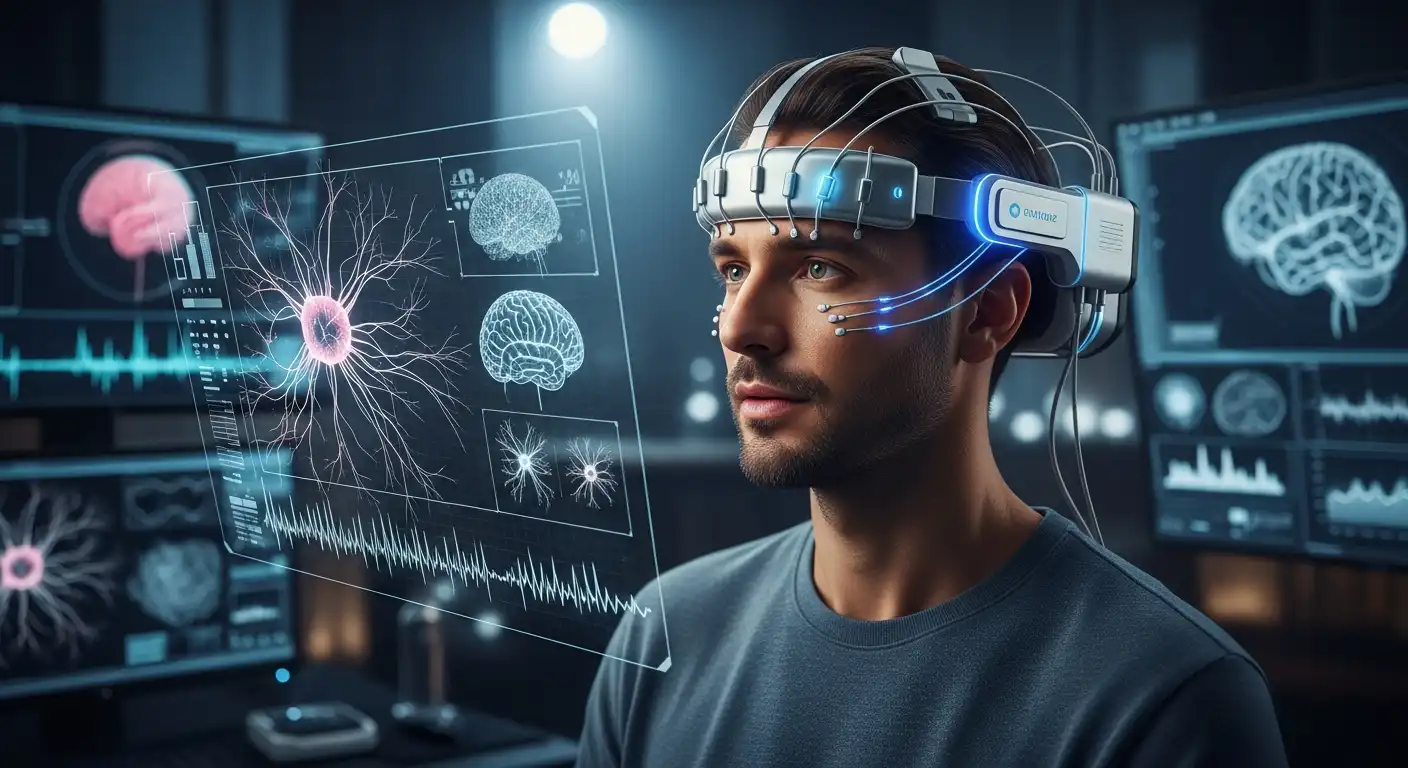
The line between science fiction and reality is blurring faster than ever, and nowhere is this more apparent than in the field of Brain-Computer Interfaces (BCIs). Once confined to research labs, this revolutionary technology is now at the center of a startup boom, promising to restore lost function, augment human capability, and redefine our relationship with the digital world. As we look ahead to 2026, today’s pioneers are on the cusp of becoming tomorrow’s industry giants.
These companies are not just developing gadgets; they are decoding the brain’s very language. From minimally invasive implants to non-invasive wearables, their approaches vary, but their goal is the same: to create a direct pathway from human thought to external action. Here are the top 5 BCI startups poised to lead this incredible technological charge in 2026.
Neuralink Corp.
Backed by Elon Musk’s immense vision and resources, Neuralink is arguably the world’s most famous BCI company. Its ambitious goal is to create a high-bandwidth, implantable BCI to help people with paralysis and, eventually, to create a symbiotic relationship between the human brain and artificial intelligence.
By 2026, following its initial human trials, Neuralink will likely be deep into refining its surgical robot, improving implant longevity, and expanding the scope of its clinical studies. Its key strengths are:
- High-Bandwidth Approach: Using thousands of tiny, thread-like electrodes, Neuralink aims to achieve a level of data transmission from the brain that is orders of magnitude greater than its competitors’.
- Vertically Integrated Technology: From the implantable “Link” chip to the surgical robot that inserts it, Neuralink controls the entire technological stack, allowing for rapid iteration.
- Massive Public Profile: Its association with Elon Musk gives it unparalleled media attention and access to top-tier talent and funding, accelerating its progress.
- Dual Focus: While its immediate goal is medical, its long-term vision of human-AI symbiosis attracts a different level of investment and talent focused on transformative future applications.
Target Application: Primarily focused on restoring motor and sensory function for individuals with severe paralysis, with a long-term vision for augmenting human cognition.
Synchron Inc.
While Neuralink grabs headlines with its surgical approach, Synchron is making waves with a revolutionary, minimally invasive technique. The company has developed the Stentrode, a BCI device implanted through the jugular vein and guided through blood vessels to sit next to the brain’s motor cortex, eliminating the need for open-brain surgery.
This less-risky approach has allowed Synchron to progress rapidly through regulatory approvals, even beating Neuralink to human trials in the U.S. By 2026, Synchron could be nearing commercialization of its initial applications. Its key advantages include:
- Minimally Invasive Procedure: The endovascular approach dramatically reduces the risk and recovery time associated with implantation, making it a more accessible option for patients and surgeons.
- Proven Safety Profile: The procedure builds on existing medical techniques for stent implantation, providing a strong safety foundation and a clearer path through FDA approvals.
- Strong Clinical Momentum: Having already demonstrated success in enabling paralyzed patients to control devices and communicate via text, Synchron has tangible, real-world results.
- Focused Medical Application: Synchron is laser-focused on restoring capabilities for patients with conditions such as ALS and stroke, giving it a clear, compelling market-entry strategy.
Target Application: Restoring communication and digital autonomy for people with severe paralysis through a safer, endovascular implant.
Blackrock Neurotech
While often seen alongside newer startups, Blackrock Neurotech is the established veteran in the BCI space, with its technology used in research and clinical trials for nearly two decades. They are the quiet giant whose foundational work has enabled many of the breakthroughs we see today, and they are now leveraging that experience to commercialize their products.
By 2026, BlackRock’s extensive long-term data and proven reliability will be a major differentiator in a market where safety and efficacy are paramount. Here’s why they remain a top contender:
- Unmatched Legacy and Data: With implants in humans for years, Blackrock possesses an unparalleled library of long-term performance and safety data.
- High-Fidelity Performance: Their “Utah Array” is considered a gold standard in neuroscience for its ability to record high-quality neural signals, enabling precise control of advanced prosthetic limbs.
- Focus on B2B and Research: Beyond its own products, BlackRock is a critical technology provider to research institutions worldwide, solidifying its central role in the industry.
- Portable “MoveAgain” System: The company is moving towards a take-home BCI system, aiming to free patients from the lab and allow them to use the technology in their daily lives.
Target Application: Providing high-performance neural interfaces for advanced prosthetic control, sensory restoration, and as a platform for neuroscientific research.
HI, LLC (Kernel)
Shifting gears from invasive implants, Kernel is a leader in the non-invasive BCI space. The company is developing helmet-like devices that use advanced optics and sensors to measure brain activity from outside the skull, making the technology safe, accessible, and suitable for a wide range of applications beyond medicine.
By 2026, Kernel is positioned to dominate the emerging market for “neuro-wearables” and brain-based wellness and research. Its key strengths lie in its accessibility and data-gathering potential:
- Non-Invasive Technology: Kernel’s “Flow” system uses functional near-infrared spectroscopy (fNIRS) to measure brain blood flow, providing a safe, scalable way to study brain activity.
- Neuroscience-as-a-Service: The company is building a platform that provides its hardware and data-analysis tools to researchers, pharmaceutical companies, and wellness clinics, creating a powerful business model.
- Potential for Mass Market Applications: While research is still underway, the long-term potential includes applications in mental health monitoring, cognitive enhancement, and even complex creative work.
- Focus on Data and AI: Kernel’s primary goal is to gather vast amounts of brain activity data and apply AI to decode it, unlocking insights into everything from neurological disorders to peak performance states.
Target Application: Brain research, psychiatric and neurological biomarker discovery, and future consumer applications in wellness and cognitive performance.
Paradromics Inc.
Paradromics is focused on solving one of the biggest challenges in BCI: data rate. The company is developing a BCI that acts like a “modem for the brain,” using a high density of micro-wires to create an unprecedentedly high-bandwidth connection with the cortex, aiming to restore communication for those who have lost the ability to speak.
By 2026, Paradromics’ focus on pure data throughput could set a new standard for what’s possible in BCI-driven communication. Its unique value proposition is its sheer power:
- Massive Data Throughput: Their Connexus® Direct Data Interface is being designed to transmit over 1 gigabit per second of neural data, potentially enabling the restoration of fluent speech and rich sensory feedback.
- Restoring Speech: The company’s initial target application—restoring communication for people with conditions like ALS and aphasia—has a profound human impact and a clear clinical need.
- Scalable Semiconductor Technology: Paradromics leverages proven semiconductor manufacturing techniques to produce its high-density electrode arrays, enabling the development of reliable, mass-produced devices.
- Strong Scientific Backing: The company has a deep bench of scientific talent and has received significant funding from agencies such as the NIH, validating its rigorous, data-first approach.
Target Application: High-bandwidth communication restoration for patients with severe paralysis and aphasia, with future potential for advanced sensory and motor applications.
Conclusion
The race to master the brain-computer interface is well underway, and these five startups represent the cutting edge of this neurological frontier. While invasive technologies like those from Neuralink, Synchron, and Paradromics promise to restore what was lost, non-invasive pioneers like Kernel are working to understand and augment the healthy brain. By 2026, the progress made by these companies will not only have resulted in life-changing medical therapies but also laid the groundwork for a future in which technology and human consciousness are more deeply and seamlessly integrated than ever before.






