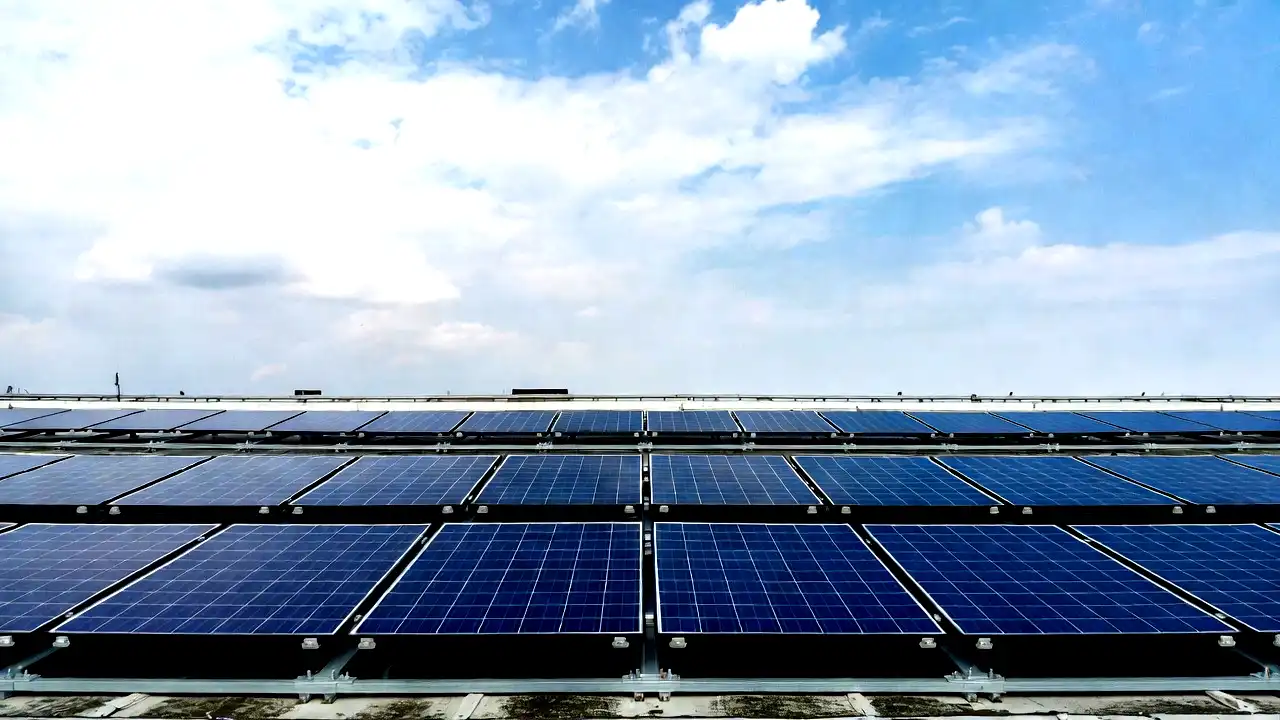
India’s ambitious drive to transform millions of residential rooftops into decentralized clean power stations is encountering severe regional disparities, testing the nation’s broader goal of deploying 500 gigawatts of non-fossil electricity capacity by 2030. While landmark federal initiatives have mobilized billions of dollars in central government subsidies, the practical rollout of rooftop solar has fractured along state lines, creating a stark divide between forward-moving industrial powerhouses and lagging agricultural heartlands.
At the center of the national rooftop push is the flagship PM Surya Ghar: Muft Bijli Yojana, an expansive 75,021 crore rupees (approximately $9.0 billion) federal initiative designed to install rooftop solar systems on 10 million households across the country. The program offers direct capital subsidies covering up to 60% of installation expenses, promising participating families up to 300 units of free electricity every month alongside surplus power sales back to regional grids.
However, detailed energy deployment data reveals that the national rooftop solar surge remains heavily concentrated in a handful of proactive states. Western industrial hubs, led overwhelmingly by Gujarat, account for the vast majority of all residential installations nationwide, driven by streamlined digital permitting, automated utility approvals, and supportive distribution companies. In contrast, densely populated states like Uttar Pradesh, Bihar, West Bengal, and Tamil Nadu lag far behind, held back by financially distressed public distribution utilities, delayed net-metering installations, and bureaucratic red tape. As India works to scale total rooftop solar capacity from roughly 14.5 gigawatts toward its long-term potential, overcoming these localized institutional bottlenecks represents the primary test for the nation’s clean energy transition.
A Critical Moment for India’s Distributed Solar Transformation
India stands as the world’s third-largest producer and consumer of electricity, operating a national power grid with an installed capacity exceeding 445 gigawatts. Over the past decade, the country achieved remarkable success in constructing massive, utility-scale solar parks across the deserts of Rajasthan and Gujarat, driving total installed renewable energy capacity past 200 gigawatts.
However, relying exclusively on large-scale solar farms introduces significant operational challenges. Giant solar parks require thousands of acres of contiguous land, take years to permit, and demand multi-billion-dollar high-voltage green energy transmission corridors to move power across state boundaries.
Distributed rooftop solar offers an elegant, decentralized alternative. By generating clean electricity directly at the point of consumption, rooftop systems eliminate long-distance transmission line losses, reduce the need for expensive land acquisition, and democratize energy production for everyday working-class families.
Recognizing these structural advantages, the central government reorganized its policy frameworks, establishing high-volume residential rooftop solar as a foundational pillar of national economic development and household inflation relief.
Unpacking the $9 Billion PM Surya Ghar Muft Bijli Yojana
The PM Surya Ghar initiative represents one of the largest consumer clean-energy subsidy programs ever launched in the developing world. Approved by the Union Cabinet with an outlay of 75,021 crore rupees, the scheme was engineered to eliminate the financial and administrative hurdles that previously discouraged residential homeowners from adopting solar technology.
The program’s financial framework provides substantial upfront support for residential homeowners:
- Direct central government financial assistance provides a subsidy of 30,000 rupees for a standard 1-kilowatt system, 60,000 rupees for a 2-kilowatt system, and a maximum of 78,000 rupees for systems rated at 3 kilowatts or larger.
- Capital subsidies covering roughly 60% of the total equipment and installation costs for a standard 2-kilowatt residential rooftop setup.
- Collateral-free, low-interest bank loans offered through public-sector commercial banks at capped interest rates around 7.0%, allowing families to finance remaining installation balances without personal assets.
- A centralized national digital portal that integrates consumer registrations, vendor selection, bank loan disbursements, and net-metering approvals into a single automated platform.
By combining generous direct cash subsidies with simplified digital financing, the scheme aims to make clean energy generation affordable for middle-income and lower-middle-income households across the country.
Subsidizing 10 Million Homes with Free Electricity Up to 300 Units
The core consumer appeal of the PM Surya Ghar initiative is the promise of direct household financial relief. In an economy where rising summer temperatures and expanding air conditioning adoption have driven household electricity consumption to record peaks, monthly utility bills represent a significant burden for working families.
A standard 2-to-3-kilowatt residential rooftop solar installation delivers immediate household economic benefits:
- Generating an average of 240 to 360 kilowatt-hours (units) of clean electrical energy every month under standard Indian solar irradiance conditions.
- Providing participating households with enough free electricity to cover standard lighting, refrigeration, ceiling fans, and television usage, effectively eliminating regular monthly power bills.
- Enabling families to sell surplus daytime solar generation back to the local distribution grid through bi-directional net meters, earning predictable monthly income or utility bill credits.
- Generating estimated cumulative household electricity savings exceeding 75,000 crore rupees annually across the target 10 million homes over the 25-year operational lifespan of the solar panels.
The program is designed to transform everyday consumers from passive utility bill payers into active energy producers, creating a distributed network of micro-generators that support the national power grid during peak daytime demand hours.
The Stark Regional Divide: Gujarat’s Dominance Versus Populous State Lags
Despite generous federal subsidies and universal digital portals, the real-world deployment of rooftop solar across India exhibits an extreme geographic imbalance. Rather than distributing evenly across the country’s 28 states and eight union territories, the rooftop solar boom has concentrated overwhelmingly in a small cluster of western and southern states.
The operational reality on the ground demonstrates that central government policies succeed only when localized state governments, provincial regulatory commissions, and public distribution companies work in close alignment.
Where state authorities actively embrace distributed solar, adoption rates surge; where state utilities resist change, consumer applications languish in administrative backlogs for months.
Why Gujarat Commands Over 80% of Residential Rooftop Capacity
The western coastal state of Gujarat has established itself as the undisputed national champion of rooftop solar adoption. While Gujarat represents roughly 5% of India’s total population, the state accounts for more than 80% of all residential rooftop solar installations completed under national programs.
Gujarat’s overwhelming success is driven by comprehensive institutional coordination:
- State distribution companies, known collectively as the holding entity GUVNL, embraced distributed solar early, treating rooftop generation as an asset rather than a financial threat.
- The state established a streamlined digital single-window clearance portal years ahead of the national rollout, allowing homeowners to secure grid approvals and net-metering connections within 15 days.
- Local commercial banks and regional cooperative credit societies partnered with certified local solar installation contractors, offering pre-approved loan packages at the point of sale.
- Strong entrepreneurial culture, high homeownership rates with independent roof ownership, and reliable local grid infrastructure created high organic consumer demand.
Gujarat’s experience proves that when state distribution utilities cooperate with private vendors and simplify administrative procedures, residential rooftop solar can scale at extraordinary speeds.
Overcoming Administrative Gridlock in Uttar Pradesh, Bihar, and West Bengal
In sharp contrast to Gujarat’s rapid adoption, northern and eastern states with massive populations and high solar potential have struggled to generate momentum. Densely populated states like Uttar Pradesh, Bihar, and West Bengal host tens of millions of potential residential rooftops, yet combined installations in these regions represent a tiny fraction of the national total.
The deployment gap in these populous states stems from severe operational friction:
- Local state-owned distribution companies face heavy financial losses and chronic debt burdens, making utility managers hesitant to process net-metering applications that could erode their commercial revenue base.
- Severe shortages of bi-directional smart net meters force consumers to wait three to six months after completing physical roof installations before their systems can legally connect to the grid.
- Low consumer awareness, combined with limited networks of certified local installation contractors, leaves rural and semi-urban households vulnerable to misconfigured equipment.
- Complex local property ownership documentation and informal housing structures prevent low-income homeowners from satisfying bank loan eligibility requirements.
Unless state governments in northern and eastern India reform their local utility bureaucracies and establish dedicated fast-track clearance protocols, national targets will remain out of reach.
The Historical Gap: Missing the 40-Gigawatt Target and the 14.5-Gigawatt Reality
The current regional struggle reflects a long-standing challenge in India’s clean energy journey. Under the original National Solar Mission targets established a decade ago, India set an ambitious goal to install 100 gigawatts of total solar capacity by 2022, which included a dedicated target of 40 gigawatts from rooftop solar installations.
While India successfully constructed tens of gigawatts of ground-mounted solar farms, the rooftop sector missed its 2022 milestone by a wide margin:
- By the end of 2022, total installed rooftop solar capacity reached only roughly 8.0 gigawatts, achieving less than 20% of the original 40-gigawatt national objective.
- Growth was driven primarily by commercial and industrial enterprises seeking to lower high commercial electricity tariffs, while residential household adoption lagged significantly.
- Today, total national rooftop capacity has expanded to approximately 14.5 gigawatts, but residential installations account for only a modest portion of total potential.
- Industry modeling indicates that India possesses an untapped technical residential rooftop solar potential exceeding 637 gigawatts across its built environment.
The launch of the PM Surya Ghar scheme represents the central government’s determined effort to correct this historical shortfall, deploying massive public subsidies to bridge the gap between technical potential and actual physical deployment.
Structural Bottlenecks Paralyzing Utility Distribution Companies
The primary systemic obstacle hindering the rapid nationwide rollout of rooftop solar is the complex financial and operational architecture of India’s power distribution sector. State-owned distribution companies, universally known across India as discoms, occupy the critical operational junction between electricity generators and end consumers.
For decades, Indian discoms have operated under deep financial distress, burdened by accumulated legacy debts exceeding 6.0 lakh crore rupees, high aggregate technical and commercial line losses, and political pressure to provide free or heavily subsidized electricity to agricultural farmers and low-income rural consumers.
To survive financially, discoms rely on a complex system of cross-subsidization: charging inflated commercial and industrial electricity tariffs to offset the financial losses incurred by supplying subsidized power to rural households.
Distributed rooftop solar directly disrupts this fragile financial model, creating a structural conflict of interest between public utility finances and national clean energy goals.
Why Discoms Fear Revenue Erosion from High-Paying Consumers
From the perspective of a state electricity distribution utility, the rapid adoption of rooftop solar represents a direct threat to corporate cash flows. The households and commercial businesses most likely to install rooftop solar are affluent, high-consuming customers who pay top-tier tariff rates without default.
When these high-paying consumers generate their own solar power on their roofs, discom revenues drop significantly:
- The utility loses its most profitable revenue streams while remaining legally obligated to supply subsidized power to low-income agricultural consumers.
- Discoms must continue paying fixed capacity charges to long-term coal-fired power plant operators, regardless of whether daytime solar generation reduces grid power demand.
- Utilities face revenue losses on transmission and distribution tariffs, reducing the capital available to maintain local substation infrastructure.
- In several states, discoms have lobbied regional electricity regulatory commissions to restrict net metering, impose grid-connection charges, or mandate gross metering to protect utility balance sheets.
Overcoming this utility resistance requires state governments to restructure discom financial models, providing performance-based financial incentives to utilities that achieve high rooftop solar integration targets.
Net Metering Delays, Regulatory Approvals, and Grid Transformer Limits
Beyond financial concerns, physical and technical integration bottlenecks continue to slow down residential rooftop installations. Connecting thousands of decentralized solar generators to localized distribution lines requires careful engineering management to prevent voltage fluctuations and equipment damage.
Key technical hurdles confronting rooftop solar developers include:
- Local Transformer Capacity Limits: Statutory safety regulations typically restrict total solar capacity connected to a local distribution transformer to 30% to 50% of the transformer’s rated capacity, preventing new homeowners from connecting once local limits are reached.
- Delayed Net-Meter Procurement: Bureaucratic procurement cycles within state utilities lead to chronic shortages of tested, certified bi-directional meters, stranding completed rooftop installations without grid connections.
- Tedious Physical Inspections: Junior utility engineers must conduct manual physical site inspections and safety audits, creating administrative backlogs that delay formal commissioning by weeks.
- Lack of Advanced Distribution Management Systems: Local distribution grids lack automated sensors and smart switchgear needed to manage bi-directional power flows, increasing the risk of localized feeder tripping.
Modernizing local distribution networks with smart transformers, automated digital meter approvals, and advanced grid-monitoring software is essential to ensure that urban distribution lines can safely support high-density rooftop solar.
Supply Chain Realities and Domestic Manufacturing Rules
The execution of India’s rooftop solar ambitions is deeply intertwined with national industrial manufacturing policies. To reduce reliance on foreign supply chains and foster domestic industrial champions, the central government has enacted strict domestic manufacturing mandates for all publicly subsidized clean-energy projects.
Under the Domestic Content Requirement (DCR) and the Approved List of Models and Manufacturers (ALMM), developers and rooftop installers participating in government subsidy programs must utilize solar photovoltaic modules and cells fabricated inside India.
While these protectionist policies have stimulated domestic manufacturing investments, they have created near-term supply chain friction, influencing equipment pricing, component availability, and technology adoption rates.
Approved List of Models and Manufacturers (ALMM) Compliance
The Approved List of Models and Manufacturers functions as an official quality and origin screening registry managed by the Ministry of New and Renewable Energy. Solar module models and manufacturers must undergo rigorous technical audits and factory inspections before receiving official certification for deployment in government-backed projects.
The enforcement of ALMM rules delivers significant structural impacts:
- Banning the use of imported, low-cost solar modules manufactured in East Asia in all subsidized residential rooftop installations under the PM Surya Ghar program.
- Supporting domestic module manufacturing capacity, which has expanded rapidly from roughly 10 gigawatts in 2020 to more than 60 gigawatts today.
- Encouraging domestic industrial conglomerates, including Tata Power Solar, Adani Solar, Waaree Energies, and Vikram Solar, to scale automated module production lines.
- Protecting domestic manufacturers from international price dumping, ensuring that public subsidy capital directly supports domestic industrial employment.
While ALMM compliance guarantees high manufacturing standards and domestic value addition, it temporarily limits the availability of ultra-low-cost modules, requiring domestic factories to expand cell production to meet surging residential demand.
Upfront Capital Hurdles and Bank Micro-Financing Access
Even with a 60% central government subsidy, the remaining 40% capital requirement for a residential solar system represents a substantial upfront expense for an average Indian household. A standard 2-kilowatt installation requires an out-of-pocket consumer investment between 35,000 and 45,000 rupees after accounting for subsidies.
To bridge this capital gap, the central government coordinated an extensive retail lending framework across the public banking sector:
- Nationalized commercial banks, led by State Bank of India, Punjab National Bank, and Canara Bank, deployed specialized collateral-free solar loan products through the national digital portal.
- Loan application processes were digitized, allowing verified homeowners to secure credit approvals within 48 hours based on credit bureau scoring and historical utility bill payment records.
- Microfinance institutions and non-banking financial companies are expanding retail lending operations in semi-urban and rural districts, offering flexible installment plans tailored to informal income earners.
- Digital fintech platforms are integrating automated billing deduction tools that allow consumers to pay off solar equipment loans using their monthly electricity bill savings.
Expanding access to low-cost digital microfinance ensures that financial constraints do not prevent lower-middle-class households from participating in the national rooftop transition.
Strategic Implications for National Decarbonization and Energy Sovereignty
The successful scaling of distributed rooftop solar carries profound strategic consequences for India’s long-term macroeconomic and environmental future. India is navigating the dual challenge of sustaining rapid economic growth—projected at 6.5% to 7.0% annually—while meeting international climate commitments to achieve net-zero carbon emissions by 2070.
Decentralizing electricity generation through rooftop solar directly supports national energy security by reducing the country’s structural reliance on imported fossil fuels.
Furthermore, distributed solar generation strengthens the resilience of the national power network, providing local electricity during extreme weather events, heatwaves, and transmission line failures.
Powering the 500-Gigawatt Non-Fossil Generation Target by 2030
India’s headline international climate pledge, submitted under the United Nations Framework Convention on Climate Change, is to achieve 500 gigawatts of non-fossil electrical generation capacity by 2030. Reaching this monumental target requires adding roughly 35 to 40 gigawatts of clean energy capacity every single year.
Distributed rooftop solar represents an indispensable contributor to this national target:
- Achieving the PM Surya Ghar target of 10 million solar rooftops will add approximately 30 to 35 gigawatts of clean, distributed generation capacity to the national grid.
- Adding 35 gigawatts of rooftop solar reduces the land acquisition burden on state governments, saving an estimated 150,000 acres of agricultural land that would otherwise be required for utility-scale solar parks.
- Distributed generation directly offsets expensive daytime peaking power purchases, lowering wholesale electricity procurement expenses for state utilities.
- Clean rooftop generation avoids an estimated 720 million metric tons of carbon dioxide equivalent emissions over the operating life of the installed systems.
By transforming millions of private homes into clean energy producers, India can expand its clean energy capacity without encountering the land acquisition disputes that frequently delay large infrastructure projects.
The Long-Term Trajectory of Decentralized Asian Energy Grids
Looking toward the end of the decade, the experience gained from India’s rooftop solar expansion will provide a transformative blueprint for emerging economies across the Global South. Developing nations across South Asia, Southeast Asia, and Africa face identical energy challenges: rapidly growing electricity demand, limited capital for transmission grid expansions, and vulnerable centralized utility monopolies.
Key structural trends that will define the future of decentralized Asian power systems include:
- Solar-Plus-Storage Integration: The rapid drop in battery energy storage costs will encourage residential homeowners to install compact lithium-ion batteries, transforming homes into fully autonomous microgrids that operate during grid outages.
- Virtual Power Plants (VPPs): Software platforms and artificial intelligence algorithms will aggregate thousands of distributed residential solar and battery systems, discharging power into public grids during evening peak demand hours to earn capacity payments.
- Peer-to-Peer Energy Trading: Blockchain-enabled local energy exchanges will allow neighbors to buy and sell surplus rooftop solar electricity directly with one another over local distribution wires.
- Electric Vehicle Integration: Integrating residential rooftop solar with home electric two-wheeler and four-wheeler chargers will enable clean, zero-cost personal mobility, driving the simultaneous decarbonization of energy and transportation.
By resolving localized state-level disparities and modernizing public utility frameworks today, India is building the decentralized, resilient, and democratic energy architecture of the twenty-first century.
India’s ambitious campaign to deploy 10 million residential solar rooftops under the $9 billion PM Surya Ghar initiative represents one of the most transformative clean energy programs in modern history. By offering direct capital subsidies covering up to 60% of equipment costs and providing up to 300 units of free electricity monthly, the central government has created a powerful economic framework to democratize power generation. However, the stark regional divide—where industrial leaders like Gujarat capture over 80% of residential capacity while populous states like Uttar Pradesh and Bihar struggle with utility resistance and net-metering backlogs—proves that national policy requires localized institutional reform. By modernizing distribution company balance sheets, streamlining smart meter deployments, and expanding digital microfinance, India can bridge this geographic gap. Transforming millions of private rooftops into clean energy generators is not merely a path to free electricity; it is the indispensable foundation required to achieve 500 gigawatts of clean energy and power a sustainable, prosperous future for 1.4 billion citizens.