

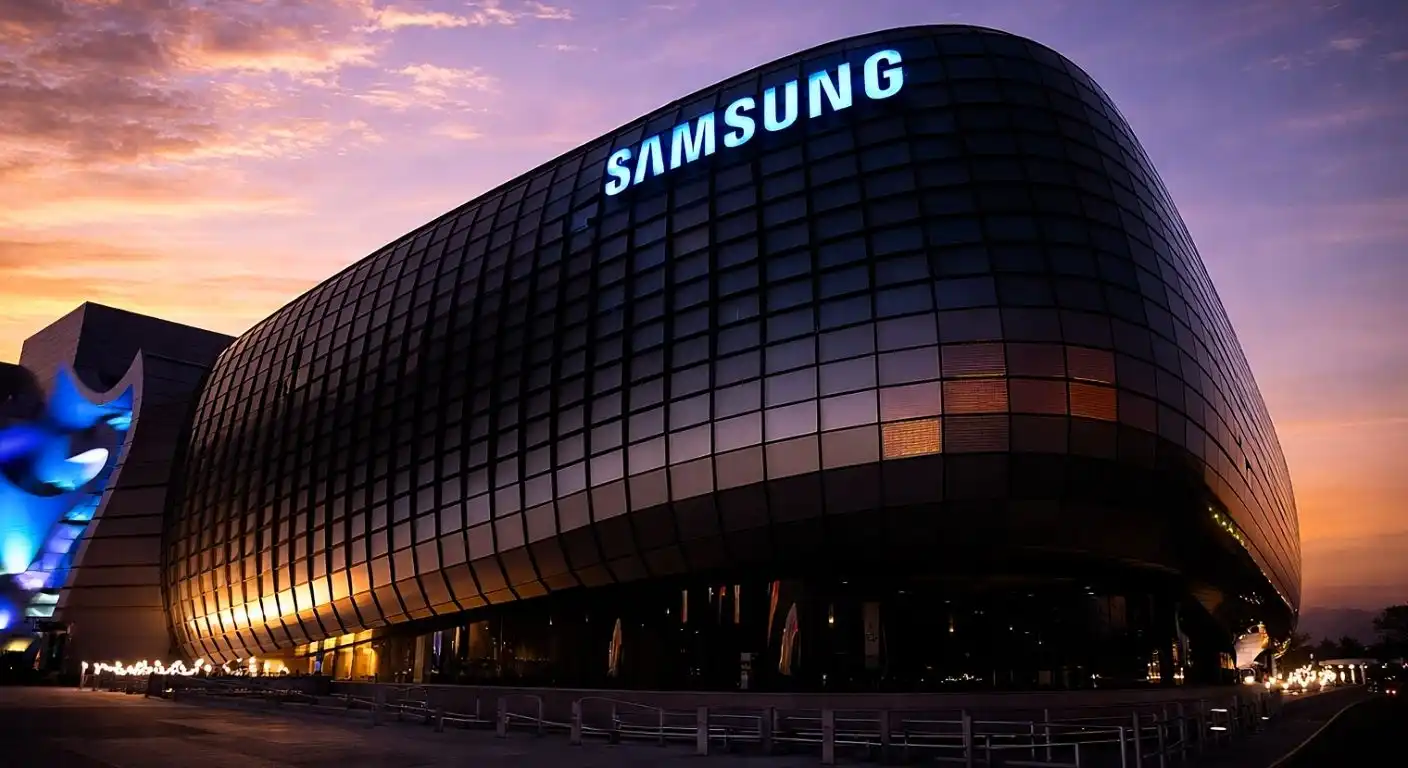
The global semiconductor industry is bracing for a massive, highly disruptive regulatory confrontation that threatens to upend the supply of high-performance computing memory. In a major development that has electrified technology markets, the U.S. International Trade Commission announced that it has officially launched an investigation into South Korean technology giant Samsung Electronics. The probe stems from a formal complaint filed by California-based Netlist, which accuses Samsung of illegally importing and selling memory products that infringe on its patented technologies.
This regulatory intervention represents a massive escalation in a long-running, multi-million-dollar legal battle over the intellectual property that powers modern server computers and artificial intelligence data centers. While Netlist has successfully secured massive financial damage awards against Samsung in federal district courts over the past three years, the filing of an International Trade Commission complaint introduces a far more lethal threat. If the commission rules in Netlist’s favor, it holds the legal authority to issue a limited exclusion order, physically blocking the import of infringing Samsung memory products into the United States.
The timing of this investigation could not be worse for the broader technology sector. As U.S. tech giants pour hundreds of billions of dollars into constructing massive data centers to train and run generative artificial intelligence models, they rely heavily on high-volume, advanced memory components manufactured by Samsung. A potential import ban on Samsung’s high-speed memory modules would trigger immediate, catastrophic bottlenecks in the American technology supply chain, forcing a high-stakes reckoning over how intellectual property is protected and valued in the digital age.
The Core of the Dispute: Netlist’s Battle with the Silicon Kingpin
The legal warfare between Netlist and Samsung Electronics is not a sudden dispute; it is the culmination of a decade-long relationship that collapsed into absolute mutual distrust. Founded in 2000 by former chip executive Chun K. Hong, Netlist spent over twenty years designing and patenting highly advanced architectures that improve the speed, capacity, and energy efficiency of computer memory modules used in enterprise servers.
To scale these technologies, Netlist entered into a joint development and licensing agreement with Samsung in 2015. Under the terms of that agreement, Samsung paid Netlist $23 million in cash and licensing fees, while securing the legal right to integrate Netlist’s patented memory-module designs into its global product lineup. However, the partnership collapsed in 2020 amid bitter disputes over tax withholding requirements, supply obligations, and patent royalty rates.
Following the contract termination, Samsung continued to manufacture and sell its advanced memory modules, prompting Netlist to launch a series of high-profile patent infringement lawsuits in federal courts.
The Three-Hundred Million Dollar Texas Jury Verdict
The first major legal reckoning occurred in April 2023, when a federal jury in Marshall, Texas, ruled overwhelmingly in Netlist’s favor. The jury found that Samsung had willfully infringed five of Netlist’s patents relating to high-performance computer memory modules, ordering the South Korean giant to pay $303 million in damages.
Samsung appealed the decision, arguing that the patents were invalid and that the damages were mathematically inflated.
However, in May 2024, a federal judge upheld the jury’s verdict, eventually raising the total financial liability to over $445 million after incorporating post-verdict interest and ongoing royalty penalties.
While this was a historic victory for Netlist, collecting multi-million-dollar damages through the federal court system is a slow, tedious process, and Samsung has continued to appeal the judgments to delay final payment, forcing Netlist to seek a more immediate, powerful regulatory remedy.
The Escalation to the International Trade Commission
Frustrated by Samsung’s delay tactics on the court judgments, Netlist took its case directly to the U.S. International Trade Commission in June, filing a formal complaint under Section 337 of the Tariff Act of 1930.
Unlike federal district courts, which can only award financial damages for past infringements, the International Trade Commission specializes in protecting domestic industries from unfair trade practices, including patent infringement by foreign exporters.
The primary weapon of the commission is the exclusion order. If the ITC investigators determine that imported goods violate valid U.S. patents, the agency can instruct U.S. Customs and Border Protection to physically seize and block those goods at all entry ports.
By initiating an ITC probe, Netlist has placed a direct, existential threat on Samsung’s multi-billion-dollar U.S. memory business. The threat of a potential import ban gives Netlist immense leverage, forcing Samsung to choose between negotiating a massive, global licensing settlement or risking complete lockout from its most lucrative corporate market.
The Technology Under Fire: LRDIMM, DDR5, and High Bandwidth Memory
The patents at the center of the International Trade Commission probe are not minor, decorative design elements. They cover the core physical and logical architectures that allow modern computer servers to access massive pools of random-access memory at lightning-fast speeds.
Specifically, the investigation targets Samsung’s high-density memory modules, including Load Reduced Dual In-line Memory Modules, next-generation double-data-rate 5 (DDR5) SDRAM, and highly advanced High Bandwidth Memory products.
As artificial intelligence workloads grow exponentially, these technologies have transformed from standard hardware components into the primary, non-negotiable bottlenecks of global data center performance.
Unpacking Load Reduced Dual In-line Memory Modules (LRDIMM)
To understand why Netlist’s intellectual property is so valuable, one must look at the physical limits of server memory. In a high-performance computer server, the central processing unit must communicate with multiple memory modules simultaneously.
However, as you add more memory modules to a server motherboard, the electrical load on the CPU’s memory controller increases significantly, causing signal degradation, data errors, and a necessary reduction in memory operating speeds.
Netlist solved this physical limitation by inventing the LRDIMM architecture. The company’s patented designs place a specialized, active buffer chip directly onto each memory module.
This buffer chip acts as an electrical shield, isolating the memory cells from the CPU’s memory controller and aggregating the data signals.
By reducing the electrical load on the system, LRDIMM technology allows servers to run at maximum speeds even when outfitted with terabytes of random-access memory. This capability is essential for running the massive database systems, cloud computing platforms, and virtualization networks that power modern internet commerce.
The Double-Edged Sword of DDR5 and High Bandwidth Memory
As the technology sector transitions away from legacy DDR4 standards to high-speed DDR5 and stacked High Bandwidth Memory architectures, the technical necessity of Netlist’s patented signal-management designs has become even more critical.
High-speed memory systems operate at extreme frequencies, making them highly vulnerable to electrical crosstalk and signal degradation.
Nvidia’s latest artificial intelligence processors, including the Blackwell architecture, rely on these advanced memory standards to feed data to their processing cores fast enough to train large language models.
If the International Trade Commission determines that Samsung’s DDR5 and HBM designs infringe on Netlist’s patents, the resulting import ban would hit the entire AI hardware sector, completely disrupting the production schedules of the world’s most valuable technology companies.
The Systemic Threat to the American Technology Supply Chain
The launch of the ITC probe has triggered immediate concern across Silicon Valley, as U.S. technology giants realize that their entire corporate roadmaps are deeply exposed to the outcome of this patent dispute. The U.S. government finds itself caught in a difficult, highly complex position: it must protect domestic intellectual property rights while ensuring that the national technology industry has access to the physical components needed to win the global AI race against China.
The global memory market operates as a highly concentrated, tightly controlled oligopoly. Just three companies—Samsung Electronics, SK Hynix, and Micron Technology—control over 95% of the global market for computer memory.
If the International Trade Commission issues a limited exclusion order against Samsung, the remaining two suppliers simply do not possess the excess manufacturing capacity to cover the deficit.
The resulting supply shortage would trigger immediate, catastrophic price spikes across the entire electronics sector, harming American competitiveness.
Threatening the Infrastructure Plans of U.S. Hyperscalers
The primary victims of a potential Samsung import ban would be the massive U.S. cloud hyperscalers, including Microsoft, Google, Meta, and Amazon. These tech giants are currently spending hundreds of billions of dollars annually to construct massive, gigawatt-scale data center clusters.
A single hyperscale data center requires hundreds of thousands of advanced server memory modules to run its cloud instances and train its AI models.
Because Samsung is the world’s largest supplier of these components, cutting off its U.S. imports would instantly paralyze these data center expansions.
Tech companies would be forced to delay their product launches, scale back their computational services, and pay astronomical premiums to secure whatever limited memory supplies are available from Micron and SK Hynix, illustrating how a localized patent dispute can have massive, systemic consequences for the global digital economy.
Evaluating the Public Interest Exception
Because a complete ban on Samsung memory imports would have such devastating consequences for the American technology sector, the International Trade Commission must carefully weigh what is known as the “public interest exception.”
Under the Tariff Act, even if the ITC investigators determine that an importer has infringed valid U.S. patents, the commission can choose not to issue an exclusion order if the ban would cause severe, disproportionate harm to the national economy, public health, or competitive conditions in the United States.
Samsung’s legal defense team will undoubtedly lean heavily on this public interest argument. They will argue that blocking their memory products would cripple the U.S. artificial intelligence sector, hand a massive competitive advantage to foreign tech rivals, and severely harm American consumers.
However, the ITC has historically been highly reluctant to deny exclusion orders based on commercial public interest claims, as doing so undermines the very integrity of the patent system.
If companies can simply steal patented technologies and escape import bans by arguing they are “too big to be blocked,” the incentive to invent and protect new technologies in the United States would be permanently destroyed.
A Pattern of Legal Defeats: Netlist’s Broader War Against Micron
To understand the strength of Netlist’s legal position, observers must look beyond the Samsung case to examine the company’s parallel legal campaigns against other semiconductor giants. The California-based developer has systematically pursued patent infringement claims across the entire memory sector, establishing a consistent pattern of legal victories that has validated the strength of its patent portfolio.
Most notably, Netlist has waged a highly successful legal campaign against Micron Technology, the largest U.S.-based memory manufacturer.
In May 2024, a federal jury in Marshall, Texas, reached a historic verdict, ordering Micron to pay Netlist $445 million in damages for infringing its high-performance memory patents.
Subsequent trials and post-verdict reviews have further expanded Micron’s potential financial liabilities.
These successive multi-million-dollar victories prove that Netlist’s claims are not speculative or opportunistic; rather, they are the legitimate protection of foundational technologies that have been quietly, systematically utilized by the world’s largest memory manufacturers without proper compensation.
Why the Tech Sector Must Re-evaluate Intellectual Property Licensing
The structural lesson of the Netlist litigation is that the era of semiconductor giants utilizing the patented innovations of smaller, specialized research firms without proper compensation is drawing to a close.
For years, the dominant players in the silicon market operated under a “build now, settle later” philosophy, assuming that their massive financial resources would allow them to tie up smaller competitors in court indefinitely.
Netlist’s relentless, decade-long legal campaign has shattered this assumption. By securing massive jury verdicts and initiating high-stakes ITC investigations, the small engineering firm has proved that it can successfully hold multinational conglomerates accountable.
This outcome is forcing a major re-evaluation of intellectual property licensing across the entire technology sector, as major manufacturers realize that ignoring valid patents carries catastrophic financial and operational risks that can threaten their entire global supply chains.
The upcoming International Trade Commission investigation into Samsung Electronics is a make-or-break moment for both the South Korean tech giant and the broader artificial intelligence hardware sector. By pushing its patent dispute to the ITC, Netlist has deployed the ultimate regulatory weapon, threatening to physically block Samsung’s advanced memory products from entering the United States.
Over the coming months, as the ITC investigators conduct their detailed audits and evaluate the complex physics of LRDIMM and DDR5 memory modules, the global tech industry will watch the proceedings with absolute focus.
The final decision of the commission will not only determine the financial future of Netlist and Samsung, but it will also reshape the legal rules governing global technology trade, proving that true innovations cannot be easily commoditized, and that the protection of intellectual property remains the ultimate foundation of the modern digital economy.






