

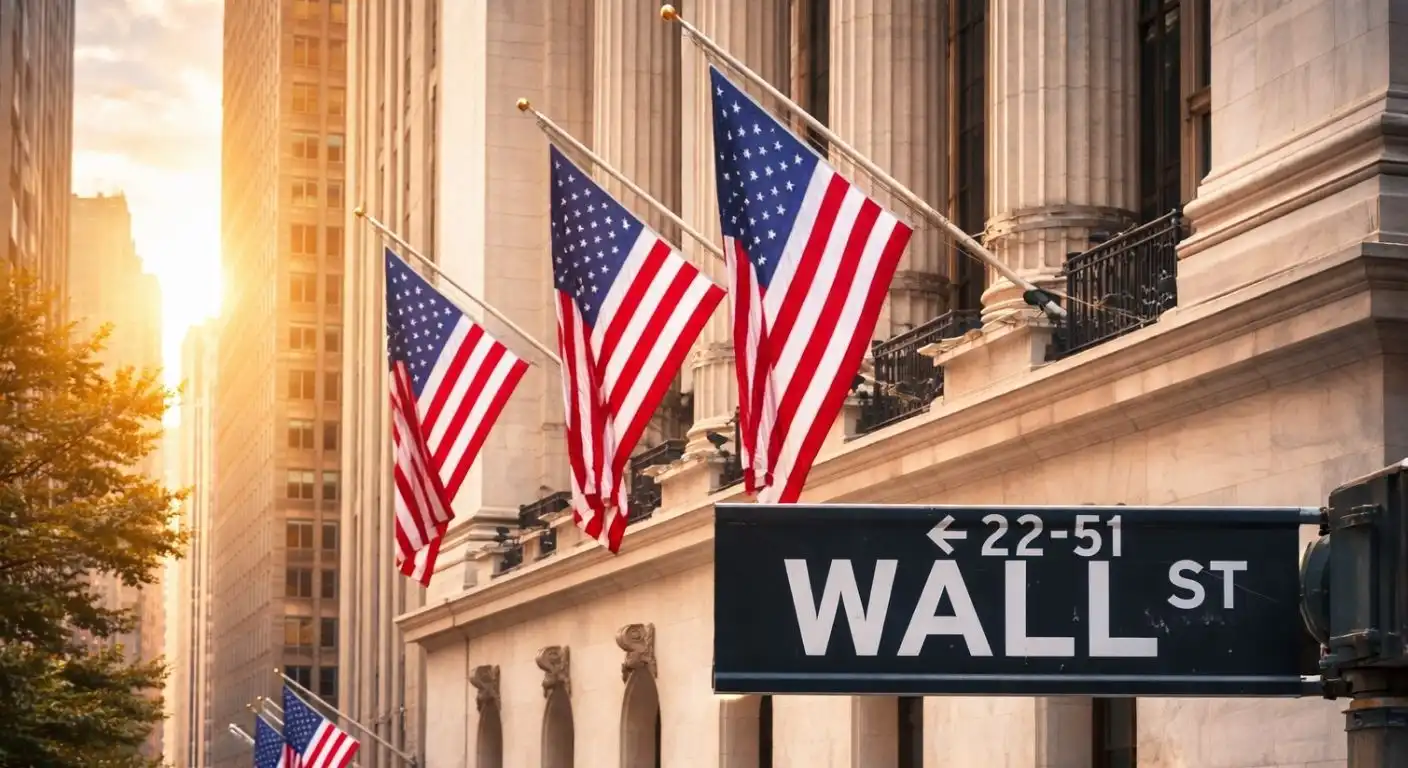
Global financial markets are entering a period of calm consolidation as the rapid, inflation-driven anxieties of the summer season begin to subside. In August 2026, U.S. stock futures remained steady during Asian trading hours, with investors pausing to digest a series of highly encouraging economic indicators. The quiet market activity follows a stellar trading week where the S&P 500 and the Nasdaq Composite secured their third consecutive weekly gains, driven by softer-than-expected inflation data and a highly robust corporate earnings season.
The seasonally adjusted index futures show that the broader equity market has established a firm, stable floor, successfully neutralizing the hawkish rhetoric that dominated central bank discussions earlier in the month. S&P 500 Futures inched 0.1% higher to 7,809.50 points, while Nasdaq 100 Futures rose 0.2% to 30,193.50 points. At the same time, Dow Jones Futures ticked a minor 0.1% lower to 53,779.0 points, indicating that traders are adopting a highly balanced, wait-and-see approach as the focus of the market shifts from raw macroeconomic indicators to retail corporate earnings.
The near-term outlook for the stock market remains highly positive, supported by the growing belief that the Federal Reserve has successfully guided the economy toward a soft landing. While persistent geopolitical tensions in the Middle East and fluctuating crude oil prices continue to create background noise, the consistent, double-digit earnings beats reported by major corporations have reassured institutional investors, proving that the corporate sector possesses the operational resilience needed to navigate a high-interest-rate environment.
Muted Futures and the Three-Week Winning Streak
The quiet performance of stock futures on Sunday night represents a natural breathing spell for an equity market that has experienced an intense, multi-week upward rally.
S&P 500 and Nasdaq Post Moderate Weekly Gains
The steady futures pricing follows a mixed but ultimately successful weekly trading session on Wall Street. During regular trading, the S&P 500 slipped a minor 0.2%, and the Nasdaq Composite fell 0.1%, as investors engaged in standard, end-of-week profit-taking following a series of record-breaking intraday sessions. Despite this minor weekend pullback, both indices managed to extend their weekly winning streaks to three consecutive weeks, with the S&P 500 gaining 0.4% and the Nasdaq adding 0.1% over the five-day period.
In contrast, the blue-chip Dow Jones Industrial Average underperformed slightly, falling 0.6% during the week. This minor divergence occurred as investors rotated their capital out of traditional, defensive industrial stocks and back into high-growth technology and consumer discretionary names, fanned by the belief that falling inflation will eventually force the central bank to ease its restrictive monetary policy.
This capital rotation has provided a powerful, ongoing stimulus to the tech-heavy Nasdaq, ensuring that the market’s primary growth engines remain well-capitalized.
Assessing the Record Closing High of Seven Thousand Eight Hundred Sixteen
A major milestone of the previous trading week was the S&P 500 reaching an all-time record closing high of 7,816.70 points. This historic achievement proved that the corporate stock market has successfully absorbed the impact of elevated interest rates, proving that the earnings power of American corporations remains exceptionally strong.
For long-term institutional investors, the index’s ability to challenge new record highs is a highly encouraging signal of underlying market health.
Even a minor 1.5% improvement in corporate profitability or a 1.5% reduction in administrative overhead can translate into billions of dollars in added value across the S&P 500, and the consistent, high-quality earnings reported by major platforms have successfully justified these premium valuations.
As the index consolidates near its record highs, the market’s technical structure remains highly supportive, indicating that any near-term pullbacks are likely to be treated by buyers as temporary, attractive entry points rather than the start of a structural decline.
Easing Inflation Fears: The July CPI and PPI Deflation Signals
The primary catalyst driving the stock market’s recent recovery is a series of highly favorable inflation reports, which have successfully cooled fears of a near-term Federal Reserve interest rate hike.
Slower Consumer and Producer Price Index Growth
The inflation data published by the Labor Department provided a major, highly anticipated sigh of relief for financial markets. According to the official statistics, the Consumer Price Index rose by a mere 0.1% in July on a month-over-month basis, representing a significant deceleration from previous months and proving that price stability is steadily returning to the economy.
At the same time, the Producer Price Index, which measures the wholesale cost of goods before they reach retail consumers, remained completely unchanged in July.
This flat PPI reading is an exceptionally positive leading indicator, suggesting that retail consumer price inflation will continue to moderate over the coming months as businesses pass their flat wholesale costs directly to consumers.
The consecutive soft inflation readings have successfully convinced the market that the worst of the post-pandemic inflationary spiral is now behind us, allowing Treasury yields to slide and boosting investor appetite for risk-on assets.
Calming the Hawkish Dissent Inside the Federal Open Market Committee
The moderating inflation data has arrived at a critical time for Federal Reserve Chairman Kevin Warsh, who is currently managing a highly divided and contentious policy committee.
During the central bank’s July meeting, the Federal Open Market Committee voted 9-3 to maintain the target range for the federal funds rate at its restrictive upper band of 3.75%.
The decision was the Fed’s most divided vote in nearly a decade, with two prominent regional bank presidents—Lorie Logan of Dallas and Beth Hammack of Cleveland—actively dissenting from the majority.
These hawkish dissenters called for an immediate 25 basis point rate hike, warning that any delay in tightening would risk allowing inflation to remain permanently above the central bank’s official 2% target, forcing more aggressive, disruptive rate hikes later in the year.
The subsequent soft CPI and PPI readings have successfully neutralized these hawkish arguments, proving that the current 3.75% policy rate is sufficiently restrictive to cool the economy and giving the Fed the breathing room it needs to hold rates steady at its upcoming September meeting without risking a central bank policy error.
Corporate Earnings and the Upcoming Retail Squeeze
While inflation data provided the macroeconomic tailwind, the fundamental driver of the stock market’s resilience remains a highly successful, record-breaking corporate earnings season.
Eighty-Five Percent Beat Rate Underpins Equity Valuations
According to comprehensive market data compiled by LSEG, approximately 85% of the S&P 500 companies that had reported their quarterly earnings by midweek successfully beat analysts’ profit expectations. This exceptional beat rate is one of the highest recorded in recent history, proving that corporate profit margins remain highly resilient.
This robust earnings performance is particularly impressive given the high borrowing costs and wage inflation that businesses have had to absorb over the past year.
Rather than allowing these cost pressures to erode their profits, American corporations have utilized advanced technology, supply chain optimization, and automated systems to lower their operational overhead.
This high level of corporate efficiency has turned the earnings season into a powerful defensive shield, ensuring that even as the economy slows, corporate cash flows remain strong enough to support premium stock market valuations.
The Shift to Retail Giants and Target’s New Chief AI Officer
With the technology and industrial sectors having completed their earnings releases, Wall Street is turning its full attention to the upcoming retail earnings season. Over the next several days, major retail giants—including Walmart, Home Depot, Target, and TJX Companies—are scheduled to publish their quarterly results, providing an invaluable, real-world update on the health of the American consumer.
The retail earnings season is carrying an unusual, high-tech twist this year, as major retail boards increasingly rely on artificial intelligence to optimize their daily operations and manage their inventories.
Target Corporation made a major, strategic announcement, appointing Chandhu Nair, formerly the Senior Vice President of Technology at Lowe’s, as its first-ever Chief Artificial Intelligence Officer, with his term scheduled to begin on August 24, 2026.
Nair will lead Target’s national AI and machine learning initiatives, focusing specifically on utilizing advanced algorithms to improve customer experience, optimize automated inventory management, and streamline corporate supply chains.
This high-profile executive appointment proves that the artificial intelligence boom has moved far beyond Silicon Valley tech labs, transforming traditional retail operations into a highly automated, data-driven science.
As other retail giants like Walmart and Home Depot execute similar technological upgrades, the efficiency gains achieved through AI are expected to drive substantial, long-term margin expansion, making the retail sector a primary focus for growth-oriented investors, with single-firm projects easily requiring over $1 billion in capital investments to execute successfully.
Geopolitical Friction: The Strait of Hormuz and Oil Volatility
While domestic economic indicators remain highly supportive, global financial markets must continue to navigate a highly volatile, energy-driven geopolitical landscape in the Middle East.
Navigating Crude Volatility Amid Iran Jitters
The international energy markets experienced a highly volatile trading week, driven by persistent military tensions in the Middle East. Following the outbreak of the regional conflict in early July, the vital Strait of Hormuz—the primary maritime shipping channel through which approximately 20% of the world’s petroleum flows—has remained highly disrupted, causing Brent crude prices to spike.
However, the energy markets experienced a welcome, temporary relief during early August.
Oil prices eased slightly in Asian trade on Monday after President Donald Trump called off a planned military strike on Iranian targets, choosing instead to focus on low-key economic sanctions and coordinated diplomatic pressure.
This llamado-off attack temporarily cooled crude prices, bringing some relief to global equity markets.
Nevertheless, energy analysts warn that the situation remains highly unstable, and any fresh escalations in the Red Sea or the Persian Gulf could instantly send oil prices back toward historic peaks, fanning fresh inflation concerns and complicating the Federal Reserve’s monetary policy roadmap.
Establishing a Stable Financial Baseline
The steady performance of U.S. stock futures represents a historic milestone for the global financial markets. By demonstrating a stable, balanced consolidation following three consecutive weeks of solid gains, the equity market has proven that its underlying fundamentals are highly robust, successfully weathering a series of intense geopolitical and monetary challenges.
Supported by the rapid cooling of consumer and producer price inflation, the central bank’s decision to maintain its 3.75% policy rate, and an extraordinary 85% earnings beat rate among major corporations, Wall Street has built a highly resilient, long-term foundation for growth.
As the focus of the market shifts to upcoming retail earnings from Walmart and Target, and the tech sector continues to scale its advanced computing infrastructure, the successful navigation of this transition will ensure that the United States remains the undisputed capital of the global digital economy, providing investors with the advanced tools, stable assets, and long-term security required to protect their wealth and generate sustainable returns for decades to come.






