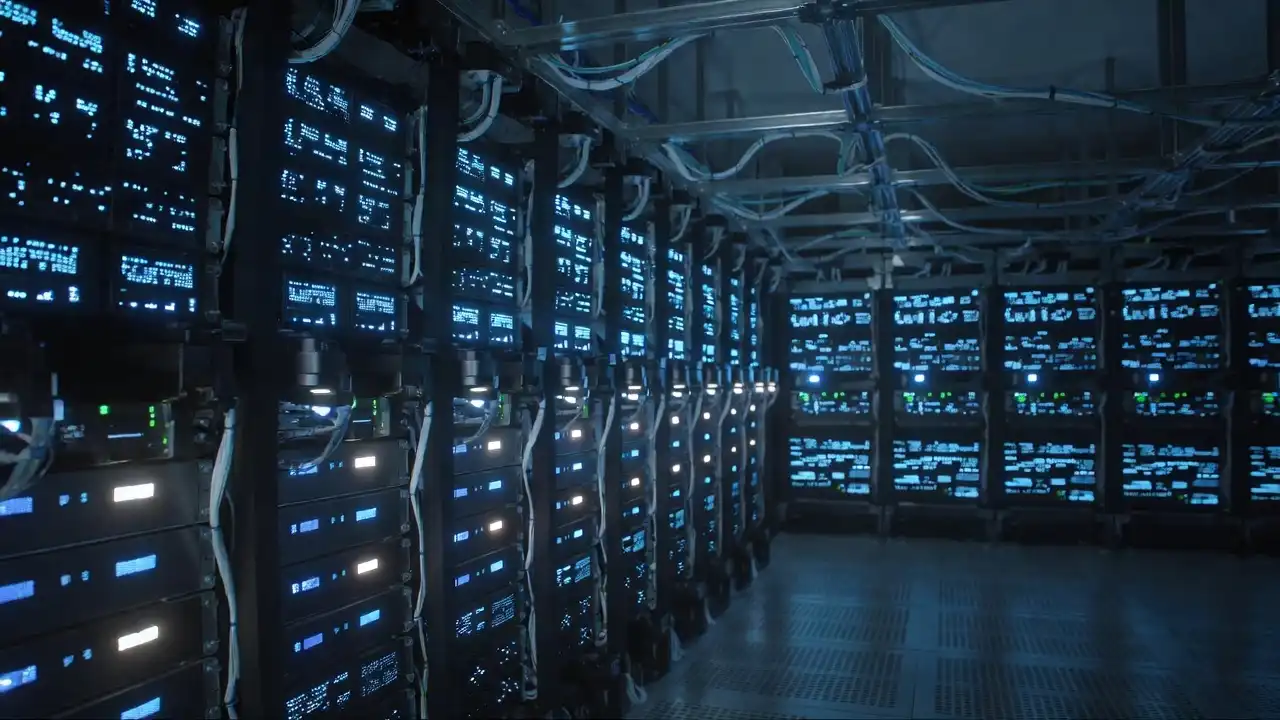
The physical infrastructure supporting the global artificial intelligence boom is preparing for its most significant public-market transition. In August 2026, industry sources revealed that wholesale data center giant Vantage Data Centers is exploring strategic options, including an initial public offering or a full sale of the company. The Denver, Colorado-based developer, backed by global technology investor Silver Lake and digital infrastructure manager DigitalBridge Group Inc., is reportedly seeking an enormous valuation of approximately $100 billion, including debt.
The proposed transaction represents a major watershed moment for the digital infrastructure sector. To fund the rapid, capital-intensive buildout of gigawatt-scale data center campuses required by modern artificial intelligence, operators require unprecedented amounts of capital. If the company pursues a stock market listing, it could raise around $10 billion in fresh equity, which would rank as the largest data center initial public offering in history, eclipsing previous benchmark listings.
This strategic exploration comes at a highly active time for the technology and capital markets. Just days after competitor Switch Inc. filed confidentially for its own multi-billion-dollar stock market debut, Vantage’s move confirms a broader corporate trend: the massive scale of the generative AI era is forcing digital infrastructure developers to migrate from private equity back to public markets to secure the virtually limitless liquidity needed to build the compute engines of the future.
The Path to One Hundred Billion: From Santa Clara to Global Dominance
The astronomical $100 billion valuation targeted by Vantage is a direct reflection of the company’s rapid, highly successful expansion over the past decade and a half. The company has evolved from a single, localized facility into a dominant global platform spanning multiple continents.
Silver Lake and DigitalBridge: The Private Equity Backers
The corporate history of Vantage is closely tied to some of the most influential investment firms in Silicon Valley and Wall Street. Technology private equity giant Silver Lake originally launched Vantage in 2010 with a single, wholesale data center campus in Santa Clara, California. Recognizing the long-term potential of the cloud computing market, Silver Lake recruited the management team that continues to lead the company today, scaling the business to serve the famously high-volume needs of Silicon Valley’s largest technology firms.
In 2017, digital infrastructure investment specialist DigitalBridge Group acquired the company, partnering with Silver Lake to accelerate its global expansion.
Through a series of highly strategic land acquisitions, corporate mergers, and international development programs, the backers scaled Vantage into a global market leader.
Today, the company owns, controls, or is actively developing over 25 massive hyperscale data center campuses across North America, Europe, and the Middle East, representing one of the largest physical footprints in the digital infrastructure industry.
The Eleven-Billion-Dollar Capital Raising Campaign
To support this rapid, multi-continental expansion, Vantage has executed some of the largest private equity raises in infrastructure history. Since late 2023, the company has raised approximately $11 billion in fresh equity and capital commitments.
The centerpiece of this fundraising campaign was a massive $9.2 billion equity investment completed in mid-2024.
Led by DigitalBridge and Silver Lake, the capital raise was significantly oversubscribed and upsized by $2.8 billion from its initial $6.4 billion target, drawing additional funding from major international co-investors alongside a €1.5 billion equity commitment from Australian pension fund AustralianSuper.
The primary proceeds from these historic raises have been deployed to fund the development of next-generation, energy-efficient data center campuses.
By utilizing these multi-billion-dollar capital pools, Vantage has set out to drive an estimated $30 billion of additional development, expanding its total projected capacity to over three gigawatts of power.
Powering the AI Giants: Oracle, OpenAI, and the Stargate Connection
The primary source of Vantage’s market value is its close, strategic relationships with the major cloud providers and artificial intelligence laboratories that are driving the global technology race.
Hosting the Stargate Supercomputer for OpenAI
Vantage operates as a wholesale data center provider, meaning it does not typically run its own software applications or sell consumer cloud services. Instead, the company builds and leases entire, high-density computer campuses to major corporate tenants, who then install their own proprietary servers and graphics processing units.
The company’s most important strategic tenant is enterprise software giant Oracle Corporation. Oracle acts as an anchor tenant for several of Vantage’s largest computing campuses, utilizing the physical facilities to host its high-growth cloud infrastructure services.
Through this Oracle partnership, Vantage’s physical data centers serve as the critical hosting backbone for “Stargate,” the highly publicized, multi-billion-dollar artificial intelligence supercomputer project developed by Microsoft and OpenAI.
By providing the physical concrete, high-voltage power lines, and advanced cooling infrastructure required to run the Stargate supercomputer, Vantage has embedded itself directly into the development of the world’s most advanced frontier AI models, securing a highly stable, long-term stream of lease revenues that is insulated from short-term market cycles.
The South Wales Alliance: Deploying Nvidia Infrastructure with Nebius
While North America remains the company’s largest market, Vantage is actively expanding its high-performance footprint across Europe. In a major operational milestone announced on August 14, 2026, the company finalized a significant capacity commitment with European cloud provider Nebius.
Under the terms of the agreement, Nebius will lease high-density data center capacity at Vantage’s CWL1 campus in Newport, South Wales.
The facility will be equipped with advanced, Nvidia-powered artificial intelligence infrastructure, marking the first commercial capacity commitment within the newly established South Wales AI Growth Zone.
By partnering with Nebius to bring advanced GPU clusters to the United Kingdom, Vantage is helping to decentralize the global AI infrastructure market, providing European developers and enterprises with high-speed, local access to the computational power required to train and run their custom models.
The Strategic Migration to Public Markets: The Capacity Squeeze on Private Capital
The potential public listing of Vantage represents a major structural shift in how the digital infrastructure sector is financed, driven by the astronomical costs associated with building the physical engines of the AI era.
Reversing the Take-Private Era of the Early 2020s
Between 2021 and 2023, the global data center sector experienced a massive, unprecedented wave of mergers and acquisitions, with private equity firms and infrastructure managers taking nearly every major pure-play provider private.
Institutional investors recognized that the steady, predictable cash flows generated by cloud-hosting leases made data centers the perfect asset class for long-term, low-cost capital, prompting them to snap up industry leaders like QTS, CyrusOne, and CoreSite in multi-billion-dollar take-private transactions.
The rapid rise of generative artificial intelligence has completely reversed this trend.
To build the gigawatt-scale data center campuses required to support modern GPU clusters, operators must commit to massive capital expenditure budgets that are exponentially larger than traditional cloud-hosting requirements.
As these annual capital spending requirements scale past tens of billions of dollars, even the largest private equity funds and infrastructure managers are hitting their concentration and regulatory risk limits.
The Squeeze on Private Capital and the Public Equity Pivot
By exploring an initial public offering or a strategic sale at a $100 billion valuation, Vantage’s backers are opening up a vital new channel of liquidity.
The public stock markets represent a virtually limitless source of capital, allowing the company to raise up to $10 billion in fresh equity to fund its massive $30 billion development pipeline.
This capital migration is a strategic necessity. When a single data center project begins to require more than $1 billion in upfront investment, relying exclusively on private debt and equity rounds can quickly strain a sponsor’s balance sheet.
By transitioning back to a public listing, Vantage can secure the capital required to maintain its rapid growth, while establishing a highly efficient corporate structure where even a 1.5% transaction margin improvement can save developers millions of dollars, ensuring the company can continue to deliver market-leading capacity to its global customers.
Environmental and Supply Chain Bottlenecks: The Reality of Physical Limits
As Vantage prepares for its high-profile public debut, the company must navigate a highly volatile environmental and operational risk landscape that is beginning to slow down physical development across the industry.
The Threat of Regional Moratoriums and Utility Restrictions
The primary operational risk facing the data center industry is the massive, unsustainable energy and water consumption of modern computing campuses.
A single, gigawatt-scale AI data center can consume as much electricity as a medium-sized city and use millions of gallons of fresh water daily to run its evaporative cooling towers.
This insatiable resource consumption has triggered a powerful wave of public backlash and regulatory intervention in several regions.
For instance, on August 3, 2026, the Governor of Texas announced a temporary pause on all new data center approvals, forcing grid operators to slash their long-term power growth forecasts.
As local governments and utility providers across North America and Europe implement similar moratoriums and strict new environmental permitting reviews, Vantage’s ability to secure the necessary power and water permits for its three-gigawatt pipeline remains a critical, long-term risk.
Waiting for Parts: The Three-Year Lead Time for Transformers
In addition to regulatory hurdles, the physical deployment of advanced data centers is facing a severe global shortage of critical electrical equipment, particularly high-voltage generation step-up transformers and switchgear.
Because of a massive global surge in grid modernization and data center construction, the world’s leading electrical equipment manufacturers are completely sold out, with average lead times for these vital transformers now exceeding three years (36 months).
This equipment bottleneck has created a severe gap in project execution.
Of the estimated 600 gigawatts of proposed U.S. data center projects currently searching for power capacity, only 183 gigawatts have successfully signed actual construction or electricity-supply agreements with local utilities.
The remaining projects are caught in a long-term limbo, unable to secure the parts or the power connections needed to proceed, ensuring that many planned developments will remain unbuilt projects for the foreseeable future, forcing operators to manage their resources with absolute discipline.
Building the Foundations of the Automated Age
The strategic exploration of an initial public offering or a sale at a $100 billion valuation by Vantage Data Centers represents a landmark milestone in the financial and technological evolution of the digital economy. By preparing for a massive $10 billion public listing, the hyperscale operator has proven that the capital demands of the artificial intelligence revolution have permanently outgrown the capacity of private equity alone.
Through its close strategic relationships with Oracle and Nebius, its massive three-gigawatt expected capacity, and its pioneering environmental designs, Vantage has built a highly resilient, high-performance computing platform.
As the company prepares to transition back to the public markets, the success of this offering will serve as a powerful signal to developers, competitors, and investors worldwide, demonstrating that the ultimate winners of the digital age will be the companies that can successfully construct, cool, and operate the physical infrastructure of the modern age.