

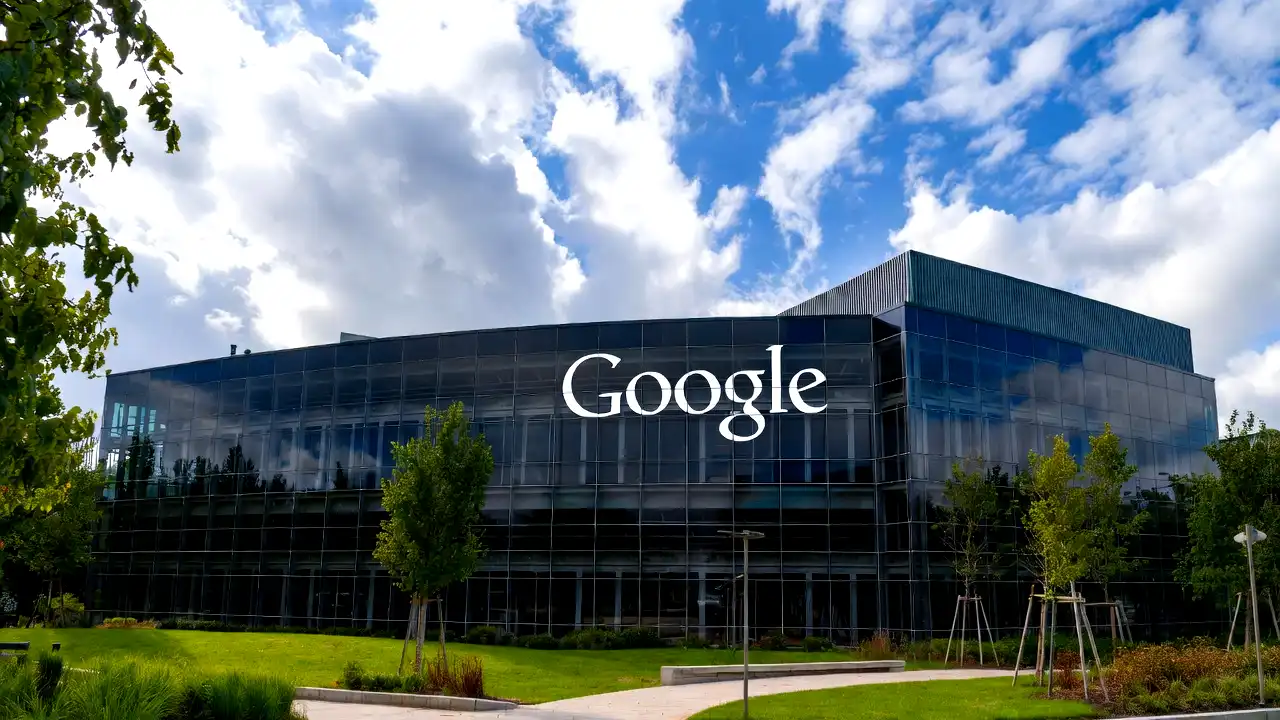
In a landmark infrastructure transaction that highlights the escalating physical demands of artificial intelligence, Verizon Communications secured a massive dark fiber agreement valued at approximately $1 billion with Google. Under the multi-year deal, Verizon Business will supply Google with extensive long-haul and regional metropolitan dark fiber optic routes across high-density technology corridors in the United States. The contract provides Google with dedicated, unlit glass strands that the technology giant will illuminate using its own specialized optical transceivers to connect its rapidly expanding data centers, artificial intelligence processing clusters, and Google Cloud regions.
The multi-billion-dollar fiber deal arrives as Big Tech companies aggressively scale up physical infrastructure to support frontier artificial intelligence models, real-time machine learning inference, and high-throughput cloud applications. For Alphabet, Google’s parent company, securing vast reserves of dedicated physical fiber optics fits directly into its capital allocation plans. Alphabet previously raised its full-year 2026 capital expenditure forecast to a range between $195 billion and $205 billion, directing unprecedented financial capital toward data center construction, custom silicon production, and high-capacity network connectivity.
For Verizon, the $1 billion agreement represents a major commercial victory for its enterprise wholesale division. The contract validates Verizon’s strategic decision to invest heavily in expanding its nationwide fiber footprint, including its long-haul intercity routes and dense metropolitan fiber rings. Securing a long-term, high-margin wholesale commitment from one of the world’s largest technology buyers provides Verizon with predictable, recurring cash flows that help offset heavy capital expenditures in 5G wireless networks and fiber optic asset acquisitions.
TechGolly provides an in-depth technical and financial analysis of the dark fiber contract between Verizon and Google, evaluating the mechanics of optical networking, dense wavelength-division multiplexing, hyperscaler capital spending, optical hardware upgrades, and the strategic outlook for telecommunications infrastructure.
Unpacking the Physics and Economics of Dark Fiber Leases
To appreciate the strategic significance of the $1 billion transaction, business leaders and network architects must understand the technical distinction between “lit” managed fiber services and “dark” unlit optical fiber infrastructure. Traditional lit fiber contracts require a telecommunications operator to manage the optical transceivers, routers, and switches, selling standardized bandwidth pipes—such as 10-gigabit or 100-gigabit Ethernet connections—to corporate customers.
In contrast, dark fiber refers to physical glass strands installed underground or along overhead utility lines that have no active lasers or electronic processing hardware attached by the carrier. Under a dark fiber lease, the carrier provides raw physical glass infrastructure, while the tenant assumes complete operational control over the terminal equipment connected at each end of the fiber route.
Hyperscale technology companies like Google strongly prefer dark fiber for several critical engineering and economic reasons:
First, dark fiber delivers complete operational control over protocol selection, optical wavelengths, and network security. Google network engineers can install proprietary optical terminal hardware, deploy custom quantum-resistant encryption algorithms directly at the physical layer, and route data traffic without passing through third-party telecommunications switches or experiencing artificial bandwidth throttling.
Second, dark fiber delivers superior long-term unit economics. Under standard dark fiber agreements—often structured as long-term Indefeasible Rights of Use (IRU) agreements spanning 15 to 20 years—Google pays a fixed physical lease fee regardless of how much data traffic passes through the glass strands. As optical technology advances, Google can upgrade its terminal hardware from 400-gigabit waves to 800-gigabit and 1.6-terabit optical transceivers, expanding total network capacity by 300% to 400% without increasing its monthly physical lease payments to Verizon.
Third, dark fiber enables advanced Dense Wavelength-Division Multiplexing (DWDM). Using DWDM laser systems, Google can transmit dozens of distinct light wavelengths simultaneously down a single pair of hair-thin glass strands. By multiplexing 80 to 90 individual optical channels onto a single fiber pair, network engineers can achieve total data transmission speeds exceeding 50 to 100 Terabits per second per fiber pair, creating massive communication channels between geographically separated data centers.
Connecting AI Server Clusters and TPU Fabrics
The primary operational driver behind Google’s $1 billion dark fiber investment is the unique network topology required by modern artificial intelligence training systems. Unlike conventional cloud workloads that route traffic between individual user smartphones and central web servers, artificial intelligence model training requires massive East-West data communication between thousands of interconnected processing units inside data centers.
Google’s proprietary Tensor Processing Units (Trillium TPUs) operate in tightly coupled computational fabrics. Training a multi-trillion-parameter foundation model like Gemini requires distributing neural network mathematical matrices across tens of thousands of TPU chips running in parallel. These processing nodes must continuously exchange model weights, gradient updates, and intermediate calculations at microsecond latencies.
When artificial intelligence workloads scale beyond the physical capacity of a single data center building, Google must distribute TPU clusters across multiple campus buildings or adjacent regional facilities. Interconnecting these distributed server halls requires dedicated, ultra-low-latency dark fiber links.
Direct physical dark fiber routes eliminate network packet drops, queuing delays, and jitter that occur when traffic passes through shared commercial switches. Securing dedicated optical glass guarantees that Google’s multi-billion-dollar TPU processing clusters remain fully utilized, preventing expensive processing chips from sitting idle while waiting for data transfers across congested public networks.
Verizon’s Strategic Transformation: Monetizing Wholesale Infrastructure
For Verizon, securing a $1 billion dark fiber agreement with Google represents a high-profile validation of its enterprise wholesale strategy. Telecommunications operators worldwide have faced intense pressure from Wall Street investors to generate higher returns on the tens of billions of dollars spent constructing physical network infrastructure.
Over the past decade, Verizon constructed an extensive nationwide fiber architecture, laying millions of miles of high-strand-count fiber cables across major metropolitan markets and intercity long-haul corridors. By deploying high-density fiber cables containing 864 to 1,728 individual fiber strands within a single conduit, Verizon built substantial dark fiber reserves designed explicitly for wholesale leasing to enterprise clients, government agencies, and technology hyperscalers.
The $1 billion agreement with Google highlights the immense commercial value embedded within these physical fiber assets. Selling unlit dark fiber capacity carries exceptionally high gross profit margins for telecommunications carriers because the physical cables are already buried underground, requiring minimal ongoing operational expenditure, zero active electronic maintenance, and virtually no customer service overhead.
Furthermore, the transaction complements Verizon’s strategic acquisition of regional fiber assets, such as its integration of Frontier Communications’ extensive fiber network footprint. Acquiring regional fiber providers expands Verizon’s physical reach into middle-mile and rural markets where tech giants are building new, power-accessible data center campuses.
The long-term wholesale revenue generated from hyperscaler fiber leases provides Verizon with essential balance sheet stability. As capital expenditures for 5G wireless towers, C-band spectrum deployments, and consumer fiber-to-the-home installations remain elevated, multi-decade enterprise fiber contracts deliver guaranteed cash flows that support corporate debt reduction and dividend payouts.
The Hyperscaler Fiber Grab: Google, Microsoft, Amazon, and Meta
The $1 billion deal between Verizon and Google is part of a broader, industry-wide scramble among technology hyperscalers to lock up physical fiber optic capacity across North America and Europe. Technology giants—including Google, Microsoft, Amazon Web Services, and Meta—are engaged in an intense land grab for raw physical infrastructure.
In previous decades, cloud providers leased managed network capacity on a short-term, as-needed basis. Today, the sheer volume of artificial intelligence data traffic has forced hyperscalers to become major physical infrastructure owners and long-term anchor tenants. Technology companies are purchasing entire fiber manufacturing runs, leasing thousands of route-miles of dark fiber, and co-investing directly in subsea transoceanic cable systems.
Physical dark fiber has become a scarce strategic commodity, particularly along high-demand data center corridors like the route connecting Northern Virginia’s “Data Center Alley” to major power hubs in Ohio, North Carolina, and Georgia. Fiber optic installation faces significant physical bottlenecks, including long permitting timelines for municipal rights-of-way, specialized labor shortages for directional drilling crews, and manufacturing lead times for heavy conduit.
By signing a $1 billion agreement with Verizon, Google effectively secures priority access to key physical transit corridors, preventing competing cloud platforms from locking up available fiber capacity along strategic data center expansion routes.
The 200 Billion Dollar AI Infrastructure Boom
The $1 billion fiber contract represents a necessary, specialized component of Alphabet’s unprecedented capital expenditure program. Executive leadership guided full-year 2026 capital expenditures to between $195 billion and $205 billion, reflecting an extraordinary acceleration in physical asset investment.
While public attention frequently focuses on high-profile graphics processing units and liquid-cooled server racks, physical fiber optics represent the nervous system holding the artificial intelligence ecosystem together. A multi-billion-dollar data center campus filled with state-of-the-art server hardware is useless if it cannot move data rapidly to other data centers, edge nodes, and end-user enterprise networks.
Financial analysts evaluating Alphabet’s capital spending emphasize that physical infrastructure investments create durable long-term competitive moats. Unlike software algorithms that can be replicated quickly by open-source projects or competitor research labs, a physical network comprising thousands of miles of high-capacity dark fiber connected directly to gigawatt-scale data center campuses represents an irreplaceable physical asset.
Furthermore, leasing dark fiber allows Google to optimize its long-term network operating costs. By controlling the physical fiber layer, Google can deploy its own custom-designed optical switches and software-defined networking (SDN) protocols, maximizing network efficiency and reducing total cost per gigabit transferred by up to 60% compared to purchasing traditional carrier-managed bandwidth.
Optical Technology Innovations: From 800G to 1.6 Terabit Transceivers
The long-term value of Verizon’s dark fiber strands to Google is dramatically multiplied by rapid technological advances in optical transceiver hardware and silicon photonics.
When Google installs new optical terminal equipment at each end of Verizon’s dark fiber cables, it deploys next-generation optical engines operating at 800-gigabit per second (800G) and 1.6-terabit per second (1.6T) speeds per wavelength. These advanced optical transceivers utilize sophisticated digital signal processors (DSPs) and high-order modulation formats (such as 16-QAM) to squeeze maximum data throughput through a single laser pulse.
Engineering teams are also advancing Co-Packaged Optics (CPO) and silicon photonics. Traditional data center server designs rely on copper cables to connect processing chips to separate optical transceivers mounted on the server faceplate, consuming significant electrical power and generating excessive heat.
Silicon photonics and Co-Packaged Optics integrate laser engines directly onto the semiconductor packaging alongside TPU and GPU chips. Converting electrical signals into optical laser pulses directly on the processor package eliminates copper transmission losses, reducing optical communication power consumption by up to 30%.
These optical hardware breakthroughs ensure that Verizon’s physical dark fiber routes will remain technologically relevant and capacity-expandable throughout the 20-year lease agreement. As optical engineers commercialize 3.2-terabit transceivers over the next decade, Google can increase total network throughput by swapping out endpoint transceivers without digging up roads or laying new physical fiber cables.
Strategic Outlook for Telecommunications and Cloud Networks
The $1 billion agreement between Verizon and Google establishes a clear blueprint for the evolving relationship between telecommunications carriers and Big Tech hyperscalers.
As artificial intelligence models become increasingly integrated into the global economy, the traditional boundary between telecommunications operators and cloud software providers is dissolving. Telecom carriers are evolving into fundamental physical asset owners, providing the land, right-of-way access, and raw dark fiber infrastructure required by artificial intelligence companies.
Looking ahead over the next decade, market analysts project that wholesale enterprise revenues from hyperscalers will represent the fastest-growing and highest-margin business segment for global telecommunications firms. Carriers that possess extensive, high-strand-count fiber networks along key industrial corridors will capture multi-billion-dollar long-term contracts from technology companies desperate for physical bandwidth.
However, operating physical dark fiber infrastructure introduces ongoing operational management obligations for carriers like Verizon. Fiber optic networks remain vulnerable to physical disruptions, including accidental cable cuts from construction crews, severe weather events, vehicular collisions with utility poles, and physical vandalism.
Verizon must maintain dedicated physical maintenance crews and automated optical time-domain reflectometer (OTDR) monitoring systems to detect and repair physical cable breaks within hours, fulfilling strict service level agreements that guarantee 99.999% network availability for Google’s mission-critical data channels.
Key Takeaways for Telecom Executives and Cloud Architects
The landmark $1 billion dark fiber contract delivers vital strategic lessons for telecommunications executives, cloud network architects, and technology infrastructure investors.
First, physical fiber optics represent an irreplaceable asset class in the artificial intelligence era. Telecommunications operators should prioritize deploying high-strand-count fiber cables along industrial corridors, creating raw dark fiber inventory that can be monetized through high-margin wholesale agreements with technology hyperscalers.
Second, hyperscale cloud architects must prioritize physical network ownership and dark fiber leasing over short-term managed bandwidth services. Securing long-term Indefeasible Rights of Use for physical glass strands provides fixed-cost predictability, total security control, and unlimited bandwidth scalability as optical transceiver technology advances.
Third, the artificial intelligence revolution is an infrastructure-heavy physical buildout. Investors evaluating the technology sector must analyze the underlying physical supply chain—spanning electrical power, liquid cooling systems, and dark fiber interconnects—recognizing that physical infrastructure providers hold the keys to scaling digital intelligence.
Finally, long-term commercial partnerships between telecommunications giants and technology leaders provide essential stability for global communications networks. By combining Verizon’s physical real estate and fiber assets with Google’s optical technology and cloud platform, the two companies are building the physical digital nervous system that will power the global artificial intelligence economy for decades to come.






