

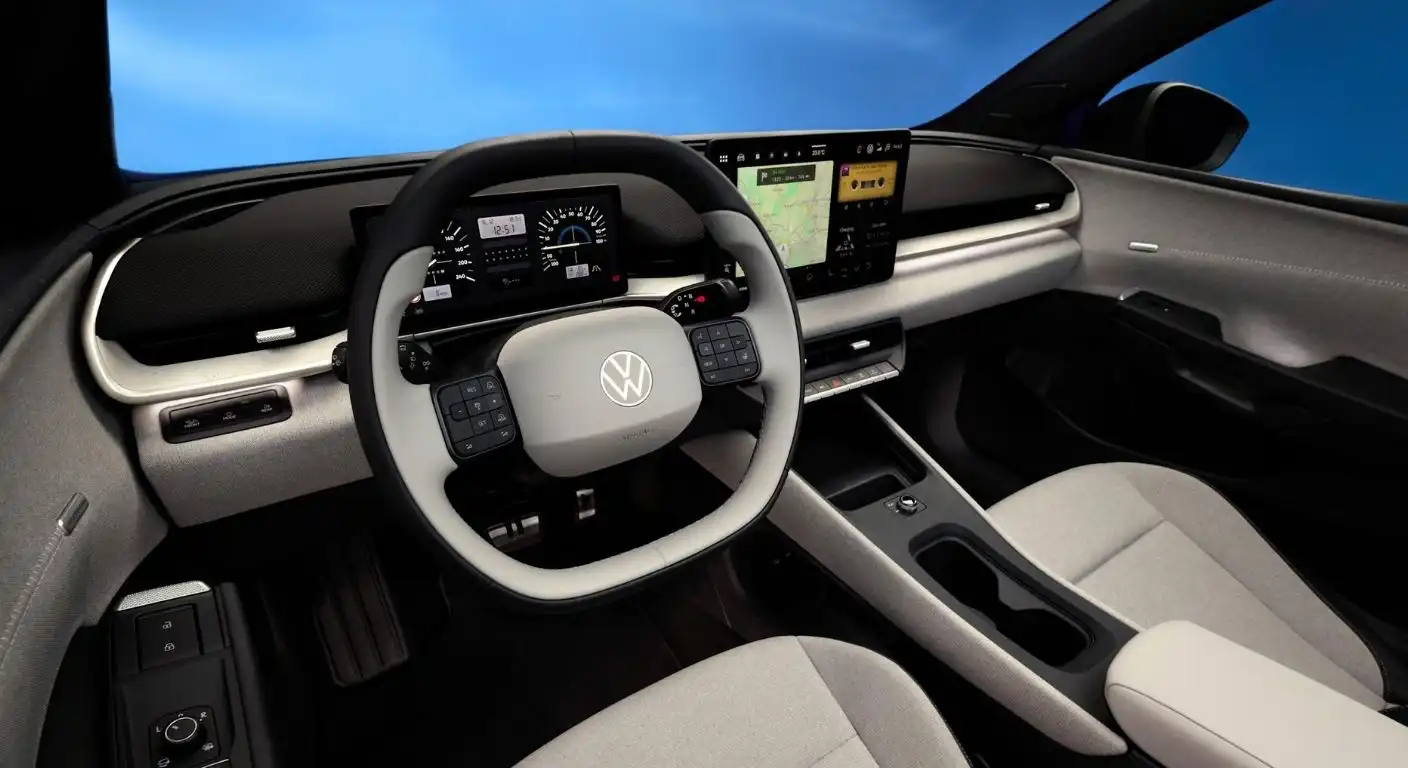
The global automotive industry is witnessing an unprecedented realignment as the era of traditional internal combustion engine dominance draws to a close. In August 2026, a comprehensive report published by Nikkei Asia revealed that the ambitious, highly publicized China comeback plan designed by European car giant Volkswagen Group is facing fresh doubts and a severe reality check. Once the undisputed leader of the world’s largest automotive market, the German automaker is experiencing a sustained, double-digit decline in Chinese sales, raising serious questions about whether its multi-billion-dollar investments in local electric vehicle technology can successfully reverse its fortunes.
The crisis facing Wolfsburg-based Volkswagen is not confined to its Chinese joint ventures. The company is currently fighting a high-stakes, defensive battle on two fronts simultaneously. At the same time that its market share is eroding in Asia, Europe’s largest carmaker is facing an unprecedented financial and labor crisis on its own home turf in Germany. Faced with skyrocketing operating costs, weak EV sales, and high energy prices, the company’s board of directors is weighing mass layoffs and planning to close domestic German factories for the first time in its 87-year history, throwing the entire European industrial sector into a state of shock.
This dual-front crisis has severely damaged investor confidence, pushing Volkswagen’s stock price down to near-historic lows. While the company’s management has promised that its new, locally developed electric models will restore its competitive edge, the rapid pace of innovation and price-cutting by Chinese competitors is making it increasingly difficult for the German giant to execute its strategy. As the global transition to software-rich electric cars accelerates, Volkswagen’s struggle to adapt has become a defining cautionary tale for the legacy automotive industry.
The German Home Turf Crisis: Unprecedented Factory Closures and Layoffs
The financial pressures building within Volkswagen have forced the company to break some of the most sacred, long-standing taboos of post-World War II German manufacturing, signaling the severity of the operational crisis facing Europe’s industrial baseline.
Dismantling the Ninety-Year Taboo of German Manufacturing
In late July 2026, Volkswagen CEO Oliver Blume shocked the global business community by announcing that the company is actively preparing to close up to four of its primary manufacturing plants in Germany. Since the company was founded in 1937, Volkswagen has never closed a domestic assembly plant, relying on a strict, state-backed system of co-determination with powerful labor unions to manage its industrial footprint.
To fund its transition to the electric era and protect its operating margins, the board has concluded that these historic factory closures are now an absolute necessity. Blume has secured preliminary approval to cut approximately 50,000 jobs across the group’s European operations, but senior executives are currently negotiating with union leaders to potentially double that figure.
By targeting up to 100,000 headcount reductions, the company wants to slash its massive operating overhead, but the aggressive plan has triggered an immediate, highly volatile showdown with powerful German labor syndicates, who have vowed to fight the factory closures and job cuts through coordinated strikes and legal challenges.
The Collapse of Volkswagen’s Public Stock Valuation
This internal operational friction has had a devastating impact on the company’s public market valuation, eroding the wealth of its shareholders and restricting its access to low-cost capital.
Over the past year, Volkswagen’s shares (XETRA: VOW3) have reversed by a staggering 33%, while sliding over 66% over a five-year period. The stock currently hovers near its 52-week low of €71, which is a massive decline from its historical high of €110.2.
This multiple compression reflects a deep, systemic skepticism among Wall Street and European investors, who are increasingly concerned that the company’s massive legacy liabilities, rigid union contracts, and slow software development have left it structurally unable to compete against nimble, high-tech rivals in China and the United States.
The Chinese Market Erosion: How “Smartphones on Wheels” Displaced German Engineering
The primary source of the cash flow drain that has forced Volkswagen into this defensive restructuring is the rapid, highly disruptive collapse of its market share in China, which has historically functioned as the company’s single most profitable market.
Slicing the Market Share of the Former Industry Leader
For decades, the Chinese auto market was the crown jewel of the Volkswagen Group. In 2019, the company dominated the country’s roads, with one in five new cars sold in China belonging to the VW Group, representing an outstanding 19% national market share.
Today, that dominant position has completely vanished.
The sales data for the first half of 2026 illustrates the speed and severity of this decline:
- Volkswagen reported that its vehicle deliveries in China fell by an alarming 14.9% year-on-year to 548,000 units during the first quarter of the year.
- The downward trend accelerated dramatically during the second quarter, with deliveries plunging by an estimated 36% compared to the prior-year period.
- The company’s total market share in China has slid to a historic low of just 14%, down from 19% in 2019.
- Overtaken by local plug-in hybrid and pure electric champion BYD in 2024 and Geely in 2025, Volkswagen has dropped to third place in national sales, completely losing its decade-long market dominance.
Faced with this rapid erosion of its sales volume, Ralf Brandstaetter, the chief executive of Volkswagen Group China, candidly admitted to European journalists that the era of super-returns for foreign carmakers in China is officially over.
The company has been forced to lower its long-term sales target, expecting to deliver up to 3.2 million vehicles annually in China by 2030, representing a significant 20% reduction from its previous, highly ambitious goal of 4 million units.
The Preference for Software Refinement Over Horsepower
The primary reason why Chinese consumers are abandoning Volkswagen is a fundamental change in what they expect from a passenger vehicle. For decades, German automakers built their global reputations on engineering pedigree, precise mechanical handling, and high-horsepower internal combustion engines.
In the modern Chinese market, these traditional mechanical selling points have become secondary.
Chinese consumers, particularly younger buyers, increasingly view cars not as mechanical machines, but as “smartphones on wheels.”
They prioritize advanced software integration, continuous over-the-air updates, autonomous driver-assistance systems, and high-tech cabin entertainment over traditional suspension tuning and engine performance.
Local brands like BYD, Nio, and tech giant Xiaomi have leaned heavily into this software-rich, connected experience, offering highly automated vehicles at price points that foreign manufacturers cannot match.
This technological gap has made conventional German cars look outdated, driving a rapid shift in consumer preferences that has left legacy automakers struggling to remain relevant.
The “In China, for China” Strategy: A Three-Billion-Euro Technological Pivot
To counter this competitive threat and win back tech-savvy Chinese consumers, Volkswagen has launched its biggest-ever localized technological pivot, investing billions of euros to move its engineering and design capabilities closer to the market.
Constructing the Massive Hefei R&D Hub
At the core of the company’s defensive strategy is its “In China, for China” program, designed to bypass the slow, bureaucratic decision-making processes of its headquarters in Wolfsburg.
The company has invested over €3 billion ($3.5 billion) to construct its largest research and development center outside Germany, located in the high-tech industrial hub of Hefei, west of Shanghai.
This specialized R&D center, which currently employs over 3,000 local software engineers, is designed to drastically accelerate the company’s product development cycles.
By operating entirely within China, the local teams can design, test, and manufacture new models tailored specifically to Chinese tastes with immense speed.
Volkswagen claims that this localized architecture allows new vehicles to be developed up to 30% faster than traditional German development timelines, reducing the time-to-market for new models from four years to just 24 months.
The Seven-Hundred-Million-Dollar Partnership with Xpeng
To quickly acquire the advanced software and autonomous driving capabilities it lacked, Volkswagen took the rare step of partnering directly with a young Chinese EV startup.
In a highly publicized move, the German carmaker invested $700 million to acquire a minority stake in Xpeng, forming a joint-development partnership.
This strategic alliance has already produced its first commercial milestone.
In mid-2026, Volkswagen officially began mass production of its first jointly developed model, the ID. UNYX 08, a full-size electric SUV manufactured at its Hefei plant.
The new vehicle, which went on sale recently, utilizes Xpeng’s advanced autonomous driving systems, sensor fusion arrays, and custom Turing AI chips.
By partnering with Xpeng, Volkswagen managed to bring the advanced electric SUV from initial design to active production in just 24 months.
The company plans to build on this success, bringing a total of 30 electrified models to China by 2027 and expanding its lineup to 50 models by 2030, moving toward “AI-defined vehicles” powered by locally trained large language models.
The Software Black Hole: The Failure of CARIAD
While the partnership with Xpeng has allowed Volkswagen to launch competitive new electric models quickly, the arrangement also highlights a severe, highly embarrassing software failure within the German group’s own internal operations.
The Fourteen-Billion-Euro In-House Failure
For several years, Volkswagen attempted to build its own proprietary automotive operating system and software platform through its dedicated, in-house software division, CARIAD.
The corporate objective was highly ambitious: build a unified software stack that would power every vehicle across the group’s diverse brands, including Volkswagen, Audi, Porsche, and Bentley, allowing the company to compete directly with Tesla’s technology-led business model.
However, the CARIAD project quickly transformed into one of the most expensive financial black holes in automotive history.
The company spent more than €14 billion trying to develop the platform, but the project suffered from years of bureaucratic delays, severe coding bugs, and personal clashes between software engineers in Munich and hardware engineers in Wolfsburg.
These software delays forced the company to postpone the launch of several critical electric models, including the highly anticipated Porsche Macan EV and the Audi Q6 e-tron, severely damaging investor confidence and contributing directly to the sales alerts and profit drops that have plagued the group over the past two years.
The Irony of Paying Competitors for Basic Survival
The failure of CARIAD has forced Europe’s largest carmaker into a highly ironic and humiliating position.
After spending €14 billion attempting to build its own proprietary software, Volkswagen must now pay its own Chinese competitors to license the essential technology required to keep its future cars competitive.
This reliance on Chinese partners represents a significant loss of automotive sovereignty.
Instead of controlling its own software value chain, Volkswagen’s future vehicles will remain completely dependent on the software designs, sensor systems, and artificial intelligence models developed by Chinese startups like Xpeng.
This reliance on foreign technology means that even if Volkswagen’s new electric offensive successfully stabilizes its Chinese sales, a substantial portion of the high-margin revenues generated by those sales will flow directly back to Chinese tech firms.
This dynamic is squeezing margins, proving that a major automaker cannot easily regain its technology lead once it has ceded it to a more agile competitor. Large-scale industrial projects of this type require over $1 billion in capital investments, and even a 1.5% margin improvement can yield massive savings for a company struggling to protect its bottom line.
Reorienting for a Challenging Future
The severe doubts surrounding Volkswagen’s China comeback plan are highly justified. The German automotive giant is currently fighting a war of survival on two fronts simultaneously, with its traditional engineering pedigree proving highly inadequate against the fast-moving, software-rich realities of the modern electric vehicle market.
While the company’s massive €3 billion investment in its Hefei R&D hub and its strategic partnership with Xpeng have allowed it to launch competitive new electric models in record time, the ongoing erosion of its sales volume in China and the unprecedented crisis on its home turf in Germany have left the company in a highly vulnerable position.
As local Chinese brands like BYD and Geely continue to dominate the domestic market with cheap, highly connected “smartphones on wheels,” and as labor unions prepare for a massive showdown in Wolfsburg, the future of Europe’s largest carmaker remains highly uncertain.
Only by successfully executing its localized “in China, for China” strategy, resolving its domestic labor disputes, and building a truly agile, software-defined business model can Volkswagen hope to survive the transition to the electric era and protect its historic position at the absolute peak of the global automotive industry.






