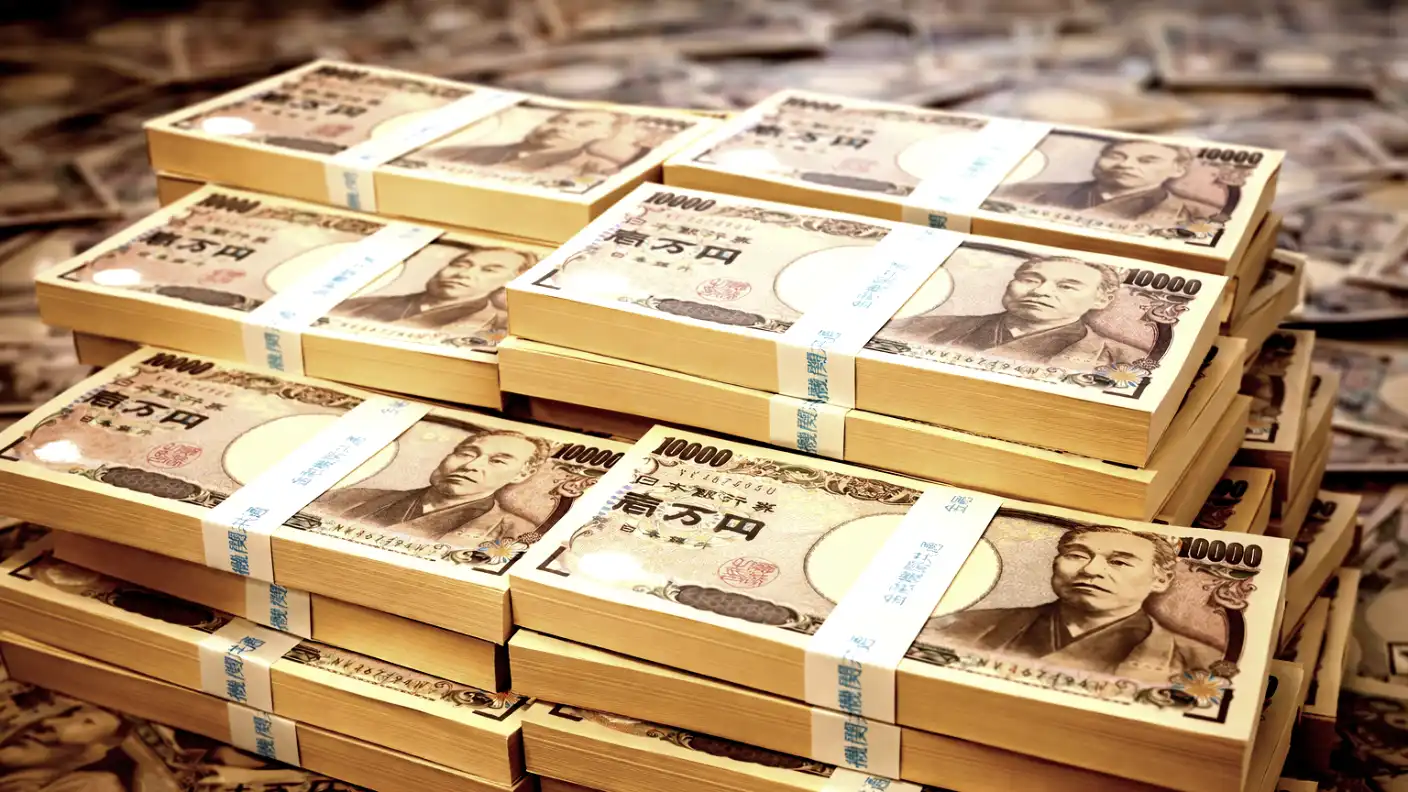
The global foreign exchange market is preparing for another period of intense volatility as Japan steps up its campaign to defend its battered currency. In August 2026, Mitsuhiro Furusawa, formerly Japan’s top currency diplomat at the Ministry of Finance and currently the president of Sumitomo Mitsui Banking Corporation’s Institute for Global Financial Affairs, delivered a stark warning to international currency speculators. Furusawa made it clear that the Japanese yen remains too weak at its current levels, and that Tokyo and Washington are prepared to execute joint currency interventions again at any moment, untethered to specific psychological thresholds.
Furusawa’s intervention warnings arrived during a highly sensitive trading week. Following a historic, coordinated currency intervention in late July and early August, which briefly hauled the yen back from a 40-year low of 163.99 per dollar to around 155.20, the currency has steadily depreciated, drifting back toward the 159.50 level. By declaring that authorities do not need to wait for the yen to cross a specific line in the sand—such as 160 or 162—before taking action, Furusawa has stripped traders of their psychological comfort, keeping them on permanent high alert.
However, the most significant revelation in the former diplomat’s assessment is that physical intervention is merely a temporary tool to buy time. The real lever to support the yen lies in the hands of the Bank of Japan. Furusawa expects the central bank to accelerate its interest rate hike schedule, starting with a highly anticipated move at the upcoming September meeting. This transition from a single intervention event into a multi-meeting tightening cycle represents a major structural change that could permanently dismantle the carry trades that have dominated global capital markets for years.
The Mechanics of Joint Currency Intervention: Removing the Line in the Sand
The joint currency actions executed by Japan and the United States represent a major milestone in modern monetary diplomacy, proving that the two allied nations are willing to use their combined financial power to stabilize key exchange rates.
The Fragility of the Late July Coordinated Intervention
The joint intervention carried out by Japan’s Ministry of Finance and the United States Treasury Department was a monumental event. It represented the first coordinated currency action to prop up the yen in nearly thirty years, dating back to the late-1990s Asian financial crisis.
By committing tens of billions of dollars to buy yen, the two allies managed to drive the dollar-yen exchange rate down by roughly 5%, providing immediate relief to Japanese importers and consumers.
However, the subsequent performance of the currency has demonstrated the limits of physical intervention alone. Within weeks of the joint action, the yen began to slide back toward the 160 level.
Because the underlying interest rate gap between the United States and Japan remains wide, speculative traders continue to short the yen, treating the government’s interventions as temporary, artificial buying opportunities.
This rapid depreciation has proved that unilateral or even joint currency purchases can only buy limited time, and the government must utilize other, more permanent policy levers to establish a stable floor for the currency.
Stripping Traders of Psychological Comfort
To deter speculative short sellers during this fragile transition phase, Furusawa has urged policymakers to abandon the practice of defending specific currency levels.
In previous years, traders operated under the assumption that Japanese authorities would only intervene once the yen crossed a specific psychological threshold, such as 155, 160, or 162.
This predictability allowed speculators to build massive, highly leveraged short-yen positions with minimal risk, as they knew exactly when the government was likely to step in.
Furusawa’s warning that intervention can come again at any yen level completely dismantles this speculative playbook. By signaling that the Ministry of Finance and the U.S. Treasury can intervene at any moment, even when the yen is trading at 158 or 159, the government has injected immense uncertainty into the market.
This tactical unpredictability makes holding large, short-yen positions exceptionally risky, forcing hedge funds and speculative traders to reduce their leverage and stay on the sidelines, effectively cooling the market’s downward momentum without requiring the government to spend a single dollar of its actual cash reserves.
The Bipartisan Tokyo-Washington Alliance: Scott Bessent’s Verbal Shield
The success of Japan’s current currency defense is closely linked to an unprecedented level of policy coordination and cooperation between Tokyo and the United States Treasury Department.
Treasury Secretary Scott Bessent’s Support for the Yen
Historically, currency intervention has been an exceptionally difficult, diplomatically thorny topic between the two major economic powers. In previous decades, Washington frequently criticized Tokyo’s attempts to intervene in foreign exchange markets, viewing such actions as protectionist measures designed to give Japanese exporters an unfair trade advantage.
This long-standing policy of non-intervention changed dramatically under the leadership of U.S. Treasury Secretary Scott Bessent.
Recognizing that the extreme weakness of the yen was beginning to distort global trade flows and disrupt U.S. financial markets, Bessent has provided strong verbal and physical support for Japan’s currency operations.
Following the late-July joint intervention, Bessent publicly confirmed the synchronized foreign exchange actions, stating that the coordinated moves successfully reduced erratic fluctuations in the Japanese yen and reaffirming that the U.S. Treasury remains in close communication with its counterparts at the Bank of Japan and the Ministry of Finance.
Why the US and Japan Share a Currency Headache
The close cooperation between Bessent and Japanese Finance Minister Satsuki Katayama is driven by a powerful alignment of national interests. For Japan, a historically weak yen is no longer a simple export advantage; it has become a severe economic headache.
Because Japan is a net energy and resource importer, the collapse of the yen has driven the domestic cost of fuel, raw materials, and food to record heights, creating severe cost-of-living challenges for Prime Minister Sanae Takaichi’s newly formed cabinet.
For the United States, a weak yen presents an equally serious challenge to President Donald Trump’s flagship trade policies.
If the yen remains depressed, it effectively blunts the trade advantage that American manufacturers are supposed to receive from the administration’s new tariff structures.
Furthermore, if Japanese institutional investors are forced to liquidate their massive holdings of U.S. Treasury bonds to raise the dollar cash needed to defend the yen, it could trigger a sharp spike in long-term U.S. bond yields, driving up mortgage rates and borrowing costs across the entire American economy.
This shared currency anxiety has forged a highly cooperative bilateral relationship, giving Tokyo a powerful new verbal shield in its fight against currency speculators.
The Bank of Japan’s Accelerated Rate Path: From One Percent to the Terminal Goal
While joint interventions and verbal warnings provide vital, short-term protection, Furusawa emphasized that the ultimate defense of the yen must come from a sustained, accelerated interest rate tightening campaign by the Bank of Japan.
The September Rate Hike Odds Skyrocket to Seventy-Six Percent
The global financial markets are currently undergoing a dramatic repricing of Japanese interest rate expectations. Just two weeks ago, following the Bank of Japan’s decision to hold its policy rate steady, currency traders priced in only a minor 24% probability that the central bank would raise rates at its upcoming September meeting.
That expectation has changed completely. Following Furusawa’s comments and hawkish signals from Bank of Japan Governor Kazuo Ueda, the market-implied probability of a September rate hike has skyrocketed to 76%.
Traders realize that if the Bank of Japan fails to follow through on these rising rate expectations next month, the market will interpret the delay as a betrayal, destroying the central bank’s hard-won regulatory credibility and potentially triggering a fresh, rapid slide in the yen.
Reaching the Terminal Rate of One Point Seventy-Five Percent
The projected path of Japanese monetary policy represents a historic departure from the country’s thirty-year post-bubble deflationary era. Under Governor Ueda’s leadership, the Bank of Japan has already taken major steps to normalize its policy, raising its benchmark interest rate to 1.0% in June 2026 from the negative territory of -0.1% where it sat in 2024.
According to Furusawa, this tightening cycle is far from complete. He expects the central bank to execute a 25 basis point hike in September, followed by another rate increase in December or January 2027.
Over the next several quarters, Furusawa projects that the Bank of Japan will steadily push its terminal policy rate to a range of 1.5% to 1.75%.
This sustained transition to positive, competitive interest rates represents a permanent structural change for the Japanese economy.
By raising the yield on domestic assets, the central bank will naturally encourage domestic savers and institutional investors to bring their capital back home, providing a powerful, long-term source of demand to support the yen.
The Entrenched Reflation and the Squeeze on Carry Trades
The Bank of Japan’s accelerated rate path is also forcing a massive, highly disruptive unwinding of global carry trades, which have dominated financial markets for years.
The Collapse of the Yen-Funded Carry Trade
The yen-funded carry trade has historically functioned as one of the largest capital pools in global finance. Under this strategy, international investors and hedge funds borrowed massive quantities of yen at near-zero interest rates, converted that capital into foreign currencies, and used the funds to purchase higher-yielding global assets, including high-tech US equities, emerging market debt, and private credit.
The combination of the physical joint intervention threat and the Bank of Japan’s accelerated rate path has placed these carry trades in a severe squeeze.
As the cost of borrowing yen rises and the currency strengthens unexpectedly, carry-trade investors face rapid, margin-crushing losses.
To limit their risk, these investors must quickly buy back yen to pay off their loans, creating an automated wave of buying pressure that further accelerates the yen’s appreciation.
This rapid unwinding of speculative positions has already begun to stabilize the exchange rate, proving that monetary policy tightening is a far more effective and durable tool than simple, physical intervention.
Managing the Rising Cost of Imports and Fiscal Deficits
The need to stabilize the yen is also closely linked to Japan’s domestic economic and fiscal challenges. Inflation in Japan has exceeded its official 2% target for much of the past four years, driven by tight labor markets, solid wage growth, and the rising cost of imported energy and commodities.
While Prime Minister Sanae Takaichi’s government favors supportive monetary and fiscal policies to encourage domestic investment, she also recognizes that a stronger yen is urgently needed to ease the cost-of-living pressures on everyday households.
By raising interest rates to support the currency, the Bank of Japan is successfully balancing these competing priorities.
Even a minor 1.5% improvement in import price stability can save the domestic economy billions of dollars in annual energy costs, proving that the central bank’s transition toward higher interest rates is a vital source of national economic resilience.
Reconstructing the Currency Baseline
The extensive analysis provided by former currency diplomat Mitsuhiro Furusawa represents a historic milestone for the Japanese financial system. By demonstrating that Japan and the United States are prepared to launch joint currency interventions at any moment, and by preparing the market for a rapid transition to a 1.75% terminal policy rate, Furusawa has outlined a highly aggressive, durable defense of the battered yen.
While physical interventions can buy vital time, the ultimate stability of the currency depends entirely on the Bank of Japan’s monetary policy path.
As the central bank prepares for its critical September meeting, the sharp surge in rate hike expectations has successfully squeezed speculative short-sellers, forcing a major realignment of global carry trades.
By systematically raising interest rates, supporting its largest foreign creditors, and securing the verbal and physical backing of the United States Treasury, Tokyo is building a highly resilient, modern monetary framework, ensuring that the Japanese yen can successfully reclaim its stable, dominant role in the global financial system for decades to come.