Key Points:
- Nvidia supplier Wiwynn warned that power supply infrastructure and high-end PCBs have overtaken memory as the most critical bottlenecks in AI server production.
- The Taiwanese manufacturing giant recently reported first-quarter 2026 revenue of NT 276.5 billion (8.79 billion), a massive 62% year-on-year increase.
- Due to extreme power constraints, the company has extended its long-term power infrastructure planning cycle through 2028.
- Wiwynn plans to build up to five new manufacturing sites, each in the United States and Mexico, to meet surging data center demand.
The relentless expansion of artificial intelligence infrastructure is running into a series of highly unexpected, non-silicon physical bottlenecks. Taiwanese hardware manufacturing giant Wiwynn Corporation, a critical server supplier to Nvidia and major global cloud service providers, warned on Thursday, May 28, 2026, that the industry’s most critical challenges have shifted. While investors have spent months focusing almost exclusively on high-bandwidth memory (HBM) shortages, the company’s executive team highlighted that the primary hurdles now encompass broader component crunches. They explicitly noted that resolving these diverse bottlenecks in Wiwynn AI servers is now a matter of national security and corporate survival.
Speaking to reporters on the sidelines of the company’s annual general shareholder meeting in New Taipei City, Chairwoman Emily Hong delivered a candid assessment of the current technology landscape. She explained that overall order demand for artificial intelligence hardware remains incredibly robust, far exceeding previous industry forecasts. However, the sheer volume of the global buildout has triggered severe, unmapped shortages of supporting industrial components. At this advanced stage of the tech cycle, Hong remarked that the ultimate winner of the AI race is simply whoever can secure their raw materials.
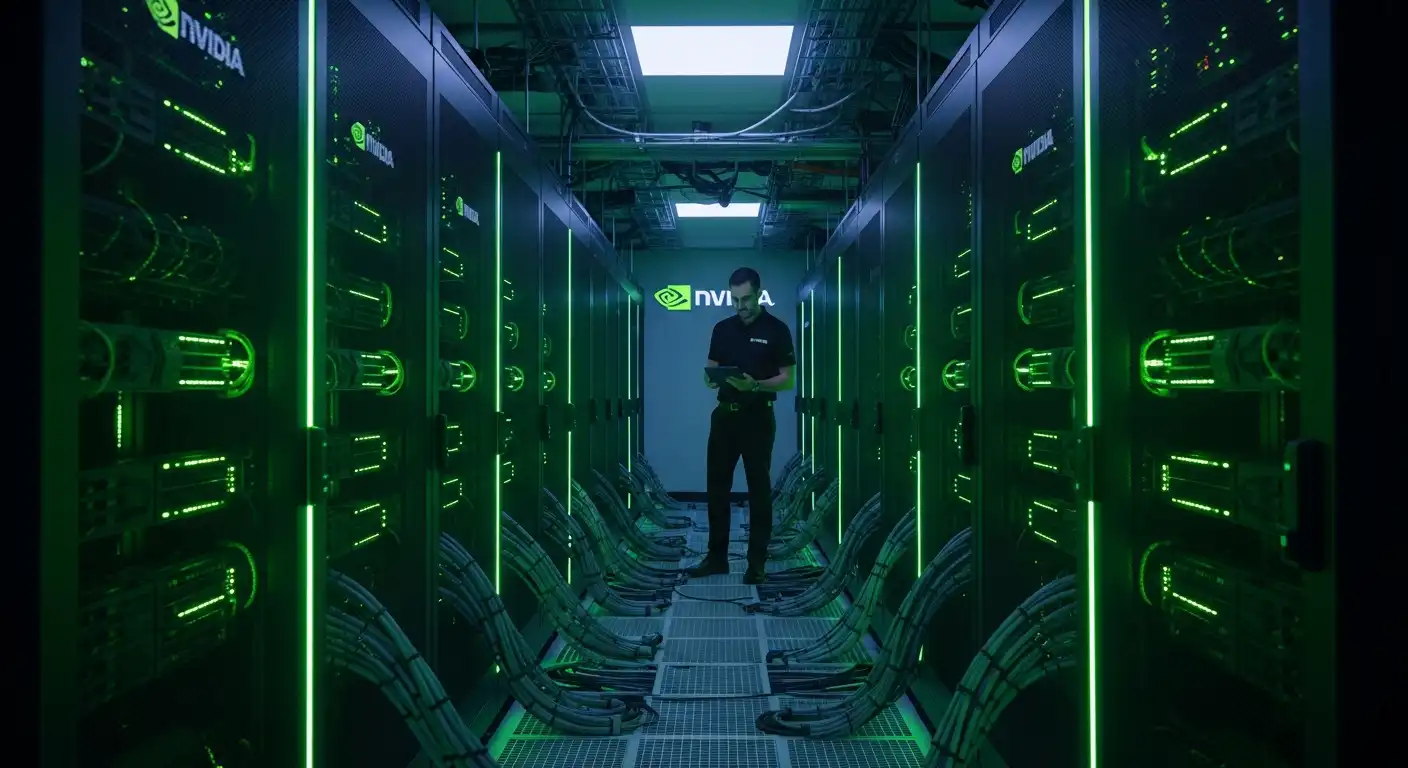
According to Wiwynn General Manager and Chief Executive Officer William Lin, the most critical physical shortages do not involve the GPUs themselves, but rather the supporting electronics and electrical infrastructure. Factories are currently struggling to secure adequate supplies of high-end printed circuit boards (PCBs), central processing units (CPUs), multilayer ceramic capacitors (MLCCs), and various power-related electrical components. These low-profile components are essential to build the massive, high-density server racks that house Nvidia’s flagship Grace Blackwell and MGX platforms.
Even more concerning than component shortages is the massive crisis surrounding global power supply infrastructure. AI data centers consume vast amounts of electricity, putting immense pressure on local utility grids. This electricity hunger has become such a critical production bottleneck that it has officially overtaken geopolitics as the company’s primary long-term concern. To mitigate this risk, Wiwynn has taken the unprecedented step of extending its long-term power infrastructure planning cycle through 2028. This long-range planning ensures that the firm can secure the electrical transformers, high-capacity switchgear, and liquid-cooling hardware required to run its future servers.
Despite these compounding supply chain headaches, Wiwynn’s financial performance continues to set record-breaking milestones. The company recently reported better-than-expected revenue of NT$276.5 billion (approximately 8.79billion) for the first quarter of 2026. This represents an extraordinary 62% year-on-year increase.
To capture this massive wave of demand and insulate its operations from geopolitical risks, Wiwynn is aggressively expanding its global manufacturing footprint. Having fully withdrawn its manufacturing plants from mainland China in 2022, the company has successfully built a highly resilient, dual-production base spanning North America and Southeast Asia. Its long-term expansion roadmap includes building three to five new manufacturing sites each in the United States and Mexico, alongside a massive new vertically integrated data center campus in Malaysia to serve the fast-growing Southeast Asian cloud market.
The corporate expansion coincides with a strategic diversification of Wiwynn’s product portfolio. While GPU-based servers—primarily utilizing Nvidia’s advanced hardware—continue to command the lion’s share of the global AI training market, the company is highly optimistic about its custom application-specific integrated circuit (ASIC) business. Major cloud service providers are increasingly developing their own custom ASICs, such as Google’s Tensor Processing Units (TPUs), to run energy-efficient AI inference models. Wiwynn expects these ASIC-based servers to see massive shipment growth in the second half of 2026, helping balance its revenue streams.
Ultimately, the warnings from Wiwynn’s leadership prove that the multi-trillion-dollar AI buildout is a physical, resource-constrained challenge rather than a pure software revolution. As global technology companies plan to invest hundreds of billions of dollars in AI data centers over the next few years, the physical limits of our electrical grids, copper mines, and component factories are beginning to push back. Resolving these diverse hardware bottlenecks will require sustained capital expenditure and highly sophisticated, cross-domain engineering, proving that building the future of artificial intelligence requires far more than just writing code.