Key Points:
- EU Commissioner Michael McGrath argues that the rule of law represents Europe’s ultimate competitive business advantage, providing the legal certainty and predictability that investors crave.
- The European Commission’s latest Rule of Law Report integrates a dedicated Single Market dimension to protect small and medium-sized enterprises (SMEs) from arbitrary state interference.
- By enforcing a level playing field, the rule of law protects the integrity of the Single Market, which connects 27 Member States and nearly 450 million consumers.
- The EU continues to use major financial levers, such as freezing over €18 billion in funding for Hungary, to show that compliance with democratic values is non-negotiable.
The European Union has long defined itself as a community of shared values, but its leadership is now framing these principles as a core driver of economic prosperity. Speaking at recent business forums, European Commissioner for Democracy, Justice, the Rule of Law and Consumer Protection, Michael McGrath, asserted that strong democracies do far more than just protect civil liberties. He argued that robust legal systems actively build resilient economies, providing the crucial predictability that businesses need to thrive. By establishing the rule of law as Europe’s primary business advantage, Brussels is shifting its defensive strategy into an offensive tool to bolster global competitiveness.
This strategic shift is highly visible in the European Commission’s latest annual Rule of Law Report. For the first time, the Commission has integrated a dedicated Single Market dimension into its monitoring cycle. This development reflects a deliberate political choice to merge economic governance with judicial oversight. The revised framework aims to address the real-world obstacles that businesses, particularly small and medium-sized enterprises (SMEs), face when operating across borders. The latest data shows that over 57.0% of the previous year’s recommendations have been fully or partially implemented, helping to ensure the impartial and uniform application of EU law.
The core of Europe’s economic appeal lies in the integrity of its Single Market, which connects nearly 450 million consumers. For this vast market to function fairly, businesses must operate under a stable and predictable legal environment. When governments allow cronyism, clientelism, or arbitrary administrative interventions to distort competition, the entire system suffers. Commissioner McGrath explained that the rule of law guarantees that like cases are treated alike, ensuring that political or social elites do not receive special judicial treatment. This impartial enforcement prevents corrupt networks from tilting the market, assuring domestic and international investors that they can compete on a genuinely level playing field.
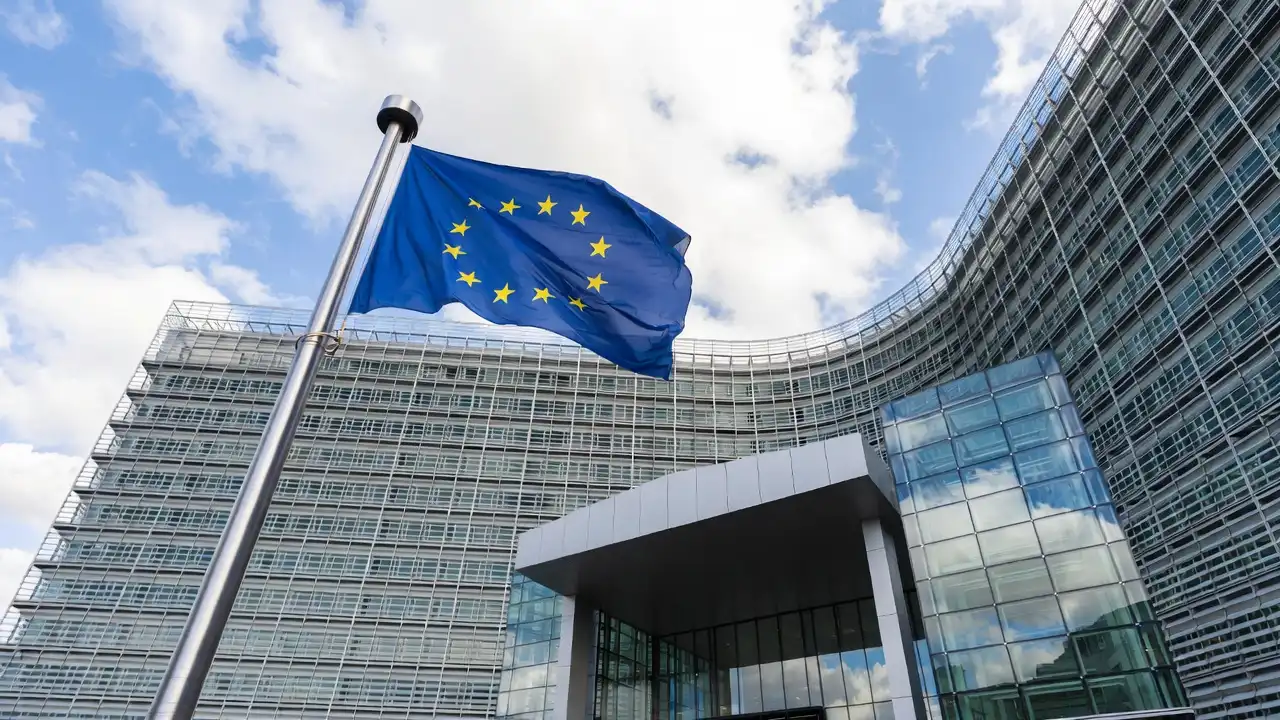
Enforcing this legal certainty has historically been a fraught affair, but the EU is increasingly using its massive financial levers to enforce compliance. The European Commission has taken a hardline stance against member states that systematically dismantle judicial independence and democratic checks and balances. Currently, the Berlaymont continues to freeze over €18 billion in European funding earmarked for Hungary, led by Prime Minister Viktor Orbán, due to persistent rule-of-law violations. This economic pressure demonstrates that the EU will no longer tolerate governments that pocket billions in subsidies while actively undermining the legal foundations of the single market.
To complement these enforcement measures, Commissioner McGrath is preparing to present a groundbreaking corporate framework known as the “28th Regime”. Designed as an optional, digital European corporate framework, the initiative aims to facilitate the creation, expansion, and cross-border investment of companies throughout the Single Market. Many innovative companies and startups face immense legal fragmentation when trying to expand beyond their home borders, navigating 27 different sets of national corporate laws. By establishing a unified, digital-by-default framework under a single regulation, the 28th Regime will dramatically cut administrative costs and simplify operations without undermining the European Union’s high labor standards.
In tandem with the corporate framework, the Commission is also drafting the Digital Fairness Act, scheduled for introduction in late 2026. This legislative proposal focuses on shielding consumers—especially children and vulnerable adults—from deceptive online tactics, predatory subscription traps, and addictive algorithmic designs on e-commerce and social media platforms. McGrath emphasized that a healthy digital economy requires high levels of consumer trust. If consumers do not feel safe participating in the digital marketplace, trust crumbles and transactions falter. This focus on digital fairness proves that the EU views robust consumer protections not as an obstacle to innovation, but as the very foundation of a sustainable digital economy.
This aggressive regulatory approach highlights a growing geopolitical divide between European and American policymakers. While the EU’s share of global GDP stands at roughly 15.0%, its regulatory influence continues to expand internationally. While some U.S. lawmakers and tech executives criticize the EU’s strict digital rules as protectionist barriers that stifle innovation, European leaders argue that their values-based approach provides a unique strategic advantage. During recent congressional hearings in Washington, critics cast European online safety laws as threats to free speech. However, European officials maintain that their rules, such as the Digital Services Act and the AI Act, are creating the gold standard for global technology governance, encouraging other countries to align with European standards to secure safe cross-border data flows.
The emphasis on the rule of law also has profound implications for global corporate responsibility. Business and human rights advocates point out that a strict rule of law is essential for enforcing international treaties and protecting human rights from corporate abuse. Without independent courts and effective legal review, companies can easily exploit fragile legal systems in developing nations to secure unfair business advantages. By embedding rule-of-law requirements into its trade agreements and investment treaties, the European Union is projecting its rights-based approach beyond its borders, ensuring that when European companies invest globally, ethical standards travel with them.
Ultimately, the European Union’s transition toward integrating the rule of law into its economic governance framework marks a bold new chapter for the single market. As global geopolitical instability and populist movements put democratic institutions under pressure, the EU is proving that a commitment to predictable, law-based governance is its most powerful economic asset. By streamlining regulations through initiatives such as the 28th Regime and defending the single market against illiberal backsliding, Brussels is demonstrating that predictability and trust are the ultimate drivers of competitiveness. In a turbulent world, Europe’s business advantage remains its unwavering dedication to the rule of law, proving that values and economic growth can walk hand in hand.