Key Points:
- The Shanghai Stock Exchange approved Unitree’s IPO application, marking the first “embodied artificial intelligence” listing on the Chinese A-share market.
- Unitree plans to raise 4.2 billion yuan ($620 million) to fund smart manufacturing bases, advanced robotics hardware, and intelligent software models.
- Setting a new regulatory record, the review took just 73 days under the STAR Market’s highly efficient pre-review mechanism introduced in July 2025.
- The listing coincides with a massive wave of Chinese “hard-tech” IPOs, including memory chip giants CXMT and YMTC, fueled by the global AI supercycle.
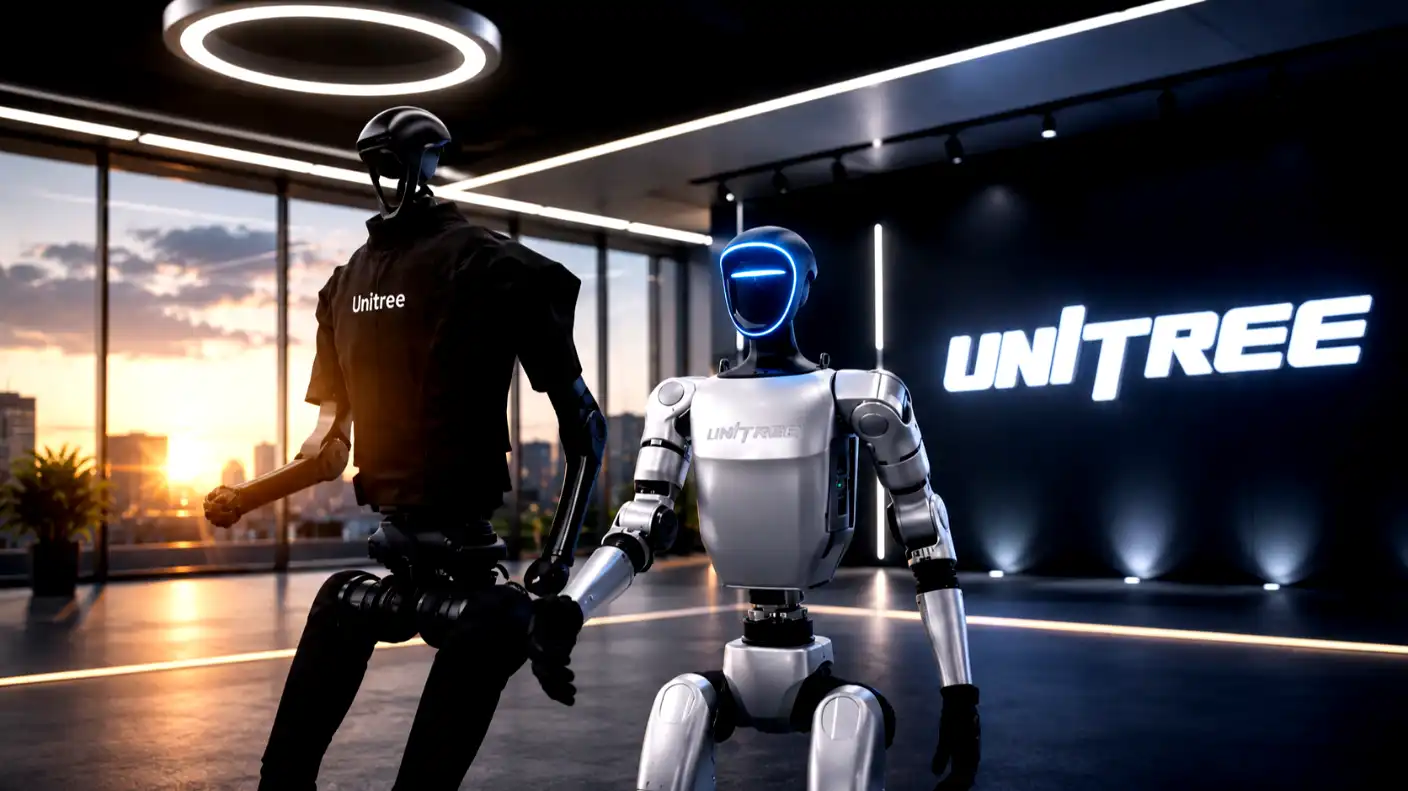
On Monday, June 1, 2026, the Shanghai Stock Exchange’s STAR Market listing committee officially approved the initial public offering (IPO) application of Unitree, a humanoid robot pioneer. This landmark decision clears the final hurdle for what will be the first-ever listing of embodied artificial intelligence on the Chinese A-share market. As global tech giants rush to bring machine intelligence into the physical world, China is rolling out the welcome mat for its most promising hardware and software innovators, positioning its capital markets as a primary engine for high-tech industrial growth.
Unitree plans to raise 4.2 billion yuan, approximately $620 million, to fund four highly ambitious core technology projects. The company will direct this capital into the research and development of intelligent robot models, next-generation robotics hardware, and advanced product innovation. Crucially, a significant portion of the funding will be used to build a state-of-the-art smart manufacturing base, enabling Unitree to mass-produce bipedal humanoids and reduce per-unit manufacturing costs to meet rising commercial demand.
This public market debut coincides with high-profile international recognition for the company’s hardware design. On Monday, Unitree announced that U.S. chipmaker Nvidia has selected its bipedal robot platform as the basis for its first-ever standardized robotics design reference. Nvidia plans to sell this integrated hardware-and-software package directly to leading global research institutions, including Stanford University and ETH Zurich. This partnership establishes Unitree as the undisputed hardware standard for global academic research in embodied AI, proving that the company’s engineering can easily compete on the world stage.
What makes Unitree’s regulatory breakthrough particularly striking is the unprecedented speed of the approval process. The STAR Market listing committee greenlit the application just 73 days after Unitree originally filed its paperwork on March 20, 2026. This lightning-fast process set a new speed record for the fastest review under the STAR Market’s pre-review mechanism since the Shanghai Stock Exchange introduced the system in July 2025. This specialized regulatory mechanism has significantly streamlined the review process, allowing companies operating in critical core technology sectors to access public capital with minimal bureaucratic delay.
Unitree’s rapid listing is not an isolated event; it represents the vanguard of a massive, coordinated wave of “hard-tech” listings in China. Just last Wednesday, the Shanghai Stock Exchange approved the listing of CXMT on the Science and Technology Innovation Board, the world’s fourth-largest DRAM memory manufacturer with roughly 8% of the global market. Driven by the relentless global artificial intelligence supercycle, CXMT’s high-margin memory business earned an astronomical 33 billion yuan, or about $4.58 billion, in the first quarter of 2026 alone, virtually wiping out its accumulated deficit from the past decade in just three months.
Following in CXMT’s footsteps, Yangtze Memory Technologies Corp (YMTC), China’s sole manufacturer of advanced 3D NAND flash memory, officially kicked off its pre-IPO preparation in May 2026. Recent market data from Counterpoint Research shows that YMTC’s global market share edged up to 11% in the final quarter of 2025, placing the Chinese memory champion just 2 percentage points behind industry veterans SanDisk and Micron Technology, and ranking sixth globally. Financial analysts expect YMTC’s eventual public listing to create a historic trillion-yuan stock, further cementing China’s domestic semiconductor supply chain.
This rapid acceleration of high-tech listings is occurring as China works to insulate its domestic industries from shifting global geopolitics and Western export restrictions. By funding domestic semiconductor, memory, and robotics firms through local public markets, Beijing is building a highly resilient, self-sustaining technological ecosystem. This strategy ensures that local developers can secure the massive capital they need to build advanced packaging plants, run complex simulations, and secure critical raw materials without relying on foreign venture capital or vulnerable international credit markets.
Embodied artificial intelligence—the integration of machine-learning brains into physical, mobile robot bodies—represents the next major frontier of global industrial automation. Unlike traditional software-only AI, humanoid robots can navigate complex, unpredictable human environments, allowing them to take over dangerous, repetitive, or labor-intensive roles in factories, power plants, and elderly care facilities. By securing the first-ever embodied AI listing, Unitree is positioning itself to lead this emerging global industry, which economists predict could eventually unlock trillions of dollars in economic value over the next decade.
Ultimately, the accelerating wave of advanced-technology IPOs on the STAR Market marks a profound turning point for China’s domestic capital markets. By fast-tracking strategic leaders like Unitree, CXMT, and YMTC, the Shanghai Stock Exchange is transforming the A-share market into a highly attractive, high-growth haven for global technology investors. As Unitree prepares to finalize its 4.2 billion yuan share sale, the successful transition of these hard-tech pioneers from private startups to publicly traded giants will undoubtedly enhance the country’s pricing authority in advanced manufacturing. The era of treating A-shares as a legacy commodity market is officially over, leaving a highly resilient, AI-powered industrial future in its place.