Key Points:
- Oman’s Mina al Fahal port restored normal operations after an alleged drone strike triggered an explosion near its mooring berths.
- Global energy contracts are on track for their first weekly gain in three weeks despite a minor dip on Friday.
- Hezbollah’s rejection of a Lebanon ceasefire has undermined hopes for a broader peace deal to reopen the closed Strait of Hormuz.
- Ongoing military strikes between the United States and Iran continue to disrupt the strategic waterway that carries twenty percent of global oil.
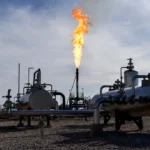
A highly volatile energy market faced fresh disruption on Friday after a targeted drone strike struck a major oil export terminal in the Gulf of Oman. Oil prices dipped slightly on Friday, June 5, 2026, after Omani authorities announced that operations at the Mina al Fahal port had fully returned to normal. The reassurance followed tense reports that operators had temporarily halted oil loadings at the terminal following an explosion. The incident highlights the constant, systemic risks hanging over the global energy supply chain as regional hostilities continue to threaten critical maritime infrastructure.
The explosion occurred between single-buoy moorings 1 and 2 berths, according to local industry sources and marine shipping reports. Investigators suspect an alleged drone attack triggered the blast, though authorities have not yet confirmed the exact timing of the strike. London Stock Exchange Group (LSEG) tracking data showed several massive supertankers anchored just off the port, waiting for loading operations to resume safely. Mina al Fahal serves as a vital shipping gateway for Oman’s crude exports, making any disruption there a highly sensitive issue for international buyers.
Despite the localized scare, international oil benchmarks experienced a minor downward drift on Friday. Brent crude futures dipped 0.09% to trade at $94.94 per barrel, while U.S. Light crude fell 0.25% to land at $92.81 per barrel. Natural gas prices also slipped by 0.15% to $3.331 per million British thermal units. In contrast, refined fuel products gained ground, with RBOB gasoline futures climbing 1.27% to $3.0768 per gallon and New York Harbor ultra-low sulfur diesel rising 0.73% to $3.7005 per gallon. Despite Friday’s minor price contraction, global energy contracts remained firmly on track to register their first weekly gain in three weeks.
The primary force driving this weekly price expansion is the ongoing blockade of the strategic Strait of Hormuz. This critical marine gateway traditionally handles one-fifth of the world’s total oil supply. Still, regional hostilities have left it effectively closed to commercial tanker traffic since the conflict erupted in late February. Energy analysts calculate that even a minor 1.5% reduction in daily global oil supply can trigger severe regional price spikes, forcing importing nations to pay billions in premium logistics fees. Consequently, global markets react aggressively to any diplomatic news that might lead to the waterway’s reopening.
However, hopes for a swift diplomatic resolution suffered a devastating blow on Thursday. The Iran-backed Hezbollah militia officially rejected a proposed ceasefire with Israel, denouncing the ongoing negotiations between Lebanese and Israeli officials. Hezbollah leadership stated that the militia will not withdraw its forces from southern Lebanon, pledging to keep up its retaliatory attacks. Simultaneously, Israel maintained its aggressive air campaign across southern Lebanon, with government officials signaling that Israeli defense forces would not halt their operations or withdraw from the region.
This regional escalation has effectively derailed broader peace talks between the United States and Iran. Tehran has repeatedly emphasized that a permanent ceasefire in Lebanon remains an absolute prerequisite for any lasting peace agreement with Western powers. Earlier this week, Iranian diplomats officially halted indirect negotiations with their American counterparts in Muscat, accusing Washington of violating a fragile ceasefire agreement through recent military actions. This diplomatic breakdown has left the prospect of an imminent U.S.-Iran peace deal mired in deep uncertainty.
The collapse of these indirect negotiations follows a series of direct military clashes between Western forces and Iranian-aligned groups. The United States military launched targeted airstrikes against multiple installations inside Iran this week, drawing swift retaliatory missile attacks from the Islamic Revolutionary Guard Corps (IRGC) against strategic Western assets in Kuwait and Beirut. These violent exchanges occurred even as Washington officials publicly claimed that a peace agreement with Iran remained close and that back-channel talks were progressing well, showcasing a sharp contrast between official rhetoric and the physical reality on the ground.
The persistent closure of the Strait of Hormuz is forcing major importing nations to undertake incredibly expensive logistical workarounds. Western economies have directed more than $100 billion toward securing strategic energy reserves, expanding alternative pipeline networks, and subsidizing domestic oil production. However, these land-based pipeline workarounds cannot fully replace the immense volume of crude oil that traditionally flows through the Persian Gulf daily. As regional inventories continue to decline, industrial manufacturers are facing rising overhead costs, which threaten to trigger a broader economic slowdown.
These shipping bottlenecks are also placing immense pressure on Asian economies, which rely heavily on Middle Eastern energy imports to sustain their manufacturing sectors. In countries like Japan and South Korea, where refiners import nearly all of their fossil fuels, the prolonged closure of the Strait of Hormuz has forced utilities to source expensive crude from West Africa and the United States, driving up freight costs. This supply chain disruption illustrates how localized geopolitical conflicts can quickly translate into global inflationary pressures, affecting everything from everyday consumer retail prices to heavy industrial output.
In the end, the minor price dip on Friday suggests that energy markets have temporarily priced in the ongoing Middle East stalemate, but the underlying situation remains highly unstable. With peace talks halted, military strikes escalating, and critical shipping ports facing drone attacks, global energy networks are operating on a knife-edge. As long as the Strait of Hormuz remains closed to commercial tanker traffic, any sudden escalation in the Gulf of Oman or southern Lebanon will likely trigger another sharp spike in global oil prices, keeping the international economy in a state of constant, highly expensive uncertainty.