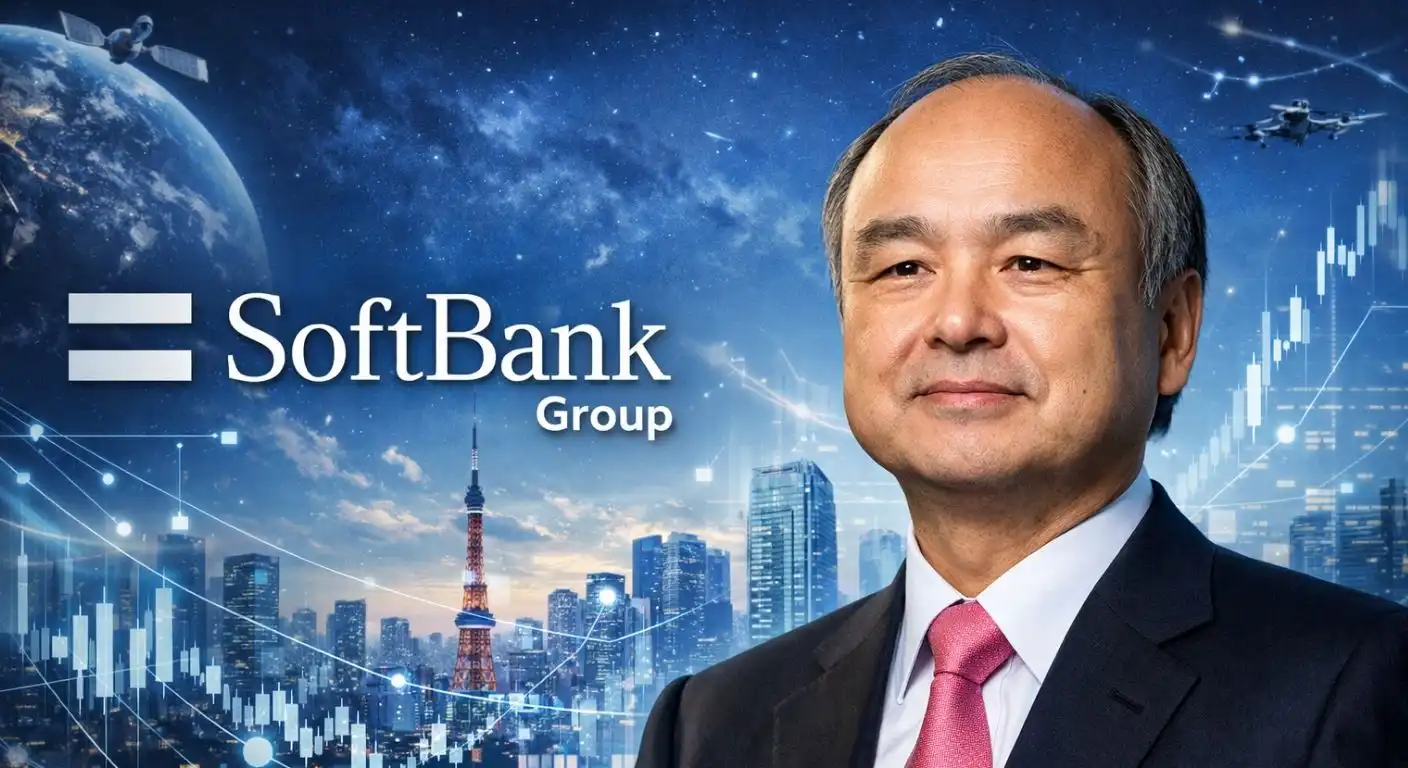
The global technology sector is experiencing an unprecedented wave of capital deployment, structural reorganization, and ideological debate. At the center of this storm is SoftBank Group Corp., the Japanese investment powerhouse that has spent the last decade funding some of the world’s most disruptive startups. At SoftBank’s forty-sixth annual general meeting of shareholders in Tokyo, founder, chairman, and chief executive officer Masayoshi Son delivered a fiercely defiant defense of the generative artificial intelligence boom.
Brushing off mounting warnings from Wall Street analysts regarding a potentially overextended market, the 68-year-old billionaire flatly rejected the notion that AI valuations have spiraled into an unsustainable bubble. He called the characterization an insult to a technological revolution that is only just beginning.
To prove his commitment to this vision, Son announced a major adjustment to his personal career roadmap. Rather than stepping aside to let a new generation of executives lead the conglomerate, the legendary investor vowed to remain at the helm of SoftBank for another 10 to 15 years.
He explained that his retirement must wait because he is completely focused on a grand, multi-decade mission: realizing the age of “Artificial Super Intelligence” (ASI) and transforming SoftBank into one of the world’s preeminent AI-powered robotics companies.
With billions of dollars in fresh infrastructure investments and a series of high-profile acquisitions underway, Son is positioning his company to act as the primary physical foundation for the automated future.
The Core Argument: Why Calling AI a Bubble Is an ‘Insult’
The debate over whether the current artificial intelligence boom represents a speculative bubble is one of the most pressing questions in modern finance. Critics frequently point to the skyrocketing valuations of semiconductor designers, hardware manufacturers, and cloud computing providers, drawing parallels to the late-1990s dot-com collapse.
Son, who famously lost 99% of his personal net worth when the dot-com bubble burst before systematically rebuilding his empire, is uniquely qualified to evaluate these historical comparisons. Yet, he completely rejects the skeptical view.
An Industry in Its Infancy
During his address to shareholders, Son emphasized that the artificial intelligence revolution is still in its absolute infancy. He pointed out that the modern generative AI era only began in earnest a few years ago.
In terms of product development and industrial integration, the AI world is only in its third year of existence.
To call an industry that is still at such an early stage of its life cycle a “bubble” is an insult to the sheer, transformative potential of the technology.
Son compared the current phase of the AI market to the earliest days of the internet. He argued that if any investor had the ability to travel back in time to the mid-1990s, they would have purchased shares of early internet pioneers like Microsoft, Google, or Yahoo without an ounce of hesitation, despite the market volatility of that era.
While individual companies will inevitably rise and fall, the long-term trajectory of the artificial intelligence sector is a structural trend that will stretch out over the next 50 to 100 years.
The Historic Comparison to 1929 and the Dot-Com Crash
Even if the market experiences a near-term correction, Son argues that it would not alter his fundamental, long-term thesis. He recently double-downed on this perspective, stating that the AI revolution is likely 10-times, or probably even 50-times, bigger than the dot-com boom.
To illustrate his point, Son referenced the historic 1929 Wall Street crash. During that catastrophic financial collapse, the stock prices of early automotive and industrial companies fell sharply.
However, that temporary market crash did not change the fact that the automobile and the assembly line were set to revolutionize human civilization, delivering massive industrial growth and investment returns for the next one hundred years.
For Son, a market correction is not a sign of failure, but a natural component of transformative technology cycles. If a market correction does occur in the tech sector, he views it as a major opportunity rather than a threat.
By keeping a massive pool of capital ready to deploy, SoftBank can use any temporary market downturn to acquire valuable AI startups and infrastructure assets at a deep discount, turning a financial panic into the ultimate investment opportunity.
Space Computing Power Is Meaningless: Son Criticizes Elon Musk
As global technology giants look to expand their computing capabilities, some of the industry’s most prominent figures have begun looking toward the stars. SpaceX founder Elon Musk has actively promoted the concept of building “orbital data centers” in space, arguing that placing AI servers in orbit could provide access to cheap, abundant solar energy and natural vacuum cooling.
During the shareholder meeting, Son poured cold water on this orbital computing theory, engaging in a highly public intellectual clash with the world’s richest person.
The Failed Economics of Orbital Data Centers
In response to a shareholder question about whether SoftBank had its own grand plans to launch space-based data centers, Son was blunt.
He directly countered the orbital computing theory, stating that building AI data centers in space is completely meaningless because the concept ignores the basic physical and financial realities of high-performance computing.
The core of Son’s criticism is built on a simple, physical math equation. While placing a data center in orbit does provide access to cheap solar electricity, power accounts for only about 7% of the total operating costs of an AI data center.
The remaining 93% of the budget is consumed by hardware, specifically the high-end processing chips and high-bandwidth memory systems required to train and run advanced models.
The Astronomical Cost of Space Launches
Building and maintaining high-end hardware in space is incredibly difficult and expensive. Industry analyses show that constructing a 1-gigawatt orbital data center would cost approximately $170 billion, which is three times the cost of building an equivalent, high-capacity data center on the ground.
More than 60% of this massive orbital budget would be swallowed by rocket fuel, launch logistics, and the specialized, heavy-duty shielding required to protect fragile silicon chips from cosmic radiation and extreme temperature fluctuations.
Furthermore, if a physical component fails inside a terrestrial data center, a technician can replace it in minutes. If a chip fails in an orbital data center, repairing it is virtually impossible without launching an expensive service mission.
By pointing out these immense operational and financial barriers, Son made it clear that SoftBank will keep its gaze firmly fixed on the ground, focusing its capital on building high-performance, terrestrial data centers that can deliver practical, cost-effective computing power.
SoftBank’s Multi-Billion Dollar AI and Robotics Infrastructure Play
To back up his bullish rhetoric, Son is leading SoftBank through a massive, global investment campaign, committing tens of billions of dollars to build the physical and digital infrastructure of the AI era.
The €75 Billion France Data Center Expansion
The most significant physical manifestation of SoftBank’s investment strategy is its massive infrastructure push in Europe. SoftBank announced plans to invest a staggering €75 billion, which translates to approximately $87 billion, to build advanced AI data center capacity in France.
This massive spending program is designed to establish SoftBank as a dominant provider of high-performance cloud computing in Europe.
By constructing state-of-the-art facilities equipped with thousands of advanced AI chips, SoftBank is building the physical foundation that European startups, enterprises, and research institutions need to train and run their own generative models, securing a vital, long-term source of infrastructure revenue.
The Successful $2 Billion Intel Investment
Son also reflected on the company’s previous, highly controversial investment decisions, using them as evidence of his long-term investment success.
In August 2025, SoftBank announced a $2 billion investment in Intel Corporation, a move that was met with a wave of intense criticism from Wall Street analysts who viewed the legacy chipmaker as a declining giant that had lost the technology race.
Today, that investment looks highly successful. Son revealed that SoftBank is now seeing paper gains worth several trillion yen based on the market value of those shares.
The stock price of Intel has soared recently following reports that technology giants Apple and Nvidia are preparing to invest in the company.
This dramatic turnaround has vindicated Son’s decision to buy the dip, proving that his willingness to take massive, contrarian risks can deliver extraordinary financial returns.
Becoming the King of Physical AI and Robotics
While data centers are essential, Son’s ultimate vision for SoftBank is the physical integration of artificial intelligence and robotics.
To accelerate this transition, SoftBank is preparing to acquire the robotics division of Swiss engineering giant ABB in 2026.
Son explained that this acquisition is designed to help SoftBank build the world’s overwhelmingly dominant robotics company, pairing advanced physical hardware with next-generation cognitive software.
Son revealed that the company has already begun mass production of these advanced physical AI robots at existing manufacturing facilities.
While he kept the specific technical details under wraps, he promised that an official announcement is coming soon that will surprise the entire industry.
By mass-producing robots that can navigate, perceive, and interact with the physical world, SoftBank aims to bridge the gap between digital software and physical automation, transforming manufacturing, logistics, and retail operations worldwide.
The ‘Egg-Laying Factory’ and the Valuation Discrepancy
Despite the company’s massive strategic progress, Son expressed deep frustration regarding SoftBank’s current stock market valuation.
He reiterated that SoftBank operates as an “egg-laying factory” designed to hatch and nurture the world’s most promising technology companies.
The core of Son’s frustration is the massive discount at which SoftBank’s stock trades relative to the underlying asset value of its portfolio holdings.
This valuation discrepancy is particularly striking when looking at Arm Holdings, the British chip design firm where SoftBank retains an approximate 90% ownership stake.
Arm has successfully established itself as the absolute backbone of the global AI chip industry.
The company’s energy-efficient processor architecture is used in almost every smartphone in the world and is rapidly taking over the server and data center markets.
Despite Arm’s massive market value, SoftBank’s own stock price does not fully reflect the value of this holding.
By continuing to lead the company into his 70s, Son aims to close this valuation gap, proving to public markets that SoftBank’s strategic shift to artificial superintelligence will deliver unparalleled long-term value to shareholders.
A Visionary’s Grounded Path to Superintelligence
The annual shareholder meeting of SoftBank Group Corp. has made one thing clear: Masayoshi Son is not preparing to slow down. By forcefully dismissing warnings of an AI bubble as an insult to a technology in its infancy, the legendary investor has set a bold, uninhibited course for his company’s future.
His sharp, mathematical criticism of Elon Musk’s orbital computing dreams demonstrates a highly pragmatic, grounded approach to technology development.
While others look to the stars, Son is focusing his capital on the earth, building the massive terrestrial data centers and mass-producing the physical robots that will define the age of Artificial Super Intelligence.
As the countdown to the official robotics launch begins, the tech world is watching Tokyo.
With its massive €75 billion European expansion and its dominant stake in Arm Holdings, SoftBank is uniquely positioned to lead the upcoming automated revolution, proving that even in a volatile market, long-term vision and industrial scale remain the ultimate path to victory.