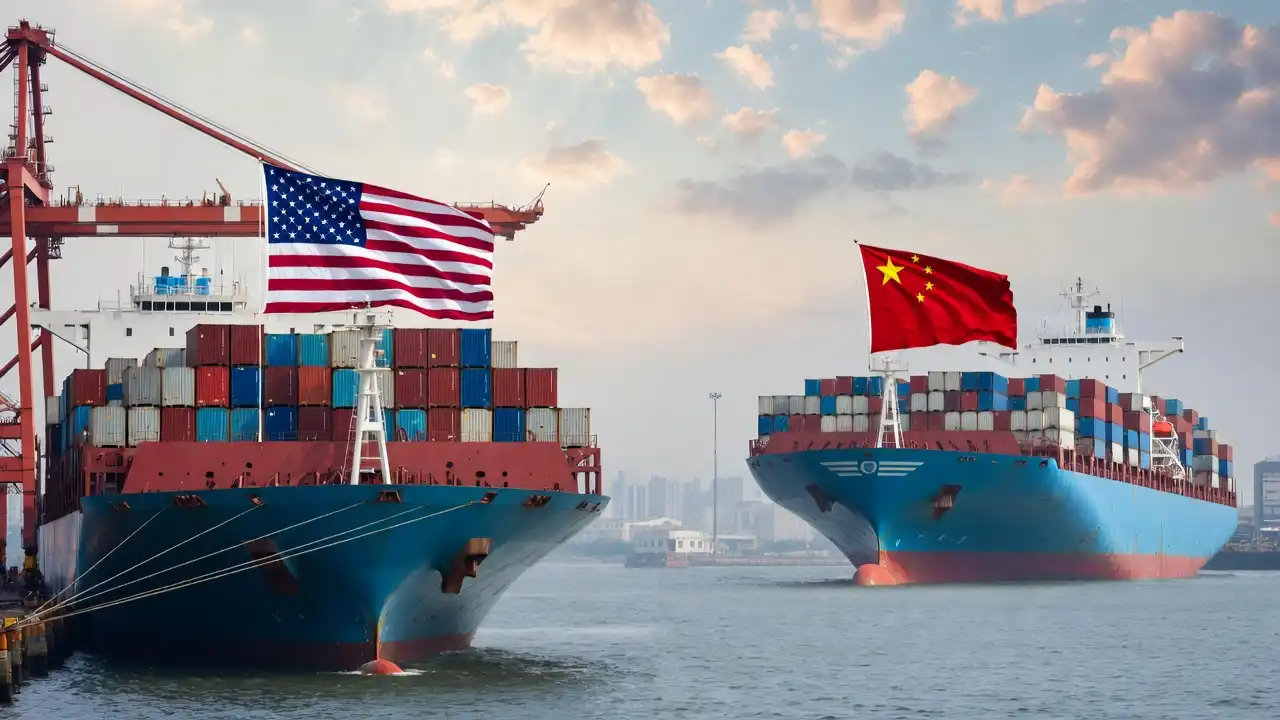
The commercial relationship between the world’s two largest economies has taken a significant step toward stability. In a move designed to replace reactive, crisis-driven negotiations with a structured diplomatic framework, China and the United States have agreed to establish a dedicated, government-level trade council. Under this new institutional mechanism, the economic and trade teams of both nations will conduct systematic consultations on reciprocal tariff reductions and broader trade cooperation.
The spokesperson for China’s Ministry of Commerce, He Yadong, confirmed the breakthrough during a regular press briefing in Beijing. He noted that the establishment of the trade council represents a concrete step to implement the consensus reached during high-level economic consultations. According to the ministry, the newly formed trade council will serve as a permanent forum where negotiators can systematically address trade disputes, with a primary focus on working out reciprocal tariff cuts on an equivalent scale.
This diplomatic progress comes at a highly critical moment for the global economy. After years of escalating trade conflicts, marked by high tariffs, restricted access to rare earth elements, and severe technology export controls, both Washington and Beijing have realized that complete economic decoupling carries unsustainable costs. By establishing this new council, the two economic superpowers are attempting to build a protective shield around their core industrial sectors, stabilizing bilateral trade and providing much-needed predictability for global markets.
Reforming Transpacific Commercial Ties
The establishment of the trade council represents a fundamental shift in how Washington and Beijing manage their economic relationship. Historically, trade negotiations between the two countries occurred in response to immediate crises, such as the sudden implementation of retaliatory tariffs or the introduction of unexpected export restrictions.
Transitioning from Crisis Responses to Institutionalized Councils
These crisis-driven negotiations were often chaotic, leaving global businesses and financial markets in a constant state of uncertainty. To prevent these sudden disruptions, the two sides have agreed to establish both a Trade Council and an Investment Council. These permanent, government-level forums will meet regularly to discuss ongoing trade issues, negotiate regulatory standards, and address corporate concerns.
By shifting their trade talks into an institutionalized framework, the two nations aim to prevent minor commercial disputes from escalating into full-blown trade wars. The trade council will allow negotiators from the U.S. Trade Representative’s office and China’s Ministry of Commerce to maintain constant communication, providing a reliable channel to resolve issues before they disrupt global supply chains. This structural stability is a vital step toward rebuilding trust and ensuring that both countries can cooperate on shared economic interests, even as they continue to compete in other geopolitical arenas.
The $30 Billion Reciprocal Tariff Reduction Framework
The primary task facing the newly established trade council is the implementation of a reciprocal tariff reduction framework. According to the Ministry of Commerce, the two sides have agreed in principle to discuss tariff cuts covering products of equivalent scale on both sides.
The scale of this initial framework is substantial, with each country targeting products worth $30 billion or more in annual trade volume. Under the proposed arrangement, the two trade teams will negotiate a specific list of commodities that will receive preferential tariff treatment.
The goal is to reduce duties on these agreed-upon products of mutual concern back to standard most-favored-nation (MFN) rates, or even lower, depending on the outcome of the negotiations. By focusing on equivalent-scale reductions, the framework ensures that neither country gains an unfair advantage, creating a balanced, mutually beneficial path to lower trade barriers.
The High-Stakes Commodities at the Center of the Bargain
While the trade council will eventually cover a wide range of industrial and consumer goods, the initial focus of the consultations is centered on two highly critical, politically sensitive sectors: aviation and agriculture. Both industries represent massive economic interest groups that carry significant political weight in Washington and Beijing.
Resurrecting the Boeing Aircraft Procurement Engine
The aviation sector is a primary beneficiary of the new trade council framework. Historically, China’s commercial aviation market has been a major source of revenue for American aerospace giant Boeing. However, the prolonged trade war and regulatory disputes frequently ground these massive procurement programs, forcing China to shift its orders to European rival Airbus.
The new agreement aims to revive this vital export engine. Under the preliminary arrangements discussed by the economic teams, China has committed to moving forward with its purchases of commercial aircraft from the United States.
The scale of these potential purchases is extraordinary. U.S. President Donald Trump previously stated that China has agreed in principle to purchase at least 200 commercial aircraft from Boeing, with the potential to increase the total order to as many as 750 aircraft if specific trade conditions are met.
The deal also includes provisions covering the purchase of up to 450 advanced aircraft engines from General Electric, with Washington committing to ensure a steady, uninterrupted supply of jet engines and aerospace components to China. This massive procurement program provides a critical economic boost to the U.S. manufacturing sector, protecting thousands of high-tech jobs across the aerospace supply chain.
Rebalancing Two-Way Agricultural Trade and Seafood Flows
Agriculture represents the second major pillar of the trade council’s immediate agenda. For American farmers, the Chinese market is an indispensable destination for soy, pork, beef, and poultry. At the same time, Chinese agricultural and seafood exporters are eager to regain access to the lucrative U.S. consumer market.
The trade council will focus heavily on reducing both tariff and non-tariff barriers to expand this two-way agricultural trade. Following recent consultations, the two sides have reached a positive consensus on resolving market access and regulatory issues for specific food products.
Under the reciprocal framework, the United States has committed to easing import restrictions and reducing non-tariff barriers on Chinese seafood and dairy products. In return, China will accelerate its purchases of American agricultural products, including beef, poultry, and grains.
By facilitating this mutual market access, the agreement helps secure a highly reliable source of demand for American farmers while providing Chinese consumers with a broader, more affordable supply of high-quality protein, demonstrating the mutually beneficial, win-win nature of the agricultural relationship.
The Geopolitical Legacy of the Kuala Lumpur Agreement
The establishment of the trade council in June 2026 is the culmination of a long, highly complex diplomatic process that began in late 2025. The current negotiations build directly on a temporary truce that the two countries reached during a high-stakes summit in October of last year.
The October 2025 Truce on Section 301 and Affiliates Export Controls
During that October 2025 meeting in Kuala Lumpur, negotiators from both sides managed to broker a temporary joint arrangement to suspend several of their most destructive trade and regulatory measures. This temporary truce was designed to prevent a sudden, catastrophic escalation in the trade war while the two teams worked on a more permanent, structured framework.
The Kuala Lumpur arrangement suspended several high-impact measures, including:
- The United States proposed 24% reciprocal tariffs on Chinese goods, and China’s corresponding retaliatory countermeasures.
- The United States’ proposed 50% affiliates rule on export controls, which would have severely restricted the ability of Chinese-affiliated companies to acquire advanced technology.
- The United States’ active Section 301 investigation into China’s maritime, logistics, and shipbuilding sectors, along with China’s corresponding countermeasures.
This temporary truce was originally scheduled to expire, creating an urgent deadline for negotiators. By establishing the permanent trade council in June 2026, the two countries have successfully converted that temporary, fragile pause into a stable, institutionalized framework, ensuring that the critical tariff suspensions and regulatory freezes remain in place while the economic teams work out the specific details of the $30 billion reciprocal tariff cuts.
Navigating the Rare Earth and Semiconductor Export Control Cold War
The creation of the trade council is also a pragmatic response to the harsh realities of the modern technology cold war. Over the past few years, the economic relationship between Washington and Beijing has been strained by intense competition over advanced technology and critical raw materials.
Washington has implemented increasingly strict export controls to prevent China from acquiring advanced semiconductors, artificial intelligence chips, and chipmaking equipment. In retaliation, Beijing leveraged its near-monopoly on the global rare earth industry, introducing sweeping export controls on critical minerals like gallium, germanium, and antimony, which are essential for manufacturing smartphones, solar panels, and advanced military guidance systems.
These aggressive export controls inflicted significant pain on both economies, disrupting manufacturing schedules and driving up costs for technology companies. The establishment of the trade council proves that both sides have recognized the limits of this escalatory behavior.
While deep-seated technological rivalry and national security concerns will continue to prevent a full reconciliation, the trade council allows the two countries to protect their non-sensitive, traditional commercial sectors—such as agriculture and aviation—from the fallout of the technology dispute, ensuring that overall bilateral trade remains resilient.
The Broad Path Forward for Global Trade Stability
The agreement between China and the United States to establish a permanent trade council and negotiate reciprocal tariff cuts has been widely welcomed by the international business community. As the world’s two largest economies, any trade dispute between Washington and Beijing has a direct, destabilizing impact on global GDP growth, investment flows, and currency markets.
By transitioning from crisis-driven responses to a permanent, institutionalized framework, the two nations are providing much-needed stability for the global economy. The trade council will not only help expand bilateral trade between the United States and China, but it will also serve as a vital reference point for broader global open cooperation, proving to the world that even the most intense geopolitical rivals can find a pragmatic, mutually beneficial path to manage their economic differences through equal dialogue and mutual respect.
While the upcoming consultations on the specific details of the $30 billion reciprocal tariff cuts will undoubtedly require months of intense, difficult negotiation, the establishment of the council is a major victory for diplomatic pragmatism, showing that the path to resolving complex economic issues lies in continuous, structured communication rather than retaliatory escalation.
A Pragmatic Framework for Two Economic Giants
The establishment of the US-China trade council in June 2026 is a significant milestone for global commerce. By creating a permanent, government-level forum to discuss reciprocal tariff reductions, Washington and Beijing have successfully defused an immediate threat of trade escalation and provided a stable, predictable framework for the future of bilateral trade.
While deep-seated technological competition and national security concerns will continue to create tension in the semiconductor and critical mineral sectors, the trade council allows the two countries to isolate and protect their traditional, mutually beneficial commercial industries, such as aviation and agriculture.
As the economic teams prepare to negotiate the specific details of the $30 billion tariff cuts, the message from both capitals is clear: equal dialogue and mutual respect remain the most effective tools to bridge differences, manage competition, and ensure that the world’s most important commercial relationship remains stable, resilient, and highly productive for decades to come.