The global energy transition is experiencing a dramatic, consumer-led realignment in Southeast Asia. As geopolitical volatility in the Middle East pushes international oil and liquefied natural gas (LNG) prices to record heights, import-dependent nations are facing severe inflationary pressures. While some governments attempt to shield their citizens through expensive state subsidies, others are passing the rising costs directly to consumers, forcing households to find their own, localized solutions to survive.
Nowhere is this transition playing out more rapidly than in the Philippines. The country has emerged as the world’s biggest spender on solar panels relative to its economy since the Middle East conflict began. Facing some of the highest and most volatile utility rates in the region, Filipino homeowners and business owners are taking matters into their own hands, initiating a rapid, bottom-up green energy revolution.
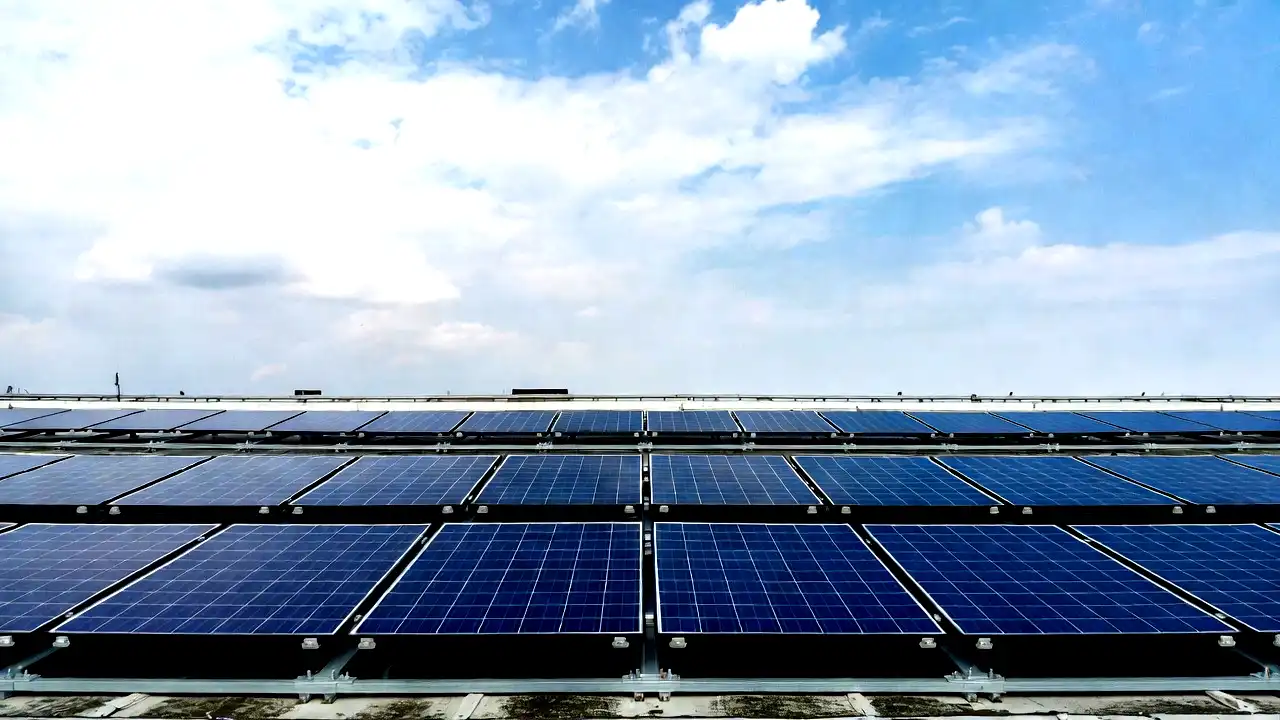
By installing solar systems directly on their roofs, consumers are successfully bypassing the traditional, highly centralized power grid. The movement is being driven not by government mandates or environmental campaigns, but by simple, urgent economics. As the cost of Chinese-manufactured solar hardware continues to fall while local utility rates climb, the financial argument for solar has become impossible to ignore, transforming the country into one of the most active clean energy markets in the world.
The Economic Squeeze: High Tariffs and the Absence of Subsidies
The primary force driving this rapid adoption of solar energy is the unique, highly challenging structure of the Philippine electricity market. Unlike its regional neighbors, the Philippines provides almost no state subsidies for residential electricity, exposing consumers to the full volatility of the global energy markets.
Meralco’s Ten Percent Price Hike and the Household Income Strain
Since the outbreak of the conflict in the Middle East, the country’s largest power distributor, Manila Electric Company (Meralco), has raised its retail electricity rates by approximately 10%. This rate hike was a direct response to rising fuel and LNG import costs, which the utility passed directly to its consumers.
The financial impact on the average Filipino family is severe. A typical median household consuming 200 kilowatt-hours (kWh) of electricity per month—the average consumption for a family of three—now spends approximately 12% of its total monthly income solely on its utility bill.
This high cost of electricity has turned power bills into a primary source of financial anxiety for families, forcing them to dedicate a substantial portion of their household budgets to basic utilities at the expense of food, education, and savings.
Regional Disparities: Why Only Singapore Compares
The severity of the Philippine energy crisis is further highlighted by a regional comparison. Across Southeast Asia, only the wealthy city-state of Singapore has comparable residential electricity rates.
However, Singapore’s citizens possess an average purchasing power that is nearly 13 times higher than that of the average Filipino.
In countries like Thailand, Malaysia, and Indonesia, governments provide massive fuel and electricity subsidies to protect their populations from global price shocks.
Because the Philippine government does not offer these protective cushions, its citizens are uniquely exposed to the raw forces of the global energy markets, making the financial incentive to bypass the traditional grid and generate their own electricity far stronger than in any other country in the region.
The Quantitative Scale of the Philippine Solar Panel Import Boom
This intense economic pressure has triggered an extraordinary, consumer-led purchasing wave, turning the Philippines into a primary destination for global solar panel exports.
Sourcing from China: Four Hundred Seven Million in Panel Imports
According to international trade data compiled by Chinese customs and analyzed by energy research firms, the Philippines imported a massive $407 million worth of solar panels during the three months through May.
This figure represents an extraordinary 145% increase compared to the same period last year.
The scale of this import boom is particularly impressive given the broader headwinds facing the global solar industry. China is the undisputed capital of solar manufacturing, producing more than 80% of the world’s solar modules.
The massive influx of Chinese panels into the Philippines has successfully driven down local installation costs, allowing middle-class families to access advanced technology that was previously reserved for wealthy enterprises.
Defying Global Trade Headwinds after Tax Rebate Removals
The strength of the Philippine solar market is also visible in its ability to defy broader global trade trends. In May, the Chinese government removed several key tax rebates for domestic solar exporters, causing overall Chinese solar panel shipments to drop by 13% globally as manufacturers adjusted to the new tax environment.
Despite this global contraction, Chinese solar exports to the Philippines actually rose by almost a third during the same month.
This divergence proves that the demand for solar in the Philippines is not a discretionary or trend-driven market.
Instead, it is an urgent, non-negotiable procurement rush, as local consumers are so desperate to escape soaring electricity bills that they are willing to purchase panels at any available price, protecting local solar installers from the supply chain shocks affecting other international markets.
The Compelling Economics of Rooftop Solar Integration
The rapid transition of the Philippine energy market is being supported by a highly compelling, investment-grade financial argument. As the cost of solar technology has fallen, the time required to earn back the initial investment has shrunk dramatically.
Payback Periods Crash to Three Years for Households
According to a detailed study published by London-based energy think-tank Ember, the payback period for a typical household rooftop solar system in the Philippines has crashed to just 3.1 years. For commercial businesses, which typically consume more electricity during peak daylight hours, the payback period is even shorter, sitting at an extraordinary 2.3 years.
Historically, a solar installation carried a payback period of four to five years, which was often too long to convince conservative homeowners to commit their capital.
With the payback period now close to three years, the financial calculation has become highly compelling.
Because quality solar panels have an expected operating lifespan of up to 30 years, once a homeowner pays off their initial installation costs in the first three years, they can enjoy nearly 27 years of virtually free, self-generated electricity, turning their rooftop into a highly valuable, income-generating asset.
Tripling Distributed Capacity to Thirty-Five Hundred Megawatts
This compelling financial return is expected to drive massive, long-term growth in the country’s clean energy capacity. Ember analyst Alnie Demoral projected that the Philippines’ distributed (rooftop) solar capacity could nearly triple within the next two years, reaching an estimated 3,500 megawatts (MW).
Achieving 3,500 MW of distributed solar would match the current size of the country’s entire utility-scale solar fleet, representing a massive shift in how the nation generates its electricity.
While solar currently accounts for under 4% of total national power consumption, the rapid expansion of rooftop installations will allow the country to significantly reduce its reliance on imported coal and LNG, improving its national energy security and helping to stabilize the wider grid during peak summer periods.
Regulatory Friction: The Rise of “Guerrilla” Solar and Grid Safety
The rapid, uncoordinated boom in rooftop solar has also created significant operational and safety challenges for local utility companies, setting off a quiet regulatory battle over grid compliance.
The Unregistered DIY Solar Trend and Safety Hazards
To bypass the high installation costs charged by professional solar firms and avoid the slow, bureaucratic process of securing official government permits, a growing number of middle-class homeowners are purchasing cheap, unvetted solar kits online and installing them themselves. This trend has led to a massive rise in unregistered, or “guerrilla,” solar installations.
While these do-it-yourself (DIY) systems offer immediate financial savings for the homeowner, they present a serious threat to public safety and grid reliability.
According to warnings issued by the Institute of Integrated Electrical Engineers of the Philippines (IIEE), unregistered solar installations often bypass critical safety standards, ignore the National Electrical Code, and do not include the necessary safety switches required to isolate the system during a power outage.
Enforcing Republic Act Seventy-Nine Twenty and Grid Stability
The primary concern for utility companies like Meralco is the risk of unsafe back-feeding. During a power outage, if an unregistered solar system continues to generate electricity and send it back into the local grid lines, it can electrocute utility line workers who are working to repair the system, presenting a severe risk to life.
To address these safety concerns, Meralco and local engineering bodies are pushing for a strict crackdown on these unauthorized installations, demanding that all rooftop systems comply with Republic Act No. 7920, also known as the New Electrical Engineering Law.
This statute mandates that only licensed electrical practitioners are authorized to design, install, and operate electrical systems, including home solar arrays.
While enforcing these rules is highly difficult given the sheer volume of unregistered panels, the utility is working to educate the public on the importance of net-metering agreements, which allow homeowners to safely and legally sell their excess solar electricity back to Meralco in exchange for billing credits.
The Class Divide: Financing Barriers and Excluded Households
While the rooftop solar boom is transforming middle-class neighborhoods and commercial districts, it is also exposing a significant class divide, as high upfront costs continue to exclude lower-income families from the green revolution.
Collateral-Free Loans and the Middle-Class Lock-In
Installing a standard, high-quality 5-kilowatt rooftop solar system requires a significant upfront investment, often exceeding several thousand dollars. To help homeowners manage this cost, local banks and solar developers are partnering to offer flexible, collateral-free solar loans.
However, these financial programs typically require borrowers to present proof of stable, formal employment, clean credit histories, and land-ownership titles.
Because the vast majority of lower-income families in the Philippines operate in the informal economy, lack bank accounts, or live in rented, informal housing, they cannot qualify for these loans.
This financial barrier has locked lower-income households into the legacy grid, forcing the very families who are most vulnerable to inflation to continue paying some of the highest electricity rates in the region, while the wealthy and middle classes successfully use solar to escape the rising costs.
Software Engineer Adrian Sabatera’s Nine-Thousand-Dollar Personal Bet
The financial reality of the transition is illustrated by the experience of Adrian Sabater, a 35-year-old software engineer living in the suburbs of Manila.
Faced with a sudden, massive spike in his family’s monthly utility bills, SabTrade decided to take action, purchasing a custom, high-density solar system for his home.
The total project cost was approximately $6,000, which Sabater financed through a combination of personal savings and a low-interest home improvement loan.
He noted that the system has successfully cut his monthly electricity bill by nearly 75%, allowing him to save thousands of dollars while protecting his family from future utility price hikes.
Sabet predicted that within three to four years, the system will have fully paid for itself through energy savings, proving that while the upfront cost is high, the long-term financial benefits of the transition make it an indispensable investment for middle-class families.
Reforming the Energy Grid
The ongoing clean energy boom in the Philippines represents a historic, highly volatile turning point that permanently alters the competitive dynamics of the Southeast Asian utility sector. By proving that the rapid transition to solar power can be driven directly by the raw forces of market demand and high retail electricity costs, the country has provided a clear, realistic roadmap for other developing nations to follow.
While the physical challenges of managing the rapid rise of uncoordinated distributed generation, securing supply lines, and overcoming regulatory bottlenecks remain significant, the collective efforts of developers, investors, and homeowners offer real hope.
By standardizing and scaling their installation processes, adopting durable LFP battery storage technologies, and working to build secure, peer-to-peer microgrids, these pioneers are proving that the future of energy is being built on the rooftops of ordinary homes.
As the first next-generation solar installations come online over the coming years, they will continue to demonstrate that the transition to a sustainable economy is no longer a top-down government mandate, but a decentralized, highly profitable consumer movement that is permanently reshaping the physical and financial foundations of the modern world.