The geopolitical battle over critical mineral security has reached a critical and highly contentious inflection point. For the past decade, Western governments have warned that their transition to high-tech manufacturing, electric vehicles, and advanced defense systems is dangerously dependent on a single country. China currently controls approximately 90% of the world’s rare-earth processing and permanent magnet manufacturing, giving Beijing immense, high-stakes leverage over the global technology supply chain.
In a direct and aggressive exercise of this leverage, China’s Ministry of Commerce announced the implementation of strict new export controls targeting ten United States companies. The blacklist specifically includes America’s two most prominent rare-earth developers: Las Vegas-based MP Materials and Oklahoma-based USA Rare Earth. The designation restricts these firms’ access to Chinese dual-use technologies, software, and raw materials, aiming to slow down their efforts to build independent, domestic supply chains.
However, the market’s reaction to this apparent setback has completely defied traditional economic logic. Instead of crashing, shares of both MP Materials and USA Rare Earth surged following the announcement.
Wall Street analysts, including research teams at William Blair & Co., pointed out that China’s decision to blacklist these specific firms serves as an official confirmation of their strategic success. By naming them on the export control list, Beijing has validated that these two companies represent genuine, credible threats to China’s long-standing monopoly.
As the geopolitical conflict intensifies, the battle between MP Materials and USA Rare Earth to become the ultimate American rare-earth champion has turned into a cutthroat race, with billions of dollars in federal subsidies and the future of Western industrial independence on the line.
The Giant of Mountain Pass: MP Materials’ Integrated Magnet Vision
To understand the dynamics of this domestic rivalry, one must examine the different operational strategies and raw material assets of the two leading American contenders.
Restoring a Full Mine-to-Magnet Supply Chain
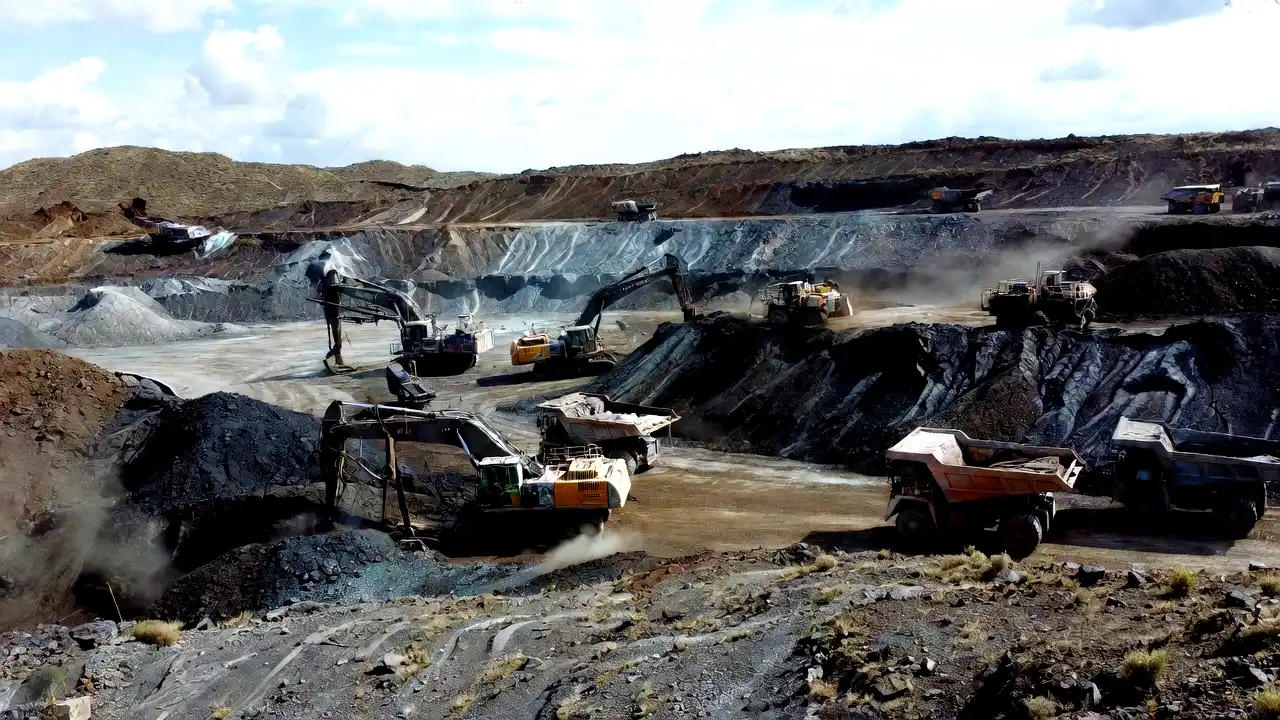
MP Materials holds a significant first-mover advantage in the domestic rare earth supply chain. The company owns and operates the historic Mountain Pass mine in California, which stands as the only active, large-scale rare earth mining and processing facility within the United States.
Rather than operating as a simple, raw-ore mining company, MP has embarked on an ambitious, vertically integrated “mine-to-magnet” expansion strategy under CEO James Litinsky.
The company has invested nearly $1 billion to restore a fully integrated, domestic rare-earth supply chain. This massive capital spend has been used to build out advanced refining facilities directly at the Mountain Pass site, allowing the company to process its raw ore locally and sell its refined materials directly to Western industrial buyers.
To complete its vertical integration, MP is also constructing a state-of-the-art permanent magnet manufacturing facility, aiming to produce the high-strength permanent magnets required to power the traction motors of electric vehicles, wind turbines, robotics, and defense systems entirely within U.S. borders.
The Heavy Rare Earth Feedstock Deficit
Despite its massive scale and physical assets, MP Materials’ integrated magnet vision faces a severe geological limitation. The ore mined at Mountain Pass is overwhelmingly rich in light rare-earth elements, most notably Neodymium-Praseodymium (NdPr).
While NdPr is the primary ingredient required to build high-strength permanent magnets, it is not sufficient on its own.
To manufacture advanced permanent magnets that can operate reliably in high-temperature environments—such as the traction motors of electric vehicles or the guidance systems of military drones—manufacturers must blend light rare earths with heavy rare-earth elements, specifically Dysprosium and Terbium. These heavy elements prevent the permanent magnets from losing their magnetism under extreme heat and physical stress.
Because Mountain Pass lacks substantial heavy rare earth deposits, MP Materials faces a severe feedstock deficit. As the company scales up its magnet manufacturing plant, it will be forced to acquire more heavy rare earths than are available at its own mine, creating a cutthroat, urgent race to secure heavy feedstock from external domestic suppliers.
The Challenger in the South: USA Rare Earth’s Heavy Oxide Push
While MP Materials dominates the light rare-earth and mining sectors, USA Rare Earth is positioning itself as the critical, heavy-metal challenger designed to solve the country’s heaviest material vulnerability.
Targeting Heavy Rare Earths at Round Top, Texas
USA Rare Earth’s primary asset is the Round Top project, located in Hudspeth County, Texas. Unlike the light-ore deposit at Mountain Pass, the Round Top mineral deposit is highly rich in heavy rare-earth elements, containing substantial quantities of Dysprosium, Terbium, and Yttrium.
This unique geological composition makes USA Rare Earth an indispensable player in the domestic supply chain. By focusing its efforts on extracting and processing heavy rare earths, the company aims to become the primary domestic supplier of the very heavy oxides that MP Materials and other magnet manufacturers desperately need to build their high-temperature permanent magnets. This strategic positioning has turned the relationship between the two companies into a highly complex, competitive, and co-dependent standoff.
Commissioning the Colorado Hydrometallurgical Plant
To accelerate its path to commercial production and prove its technological capabilities to Wall Street, USA Rare Earth announced a major operational milestone. The company successfully commissioned its newly constructed, high-precision hydrometallurgical demonstration facility in Colorado.
The facility is engineered specifically to process and separate heavy rare-earth elements from raw ore using advanced, highly efficient chemical extraction techniques.
The company expects the plant to begin commercial production of heavy rare-earth oxides by the third quarter of this year, representing the first time that separated, high-purity heavy rare earths will be produced at scale within the United States.
By bringing this facility online ahead of schedule, USA Rare Earth has demonstrated its operational maturity, positioning itself to capture lucrative supply contracts with the Department of Defense and major automotive manufacturers.
Geopolitical Tailwinds and the Pentagon’s Billions
The escalating trade war and the implementation of fresh Chinese export controls have acted as a powerful, highly lucrative catalyst for American mining companies, driving a massive wave of government support and low-cost federal financing.
Turning Chinese Blacklists Into Federal Grants
While the Chinese export ban restricts the companies’ access to Chinese dual-use goods and engineering technologies, Wall Street analysts argue that the long-term impact of the sanctions is highly positive.
By explicitly naming MP Materials and USA Rare Earth on its blacklist, the Chinese government has officially confirmed to Washington that these two firms are the primary credible threats to its global monopoly.
This official “seal of approval” has accelerated the release of low-interest federal loans, Department of Defense (DoD) contracts, and Commerce Department grants.
The U.S. government has made it a top national security priority to break its critical mineral dependency on China, and it is prepared to spend billions of dollars to achieve this goal.
Already, MP Materials has secured a massive $400 million partnership with the Department of Defense to support its magnet-manufacturing facilities, while USA Rare Earth has received $1.6 billion in Commerce Department funding to insulate its operations from Chinese supply chain disruptions.
These massive government subsidies effectively shield the two companies from being undercut by state-subsidized Chinese imports in the future, providing them with a highly secure, politically protected financial runway.
The G7 Sixty Percent Import Cap and Global Realignment
The domestic support is further reinforced by a major, highly coordinated global policy shift among Western allies. During a recent summit, the Group of Seven (G7) nations agreed to a binding policy to cap imports of rare-earth elements from any single country outside the bloc at less than 60% by 2030.
This policy is designed specifically to break China’s current 90% monopoly over global rare-earth processing, forcing multinational corporations and industrial buyers to actively diversify their supply chains.
As the 2030 deadline approaches, automotive manufacturers, wind turbine developers, and electronics companies will have no choice but to purchase a significant portion of their critical minerals from verified, non-Chinese sources.
This global import cap guarantees a massive, high-value customer base for both MP Materials and USA Rare Earth, ensuring that their planned production capacities will be fully absorbed by the market.
The Competitors on the Periphery: Lynas and Beyond
While the battle for American rare-earth dominance is heavily focused on the rivalry between MP Materials and USA Rare Earth, other established international players are also moving to capture a significant share of the lucrative U.S. market.
The most formidable competitor on the periphery is Australian mining giant Lynas Rare Earths. Founded in 1983, Lynas has spent decades operating as the only major rare-earth mining and processing company outside of China, giving it an unmatched level of technical expertise and operational maturity.
Lynas operates the highly successful Mt Weld mine in Western Australia and runs a massive, high-efficiency processing facility in Malaysia.
To capture the growing demand from the U.S. automotive and defense industries, Lynas is aggressively expanding its physical footprint into the United States. The company is currently constructing a heavy rare-earth separation facility in Texas, scheduled to come online later next year.
By building this domestic processing plant, Lynas will compete directly with both MP Materials and USA Rare Earth, using its decades of operational experience to offer local buyers a highly reliable, proven source of separated heavy rare-earth oxides and permanent magnets, further intensifying the cutthroat race for market dominance.
Securing the American Silicon and Steel Future
The ongoing corporate and geopolitical struggle to become America’s rare-earth champion represents a historic, highly volatile milestone that will permanently alter the competitive dynamics of the global technology sector. By proving that the traditional, highly centralized supply chain dominated by China can be successfully challenged through a combination of private capital, advanced engineering, and robust government support, MP Materials and USA Rare Earth are paving a clear, viable path toward Western industrial autarky.
While the physical challenges of managing complex chemical extraction, navigating high interest rates, and overcoming the global talent shortage remain significant, the collective financial resources and political support flowing into the sector offer real hope.
As USA Rare Earth begins commercial production at its Colorado facility and MP Materials scales up its California magnet plant, the two companies are proving that the future of economic and national security is fundamentally tied to the raw, physical resources of the earth.
By continuing to expand their domestic mining, refining, and manufacturing capacities, these pioneers are ensuring that the advanced technologies of the digital age—from electric vehicles and collaborative robots to deep-space satellites and military defense systems—can be built on a secure, self-sufficient, and highly profitable foundation for decades to come.