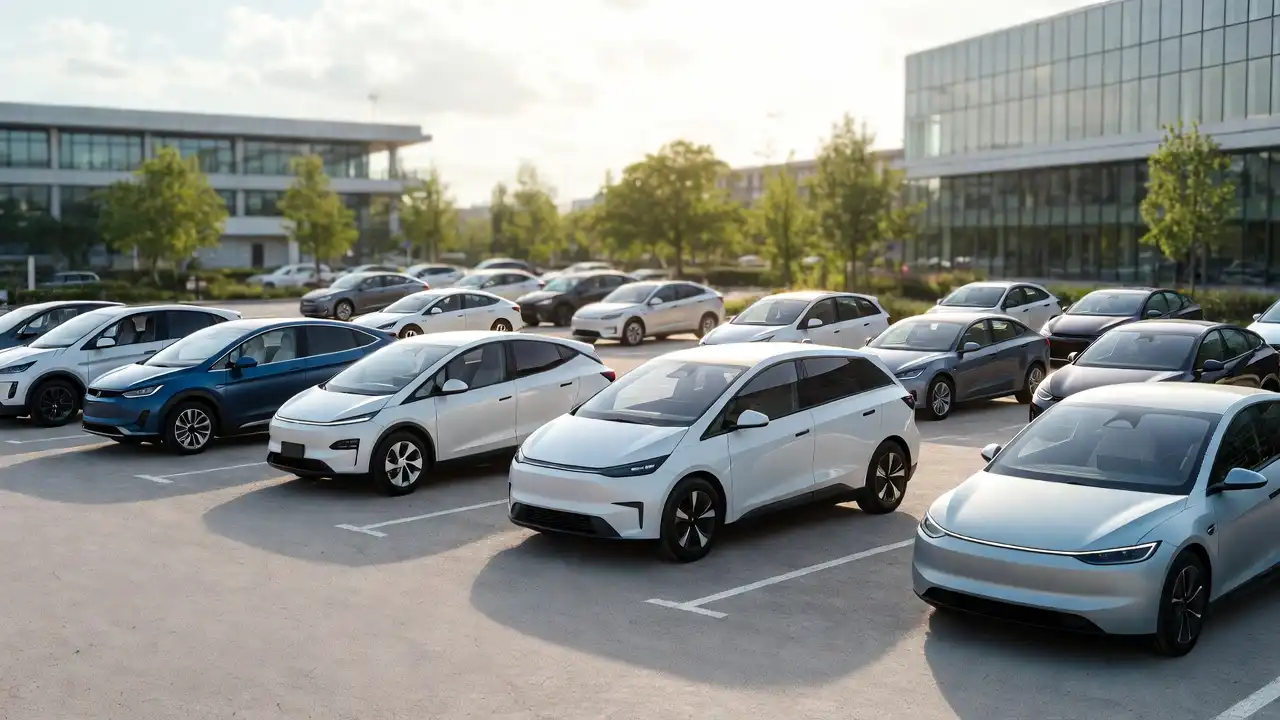
In the United States, the automotive market is going through a swift and painful restructuring. For several years, lawmakers, environmentalists, and major automakers pushed a clear narrative: the future of transportation belongs to battery-electric vehicles (EVs). Backed by billions of dollars in federal subsidies, car manufacturers raced to design factories, retool assembly lines, and transition their fleets away from fossil fuels. Today, however, that trajectory has hit a wall. Shifting political landscapes, consumer skepticism, and economic pressures have cooled the demand for fully electric cars, turning a once-promising boom into a costly slowdown.
Instead of returning to traditional, fuel-thirsty gasoline cars, American consumers have chosen a middle path. They are buying gasoline-electric hybrid vehicles in record numbers. This shift highlights a major gap between political ambitions and the practical realities of everyday car buyers. Drivers still want to save money at the pump, especially with fuel prices fluctuating, but they do not want to deal with the higher purchase costs, steep depreciation, and public charging anxieties associated with fully electric models. Consequently, the auto market is witnessing a historic rise in hybrid sales, forcing global brands to rewrite their business playbooks almost overnight. This unexpected development shows that the transition to cleaner transportation is far more complex than many initially predicted.
Reevaluating the Death of the Electric Vehicle Subsidy
To understand this market shift, we must look at the sudden end of the primary government incentive that supported electric car sales. Since the passage of federal clean energy legislation, the $7,500 tax credit served as a main pillar of the domestic EV market. It shaved thousands of dollars off the retail price of qualifying vehicles, making expensive battery-powered models competitive with traditional combustion-engine cars. However, policy changes under the Trump administration upended this ecosystem. In late September of last year, the administration allowed the popular tax credit program to expire, effectively ending the $7,500 incentive for consumers purchasing or leasing a new EV.
Alongside the elimination of the tax credit, the federal government rolled back strict corporate average fuel economy (CAFE) standards and ended emissions fines that previously pressured automakers to sell more zero-emission vehicles. This sudden shift in policy removed the regulatory safety net that had shielded the electric vehicle sector from raw market forces. Suddenly, the true cost of producing and owning an electric vehicle fell squarely on manufacturers and car buyers. Without government support, the economic math of owning an EV changed for millions of middle-class households, leading to a sudden and dramatic slowdown in sales. Many potential buyers who previously considered electric cars decided to wait, causing inventory to build up on dealer lots across the country.
The Stark Impact on Car Manufacturers and the Billion-Dollar Write-Downs
The policy shift sent shockwaves through boardrooms in Detroit, Tokyo, and Seoul. Automakers that had spent billions of dollars on EV platforms had to make immediate, painful adjustments. According to industry data, new EV sales fell sharply, with some prominent dealership networks reporting a 27% decline in EV sales year-over-year. Nationally, overall EV sales dipped by 22%, indicating a severe contraction in a market that manufacturers expected to grow indefinitely.
As a result, car companies began canceling planned electric models and taking massive financial write-downs to clean up their balance sheets. For example, Toyota had planned to debut a flagship all-electric Lexus EV, which was supposed to lead the brand’s transition toward an all-electric lineup by 2035. However, following the policy changes, Toyota abandoned the electrified Lexus project. Tesla, the dominant force in the EV market, mothballed its high-end Model S and Model X vehicles to focus on cheaper alternatives, while Stellantis warned that it would suffer a massive financial penalty due to overestimating how quickly consumers would adopt electric cars.
Honda and Stellantis Face the Harsh Math of Transition
The financial damage is particularly visible in the earnings reports of major international carmakers. Honda canceled three planned electric models meant for the North American market and wrote down $9 billion in EV-related investments. This move reflected a realization that without federal subsidies, mass-market buyers were not willing to pay a premium for battery-only vehicles.
Similarly, Stellantis expects to record a $26 billion charge, which stems directly from the cost of over-estimating the pace of the energy transition. These multi-billion-dollar losses highlight the risk of relying too heavily on government subsidies to sustain a new technology before the broader market is ready to support it. For many of these companies, writing off these investments is the only way to pivot toward products that consumers are actually buying today.
High Interest Rates and the Credit Cliff
The loss of the $7,500 federal incentive coincided with a challenging macroeconomic environment. Interest rates in the United States reached multi-decade highs, making auto loans and leases significantly more expensive. When auto loans carry interest rates of 7% or 8%, the monthly payment on an average-priced vehicle rises by dozens of dollars.
For a standard $55,000 EV, the combination of high interest rates and the sudden loss of a $7,500 tax discount created a credit cliff that priced out a massive segment of the car-buying public. Consumers who might have stretched their budgets to buy an electric car when interest rates were low and subsidies were active found themselves unable to justify the transaction. This economic reality forced dealerships to adjust their inventory strategies, shifting their focus toward vehicles with lower upfront costs and more predictable monthly payments.
The Rise of Hybrids as the No-Friction Alternative
With electric vehicle sales struggling, car buyers did not simply return to traditional gasoline engines. Instead, they crowded into dealership lots looking for hybrid vehicles, which offer a compromise between fuel efficiency and convenience. Sales of hybrid cars have risen by over 80% since 2023, reaching an annualized pace of more than 2 million vehicles. This rapid growth has made hybrids the clear bright spot of the modern automotive market.
During the first quarter of this year, hybrids made up a record 14.1% of all new vehicle sales in the United States. This figure is nearly three times the market share of fully electric vehicles during the same period. For many drivers, a hybrid is a no-friction purchase. It does not require a home charger, a dedicated electrical upgrade to the garage, or long stops at public charging stations along highway corridors. Instead, a hybrid drives exactly like a conventional gasoline car while achieving superior fuel economy, often exceeding 40 or 50 miles per gallon. This simplicity has turned hybrids from a niche green choice into a mainstream consumer preference.
Toyota’s Hybrid Gamble Pays Off Big
The surge in hybrid sales represents a major victory for Toyota, which historically faced criticism from environmental groups and competitors for its slow transition to pure battery-electric vehicles. While other manufacturers focused entirely on EVs, Toyota maintained that hybrids were the most practical way to reduce carbon emissions at scale. The company began shifting several of its most popular models to hybrid-only configurations.
The Sienna minivan went hybrid-only in the 2021 model year, followed by the Land Cruiser in 2024 and the Camry in 2025. The biggest step came with the release of the 2026 RAV4, which is America’s best-selling compact SUV. Toyota made the bold decision to offer the 2026 RAV4 exclusively with a hybrid powertrain. Despite fears that the lack of a pure gasoline option might alienate buyers, sales have remained exceptionally strong. This strategy has allowed Toyota to capture a massive share of the growing hybrid market, insulating the company from the steep losses and write-downs currently plaguing its competitors.
Gas Price Volatility and Consumer Practicality
The consumer pivot to hybrids is deeply tied to the price of fuel. Although global oil prices have seen periods of decline, retail gasoline prices in the United States remain high, averaging around $3.92 a gallon in many regions. In some areas, geopolitical conflicts have pushed fuel prices even higher. These high pump prices make fuel efficiency a top priority for car buyers.
However, instead of taking a financial gamble on an EV, consumers prefer the familiarity and lower upfront cost of a hybrid. A hybrid offers a predictable way to cut fuel costs by 30% to 50% without changing daily driving habits, making it the most sensible choice for the average American household. Dealerships report that hybrid models are selling almost as fast as they arrive on the lots, with buyers often willing to wait weeks for delivery.
Automakers Take the Financial Hit to Keep EVs Alive
Even though the loss of federal subsidies hit the EV market hard, manufacturers cannot easily abandon their electric vehicle programs. They have invested far too much in battery factories and vehicle architectures to walk away completely. Consequently, automakers are taking drastic financial steps to keep their electric models moving off dealership lots. In May of this year, estimated EV sales rebounded slightly to 85,000 units, marking the strongest month for the segment since the federal tax credits disappeared last autumn.
However, this rebound came at an immense cost to manufacturer profitability. To keep these vehicles competitive, automakers had to spend an average of 14% of the vehicle’s transaction price on customer incentives—equivalent to roughly $7,600 per vehicle. This incentive spending is nearly double the automotive industry average. Essentially, car manufacturers are paying the equivalent of the lost $7,500 tax credit out of their own pockets to make up for the ended government subsidy. While this strategy helps clear inventory, it seriously erodes profit margins and is unsustainable over the long term. It also pushed the average transaction price of a new EV down to $54,532, marking nearly a year of consecutive price declines.
Looking Ahead at the Multi-Pathway Transportation Future
The dramatic surge in hybrid sales and the slowdown in electric car adoption suggest that the transition to clean energy will take much longer than early advocates predicted. Rather than a straight line from combustion engines to batteries, the automotive market is adopting a multi-pathway approach where hybrids, plug-in hybrids, and gasoline vehicles will coexist for decades.
Without federal incentives to bridge the price gap, fully electric vehicles will likely remain a premium option for high-income households with private garages and easy access to charging. For the rest of the market, hybrids will serve as the primary practical tool for reducing emissions and saving on fuel. This shift teaches a valuable lesson about the limits of government policy: while subsidies can jump-start a new technology, consumer demand and economic reality ultimately decide which vehicles win on the open road. As automakers recalibrate their production lines, the coming years will likely see an even wider variety of hybrid options as the industry adapts to what drivers actually want.