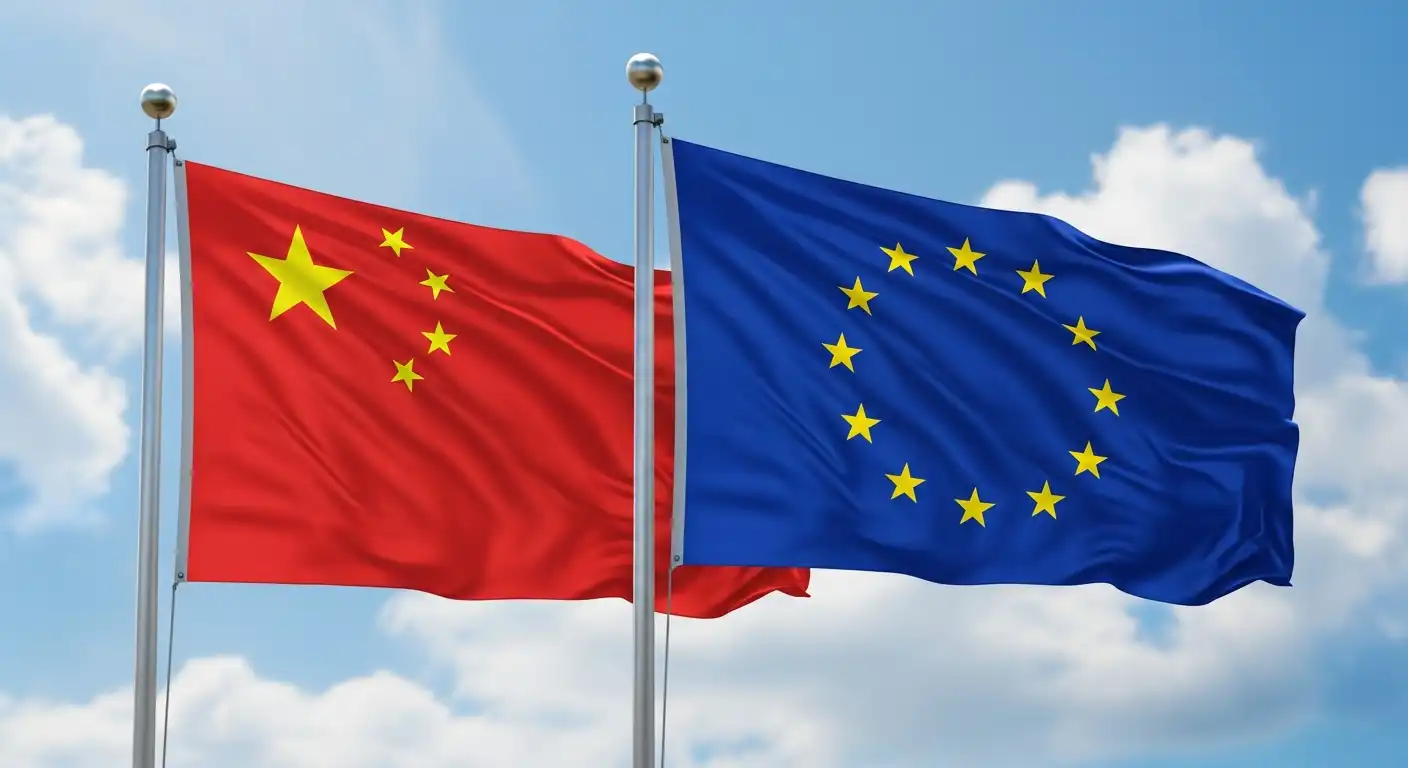
In late June 2026, high-ranking trade officials from the European Union and China gathered in Brussels for an intensive, day-long negotiating session. Faced with mounting political friction and the threat of an escalating trade war, the two economic powers agreed to a critical soft deadline. EU Trade Chief Maroš Šefčovič and Chinese Commerce Minister Wang Wentao established October 2026 as the target date for achieving tangible results on several major trade and investment disagreements. The agreement represents the first joint statement of its kind between the two powers since 2019, highlighting the urgency of the current economic situation.
The centerpiece of this diplomatic effort is the launch of a new ministerial-level platform called the Trade and Investment Consultations (TIC). This dedicated forum will provide a structured environment for officials to address structural imbalances, trade barriers, and industrial policies. Rather than letting disputes play out through unilateral tariffs and retaliatory measures, both sides are attempting to stabilize their commercial relationship through active dialogue. However, European officials warned that the bloc remains prepared to deploy defensive trade tools if negotiations do not yield real progress by the autumn deadline.
The Staggering Reality of the €360 Billion Trade Deficit
At the heart of the European Union’s aggressive stance is an increasingly uncomfortable number: a massive goods trade deficit with China that reached €359.9 billion (approximately $411 billion) in 2025. This figure represents a 15% increase compared to the previous year, and the imbalance has continued to widen by another 10% during the first four months of 2026. For European policymakers, this deficit is not just an abstract statistical worry. It translates into an imbalance of roughly €1 billion every single day across all 27 EU member states.
The scale of this deficit has become a major political liability for leadership in Brussels. European Commission President Ursula von der Leyen and other senior leaders have repeatedly stated that the current status quo is unsustainable. Over the past five years, Chinese imports into the European market grew by 45%, driven primarily by what European officials describe as state-subsidized industrial overcapacity. When subsidized goods enter the European market at prices that domestic manufacturers cannot match, it threatens European industrial bases and jobs. This phenomenon, which many economists are calling the “China Shock 2.0,” extends far beyond clean energy products and has begun to affect traditional manufacturing sectors throughout the continent.
The Battle Over Electric Vehicles and Green Tech
The most visible flashpoint in this economic struggle is the automotive sector, specifically battery-electric vehicles (EVs). In October 2024, the European Union officially implemented five-year anti-subsidy tariffs on imported Chinese electric vehicles, placing additional duties of up to 35.3% on top of the standard 10% import rate. The EU designed these tariffs to counter the unfair competitive advantage that Chinese state subsidies supposedly provided to domestic car manufacturers. Despite these high barriers, Chinese car companies have shown surprising resilience in the European market.
Data from the first quarter of 2026 shows that Chinese vehicle exports to Europe surged by 84.7% year-over-year, reaching 438,400 units. Battery-electric vehicles led this export push with 198,300 units, representing a 94.6% increase, while plug-in hybrids jumped by 152.4% to reach 106,000 units. By April 2026, Chinese auto brands captured a record-high 9.8% of the European market, and their share of the pure-electric segment breached the 15% mark for the first time. This paradox reveals that tariffs alone have not been enough to halt the inflow of competitive, high-quality vehicles from Chinese factories, forcing European regulators to consider further measures.
The Looming Expansion of EV and Hybrid Tariffs
Because the initial wave of anti-subsidy tariffs focused primarily on battery-electric vehicles, Chinese manufacturers quickly adjusted their export strategies to emphasize plug-in hybrids. This shift allowed them to bypass the heaviest duties while still capturing significant market share in Europe. In response, the European Commission is preparing to expand its trade defenses to include Chinese-made plug-in hybrid vehicles.
Preparations for these new hybrid tariffs are reportedly complete, and the measures are ready to roll out if they secure approval from a majority of EU member states. This looming expansion puts additional pressure on the ongoing trade talks. Chinese officials view the potential tariffs on hybrid vehicles as a highly escalatory step that could severely damage bilateral relations. The October deadline serves as a critical window to find a compromise on automotive trade before these new duties go into effect and trigger a round of retaliatory actions from Beijing.
The Debate Over Price Undertakings and Access Conditions
As the threat of permanent tariffs looms, negotiations have shifted from a simple debate over duty rates to a complex discussion about market access conditions. One of the primary pathways under discussion is the implementation of price undertaking offers. A price undertaking is a mechanism where an exporter commits to selling products above a minimum agreed price to offset the distortive effects of subsidies, allowing them to avoid paying the tariff.
The European Commission recently published a guidance document detailing how Chinese exporters can submit these price undertaking offers for battery-electric vehicles. This development turns a highly politicized tariff debate into a highly technical, monitored process. Negotiators must now establish strict acceptability criteria and monitoring frameworks to ensure that Chinese automakers comply with the agreed terms. If both sides can agree on a robust verification system, price undertakings could offer a peaceful resolution to the EV dispute, allowing Chinese brands to maintain European market access without undermining domestic carmakers.
Structural Friction: Export Controls, Steel, and Critical Materials
While electric vehicles dominate the headlines, the trade friction between Europe and China involves several other critical sectors. European industries depend heavily on Chinese supplies of raw materials, semiconductors, and advanced manufacturing components. This dependence has raised concerns about economic security and potential supply chain disruptions. In particular, Europe is vulnerable to Chinese export controls on rare earth elements and permanent magnets, which are essential for producing wind turbines, electric motors, and defense equipment.
During the Brussels talks, Minister Wang Wentao provided reassurances that China’s current export controls on rare earths would not disrupt European supply chains. While European officials welcomed these statements, they remain cautious. At the same time, the EU is preparing to enforce new protective measures for its domestic steel industry. As existing steel safeguards approach their expiration, the European Commission is considering proposals to halve import quotas and double tariffs on certain steel imports to 50%. These overlapping disputes across multiple industries create a highly volatile trading environment that both sides are desperate to stabilize.
Supply Chain Vulnerabilities and the Push for Supplier Diversification
The sheer scale of Europe’s reliance on Chinese critical materials has forced policymakers to rethink their long-term economic strategies. In response to potential supply chain bottlenecks, the European Commission is developing a regulatory tool that would force European businesses to diversify their suppliers in critical sectors. This initiative targets vital components like microchips, battery raw materials, and rare earth elements.
The goal of this policy is to reduce the risk of a single-point failure in the supply chain. If an economic dispute or geopolitical crisis were to cut off access to Chinese inputs, many European industries would grind to a halt within weeks. By mandating supplier diversification, Brussels hopes to build economic resilience. However, this diversification process is incredibly slow and expensive, as finding alternative suppliers or building domestic processing facilities requires years of capital investment. In the short term, maintaining stable trade relations with Beijing remains a necessity for European industrial survival.
The Promise and Perils of the Joint Flow-Monitoring Mechanism
To prevent trade disputes from spiraling out of control, the European Union and China agreed to immediately establish a joint monitoring mechanism of trade flows. This tool is designed to track import and export data in real-time, going beyond the traditional monthly figures recorded by official customs databases. By sharing and agreeing on the same trade data, both sides hope to eliminate arguments over statistical discrepancies.
The joint mechanism will identify sudden surges in trade flows and categorize them into visual danger zones, such as “amber” or “red” levels. If import volumes of a specific product category spike suddenly and cross into these warning zones, it will automatically trigger high-level political and diplomatic consultations. This early-warning system aims to give both sides a chance to negotiate a solution before the import surge causes severe damage to domestic industries or prompts unilateral tariff retaliation. While the concept is promising, its success depends entirely on both governments’ willingness to share accurate data and engage in good-faith discussions when the warning lights turn red.
Divided Europe: Internal Disagreements Over Tariffs and Retaliation
One of the greatest challenges the European Union faces in its negotiations with China is its own lack of internal unity. The 27 member states of the bloc hold deeply divided views on how to handle the economic challenge from Beijing. This division often weakens the EU’s bargaining position, as Chinese negotiators can exploit disagreements among European leaders to delay or dilute proposed trade defenses.
Germany, which possesses the largest economy in Europe, has historically taken a highly cautious approach to trade confrontation with China. German automakers like Volkswagen, BMW, and Mercedes-Benz are deeply integrated into the Chinese market, relying on local sales for a massive portion of their global profits and operating extensive manufacturing joint ventures. German officials fear that aggressive European tariffs will invite swift retaliation from Beijing, directly targeting German car exports and harming their domestic economy. On the other hand, countries like France and Italy, whose domestic carmakers are less dependent on Chinese sales, have pushed for much stronger trade defense tools to shield their domestic industrial bases from cheap imports. Finding a consensus that satisfies both German automotive interests and French industrial protectionism remains one of the most difficult tasks for the European Commission.
Conclusion
The agreement between the European Union and China to target October 2026 as a deadline for tangible progress marks an important step toward stabilizing global trade relations. By establishing the Trade and Investment Consultations and launching the joint trade-flow monitoring mechanism, both sides have shown a willingness to prioritize dialogue over immediate escalation. These platforms provide a structured framework to address the politically uncomfortable trade deficit and the ongoing tariff disputes over electric vehicles and critical raw materials.
However, the underlying structural issues remain incredibly difficult to resolve. The €360 billion trade deficit reflects deep-seated imbalances in industrial capacity, state subsidies, and market access that cannot easily be wiped away in a few months of negotiations. Furthermore, the European Union’s internal divisions and China’s strategic leverage over critical supply chains will complicate the path to a lasting agreement. While the October deadline provides a useful pressure mechanism to keep negotiators at the table, achieving a balanced and fair trading relationship will require significant concessions from both Brussels and Beijing. The coming months will reveal whether this diplomatic push is the beginning of a genuine economic rebalancing or merely a temporary pause before a broader trade war.